Handwriting improvement Worksheets for Ages 4-9 - Page 2
25 filtered results
-
From - To
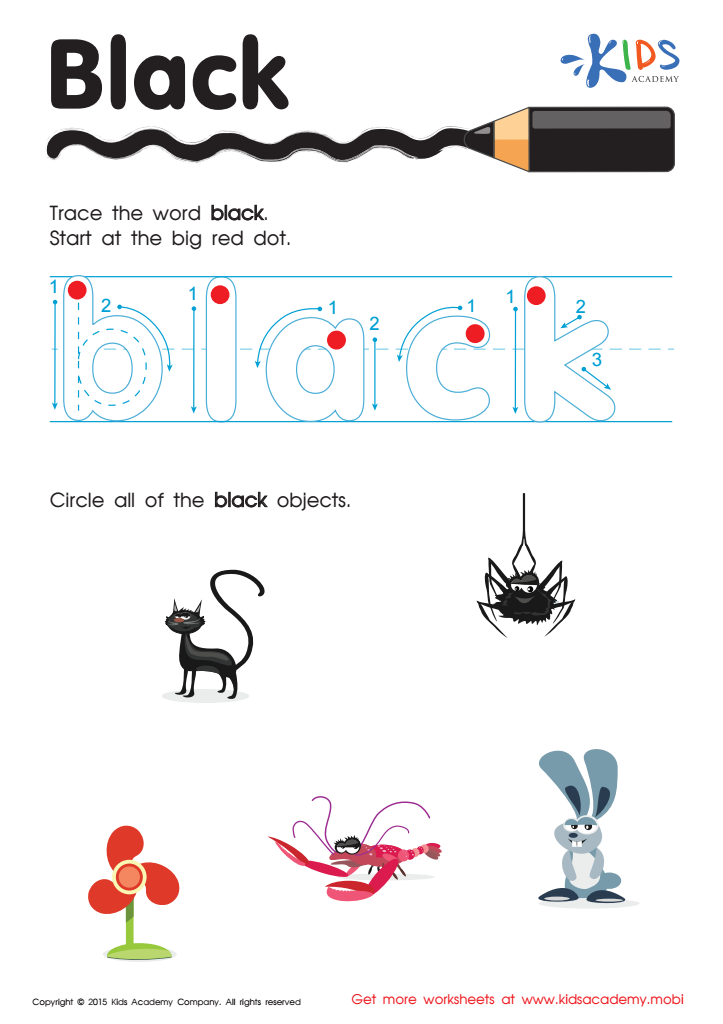
Black Tracing Color Words Printable
 Assign to My Students








Handwriting improvement is crucial for children aged 4-9, as it lays the foundation for both academic success and overall development. At this stage, children are developing fine motor skills, which are essential for various tasks, from writing their names to completing exams. Good handwriting fosters confidence; children feel accomplished when they produce legible work, motivating them to engage more assertively in learning activities.
Handwriting is also linked to cognitive development. The process of writing by hand enhances memory retention and understanding of letter formation and language structure. It encourages children to think critically about their words and ideas, leading to better overall literacy skills.
Additionally, messy or illegible handwriting can lead to frustration, impacting a child’s eagerness to learn and contribute in classroom settings. By focusing on handwriting improvement, teachers and parents can help children develop organizational skills and attention to detail.
In the digital age, while typing skills are vital, handwriting remains important for certain everyday tasks, creative expression, and standardized testing. By supporting this skill development in young learners, educators and parents foster a strong educational foundation, encouraging a love for writing and effective communication that will benefit children throughout their lives.








