
Identify colors Worksheets for Ages 4-9
4 filtered results
Difficulty Level
Grade
Age
-
From - To
Subject
Activity
Standards
Discover a vibrant collection of "Identify Colors Worksheets" designed for children ages 4-9. Our engaging and interactive worksheets help young learners recognize and name colors while enhancing their cognitive and fine motor skills. Perfect for at-home learning or classroom activities, these resources feature colorful illustrations and fun exercises that inspire creativity and observation. As children explore various color combinations and patterns, they build essential foundational skills crucial for their academic growth. Dive into our printable worksheets and make learning colors an enjoyable adventure that will captivate your child's curiosity and foster a love for learning!
Favorites
With answer key
Interactive
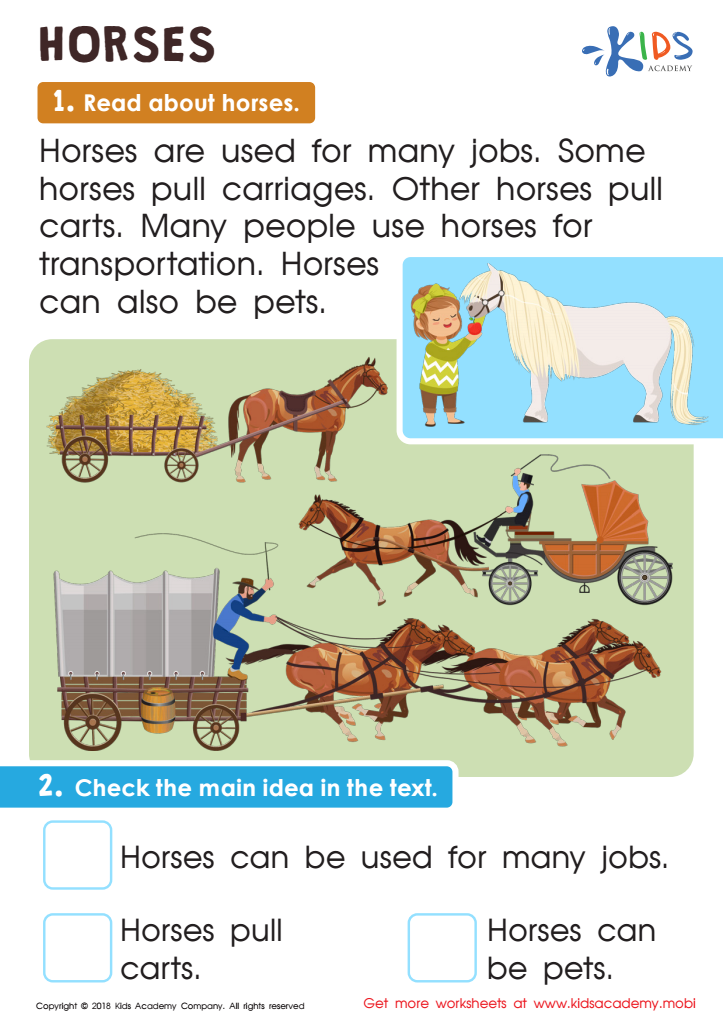
Horses Worksheet
Help your little reader differentiate between details and the main idea with this fun worksheet about horses. Kids will be excited to learn about the different roles horses play. To ensure they understand the overall concept, discuss it before having them choose the right statement at the end.
 Assign to My Students
Horses Worksheet
Worksheet
Join Kids Academy for Free
Who is primarily going to use this learning content?







Identifying colors plays a crucial role in the cognitive and social development of children ages 4 to 9. Understanding colors aids in the development of key skills such as observation, differentiation, and categorization, which are foundational for critical thinking and problem-solving. For this age group, learning colors also enhances vocabulary development and communication skills, as children learn to describe and discuss their findings.
Moreover, incorporating color identification into play-based learning fosters creativity and imagination. Engaging children in activities such as art projects or nature walks allows them to observe the world around them and express themselves in diverse ways. Recognizing colors can also strengthen memory as children associate colors with emotions, objects, and experiences.
From a social perspective, color identification helps children build interpersonal skills. For example, discussing favorite colors or collaborating on group projects can promote teamwork and communication. As parents and teachers, investing time in color education can enhance a child’s confidence and social interactions.
Ultimately, understanding colors serves as a stepping stone for more complex learning, including math and science concepts, supporting lifelong learning habits. Therefore, it's essential for parents and teachers to prioritize color recognition in early education.








