
Improving problem-solving abilities Worksheets for Ages 4-9
4 filtered results
Difficulty Level
Grade
Age
-
From - To
Subject
Activity
Standards
Unlock your child's potential with our "Improving Problem-Solving Abilities Worksheets for Ages 4-9." Designed to stimulate young minds, these engaging, age-appropriate sheets cover essential critical thinking skills. Children from 4 to 9 will embark on fun-filled adventures that hone their logical reasoning, sequencing, and pattern recognition capabilities. Perfect for parents and educators looking to boost confidence and academic success. Our worksheets are crafted by education experts, ensuring both enjoyment and educational value. Start your journey today and watch your child's problem-solving skills soar! Accessible, printable, and perfect for any learning environment.
Favorites
With answer key
Interactive
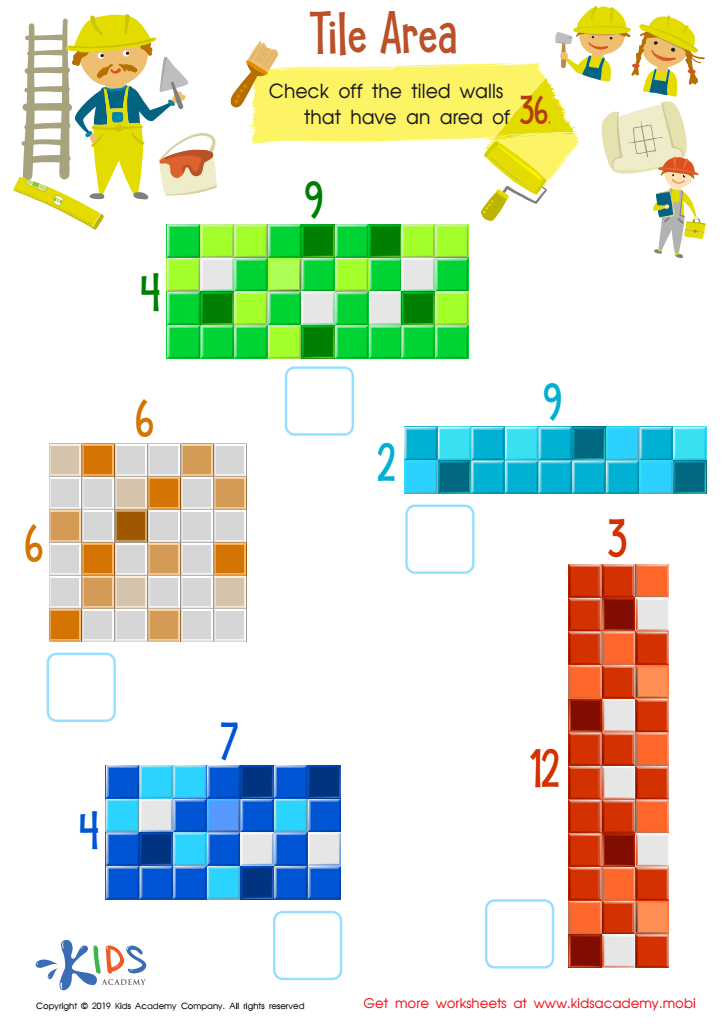
Tile Area Worksheet
Help kindergartners become experts in solving simple math problems. Teach them about measuring, the parts to measure, and how to measure the area of tiled walls. Use the worksheet to check off the walls with an area of 36. This can help them understand the concepts and make measuring objects less intimidating.
 Assign to My Students
Tile Area Worksheet
Worksheet
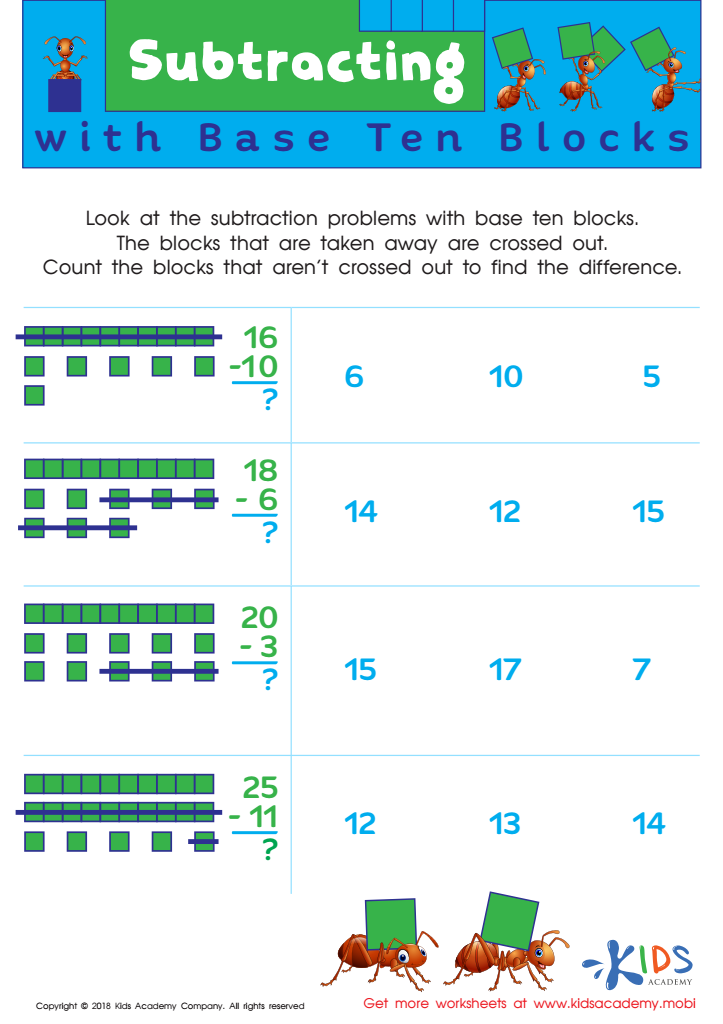
Subtracting with Base Blocks Worksheet
Little mathematicians can use base ten blocks to understand place value for subtraction. This worksheet helps them cross out blocks to solve problems with accuracy. Seeing equations like this boosts their number reasoning skills and helps them work with larger numbers.
Subtracting with Base Blocks Worksheet
Worksheet
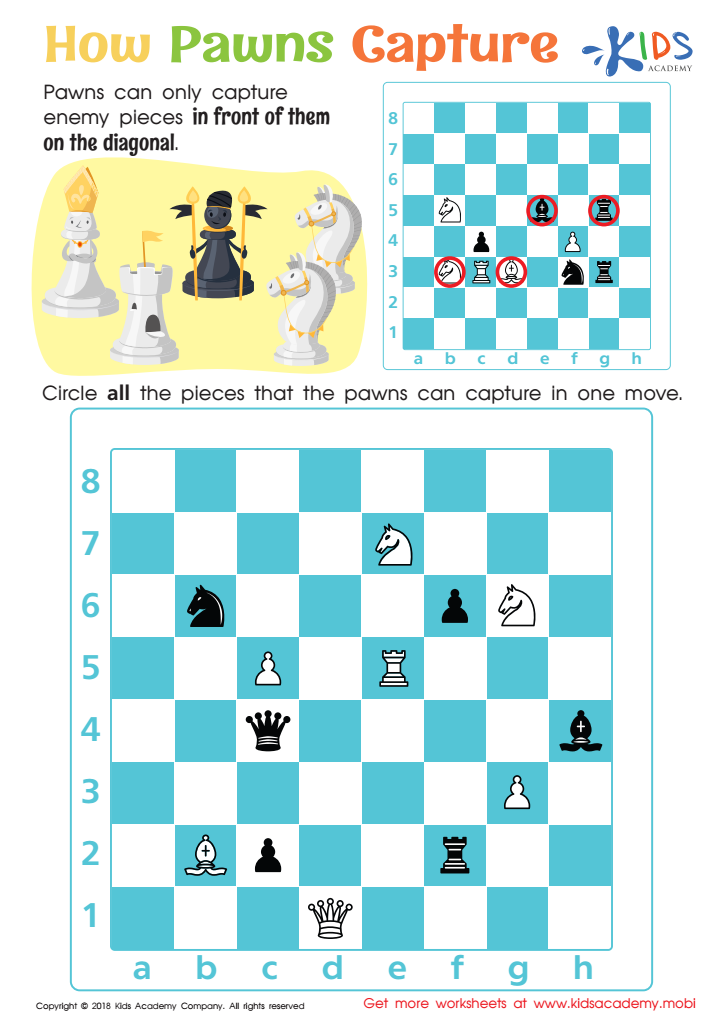
How Pawns Capture Worksheet
Ask your child to circle all the places a pawn can capture in one move on the diagonal. Pawns are limited in the moves they can make, but can still capture enemy pieces. This worksheet will help brush up on their knowledge of the rules of chess.
How Pawns Capture Worksheet
Worksheet
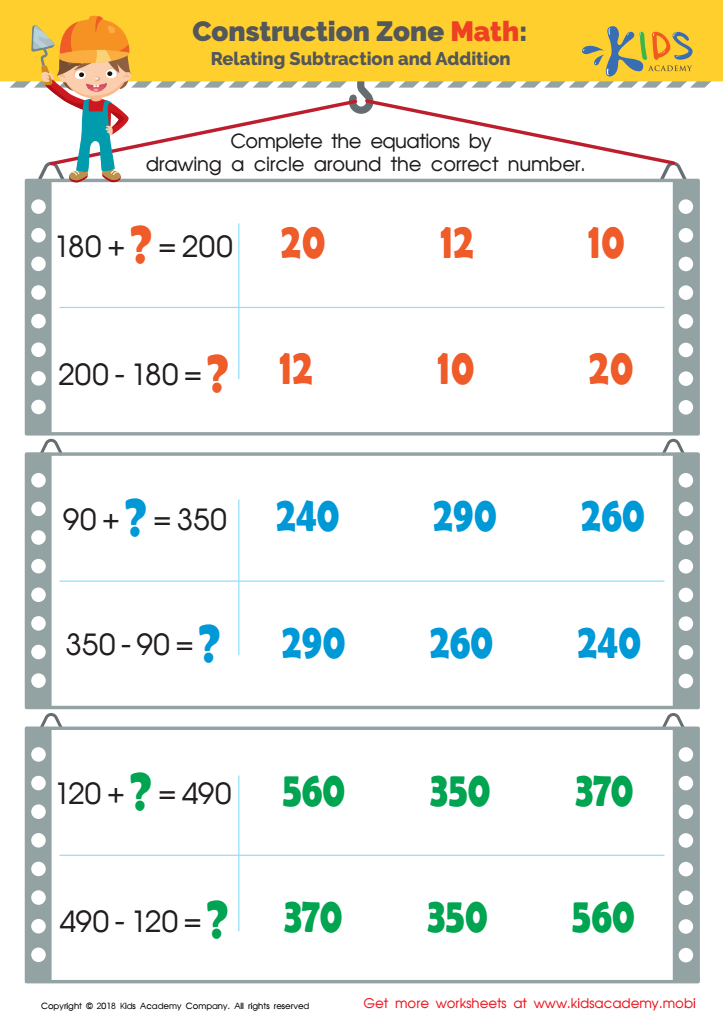
Construction Zone Math: Relating Subtraction and Addition Worksheet
Help kids master the concept of solving for missing numbers with subtraction. Use this cute worksheet featuring construction elements and colorful equations. Show them how to subtract to find the missing number, then circle the answer. It'll help them increase their number sense and get ready for algebra.
Construction Zone Math: Relating Subtraction and Addition Worksheet
Worksheet
Learning Skills
Join Kids Academy for Free
Who is primarily going to use this learning content?








Improving problem-solving abilities in children aged 4-9 is crucial for their overall development and future success. This developmental stage is marked by rapid cognitive, social, and emotional growth, making it an ideal period to instill essential life skills.
Problem-solving encourages critical thinking, helping children to analyze situations, consider possible solutions, and make informed decisions. These skills are not only fundamental for academic success but also for everyday interactions and challenges. For instance, kids learn to share, resolve conflicts with peers, and adapt to new or unexpected scenarios.
Moreover, fostering problem-solving skills early enhances children's confidence and independence. When children are encouraged to tackle problems on their own, they build resilience and a growth mindset – the understanding that effort leads to improvement. This empowers them to take on challenges, rather than avoid them, shaping a proactive and optimistic approach to life.
Finally, developing problem-solving abilities nurtures creativity and innovation. Kids learn to think outside the box, experiment with various solutions, and understand that failure is simply part of the process, not the end. This mindset is invaluable not only for personal achievement but also for contributing to a progressive society.
In summary, investing in the development of problem-solving skills in young children lays a strong foundation for their academic accomplishments, emotional well-being, and future roles as adaptive, inventive adults.








