
Interpreting information Worksheets for Ages 4-9
3 filtered results
Difficulty Level
Grade
Age
-
From - To
Subject
Activity
Standards
Enhance your child's critical thinking and comprehension skills with our Interpreting Information Worksheets designed for ages 4-9. These engaging worksheets provide exciting activities that encourage young learners to analyze, interpret, and draw conclusions from various types of information. Tailored for early learners, our resources feature colorful illustrations, relatable scenarios, and age-appropriate challenges that make learning fun. As children explore categorization, comparison, and summarization, they develop essential skills in understanding various formats—from texts to charts. Perfect for both classroom and home use, our worksheets support literacy and cognitive development, ensuring your child becomes a confident thinker and effective communicator. Unlock their potential today!
Favorites
With answer key
Interactive
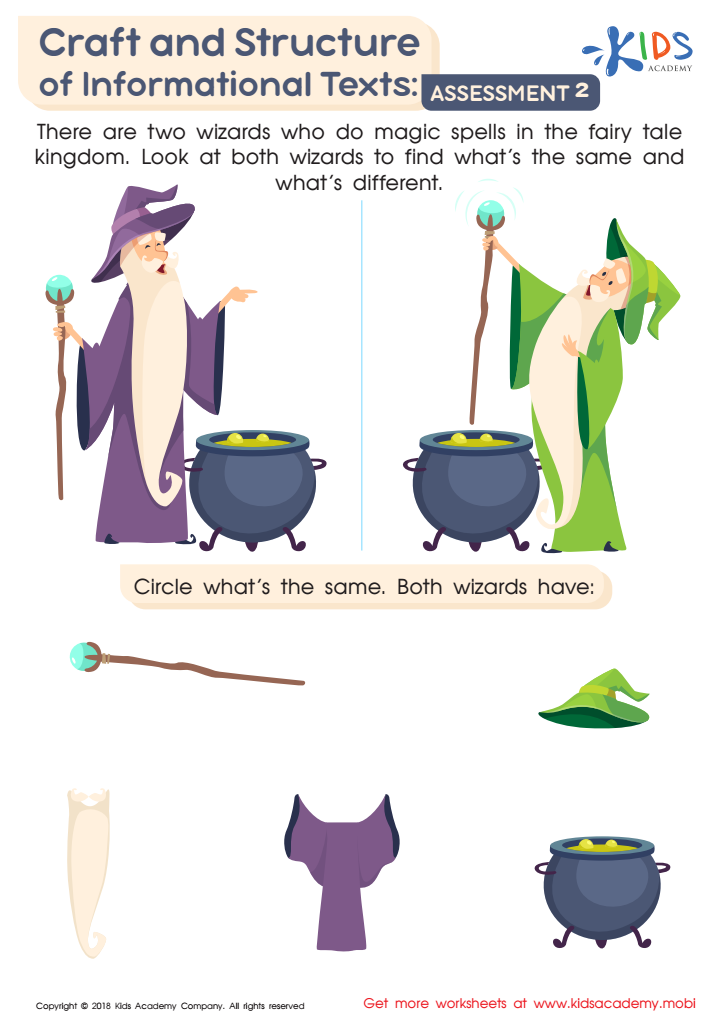
Craft and Structure of Informational Texts: Assessment 2 Worksheet
This assessment has kids looking at two similar fairy tale wizards, focusing on their visuals to find the similarities and differences. Then, they'll circle the things they both have. It's a great way to help children hone their detail-oriented comprehension skills, which is essential when using informational texts.
 Assign to My Students
Craft and Structure of Informational Texts: Assessment 2 Worksheet
Worksheet
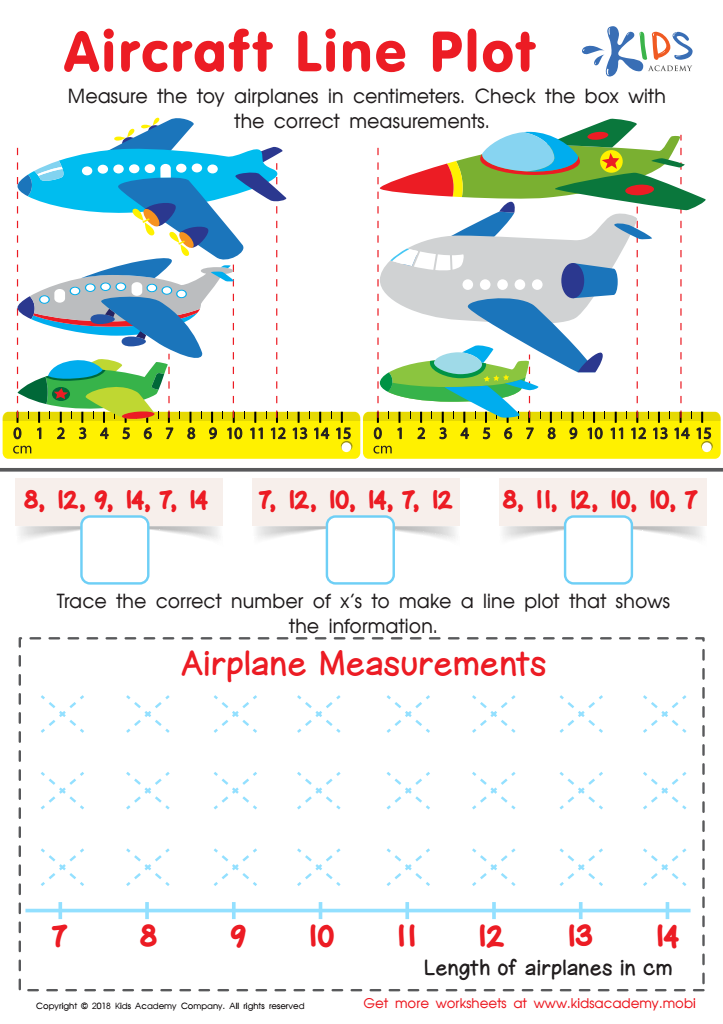
Aircraft Line Plot Worksheet
If your kids are aviation enthusiasts, they'll love this worksheet! Look at the picture with them, then ask them to measure the toy planes in cm. Check the box with the right measurements and then trace the x's to make a line plot with the data.
Aircraft Line Plot Worksheet
Worksheet
Join Kids Academy for Free
Who is primarily going to use this learning content?







Interpreting information is a critical skill for children aged 4-9, forming a foundation for their future learning and development. During this formative stage, children are learning to process and understand various types of information, from visual cues to verbal instructions. Parents and teachers play a vital role in guiding this process, as effective interpretation skills enhance a child's ability to navigate the world around them.
By encouraging children to interpret information—such as pictures, stories, and simple data—adults help develop critical thinking and analytical skills. This early engagement fosters cognitive development and boosts confidence. Moreover, these skills are essential as children progress to more complex subjects, enabling them to draw connections, make informed decisions, and understand diverse perspectives.
Furthermore, teaching interpretation is linked to language development. It helps children learn vocabulary and enhances their comprehension skills, paving the way for successful communication. Additionally, nurturing these abilities supports emotional intelligence by allowing kids to interpret social cues and understand emotional contexts in their interactions.
Ultimately, by prioritizing the interpretation of information, parents and teachers empower children to become curious explorers and confident learners, laying the groundwork for lifelong intellectual engagement and adaptability in an ever-changing world.








