
Learning scientific vocabulary Worksheets for Ages 4-9
3 filtered results
Difficulty Level
Grade
Age
-
From - To
Subject
Activity
Standards
Unlock the world of science for young minds with our engaging "Learning Scientific Vocabulary Worksheets for Ages 4-9". Designed to spark curiosity and foster knowledge, these worksheets make learning scientific terminology fun and interactive. From exploring basic concepts to enhancing language skills, each worksheet is crafted to suit early learners, laying a strong foundation in science education. Ideal for both classroom and home use, these printable resources encourage hands-on learning and nurture a love for scientific discovery. Instill confidence in young learners as they master essential scientific vocabulary and pave the way for future academic success.
Favorites
With answer key
Interactive
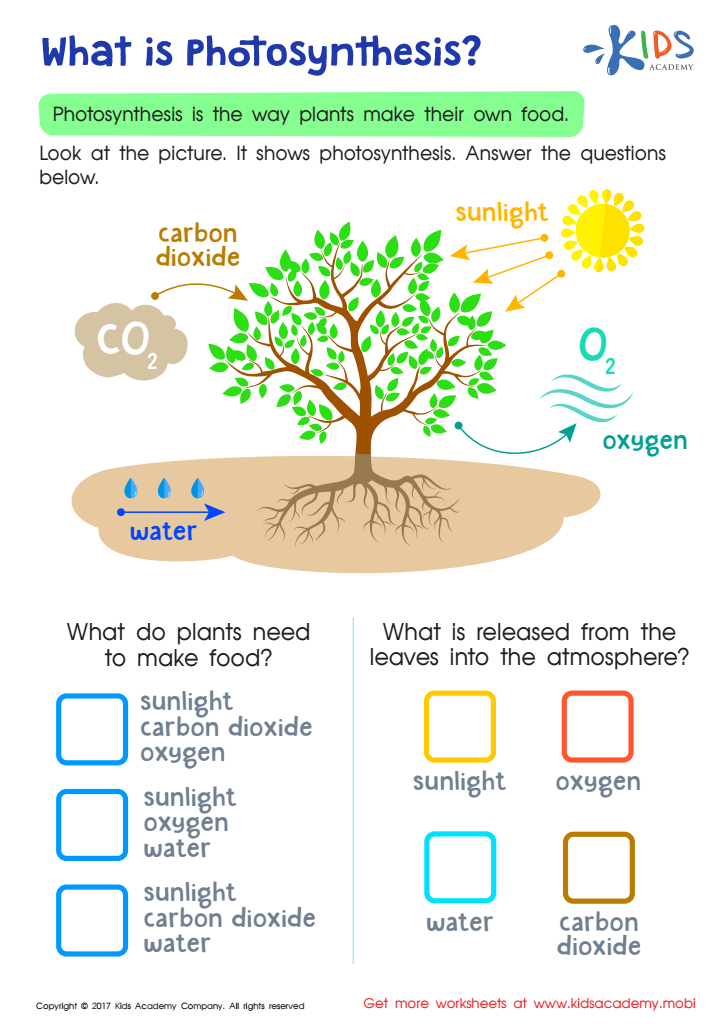
What is Photosynthesis Printable
Plants need to eat too; they make their own food from the air. Introduce them to photosynthesis with this fun worksheet!
 Assign to My Students
What is Photosynthesis Printable
Worksheet
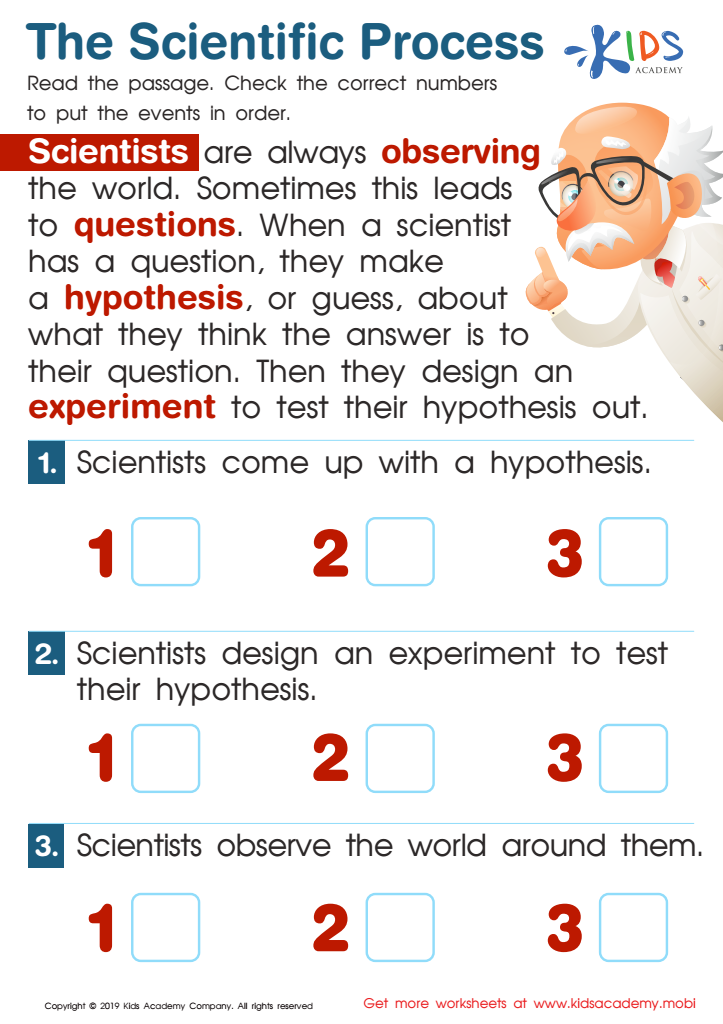
The Scientific Process Worksheet
Help your kids read the passage, then ask them to explain what they've learnt. Ask the questions and help put the events in order. Through this worksheet, your kids will learn more about science and practice reading skills. It's a fun way to explore science! (80 words)
The Scientific Process Worksheet
Worksheet
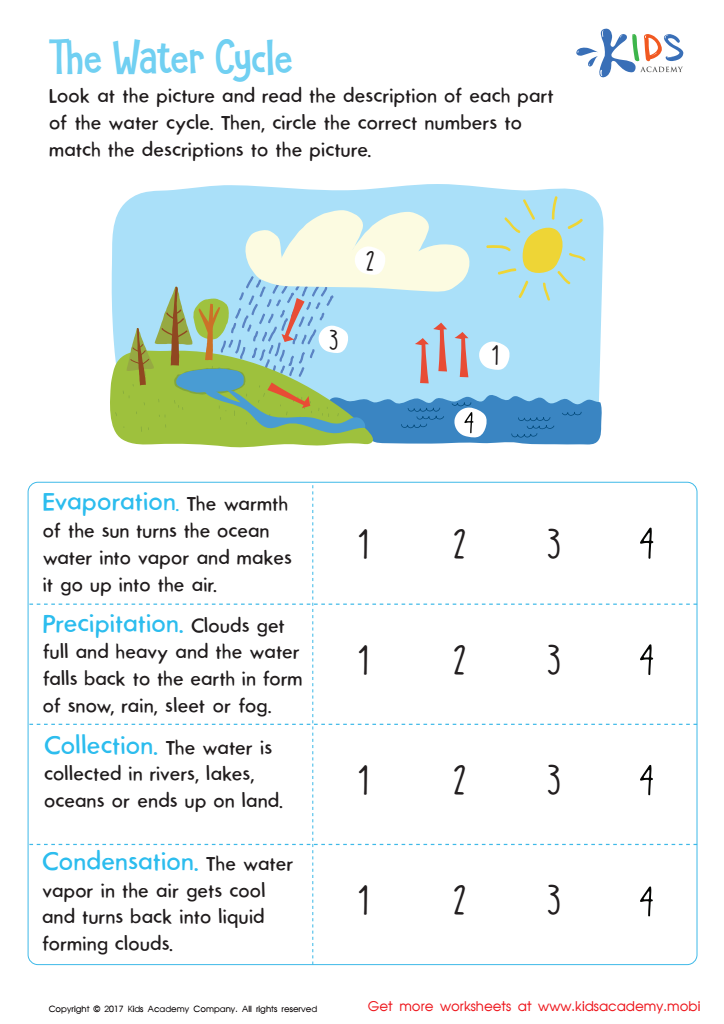
The Water Cycle Worksheet
Kids love science because it sparks their curiosity, so use this worksheet to introduce them to earth science and build a strong foundation for future learning.
The Water Cycle Worksheet
Worksheet
Learning Skills
Join Kids Academy for Free
Who is primarily going to use this learning content?






Introducing scientific vocabulary to children aged 4-9 is pivotal for several reasons. Early exposure to scientific terms helps young learners develop a natural curiosity about the world around them, fostering a lifelong love for science. Understanding specific terms like "habitat," "evaporation," or "gravity" can significantly enhance a child's ability to grasp more complex scientific concepts later on. It's akin to building a strong foundation in literacy; without a robust vocabulary, higher-order thinking and comprehension become challenging.
Moreover, learning scientific vocabulary nurtures critical thinking and problem-solving skills. When children understand the language of science, they can better articulate their observations, ask meaningful questions, and engage in discussions and experiments. This early cognitive engagement is essential for developing analytical skills that are transferable across all subjects.
Scientific vocabulary also supports literacy development. Many scientific terms have roots in Latin or Greek, which can enhance a child's broader vocabulary, reading comprehension, and spelling skills. For teachers and parents, instilling an early love for science can also ignite students' interest in STEM (Science, Technology, Engineering, and Mathematics) fields, preparing them for future academic and career opportunities.
Thus, prioritizing scientific vocabulary for young learners equips them with the tools they need for academic success and sparks an innate curiosity that drives continuous learning.








