Learning times tables Worksheets for Ages 4-9
3 filtered results
-
From - To
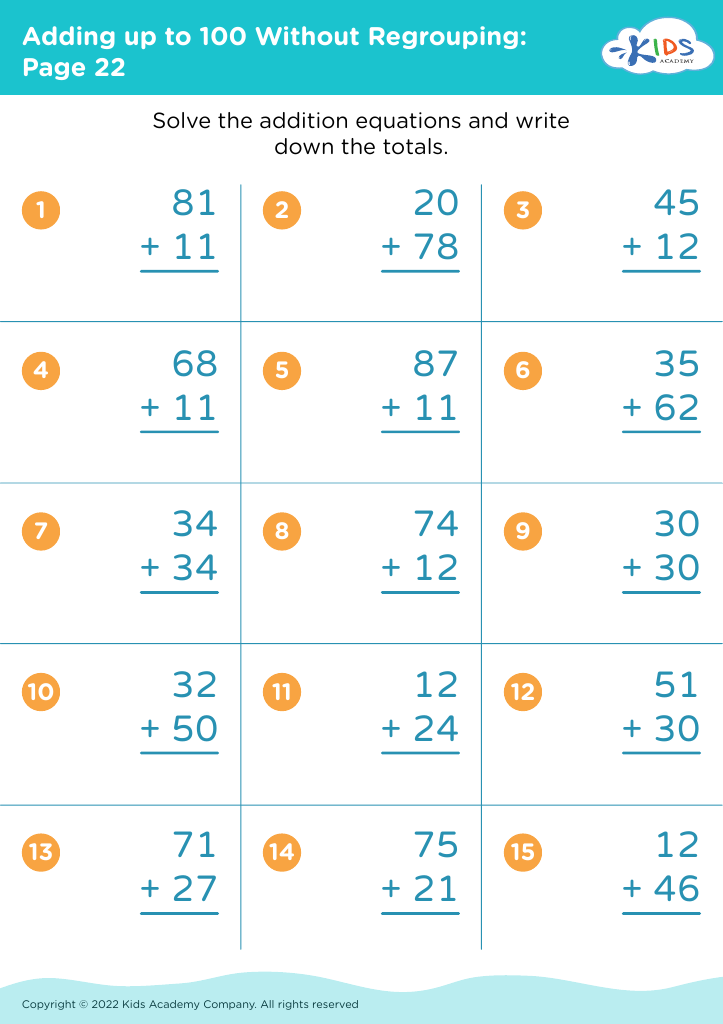
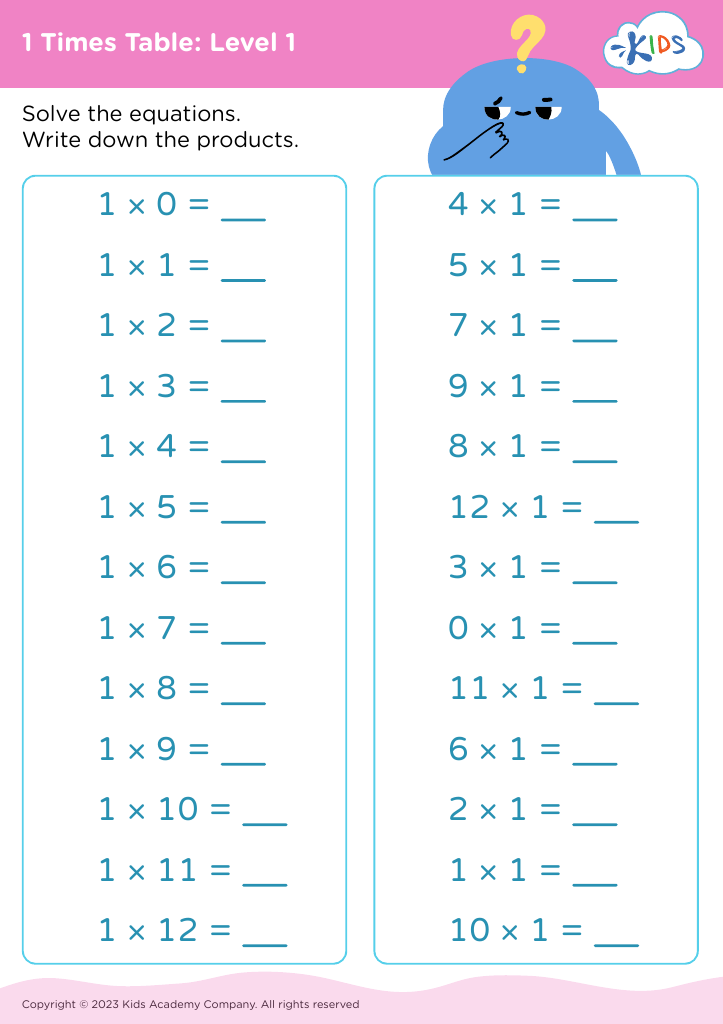
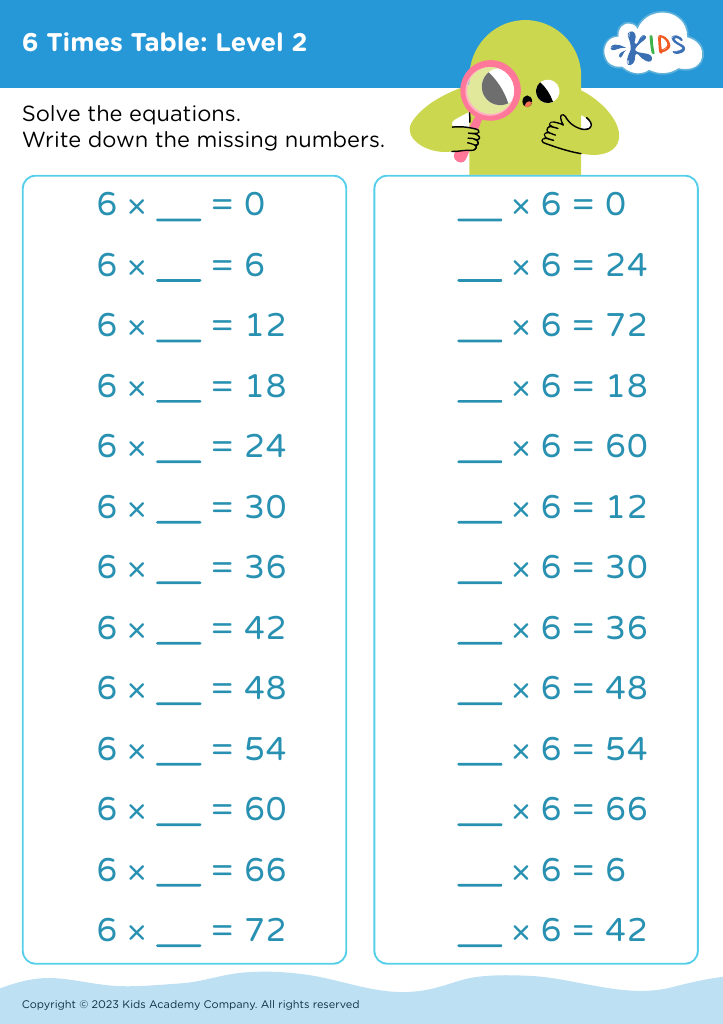
Discover our expertly designed Learning Times Tables Worksheets, perfect for children aged 4-9! These printable resources from Kids Academy are crafted to enhance early math skills, making multiplication fun and easy to understand. With colorful, engaging exercises, your child can practice times tables systematically, boosting their confidence and proficiency. Suitable for home or classroom use, these worksheets cater to different learning styles and paces, ensuring every child grasps essential concepts. Start today and watch as your child's numerical abilities flourish. Unlock the door to math success with Kids Academy’s Learning Times Tables Worksheets!






Parents and teachers should prioritize learning times tables for children aged 4-9 because it forms the foundation for mathematical understanding and builds critical cognitive skills. Early mastery of times tables enhances number sense, making more complex math concepts easier to grasp later on. For instance, familiarity with multiplication aids in understanding division, fractions, and eventually algebra and geometry.
Moreover, learning times tables boosts a child’s confidence. When students feel proficient in basic math, they are more likely to tackle advanced topics with enthusiasm rather than fear. This confidence extends beyond the classroom, encouraging problem-solving and analytical thinking in everyday situations.
Additionally, memorizing times tables strengthens working memory, which is crucial for multitasking and executing more complex academic tasks. It also encourages pattern recognition, a skill relevant not only to mathematics but to overall cognitive development.
In a world increasingly driven by STEM fields, early competence in mathematics opens doors to diverse career opportunities in science, engineering, and technology. By investing time and effort into learning times tables at an early age, parents and teachers set children up for long-term academic success and practical life skills. Therefore, this foundational knowledge deserves attention and resources from both educators and guardians.








