Lowercase identification Worksheets for Ages 4-9
5 filtered results
-
From - To
Introducing our engaging Lowercase Identification Worksheets, specially crafted for children ages 4-9! These fun and interactive worksheets are designed to enhance your child's letter recognition skills through captivating activities. Each worksheet includes vibrant illustrations and playful exercises that help kids identify lowercase letters in a variety of contexts. Perfect for both classroom use and at-home learning, these worksheets promote early literacy development while keeping kids motivated. Whether your child is just beginning to learn the alphabet or looking to strengthen their skills, our Lowercase Identification Worksheets are an ideal resource for becoming confident readers and writers. Explore today and watch your child's skills flourish!
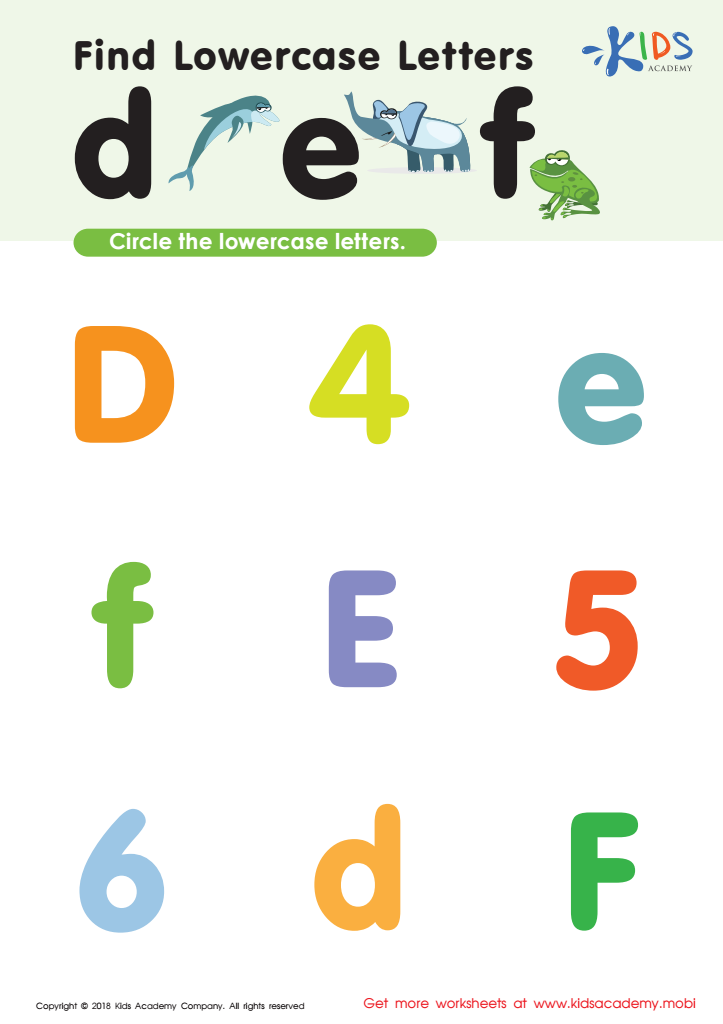
Find Lowercase Letters d e f Worksheet
 Assign to My Students
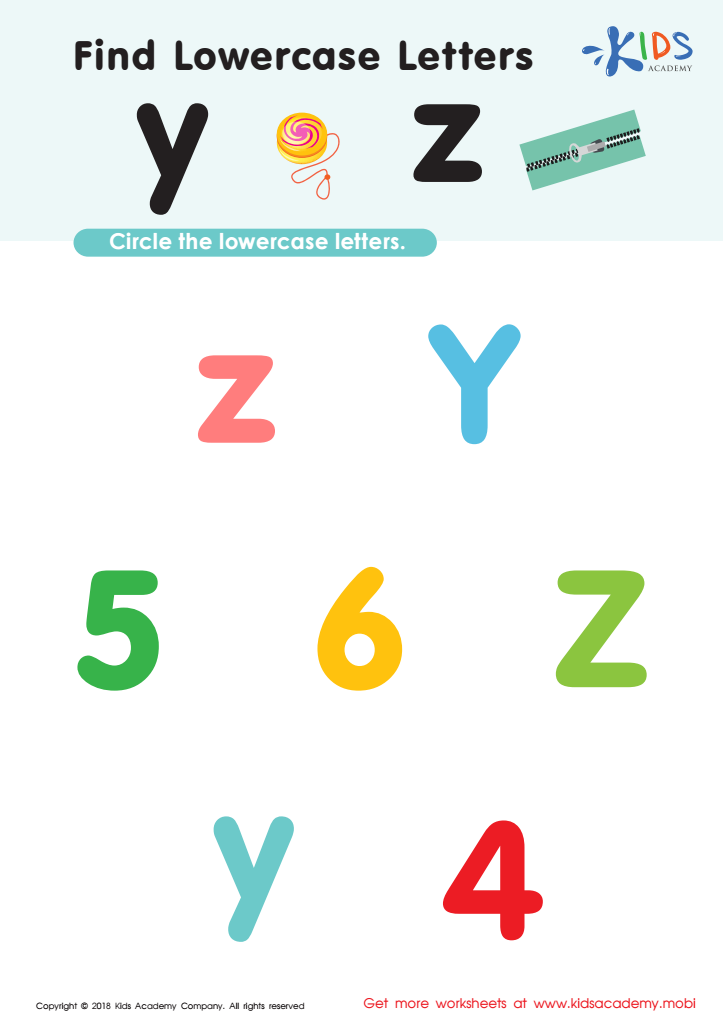
Find Lowercase Letters y z Worksheet
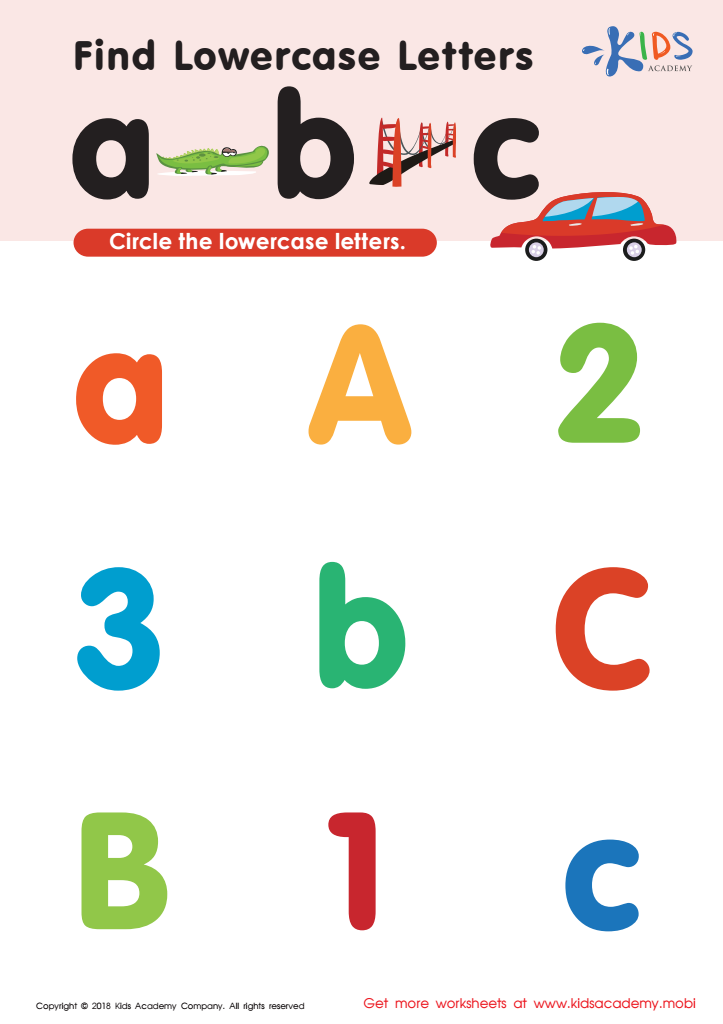
Find lowercase letters a b c Worksheet
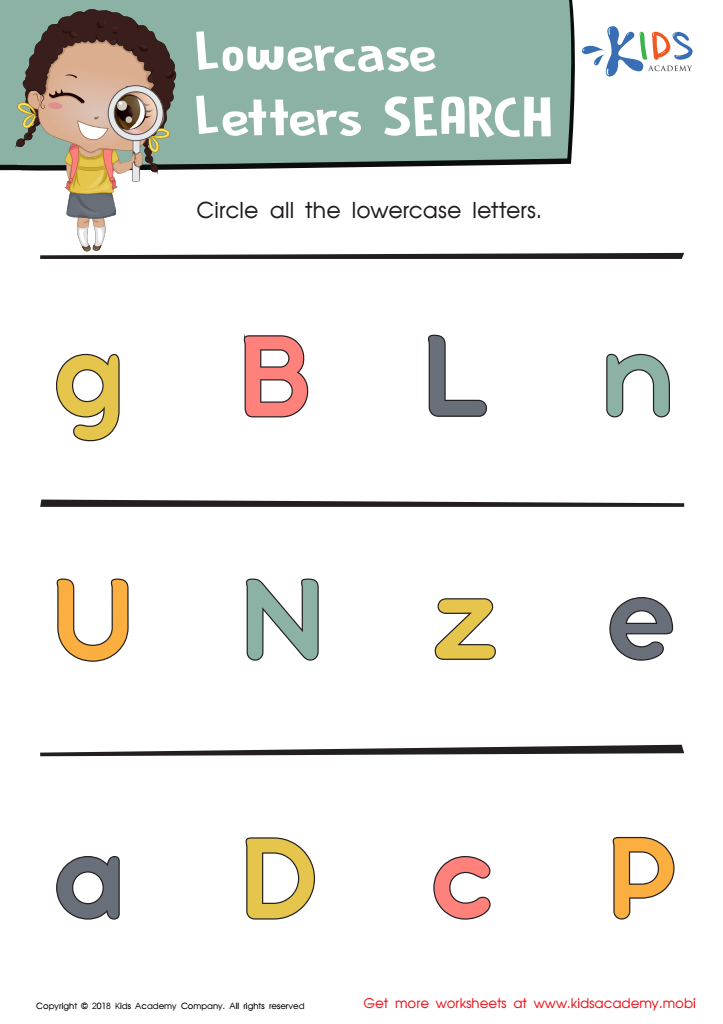
Lowercase Letters Search: Assessment Worksheet
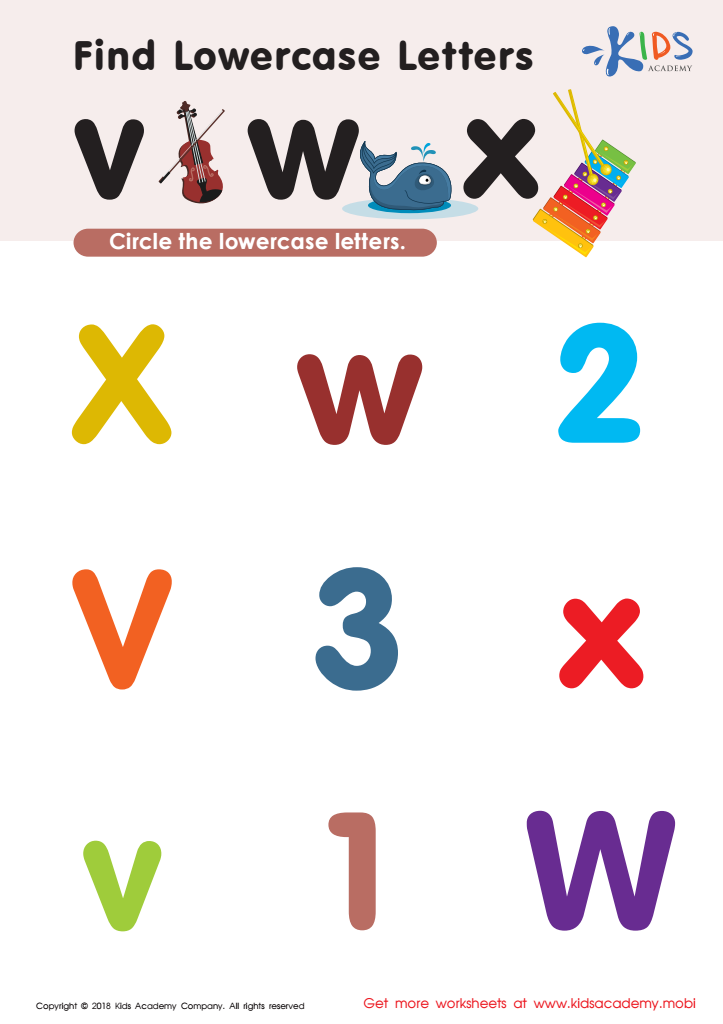
Find Lowercase Letters v w x Worksheet







Lowercase letter identification is a crucial skill for children aged 4-9 as it lays the foundation for literacy development. Understanding lowercase letters is essential to reading fluency and comprehension. Unlike uppercase letters, which are used at the beginning of sentences or for proper nouns, lowercase letters make up the bulk of written text. Children encounter these letters more frequently in books, schoolwork, and everyday reading.
When parents and teachers emphasize lowercase identification, they help children recognize letters in their natural environment, reinforcing their reading skills. Additionally, proficiency in lowercase letters aids in writing, as most writing tasks involve typing or hand-writing in lowercase. Developing this skill can lead to greater confidence in reading and writing, fostering a love for literacy that supports lifelong learning.
Moreover, early mastery can alleviate anxiety around reading, making it a more enjoyable experience for young learners. Parents and teachers can aid in this identification through games, reading aloud, and interactive activities, making learning fun and engaging. By prioritizing lowercase letter recognition, adults can significantly contribute to a child's reading journey and overall academic success.








