Math fluency development Worksheets for Ages 4-9
3 filtered results
-
From - To
Enhance your child's mathematical skills with our engaging Math Fluency Development Worksheets, designed specifically for ages 4-9. These worksheets focus on building essential math concepts such as addition, subtraction, and number recognition through fun and interactive activities. Tailored to cater to varying learning levels, our resources support children's progress in a visually appealing format that keeps them motivated. By practicing regularly, kids will gain confidence in their abilities and develop a strong foundation for future math success. Explore our diverse selection of worksheets to foster a love for math while ensuring your child masters essential skills in a joyful way!
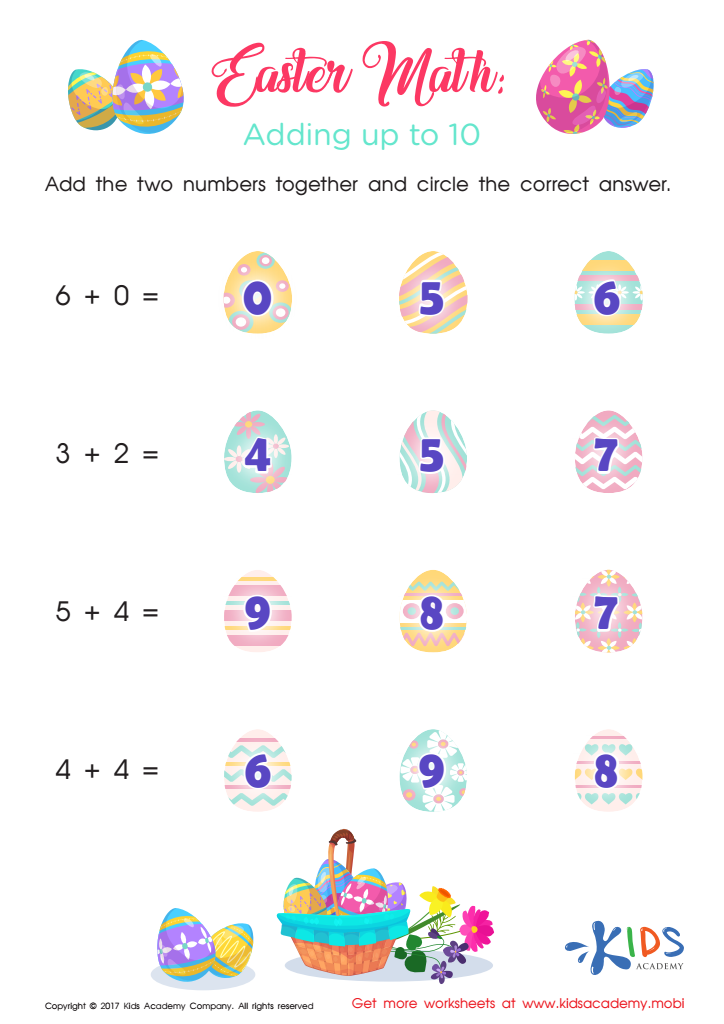
Addition Up To 10 Worksheet
 Assign to My Students
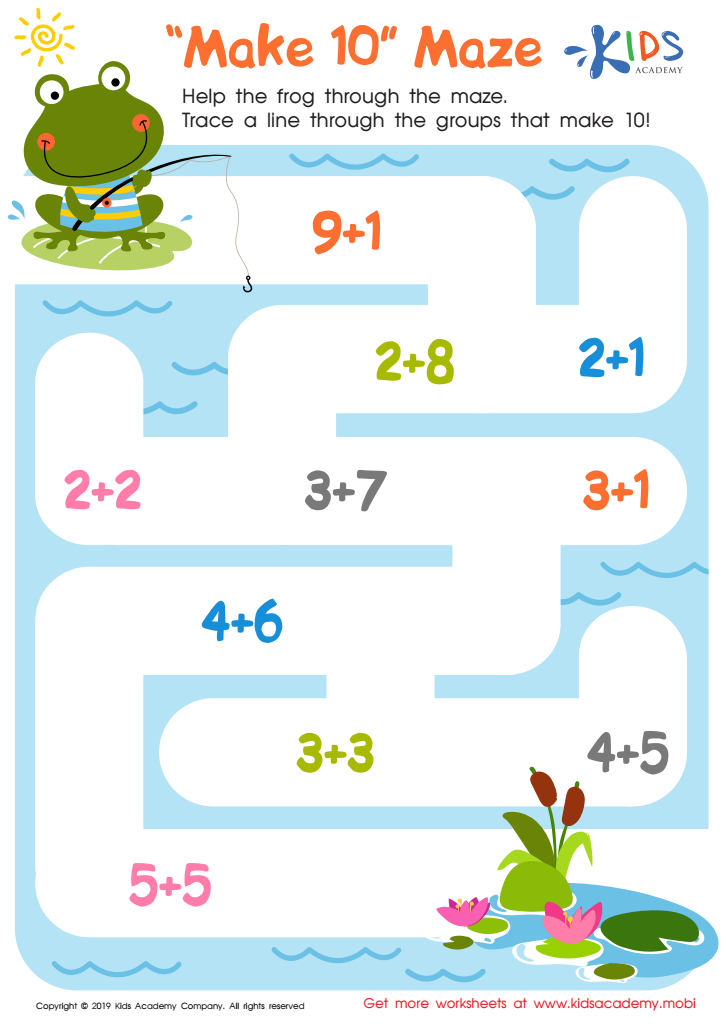
Make 10 Maze Worksheet
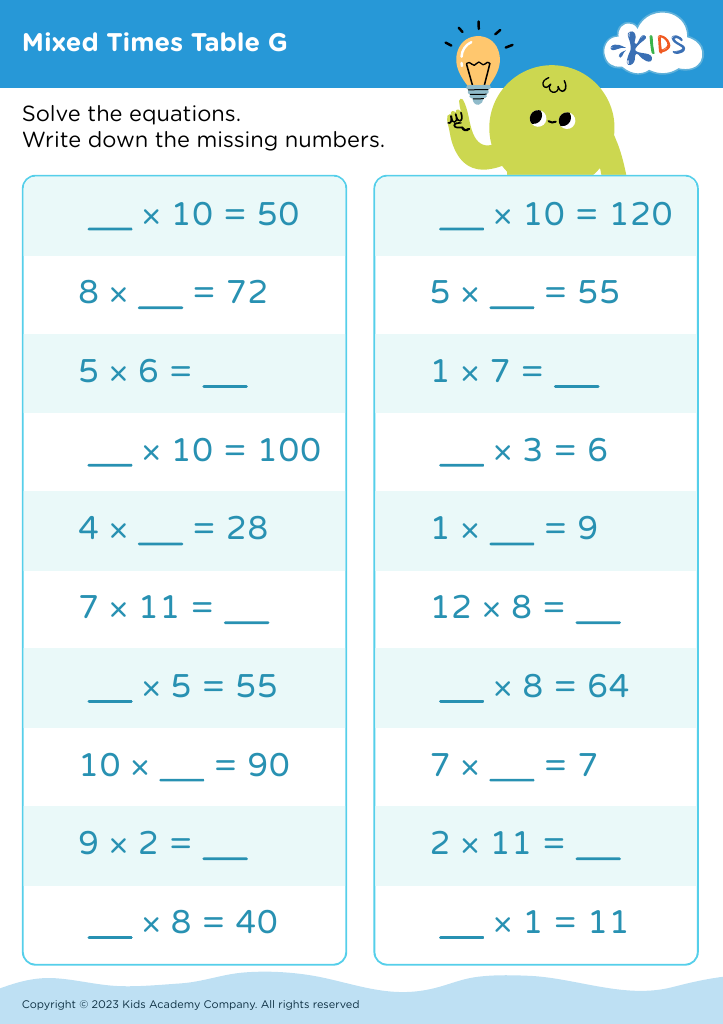





Math fluency development for children aged 4-9 is crucial for several reasons, making it a priority for both parents and teachers. At this foundational stage, children begin to form their understanding of numbers and mathematical relationships. Achieving math fluency helps them perform basic operations—addition, subtraction, multiplication, and division—rapidly and accurately, which is essential for success in more complex mathematics later on.
Research shows that early math skills are strong predictors of future academic success, including performance in reading and overall school achievement. When children become fluent in math, they build confidence and motivation, reducing math anxiety as they progress. This confidence encourages a more positive attitude toward learning and reinforces a growth mindset.
Moreover, math fluency nurtures critical thinking and problem-solving skills, necessary not only in math but across all subjects and everyday situations. Engaging with math through games, real-world applications, and dialogues helps cement these skills. Lastly, parents and teachers play a key role in creating a supportive environment for math development. By prioritizing math fluency, they contribute to shaping a child’s cognitive development, ensuring they are well-prepared for academic challenges ahead. Early investment in math fluency lays a strong foundation for lifelong learning and success.








