
Mathematical understanding Worksheets for Ages 4-9
3 filtered results
Difficulty Level
Grade
Age
-
From - To
Subject
Activity
Standards
Discover our engaging Mathematical Understanding Worksheets tailored for children ages 4 to 9! Designed to enhance early math skills, these worksheets cover essential topics such as counting, addition, subtraction, shapes, patterns, and measurement. Each worksheet incorporates fun activities that promote problem-solving and critical thinking while keeping learning exciting. Our colorful, interactive formats make it easy for young learners to grasp foundational concepts with confidence. Whether at home or in the classroom, these resources are perfect for reinforcing math skills and aiding in academic development. Explore our collection today and help your child build a strong mathematical foundation!
Favorites
With answer key
Interactive
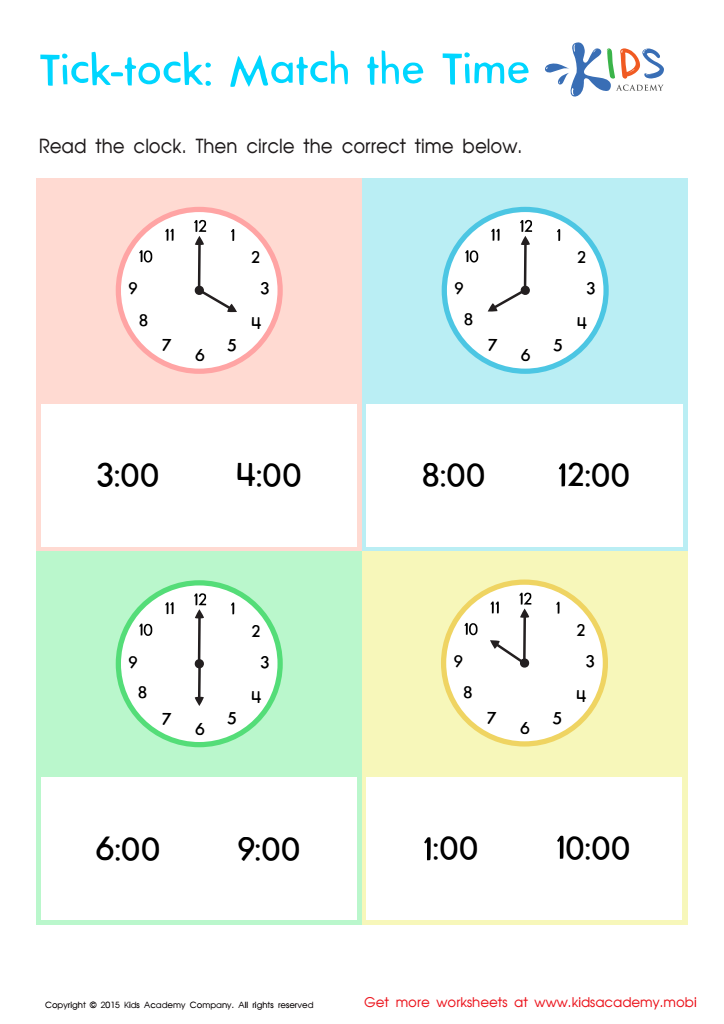
Telling The Time Worksheet: Part 4
Test your skills in telling the time! Circle the right time on 4 analog clock faces.
 Assign to My Students
Telling The Time Worksheet: Part 4
Worksheet
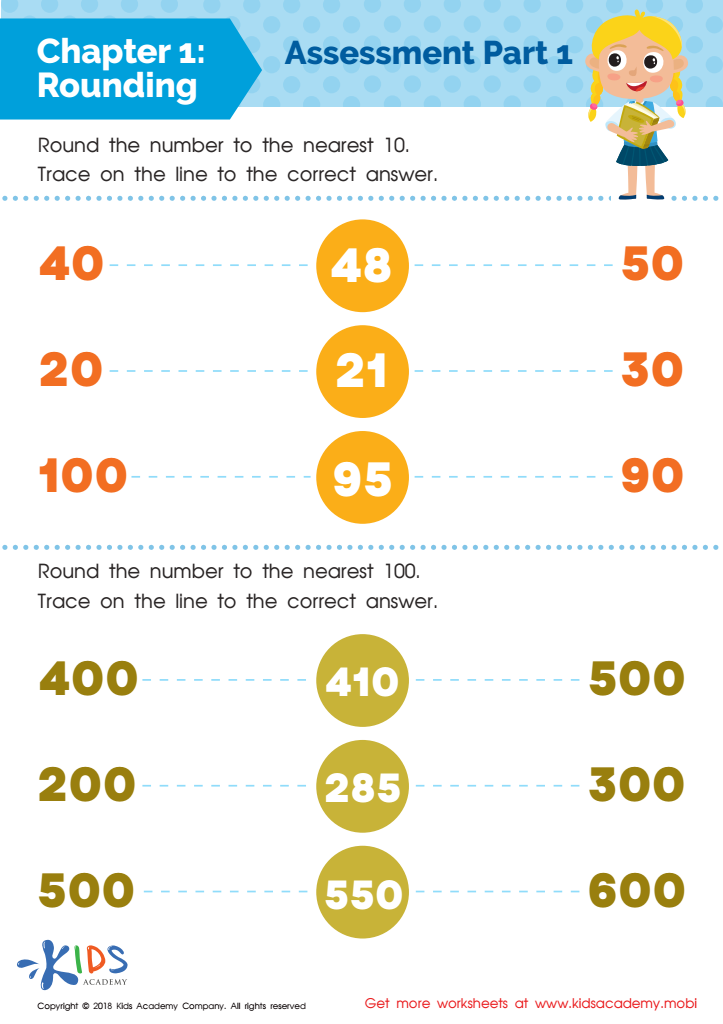
Rounding Worksheet 3rd Grade
Practice and refresh your child's 3rd grade rounding skills with this quick worksheet! Have them round each set of numbers to the nearest 10s or 100s. This simple exercise will help maintain math fluency.
Rounding Worksheet 3rd Grade
Worksheet
Join Kids Academy for Free
Who is primarily going to use this learning content?








Mathematical understanding from ages 4 to 9 is crucial for a child's cognitive development and future academic success. During these formative years, children are not just learning numbers and operations; they are developing critical thinking, problem-solving, and analytical skills. Engaging with concepts like patterns, shapes, and basic arithmetic lays the foundation for more complex mathematics later in life.
For parents and teachers, nurturing mathematical understanding promotes a child’s confidence and curiosity about math, making learning enjoyable rather than intimidating. Early exposure to mathematical concepts helps children make connections to real-world situations, fostering practical application and relevance in everyday life.
Moreover, foundational math skills have been shown to correlate with academic achievement across various subjects. When children grasp these early concepts, they are better prepared to tackle challenges in later grades. Teachers can use this time to create positive math experiences, while parents can reinforce these lessons at home through fun activities and practical applications, bridging school and home learning.
In essence, prioritizing mathematical understanding in early education equips children with essential skills for their future, helping them become competent learners and confident problem-solvers. This involvement ultimately shapes a generation that appreciates and utilizes mathematics meaningfully throughout their lives.








