
Noun identification Worksheets for Ages 4-9
10 filtered results
Difficulty Level
Grade
Age
-
From - To
Subject
Activity
Standards
Discover our engaging Noun Identification Worksheets designed specifically for children aged 4-9! These printable resources help young learners identify and understand nouns through colorful illustrations and interactive activities. Each worksheet presents fun exercises that encourage children to recognize common nouns, including people, places, and objects, fostering language development skills in a playful way. Ideal for classroom settings or home learning, these worksheets provide essential practice and build confidence in grammar. Encourage your child’s love for language with our well-crafted noun identification activities that turn learning into an exciting adventure. Download them today and watch your child's skills flourish!
Favorites
With answer key
Interactive
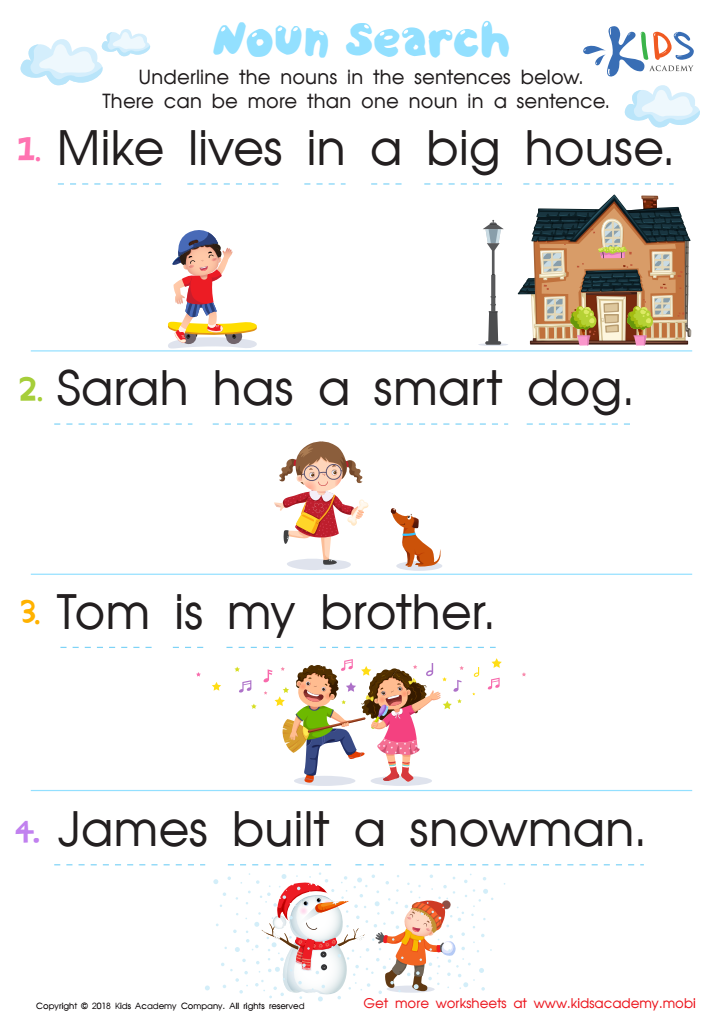
Noun Search Worksheet
To help your children learn the basics of grammar, start with nouns, verbs, adverbs and adjectives. This noun search worksheet will help your child understand the most common part of speech - the noun. Ask them to underline the nouns in each sentence. This is a great way to start learning proper grammar.
Noun Search Worksheet
Worksheet
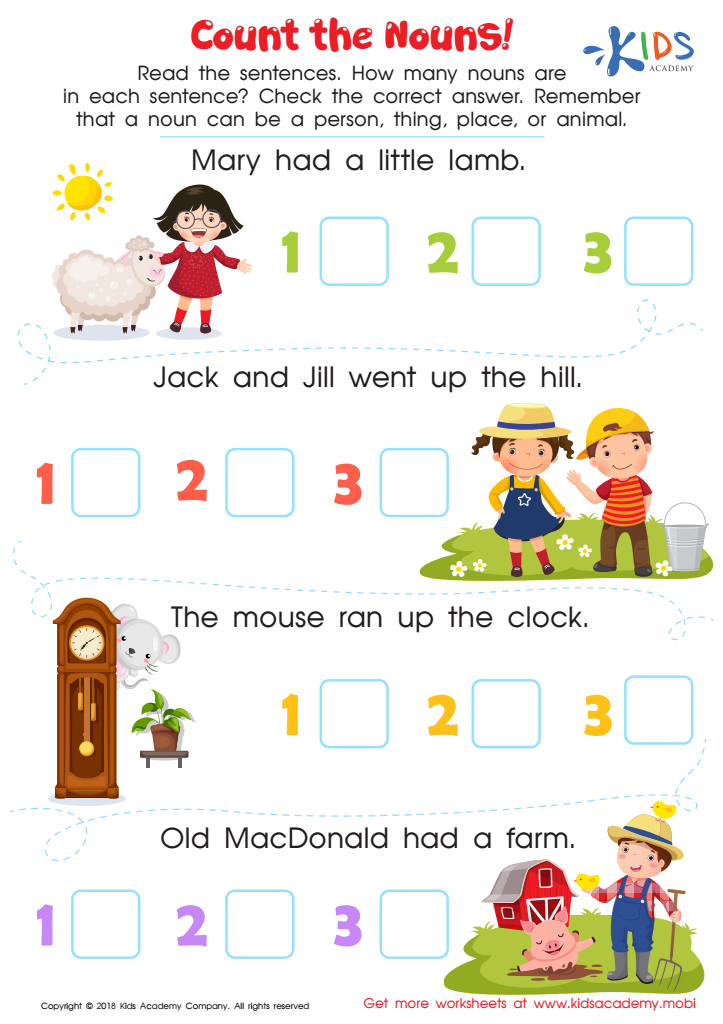
Count the Nouns Worksheet
Read the sentences with your children and ask them to find the nouns. Explain that nouns are names of people, animals, places or things. Point out the boxes with the answers to check.
Count the Nouns Worksheet
Worksheet
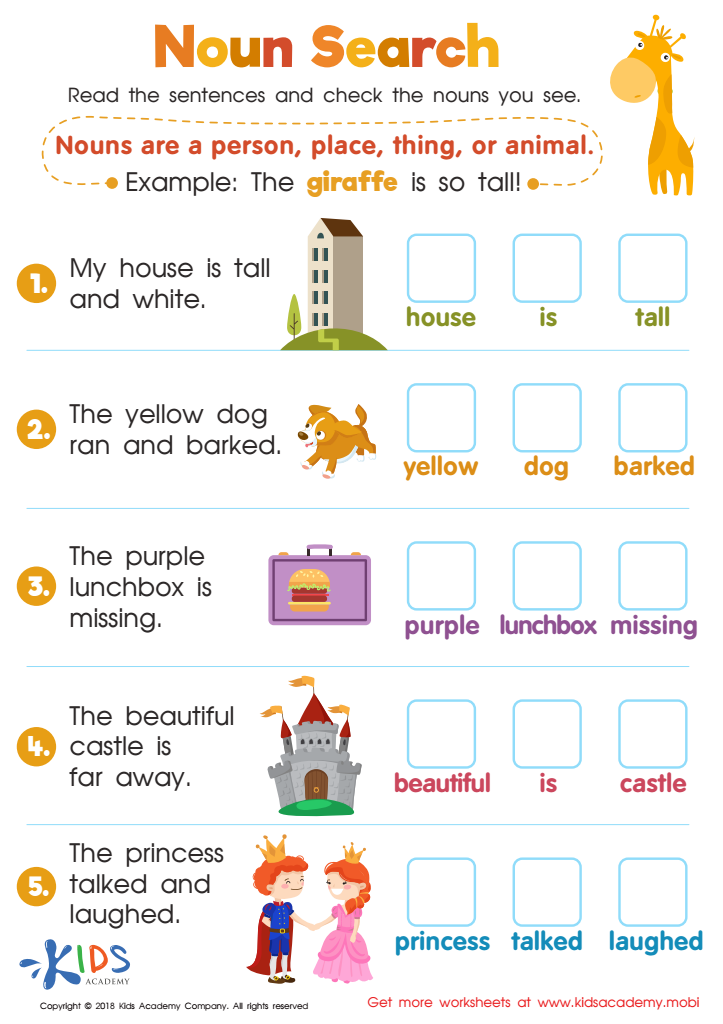
Noun Search Worksheet
Ask your kids what a noun is. If needed, remind them a noun is a name for a person, animal, place or thing. Give examples like 'dog', 'Sara', 'USA' and 'book'. Ask for more examples, then read the sentences in this worksheet and ask kids to check for nouns.
Noun Search Worksheet
Worksheet
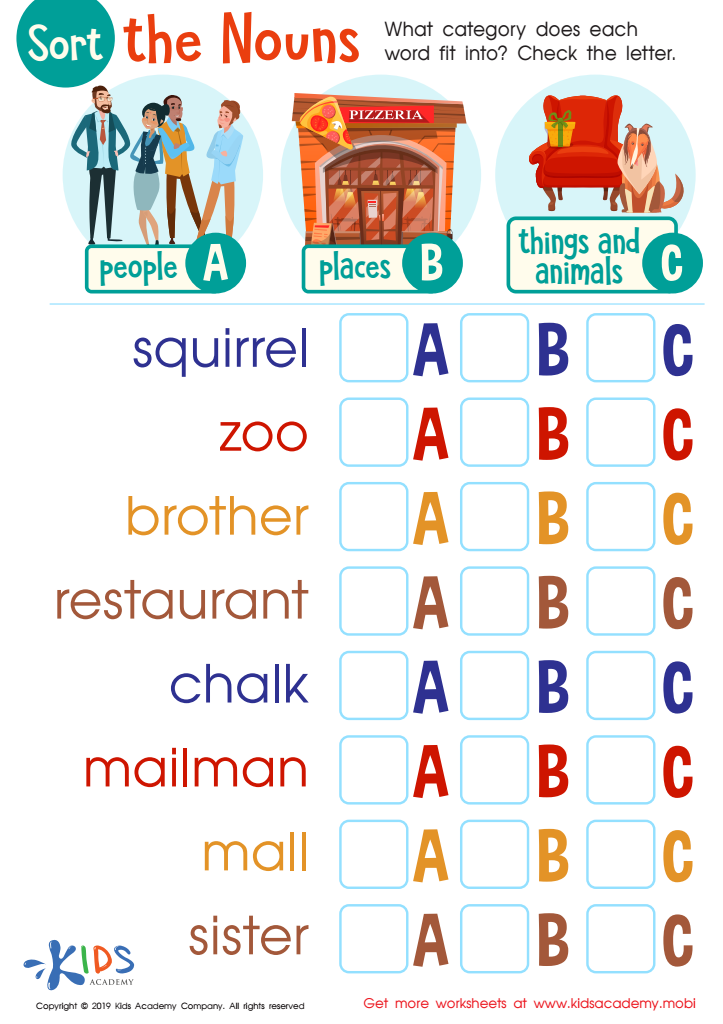
Sort the Nouns Worksheet
Nouns are words for people, places, things, and ideas. This worksheet helps kids focus on three categories: people, places, and things (including animals). All the words are nouns; the task is to match them to the correct category. Circle the answer for each!
Sort the Nouns Worksheet
Worksheet
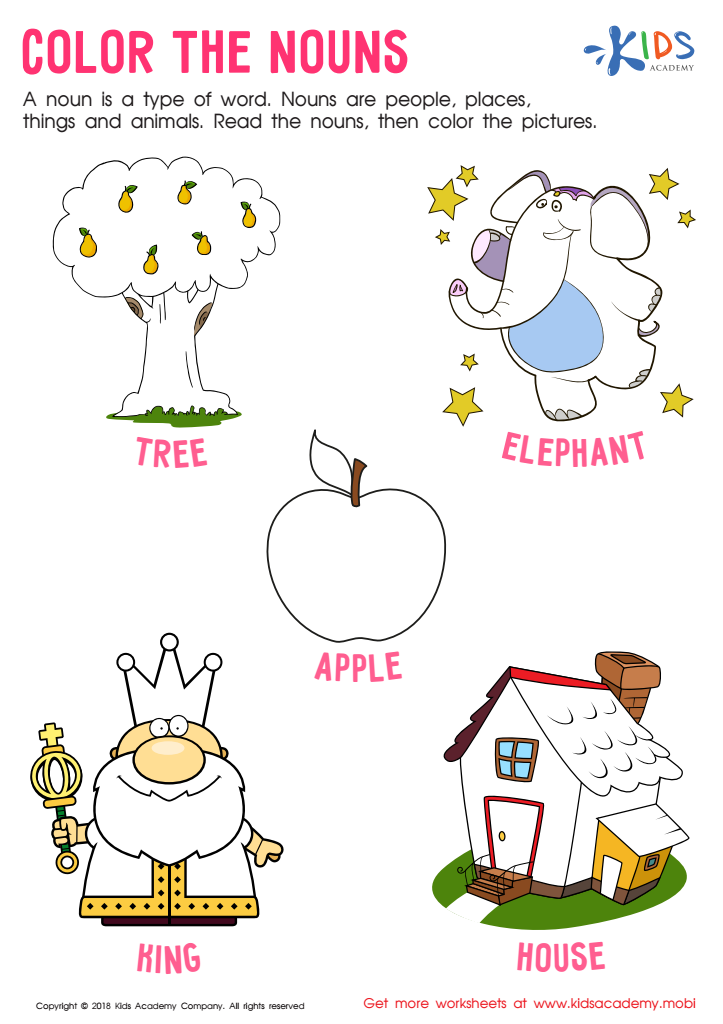
Color the Nouns Worksheet
Test your child's understanding of nouns with this downloadable worksheet. Explain that nouns are words for people, places, animals and things. With the coloring sheet, read each word and color the corresponding picture. By the end of it, your child should be able to recognize common nouns.
Download (PDF)
 Assign to My Students
Assign to My Students
Color the Nouns Worksheet
Worksheet
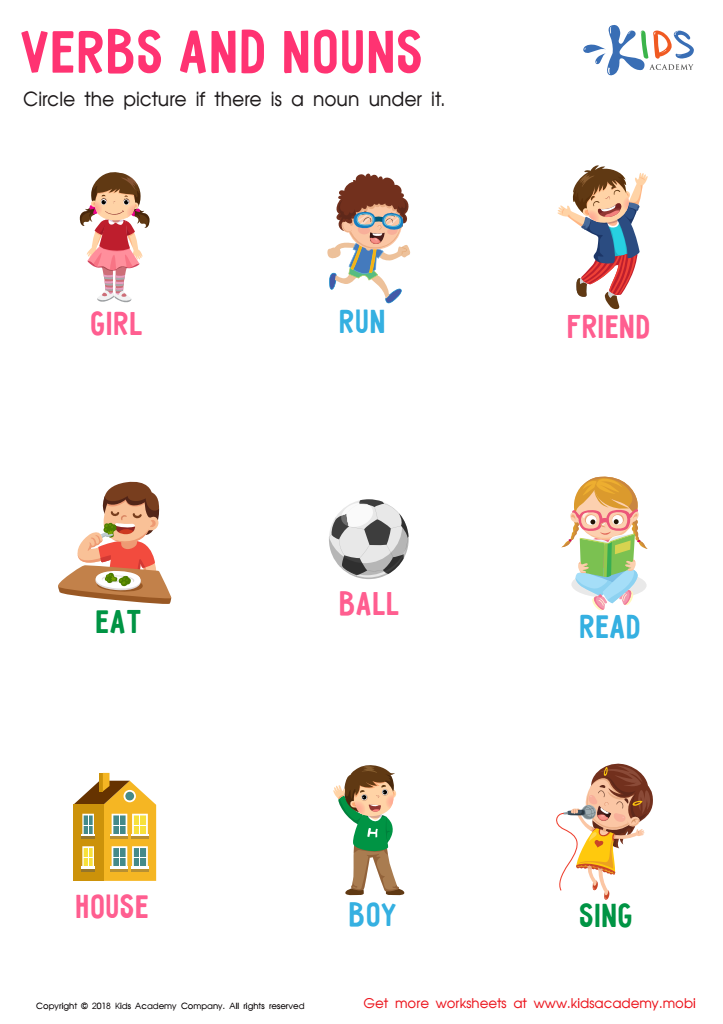
Verbs and Nouns Worksheet
Your child should have basic knowledge of verbs and nouns before starting this worksheet. Go through it with them and ask them to circle the pictures with nouns under them. This way, they'll become more familiar with parts of speech.
Verbs and Nouns Worksheet
Worksheet
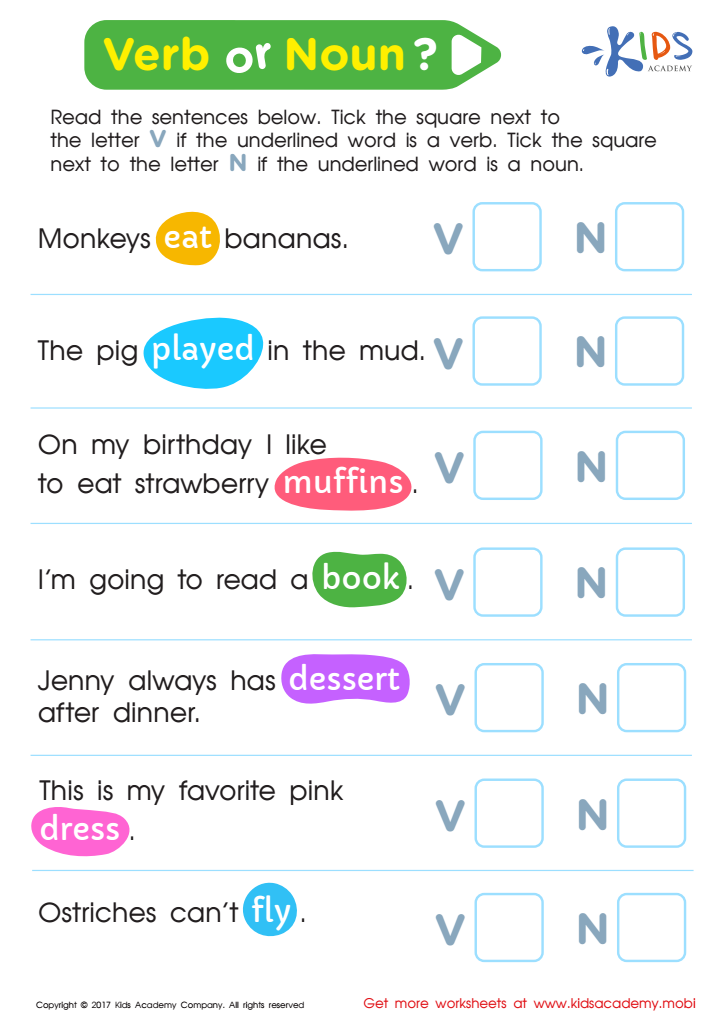
Verb or Noun Worksheet
This worksheet will help your child identify verbs and nouns quickly. With colorful highlights and simple sentences, they'll master parts of speech in no time! Get ahead of the game with this incredible worksheet.
Verb or Noun Worksheet
Worksheet
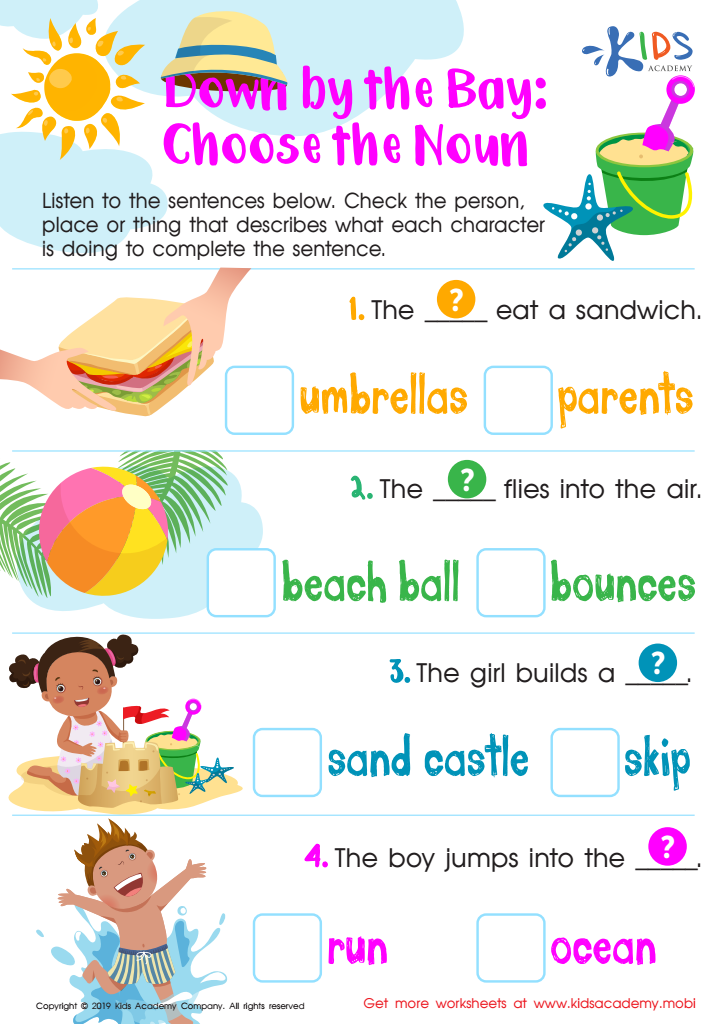
Down by the Bay: Choose the Noun Worksheet
Teach your child the basics of speaking and constructing English, like the parts of speech. Nouns are especially important; they are names of people, animals, objects, places, or things. Go through this worksheet with your kids and have them identify the nouns in the sentences. This exercise will help them understand the concept better.
Down by the Bay: Choose the Noun Worksheet
Worksheet
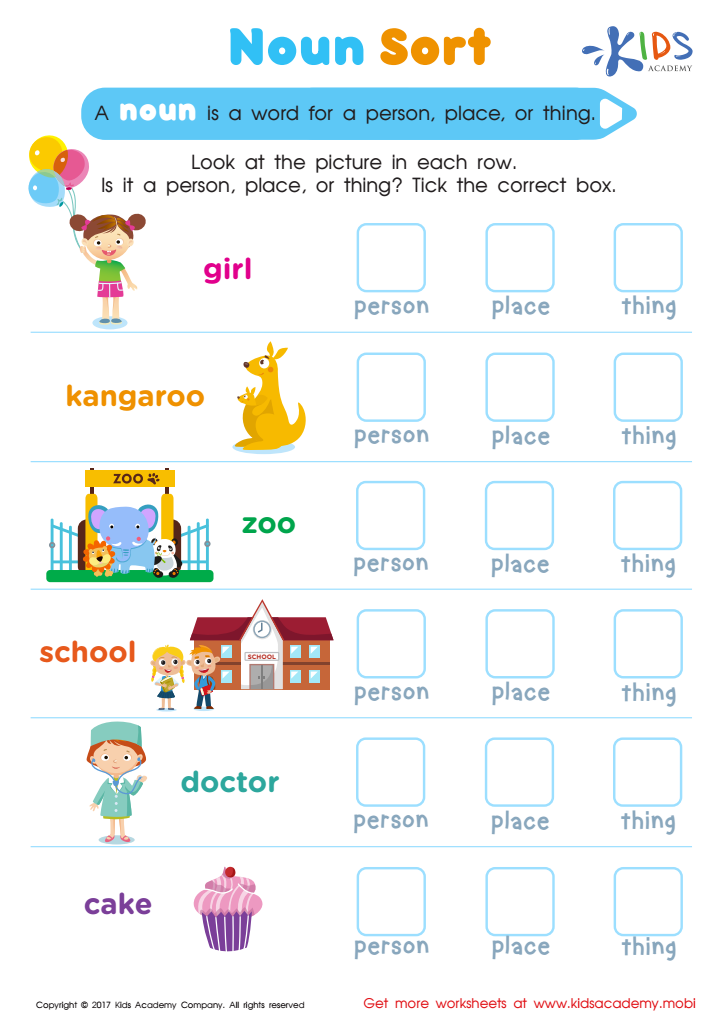
Noun Sort Printable
This printable worksheet helps kids sort nouns into person, place, or thing categories. Perfect for learning the basics of grammar!
This printable worksheet helps kids learn parts of speech by sorting nouns into person, place, or thing categories using familiar images. Perfect for mastering basic grammar!
Noun Sort Printable
Worksheet
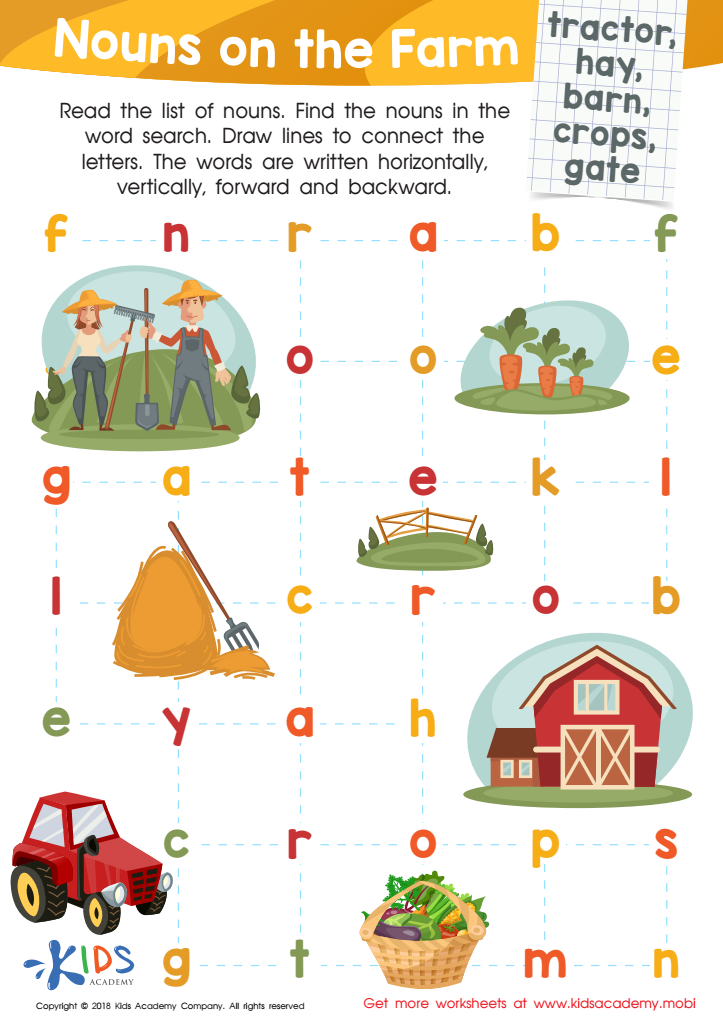
Nouns on the Farm Worksheet
Help your child learn nouns with this worksheet: Read the list to them and have them find the nouns in the word search. Draw lines to connect the letters, and explain the words can be found horizontally, vertically, forward, and backward.
Nouns on the Farm Worksheet
Worksheet
Join Kids Academy for Free
Who is primarily going to use this learning content?








Noun identification is a fundamental step in early language development and literacy for children aged 4 to 9. Understanding nouns helps young learners recognize and categorize objects, people, places, and ideas, which are essential building blocks for effective communication. When children grasp noun concepts, they can better express themselves, follow instructions, and engage in conversations.
Parents and teachers should prioritize noun identification because it lays the groundwork for grammar and sentence structure. It enhances vocabulary development, as children learn to identify common nouns first and gradually move to more complex ones, enriching their language experience. Furthermore, mastering nouns helps in reading comprehension; recognizing nouns within texts enables children to understand story contexts and identify key elements.
Supporting noun identification also fosters cognitive skills. As children categorize nouns, they enhance their critical thinking abilities, enabling them to make connections between words and the world around them. Engaging in fun activities like games or storytelling that incorporate noun identification can boost children’s motivation and enjoyment in learning. Overall, fostering these skills not only aids in academic success but also supports emotional and social development, making it critical for parents and teachers to invest time in this area.








