Number Matching Worksheets for Ages 4-9
4 filtered results
-
From - To
Discover engaging Number Matching Worksheets designed for children aged 4-9! These fun and interactive resources aim to enhance your child's counting and number recognition skills while incorporating play-based learning. Our worksheets feature vibrant illustrations and activities that make learning numbers enjoyable and effective. Perfect for teachers and parents alike, they offer a variety of exercises tailored to different proficiency levels. Helping kids develop critical thinking and fine motor skills, these worksheets encourage independent learning while tracking progress. Explore our collection today to inspire a love for numbers in your child and give them the tools they need for future mathematical success!
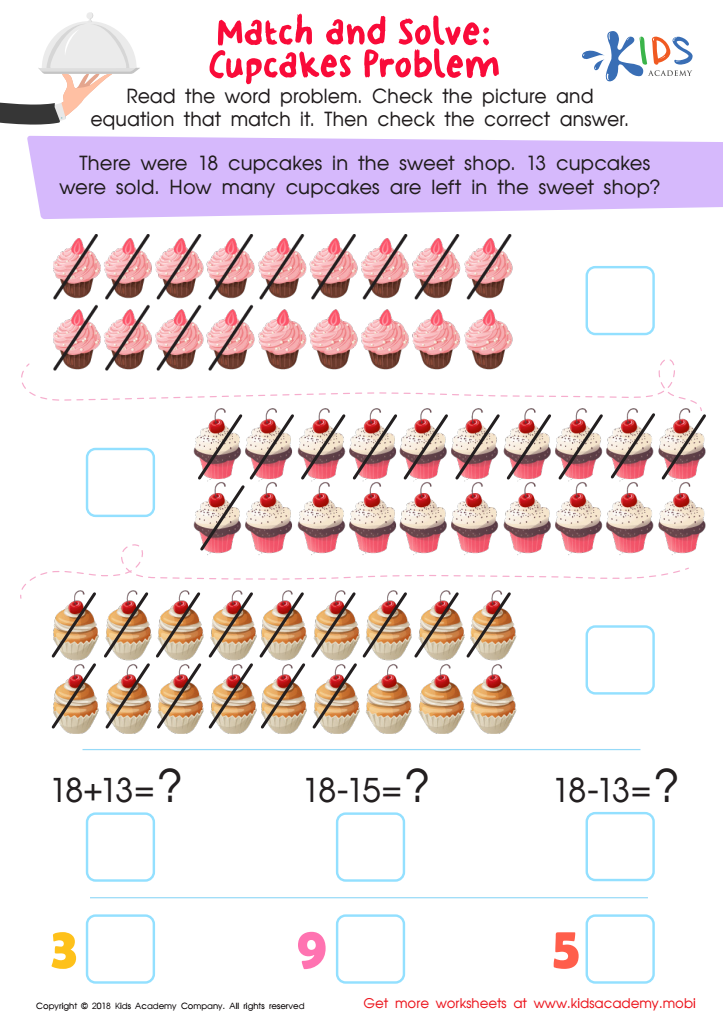
Match and Solve: Cupcakes Problem Worksheet
 Assign to My Students
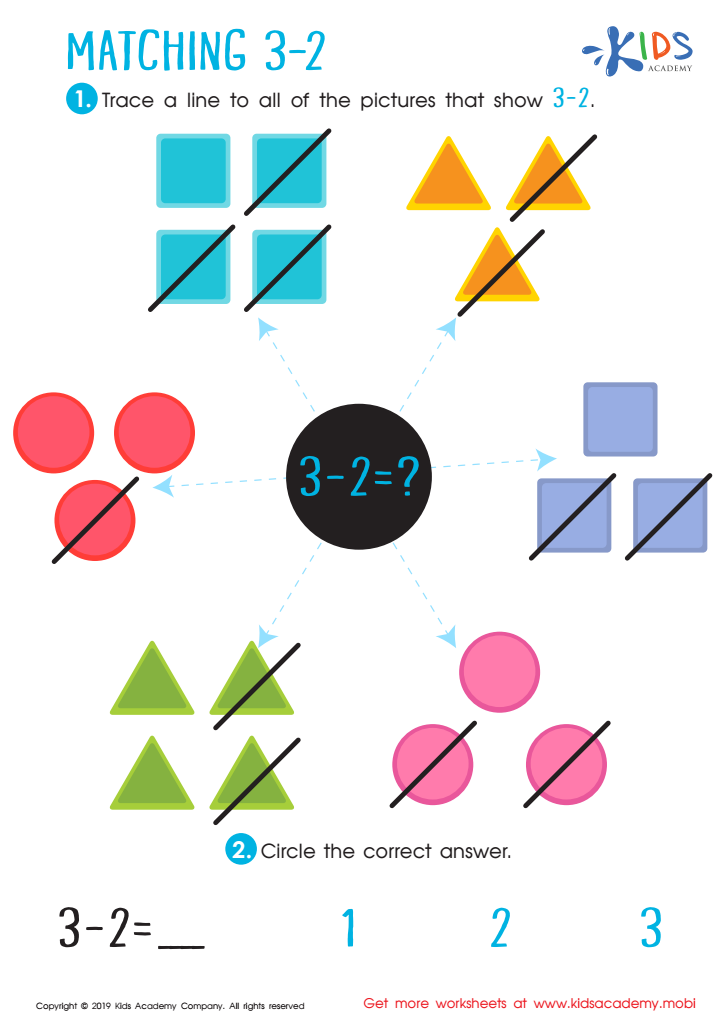
Matching 3-2 Worksheet
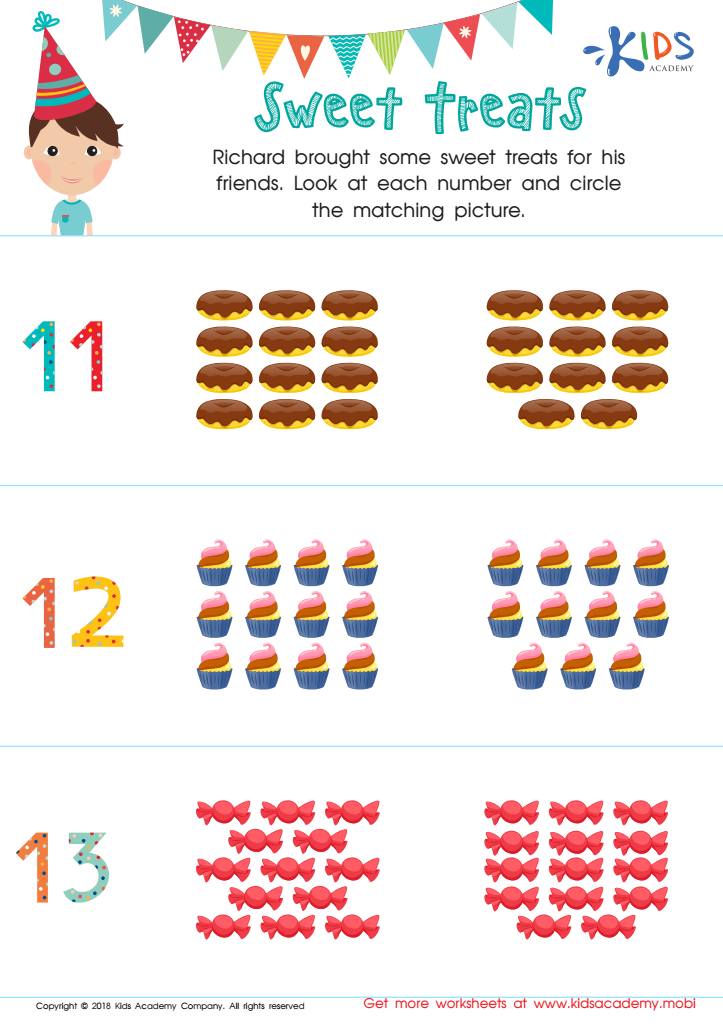
Kindergarten Math Worksheet Matching Numbers
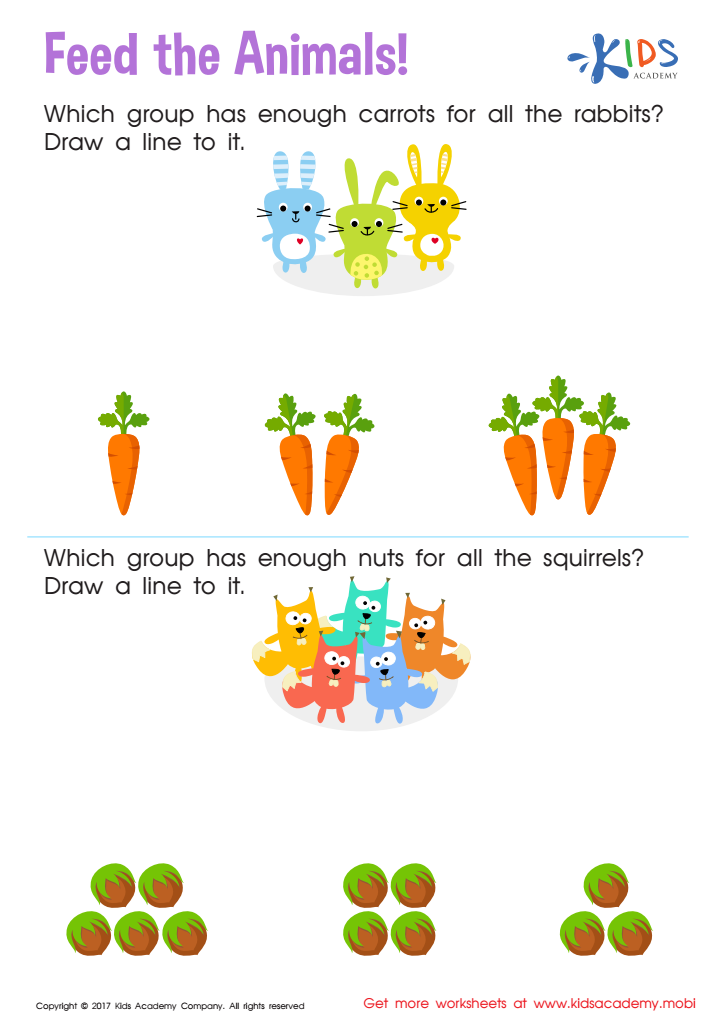
Count and Match: Feed the Animals Worksheet







Number matching is a crucial foundational skill for children ages 4-9 that lays the groundwork for future mathematical understanding. During these formative years, children develop core cognitive abilities that enhance their number sense, which influences their ability to perform mathematical tasks later in life. Engaging in number matching activities helps children with one-to-one correspondence, enabling them to recognize the link between numerals and quantities.
For parents and teachers, fostering these skills is vital, as strong number sense supports children’s confidence and participation in math-related activities. Additionally, number matching tasks can be both enjoyable and educational, serving as interactive games that encourage critical thinking and problem-solving right from an early age.
Moreover, learning through play stimulates a child's curiosity and resilience, helping them develop a positive attitude toward math. When children consistently practice number matching, they also enhance fine motor skills, concentration, and memory. These competencies not only contribute to their success in math but also improve their overall cognitive development. Ultimately, investing time in number matching activities supports children's academic growth and sets them on a path for future learning, which is why parents and teachers should prioritize these activities.








