Phonics skills enhancement Worksheets for Ages 4-9
3 filtered results
-
From - To
Discover our Phonics Skills Enhancement Worksheets designed for children ages 4-9! These expertly crafted worksheets offer a fun, interactive approach to building essential reading and spelling skills. Through a variety of engaging activities like matching, tracing, and syllable breaking, kids develop strong phonemic awareness and letter-sound correspondence. Perfect for both classroom and at-home learning, our worksheets adapt to every child's unique pace. Empower your young learners with the tools to boost their confidence and fluency in reading. Unlock a world of literacy with our comprehensive phonics resources! Visit Kids Academy for the best in educational worksheets.
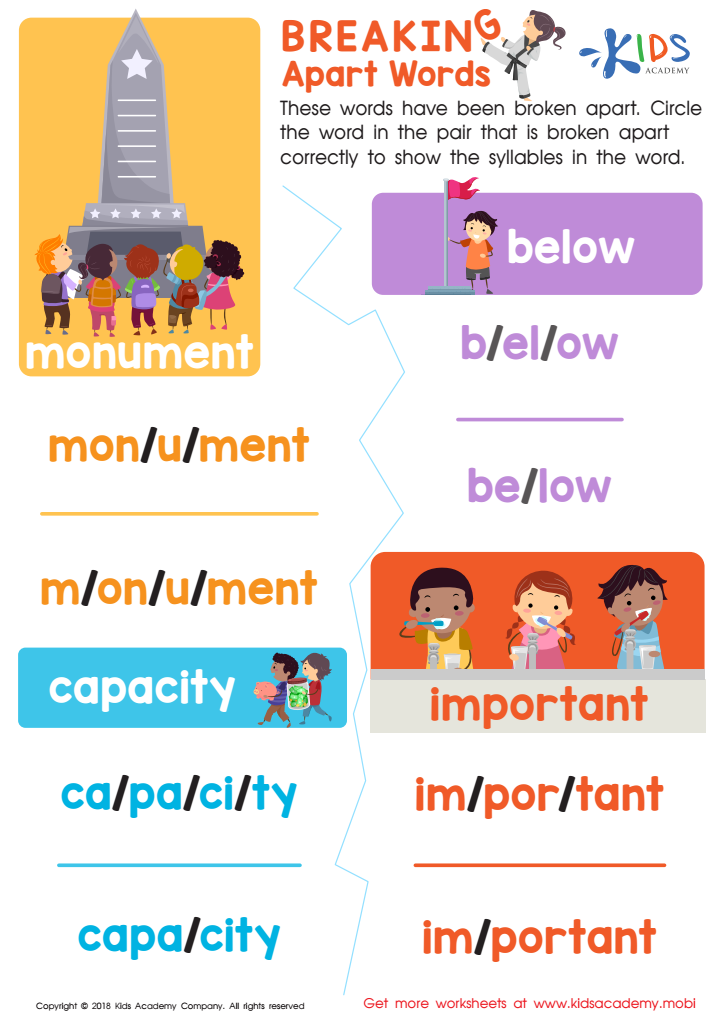
Breaking Apart Words Worksheet
 Assign to My Students
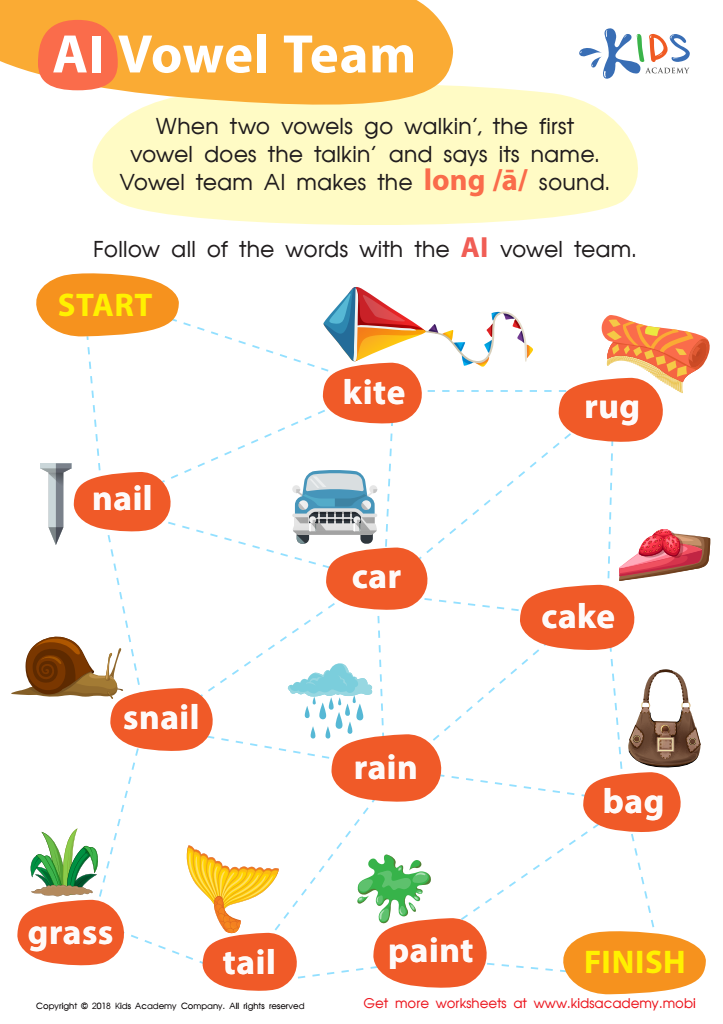
Reading: AI Vowel Team Worksheet
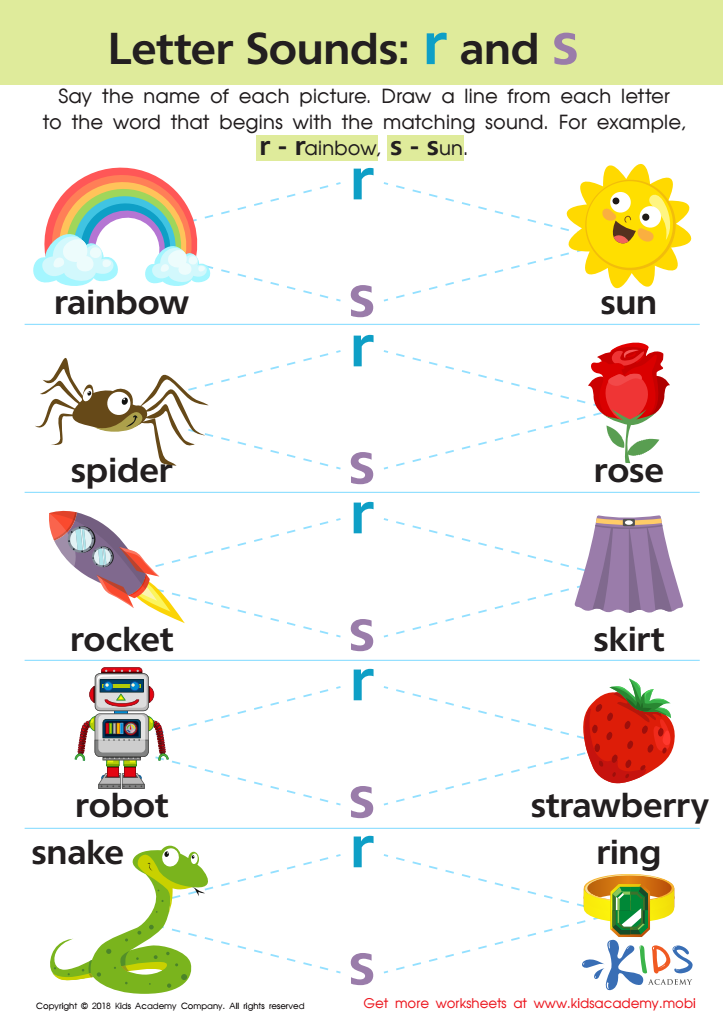
Letter R and S Sounds Worksheet



.jpg)




Parents and teachers should prioritize phonics skills enhancement for children ages 4-9 because it serves as the foundation for proficient reading and writing. Phonics instruction helps children understand the relationship between letters and the sounds they represent, which is fundamental for decoding unfamiliar words—a crucial skill in literacy. Effective phonics instruction accelerates a child's ability to read with accuracy, fluency, and comprehension, paving the way for academic success and a lifelong love of reading.
Moreover, early confidence in reading abilities positively impacts other areas of learning. When children can read well, they can better understand instructions, grasp complex concepts, and engage more fully in a diverse range of educational subjects. Research shows that early phonics skills correlate with later academic achievement across disciplines including mathematics, science, and social studies.
Enhancements in phonics skills can also contribute to social-emotional well-being. Children who struggle with reading often experience frustration, anxiety, and diminished self-esteem. By investing in phonics skills at an early age, parents and teachers can help mitigate these negative outcomes, ensuring children feel more competent and confident among their peers.
Therefore, emphasizing phonics is not just about enhancing literacy but also about fostering comprehensive developmental benefits that contribute to a child’s overall growth and success in school and beyond.








