Practical application of fractions Worksheets for Ages 4-9
3 filtered results
-
From - To
Explore our comprehensive collection of "Practical Application of Fractions Worksheets" designed specifically for children ages 4-9. These engaging and colorful worksheets help young learners grasp the concept of fractions through real-life applications, making math fun and relatable. Our interactive activities involve using visual aids and practical scenarios that spark curiosity and enhance understanding. From sharing pizza slices to dividing candy, these worksheets foster critical thinking and problem-solving skills. Tailored to meet various learning styles, our resources are perfect for teachers and parents alike. Embark on an exciting journey through the world of fractions and see your child's confidence soar!
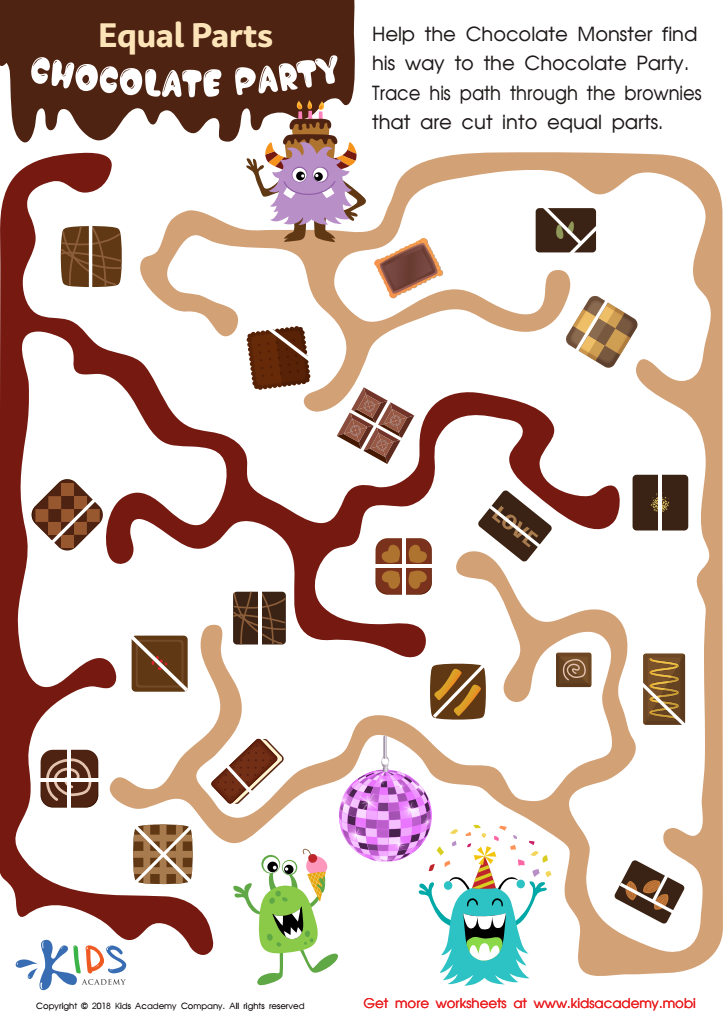
Equal Parts: Chocolate Party Worksheet
 Assign to My Students
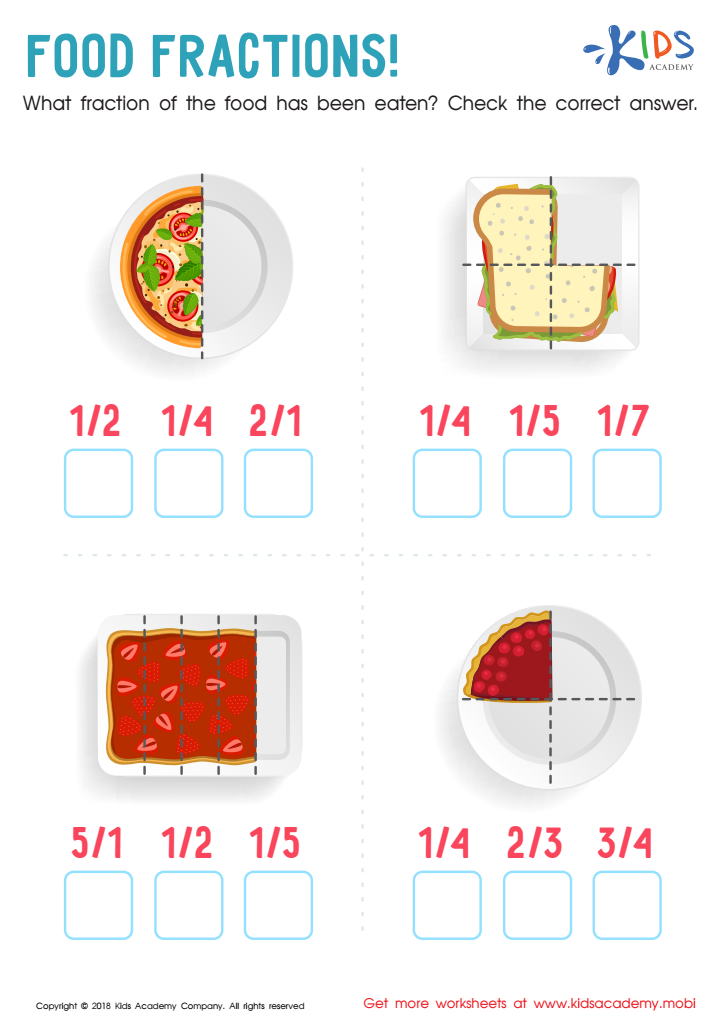
Food Fractions Worksheet
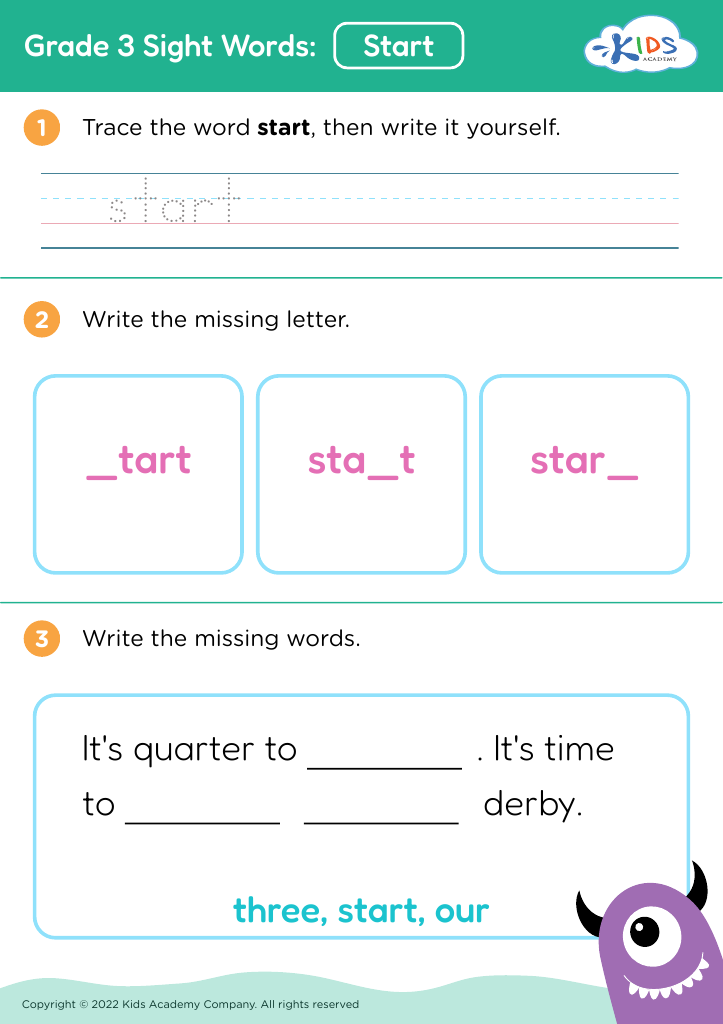





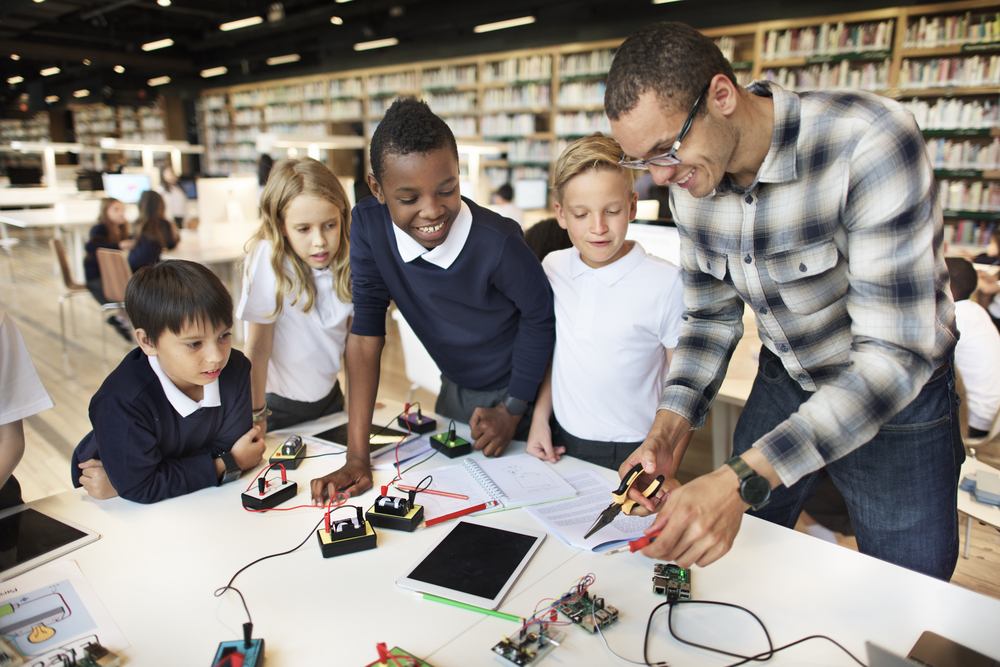

Understanding fractions through practical application is fundamental for children ages 4-9, as it lays the groundwork for their mathematical reasoning and everyday problem-solving skills. During these formative years, children are naturally curious and engage actively in their surroundings. By introducing fractions in practical contexts—like sharing pizza, measuring ingredients while cooking, or dividing toys—they can visualize and invoke a real-world significance.
This hands-on approach helps solidify their understanding, as it transforms abstract concepts into tangible experiences. For instance, when a child understands that cutting a pizza into equal parts teaches them about division and sharing, they begin to grasp cooperation and fairness alongside mathematical concepts. It also enhances critical thinking, as young learners start to calculate and compare fractions in ways that are applicable and meaningful to them.
Moreover, early mastery of fractions sets the stage for future math skills, reducing anxiety associated with more complex concepts in later grades. Parents and teachers should prioritize impressive methods for teaching fractions, ensuring that children recognize their value, both academically and in everyday life, ultimately fostering confidence and a love for mathematics.








