Practice counting Worksheets for Ages 4-9
6 filtered results
-
From - To
Welcome to our Practice Counting Worksheets for Ages 4-9! Designed to make learning fun and engaging, these worksheets cater to young learners eager to master counting skills. Our printable activities include colorful visuals, interactive exercises, and various difficulty levels to suit every child's needs. From simple counting concepts to more advanced number recognition, these worksheets help build a strong mathematical foundation. Perfect for both home and classroom use, they encourage independent learning and problem-solving. Explore our diverse selection and watch your child's confidence soar in counting as they embark on an exciting educational journey!
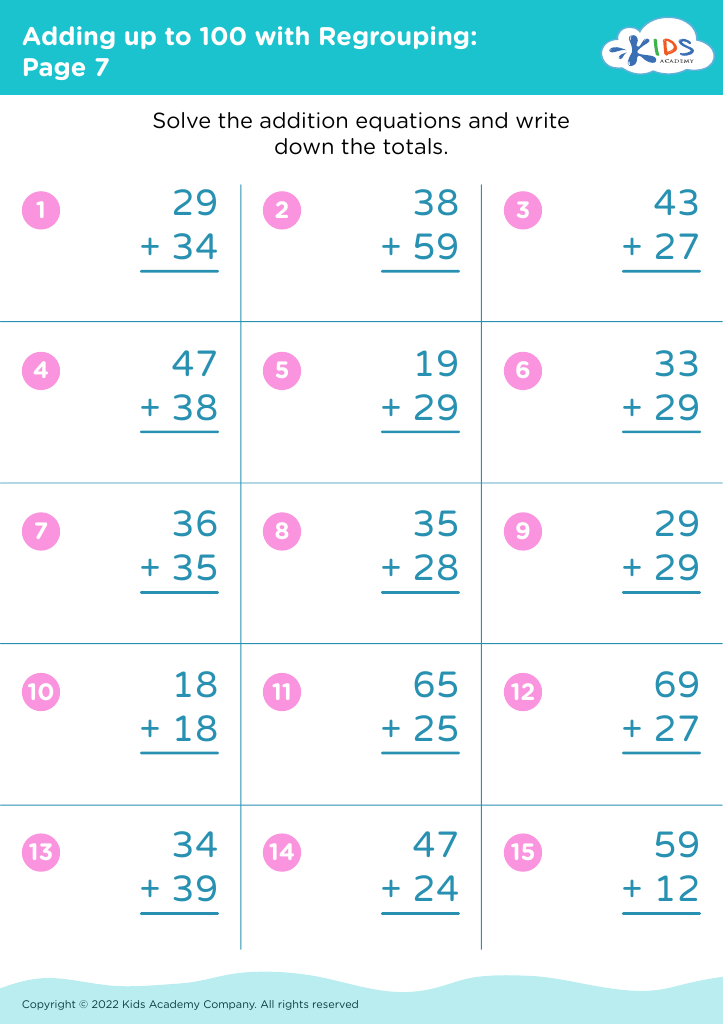
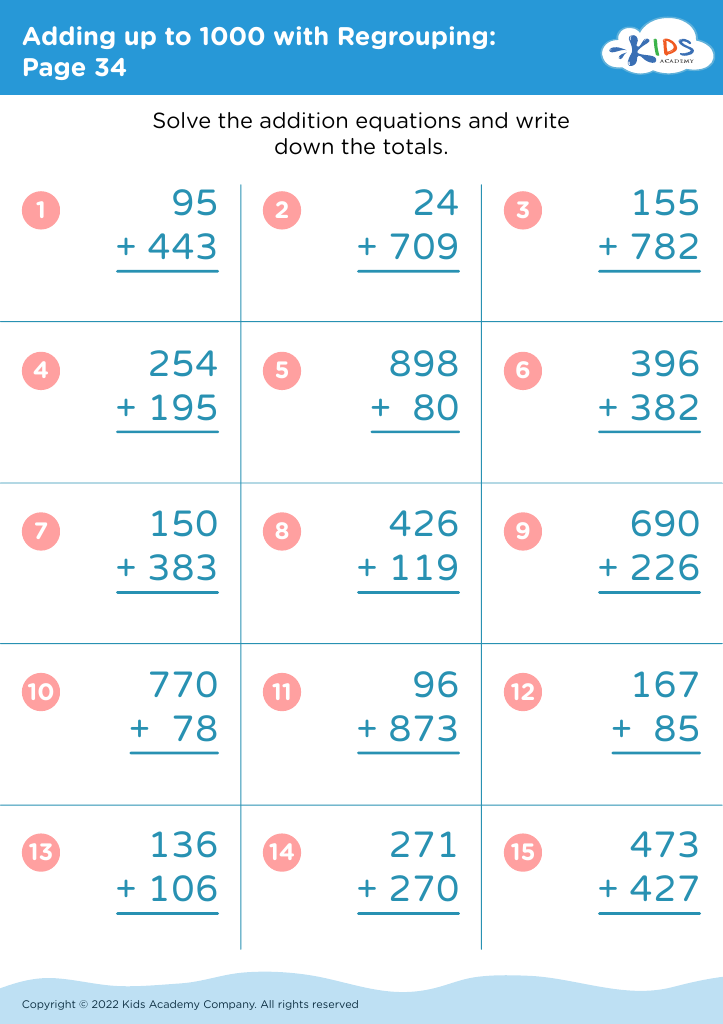
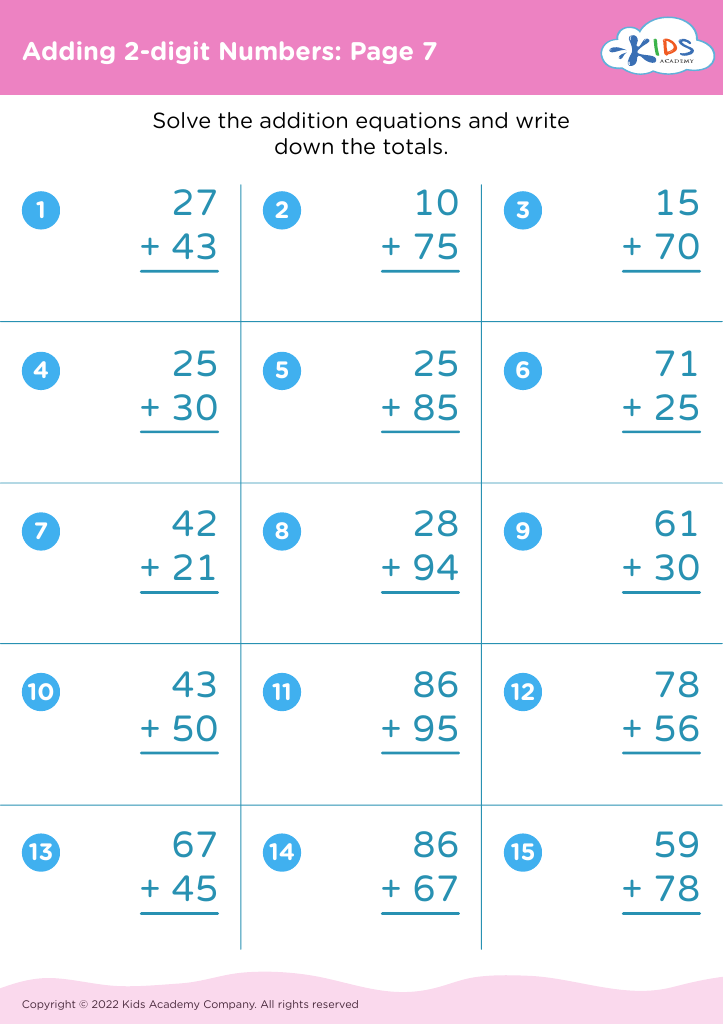
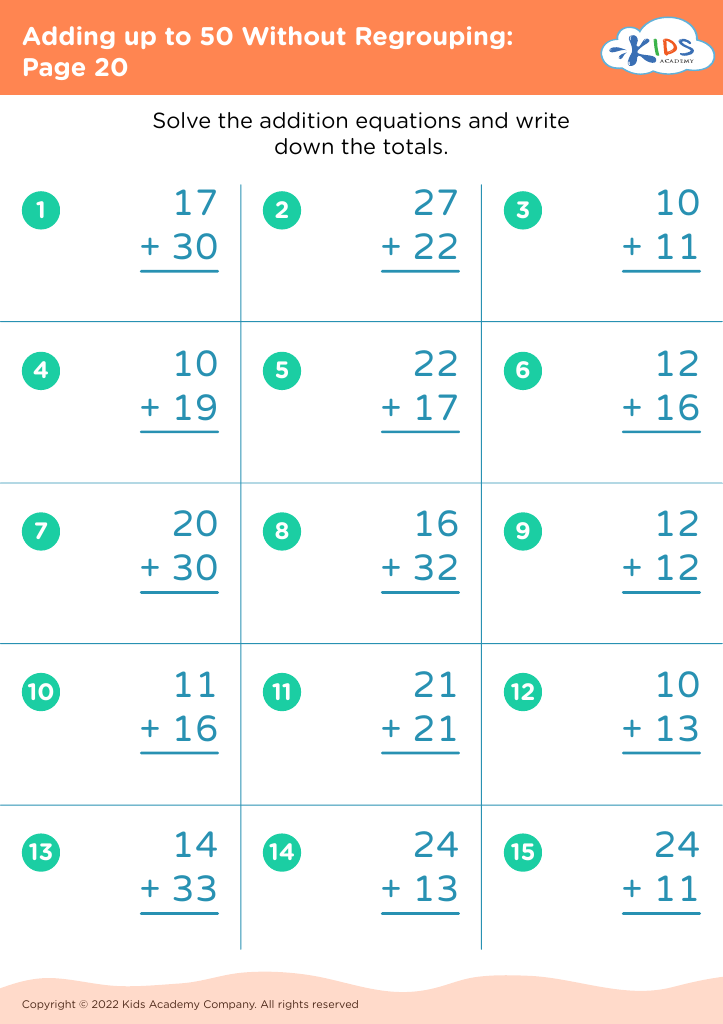
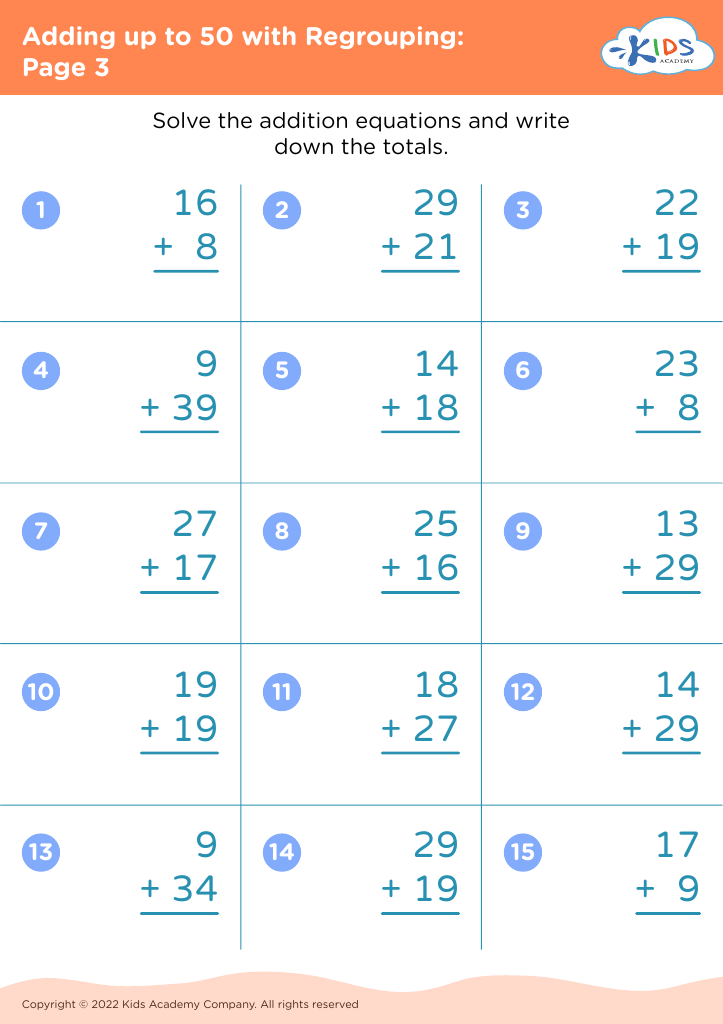
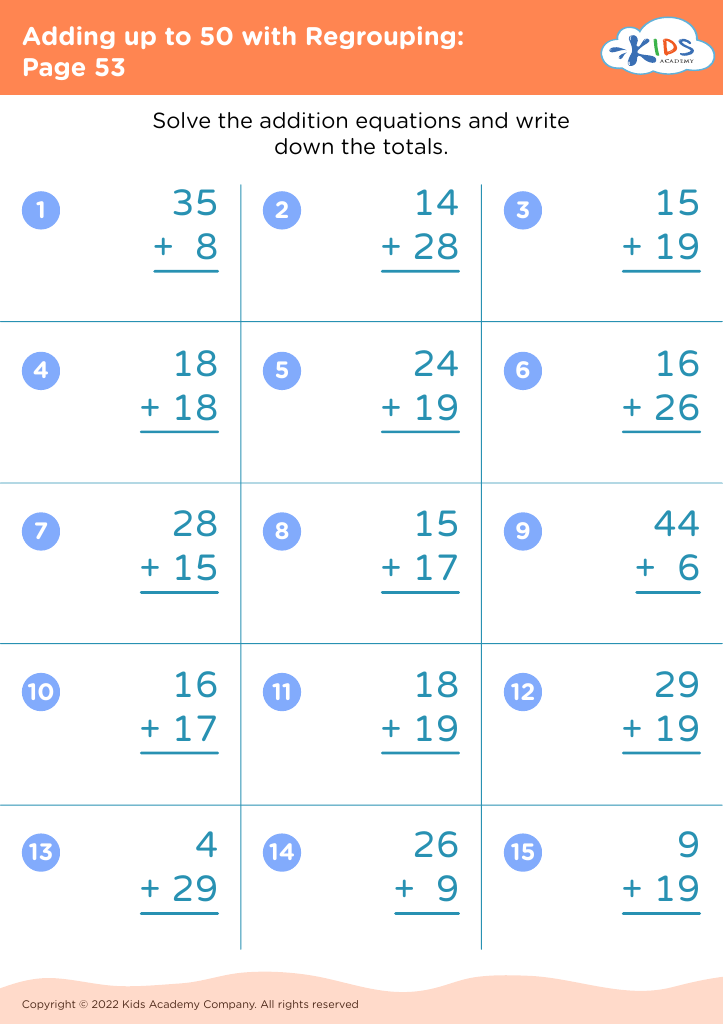






Practice counting for children aged 4-9 is crucial for their overall cognitive development and understanding of fundamental math concepts. During these formative years, children are like sponges, eagerly absorbing information about the world around them. Counting not only develops numerical literacy but also enhances their logical thinking and problem-solving skills.
Parents and teachers should prioritize counting practice because it lays the foundation for future mathematical learning. By grasping numbers and their sequences, children become equipped to tackle more complex math principles, such as addition and subtraction, which they will encounter in later grades. Moreover, counting helps children develop spatial awareness and an understanding of patterns, both of which are essential for critical thinking and real-world problem-solving.
Engaging in counting activities fosters a love for learning and builds confidence in their mathematical abilities. When reinforced through playful and interactive methods, such as songs, games, or hands-on activities, children find joy in practicing counting, thus making math a fun subject rather than a daunting challenge.
Ultimately, nurturing counting skills in early childhood not only prepares children academically but also empowers them with essential skills for navigating everyday life, reinforcing their understanding of quantities, measurements, and the world around them.








