Practice subtraction Worksheets for Ages 4-9
11 filtered results
-
From - To
Unlock confidence in young learners with our engaging "Practice Subtraction Worksheets for Ages 4-9." Specially designed for kindergarten through early elementary students, these worksheets offer a fun, colorful approach to mastering subtraction. Each activity strengthens essential math skills through age-appropriate challenges that make learning feel like play. Perfect for classroom use or at-home practice, our worksheets help children build a strong foundation in math. With incremental difficulties to suit each child's pace, these resources promote problem-solving abilities and boost self-esteem. Prepare your child for academic success while making subtraction an enjoyable experience with Kids Academy’s high-quality materials.
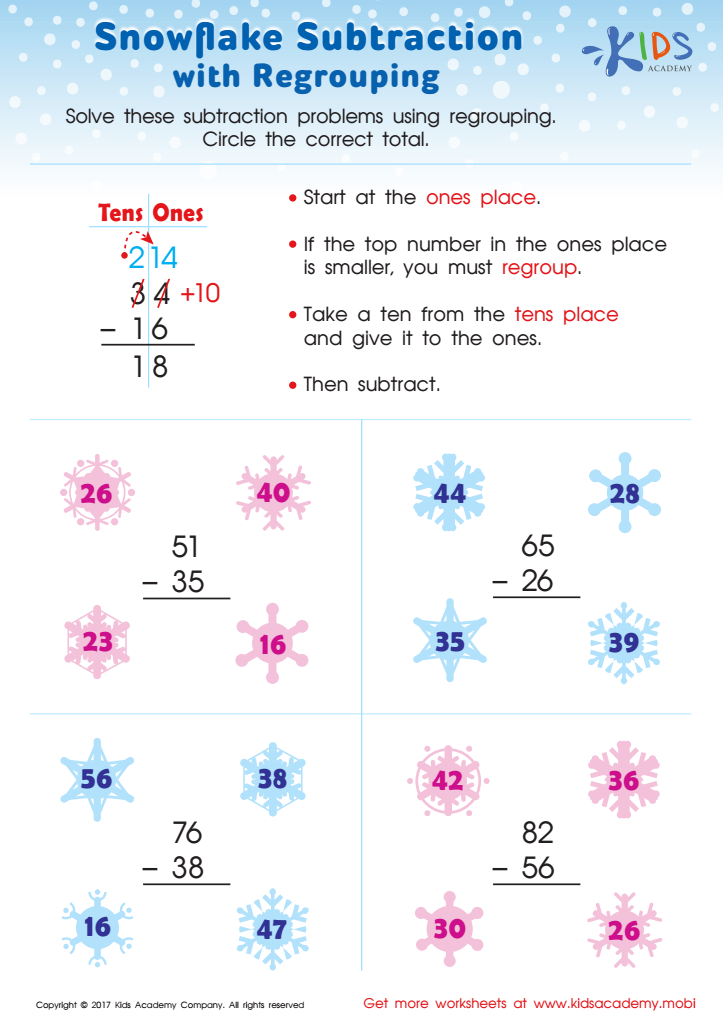
Subtraction With Regrouping Worksheet: Snowflake
 Assign to My Students
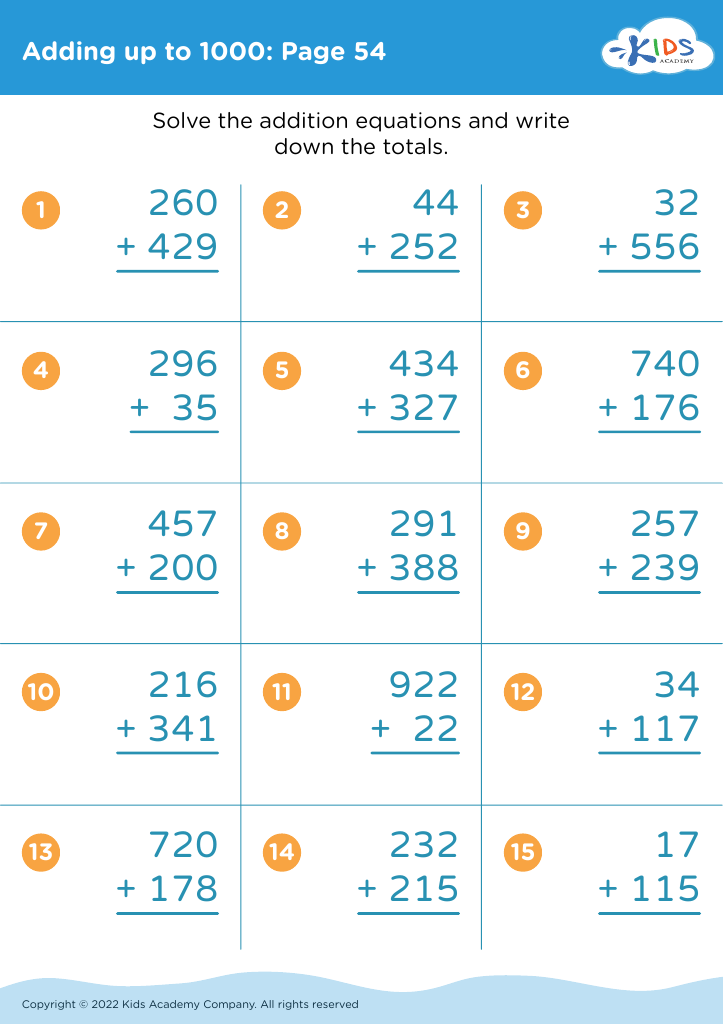
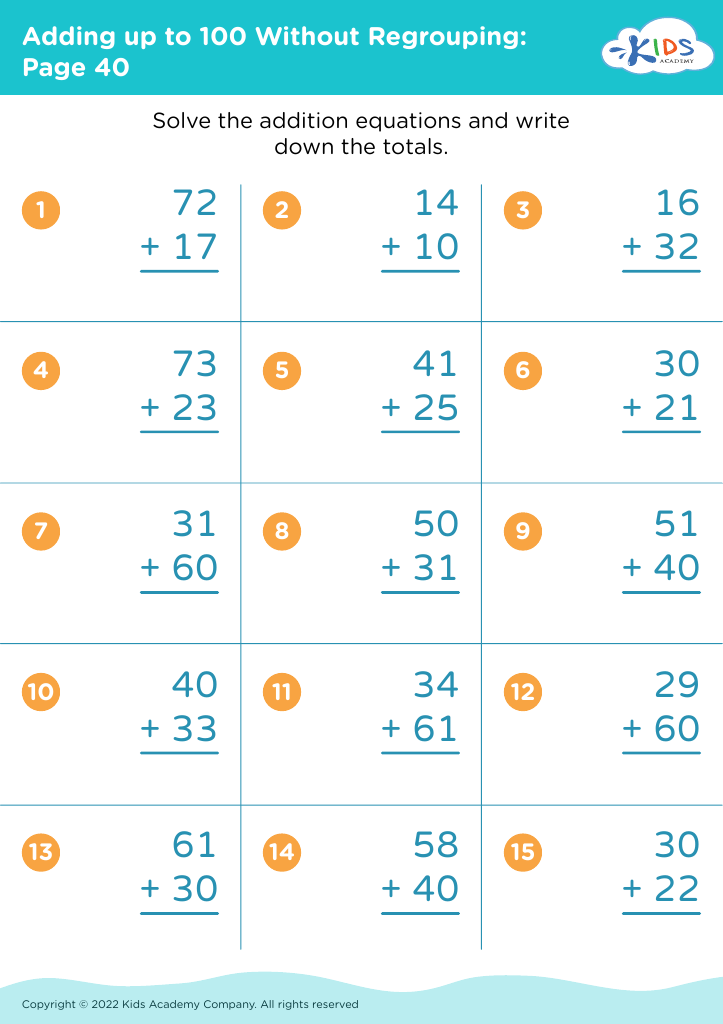
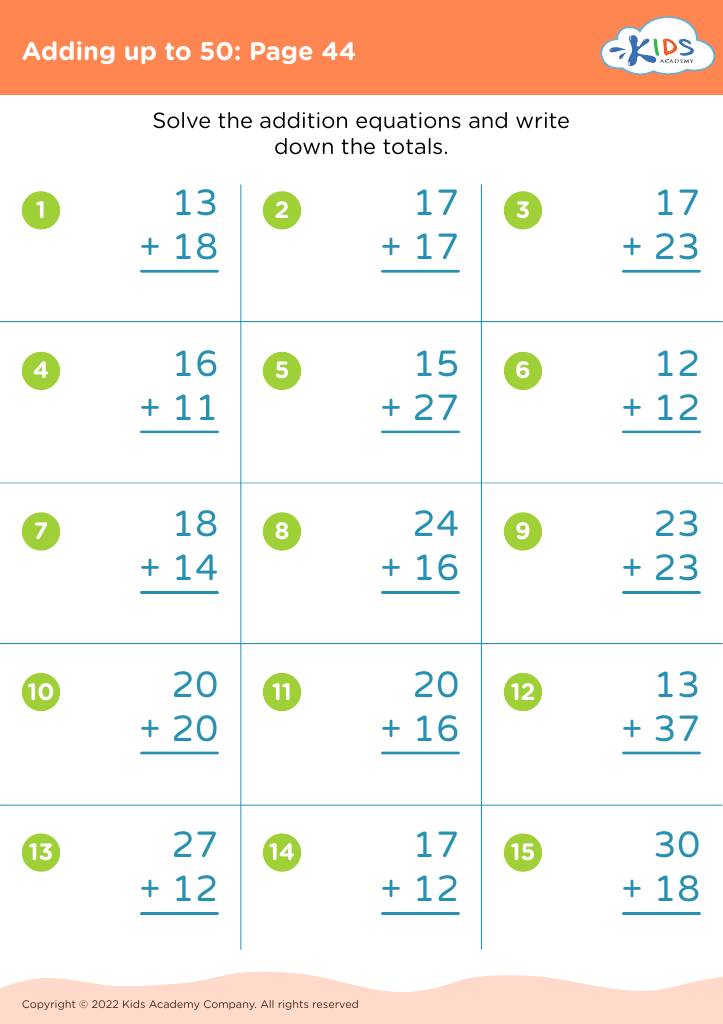
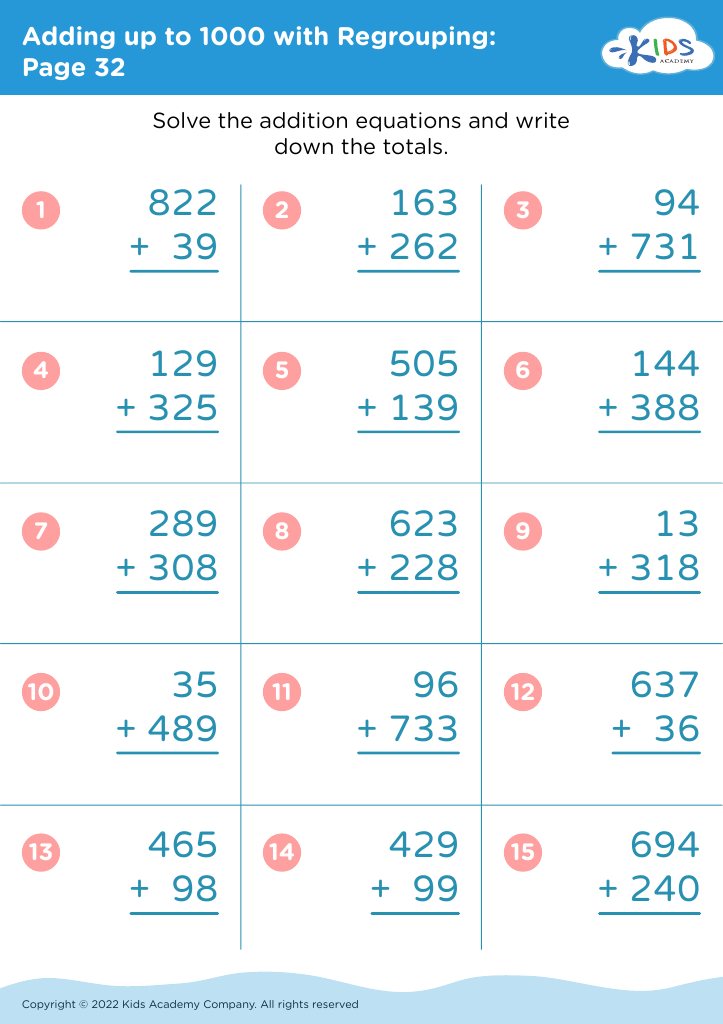
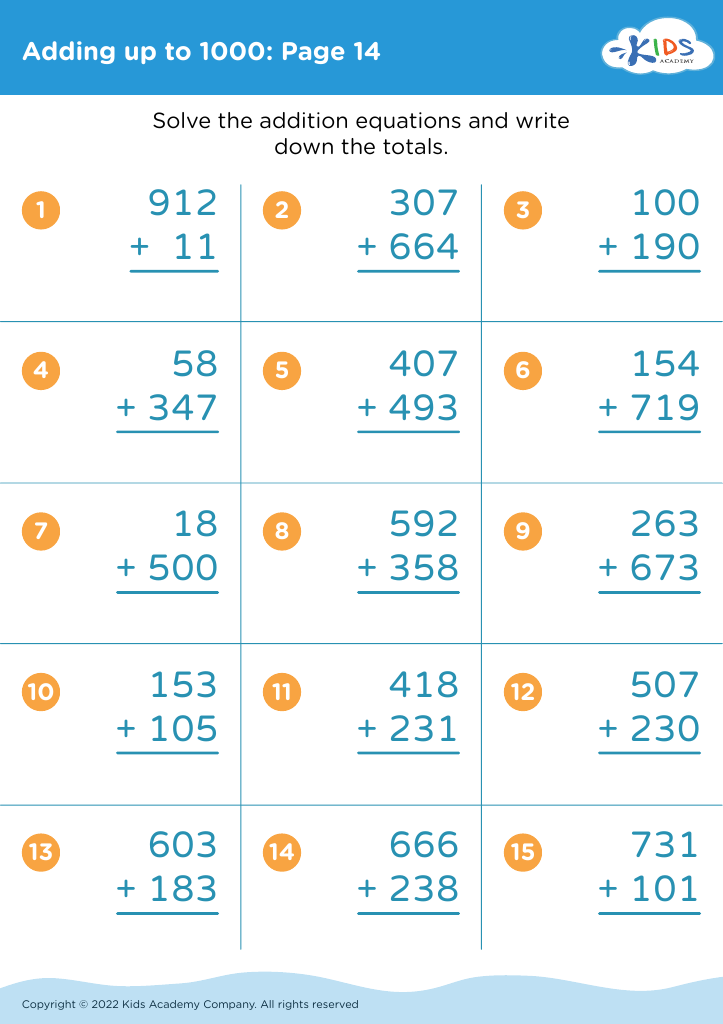
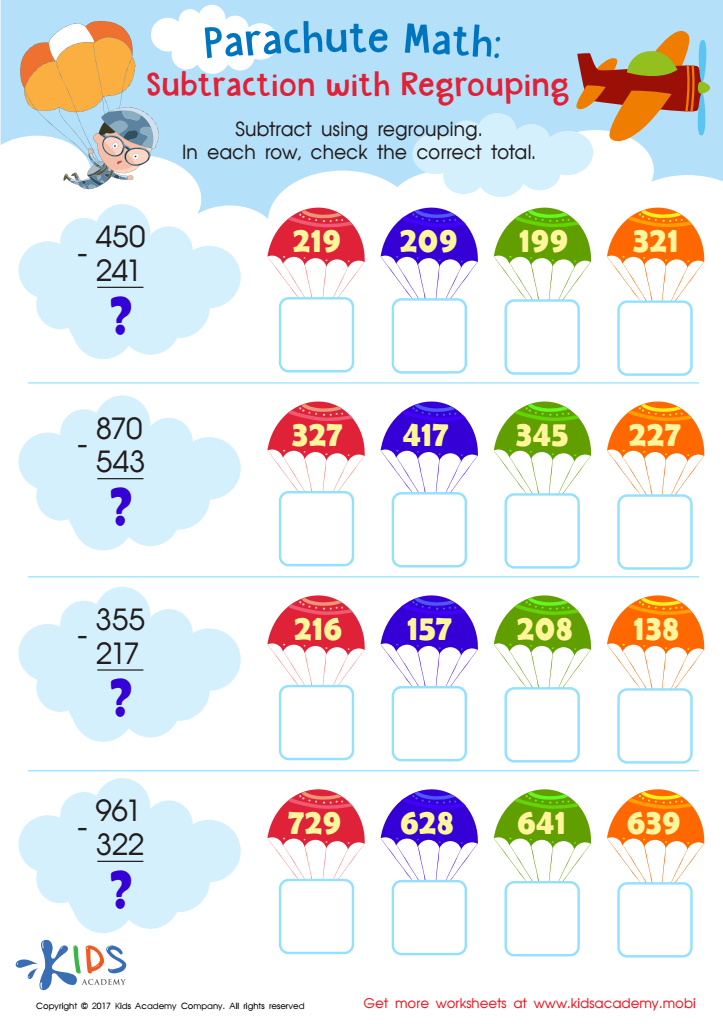
Subtraction with Regrouping for 3rd Grade Worksheet








Parents and teachers should prioritize practicing subtraction with children aged 4-9 because it lays a crucial foundation for future mathematical understanding and problem-solving skills. During these formative years, children's brains are highly adaptable, making it an ideal time to develop fundamental math concepts. Subtraction, a core component of arithmetic, enhances both computational proficiency and logical reasoning.
Engaging children in subtraction exercises builds their numerical literacy, helping them understand the relationship between numbers and the concept of "taking away" or difference. This understanding is not only essential for more advanced math topics, such as algebra and calculus, but also for everyday tasks like making change, measuring ingredients in recipes, or even simple time management.
Subtraction practice also aids in sharpening memory and concentration. By solving problems, children improve their ability to retain information and increase focus—skills that are beneficial across all areas of learning. Encouraging regular subtraction exercises, especially through games and interactive activities, helps make learning math enjoyable and boosts children's confidence in their abilities.
Therefore, consistent practice of subtraction for children in this age range sets the groundwork for academic success, fosters critical thinking, and nurtures a positive attitude towards mathematics, making it a vital aspect of early education.








