Science vocabulary enhancement Worksheets for Ages 4-9
3 filtered results
-
From - To
Boost your child's scientific literacy with our engaging Science Vocabulary Enhancement Worksheets, specially designed for ages 4-9. These interactive resources focus on essential science terms and concepts, making learning fun and accessible. Each worksheet incorporates colorful illustrations and age-appropriate activities that spark curiosity and foster understanding. Kids will explore topics like the environment, animals, plants, and basic physics through games, matching exercises, and fill-in-the-blank challenges. Ideal for classrooms or at-home learning, our worksheets provide a solid foundation for future scientific learning while enhancing critical thinking skills. Start your child's scientific adventure today! Explore our collection and watch them thrive!
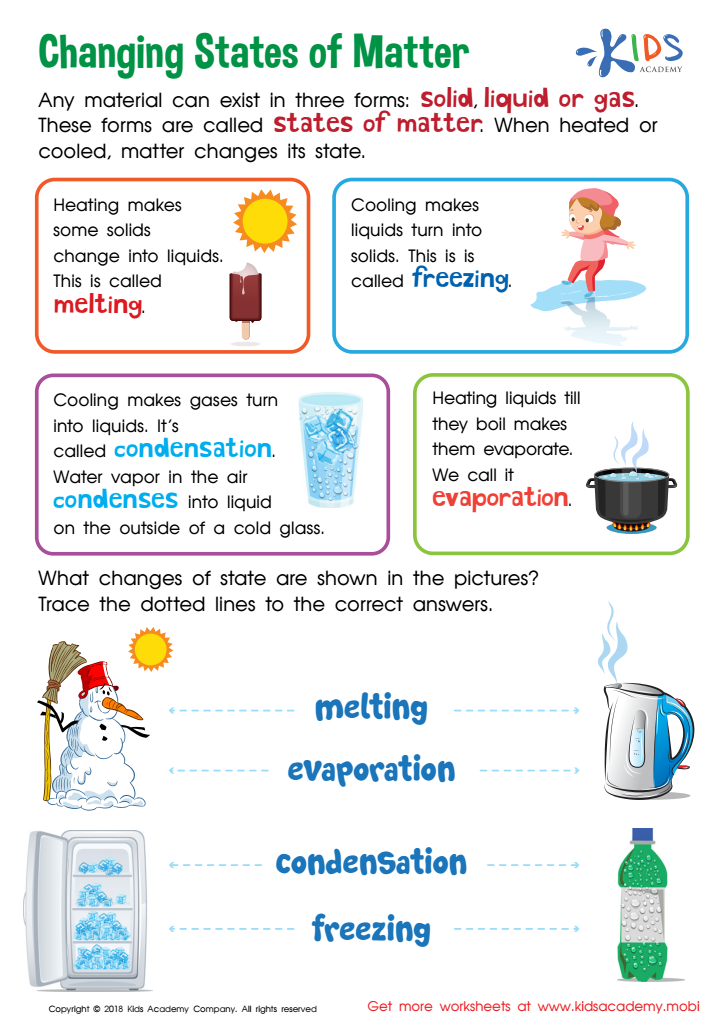
States of Matter Worksheet
 Assign to My Students
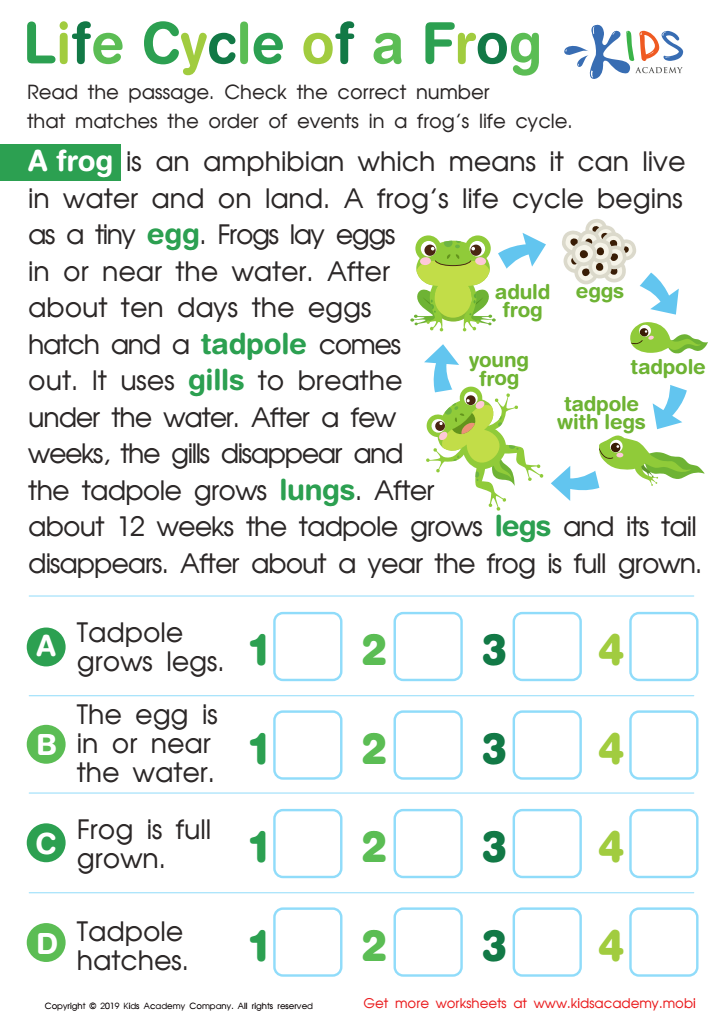
Life Cycle of a Frog Worksheet
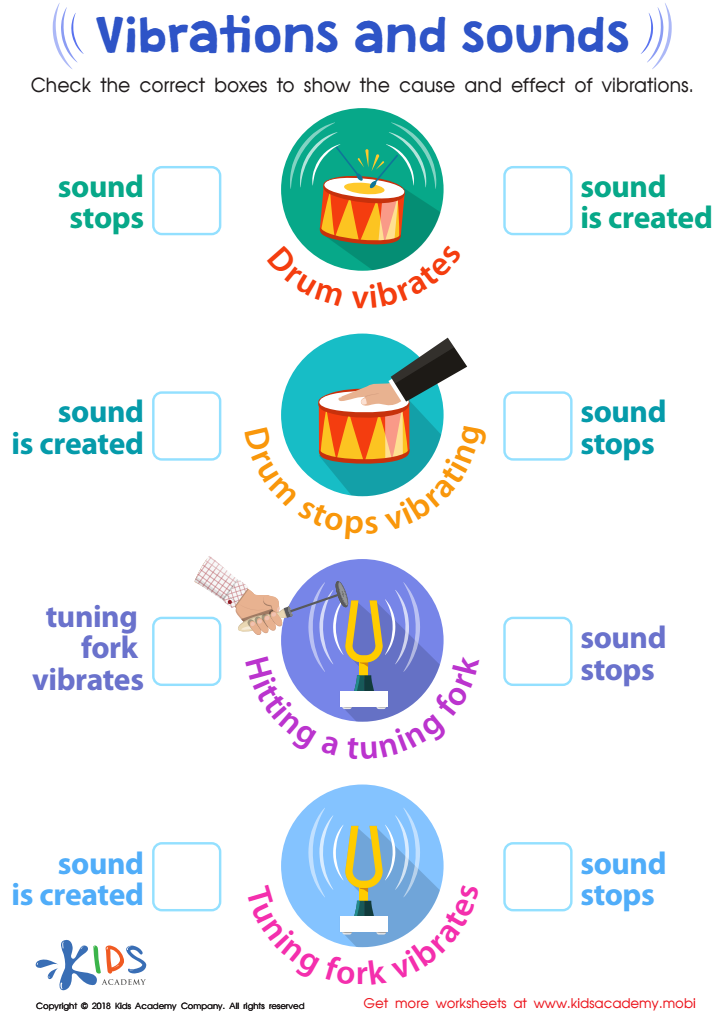
Vibrations and Sounds Worksheet





.jpg)

Enhancing science vocabulary for children aged 4-9 is vital for their cognitive and linguistic development. Early vocabulary acquisition directly influences a child's ability to grasp complex scientific concepts in later education. When parents and teachers prioritize science vocabulary, they foster curiosity and encourage the exploration of the natural world. Understanding scientific terms helps children articulate their thoughts and observations, leading to more effective communication and engagement in discussions about science.
Moreover, a strong science vocabulary poses long-term academic benefits. Research indicates that children with enriched vocabulary perform better in standardized tests and have a deeper understanding of science as they advance through school. This proficiency nurtures critical thinking skills, as children learn to categorize, compare, and analyze different concepts.
Additionally, introducing science vocabulary within everyday contexts supports a child's ability to relate to real-world phenomena, cultivating a sense of wonder and inquiry. Activities like hands-on experiments, nature walks, and interactive discussions can make learning science vocabulary enjoyable. Ultimately, parents and teachers play a essential role in equipping children with the language needed to explore, understand, and succeed in science, paving the way for lifelong learning and a potential passion for STEM fields.








