Sentence structuring Worksheets for Ages 4-9
8 filtered results
-
From - To
Enhance your child's language skills with our engaging Sentence Structuring Worksheets designed specifically for ages 4-9. These printable resources provide exciting activities that help young learners develop a solid understanding of sentence formation. By exploring various sentence types and practicing word ordering, children will boost their vocabulary and improve their writing abilities. Our worksheets cater to different learning styles, ensuring that each child can grasp fundamental concepts at their own pace. Perfect for homeschooling or classroom use, these worksheets promote creativity and critical thinking, laying the foundation for confident communication skills. Start your educational journey today!
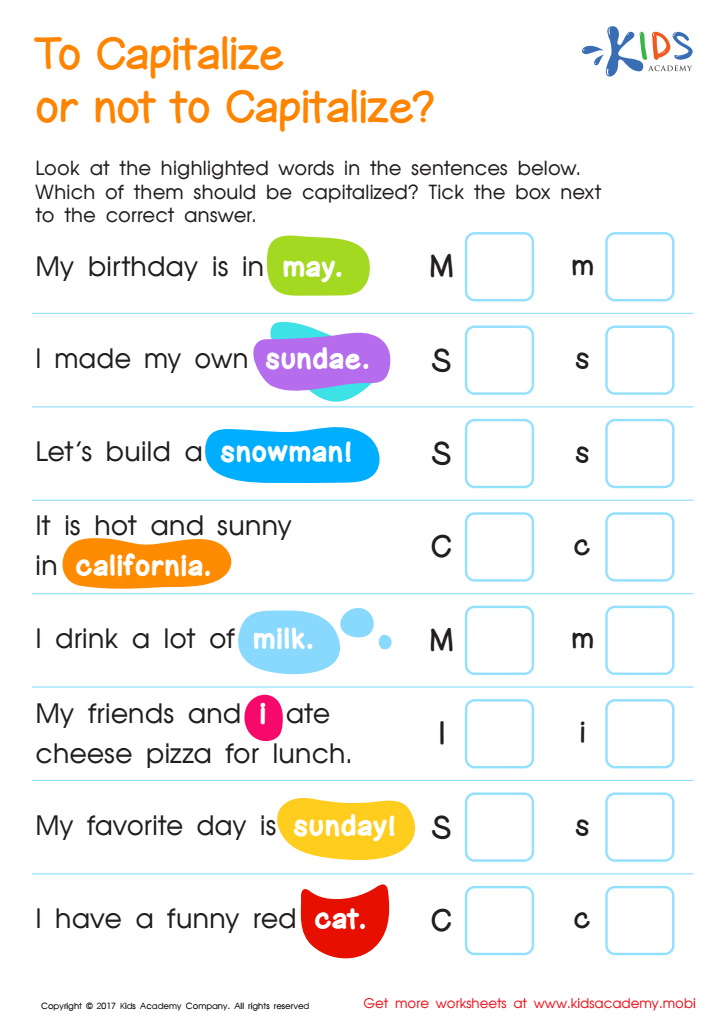
Capitalization: To Capitalize or Not? Printable
 Assign to My Students
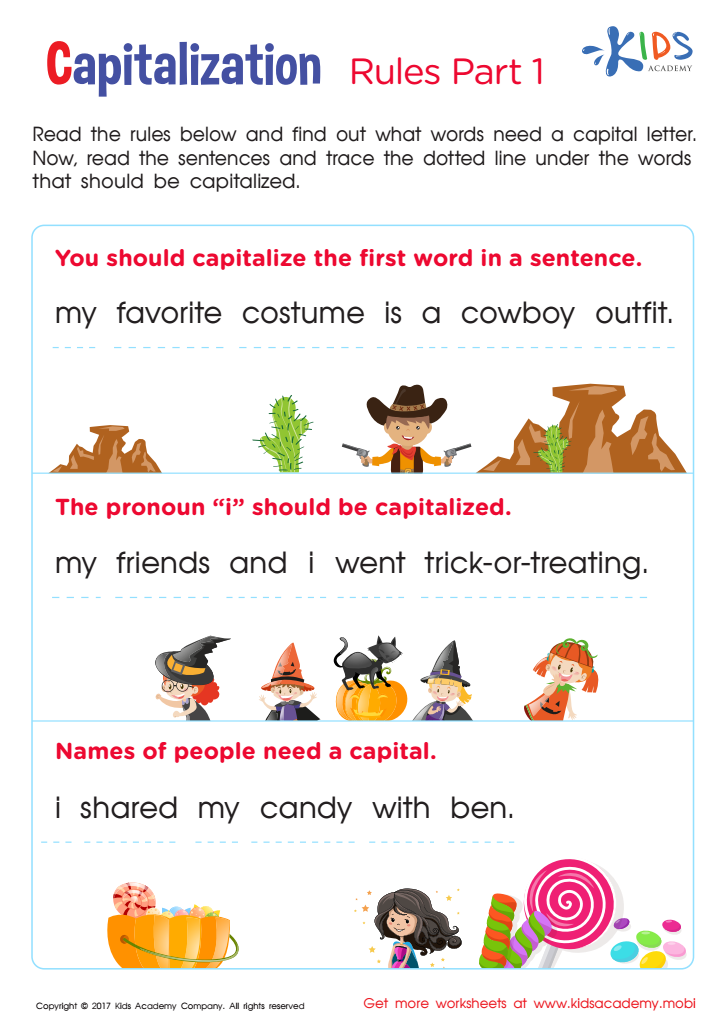
Capitalization Rules: Part 1 Worksheet
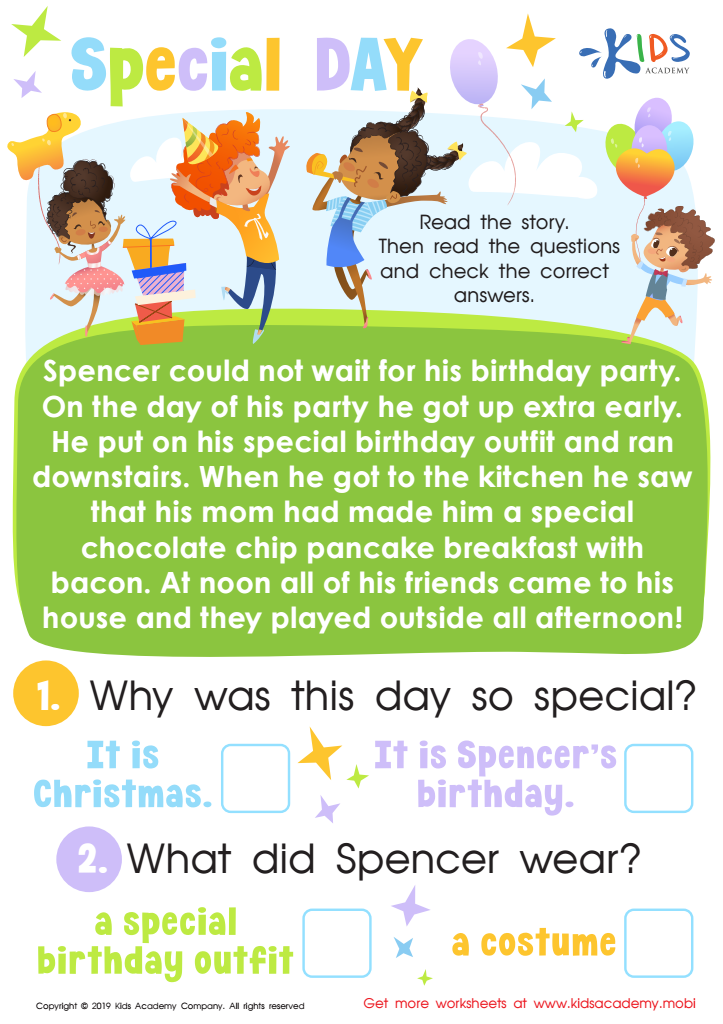
Special Day Worksheet
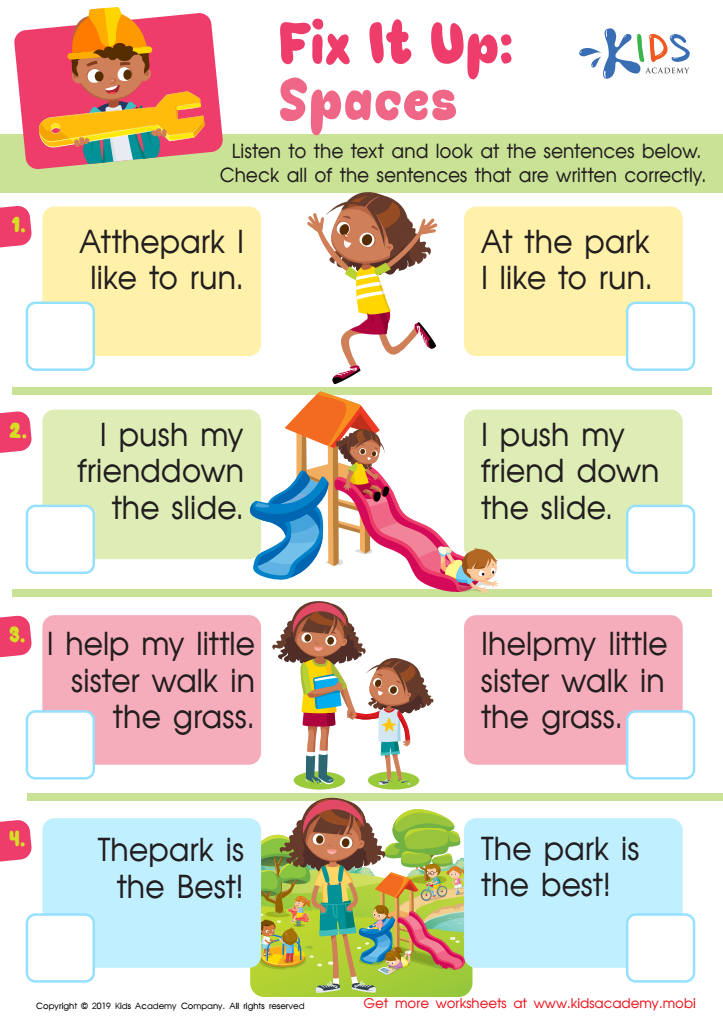
Fix Spaces Worksheet
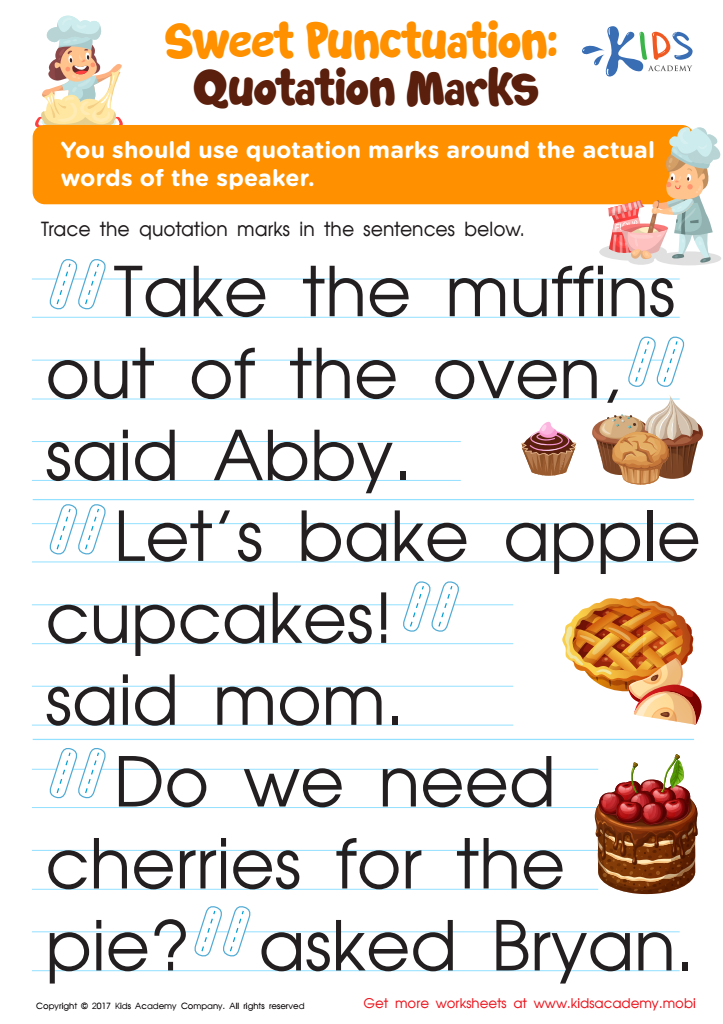
Commas and Quotation Marks Worksheet
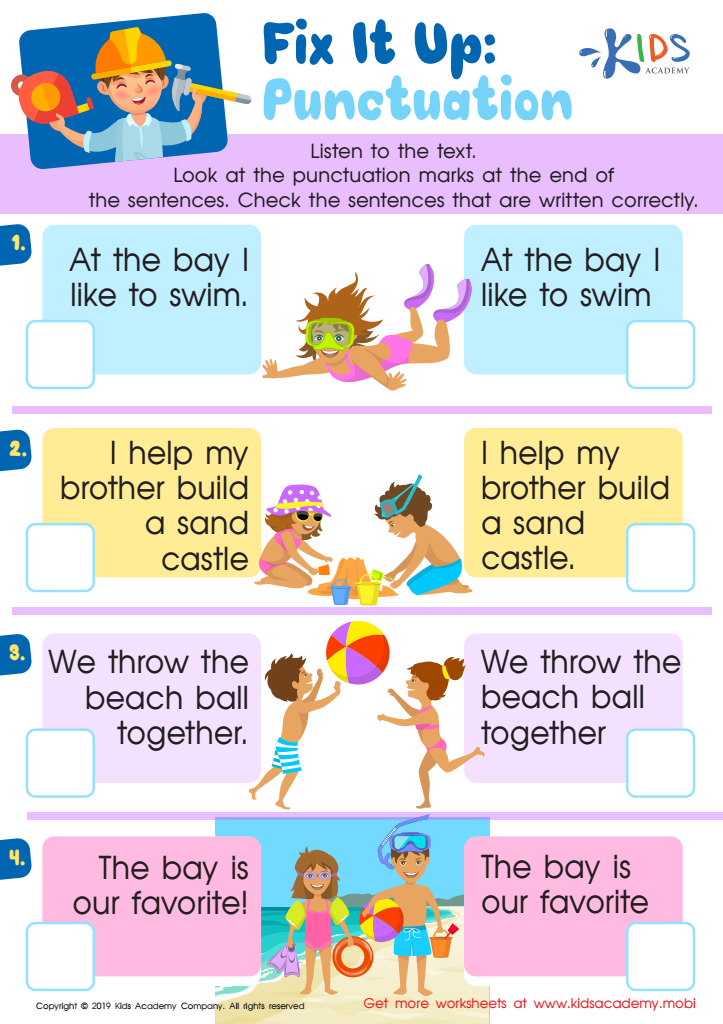
Fix Punctuation Worksheet








Sentence structuring is a fundamental skill that significantly impacts literacy development in children aged 4-9. During these formative years, children are like sponges, eagerly absorbing language and communication styles. Understanding sentence structure helps them convey their thoughts clearly and coherently, essential for effective communication in both written and spoken forms.
For parents and teachers, promoting strong sentence structuring skills fosters creativity and critical thinking. When children learn to construct sentences, they also learn how to express their ideas, feelings, and stories more vividly. This mastery encourages greater participation in discussions, enhancing social skills and confidence.
Additionally, solid sentence structure lays the groundwork for future academic success. Proper grammar and syntax are integral to reading comprehension and writing proficiency. By focusing on this skill early on, educators and parents ensure that children are not left behind as they progress through school.
Lastly, developing sentence structuring skills emerges in the context of playful learning. Engaging activities can make mastering this skill enjoyable, instilling a lasting love for language. Ultimately, an emphasis on sentence structure leads to more articulate, self-assured, and communicative young learners, setting the stage for lifelong educational achievement.








