Shape comparison Worksheets for Ages 4-9
4 filtered results
-
From - To
Enhance your child's understanding of shapes with our engaging Shape Comparison Worksheets designed for ages 4-9! These worksheets provide an interactive way for young learners to develop essential skills by comparing different shapes based on size, color, and characteristics. Fun activities like matching, sorting, and identifying shapes will keep your child engaged while promoting critical thinking and visual discrimination skills. Perfect for home or classroom use, our shape comparison worksheets are easy to download and print, making learning accessible and enjoyable. Introduce your child to the world of geometry with our thoughtfully crafted resources that ignite curiosity and foster learning!
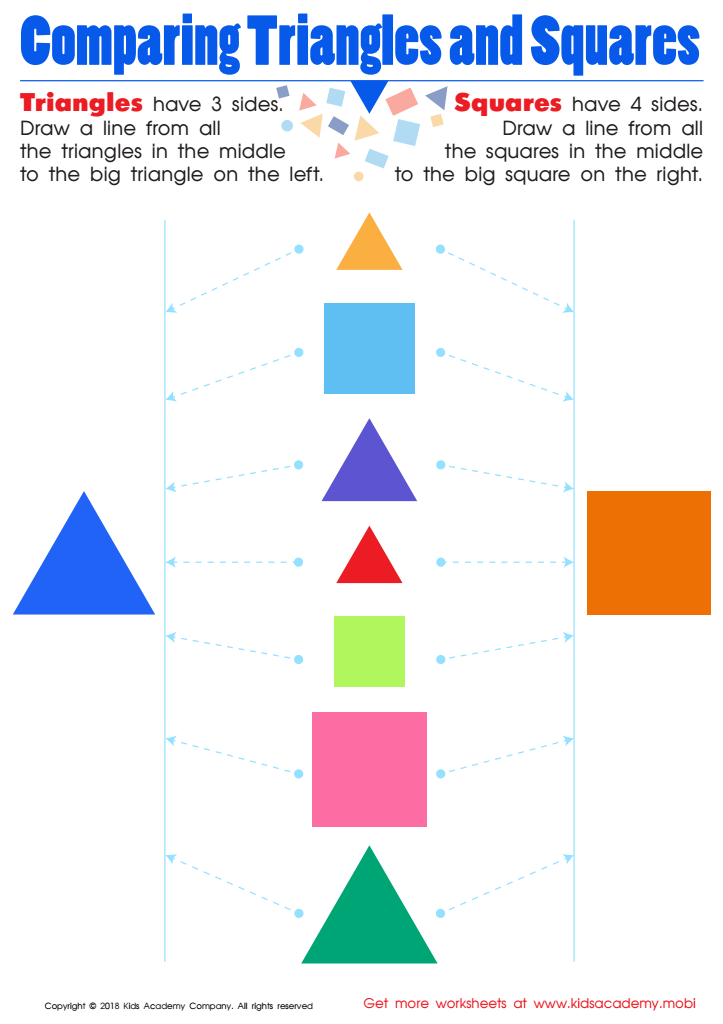
Comparing Triangles Squares Worksheet
 Assign to My Students
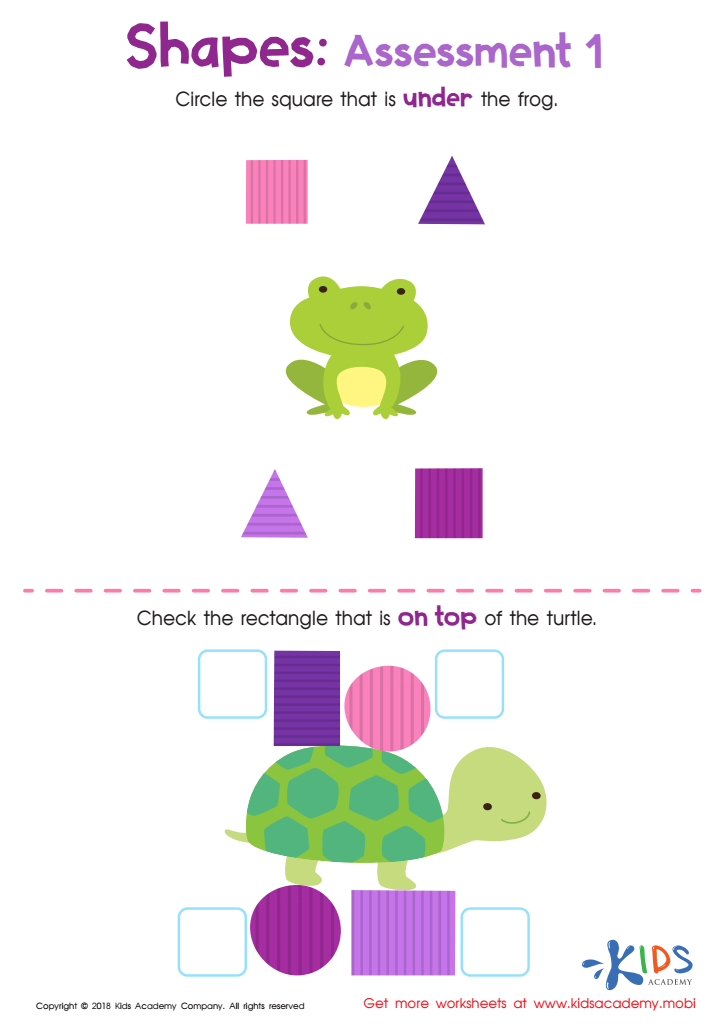
Geometry – Assessment 1 Worksheet
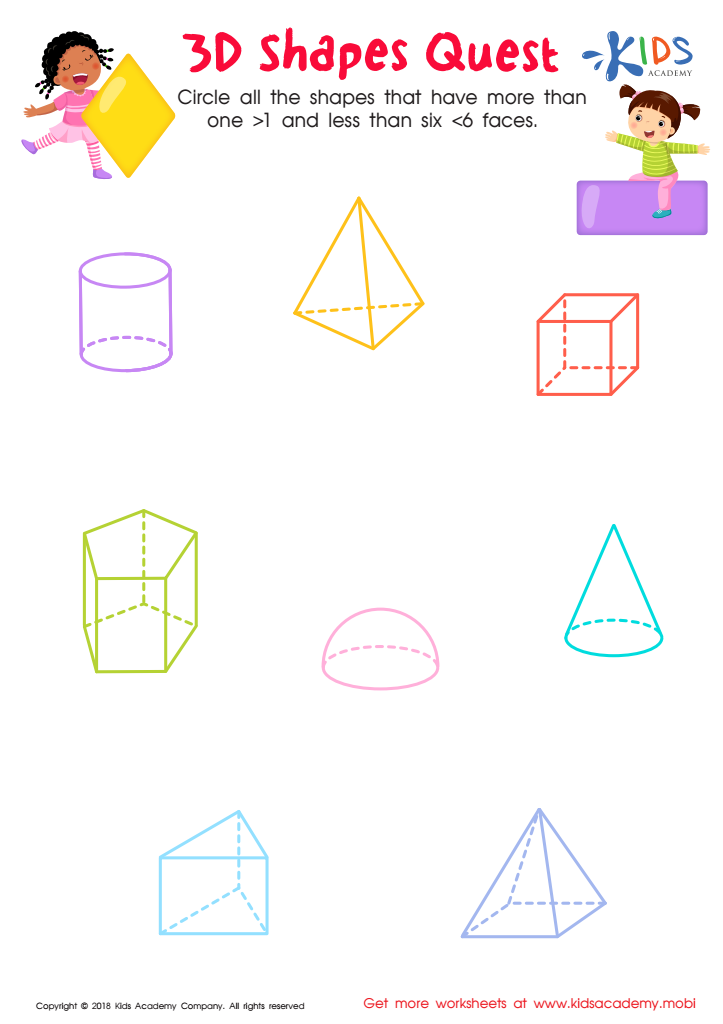
3D Shapes Quest Worksheet
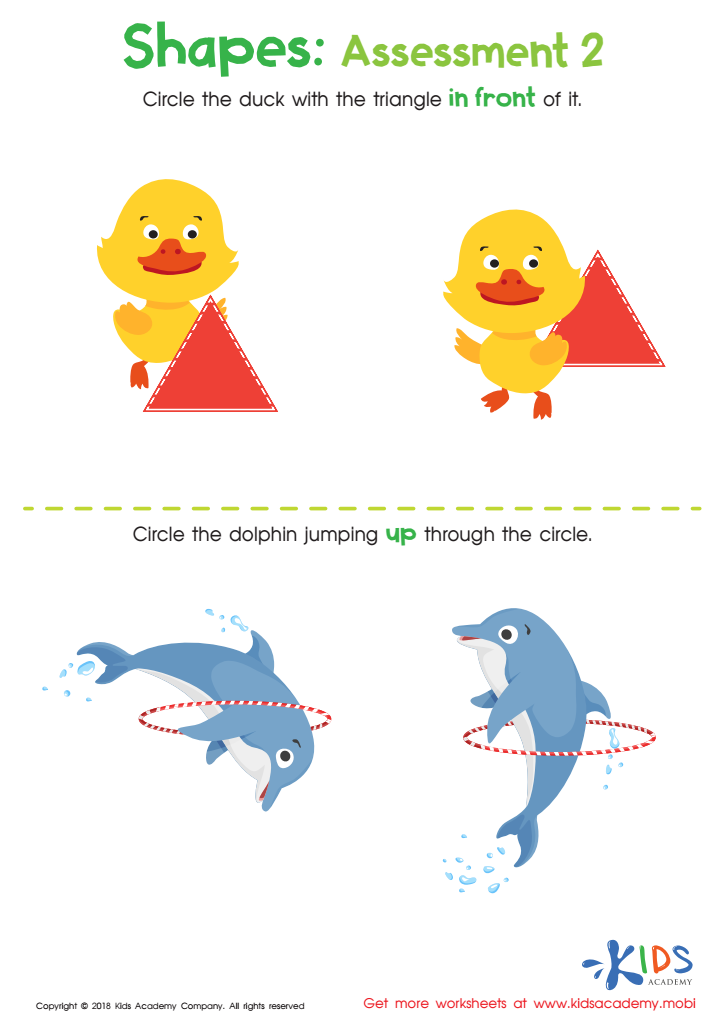
Geometry – Assessment 2 Worksheet







Shape comparison is a vital educational activity for children aged 4-9, as it lays the foundation for later mathematical learning and critical thinking skills. At this developmental stage, children develop spatial awareness, boost their problem-solving abilities, and enhance their understanding of geometry. Learning to compare shapes—recognizing similarities and differences such as size, attributes, and orientation—encourages observational skills and attention to detail.
These shape recognition abilities also contribute to semantic language development, as children learn the vocabulary associated with different shapes (e.g., circle, square, triangle) and mathematical concepts (e.g., bigger, smaller, similar). Engaging in shape comparison the also fosters creativity as children explore how shapes can be combined to form new objects or patterns.
Moreover, early exposure to these skills can build confidence, allowing students to approach math-related tasks with a positive mindset. Teachers and parents play a significant role in facilitating these experiences through play and structured activities. By prioritizing shape comparison, we not only enrich children's cognitive development but also prepare them for future academic success in more advanced mathematical concepts. In essence, understanding and comparing shapes is not just about shapes; it’s about equipping children with essential skills for lifelong learning.








