
Sound differentiation Worksheets for Ages 4-9
5 filtered results
Difficulty Level
Grade
Age
-
From - To
Subject
Activity
Standards
Enhance your child’s phonemic awareness with our engaging Sound Differentiation Worksheets for ages 4-9! These fun, printable activities are designed to help young learners identify, differentiate, and manipulate sounds in various contexts. Our worksheets feature vibrant illustrations and age-appropriate exercises that promote listening skills and boost vocabulary. Ideal for home or classroom use, these resources make learning sound recognition enjoyable and interactive. Your child will cultivate essential literacy skills while building confidence in their reading abilities. Explore our collection and watch your little ones thrive as they embark on their phonics adventure today!
Favorites
With answer key
Interactive
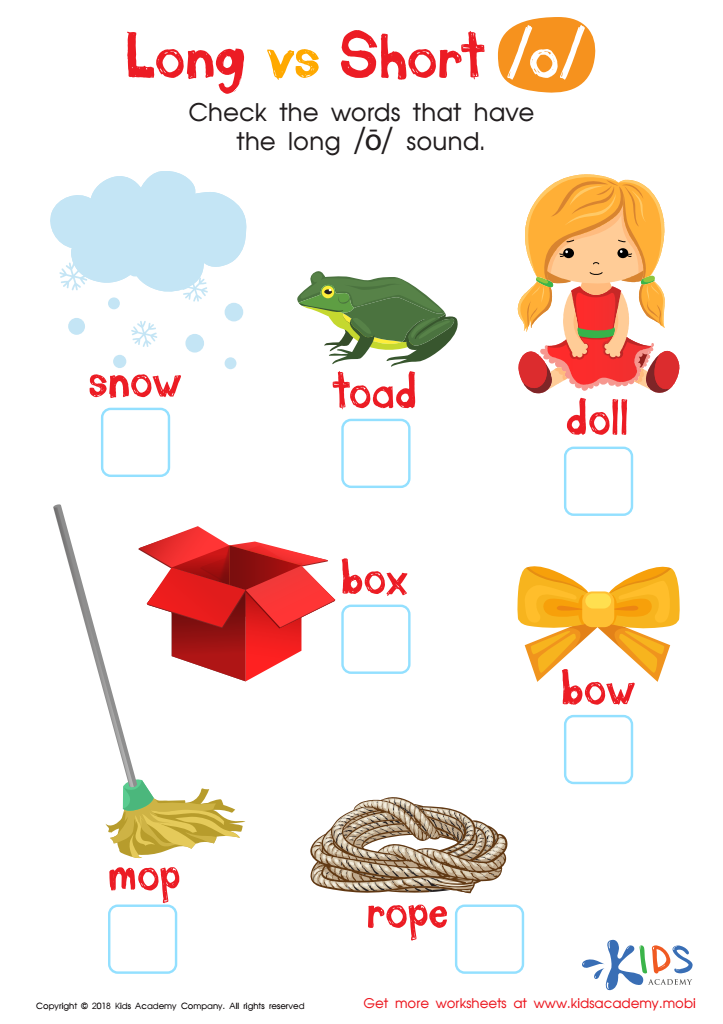
Long vs Short O Reading Worksheet
Help your child learn to identify the long and short «o» sound with this colourful worksheet. Guide them as they spot words with the long or short «o» sound. With practice, your child will find it easier to tell the difference between the two.
 Assign to My Students
Long vs Short O Reading Worksheet
Worksheet
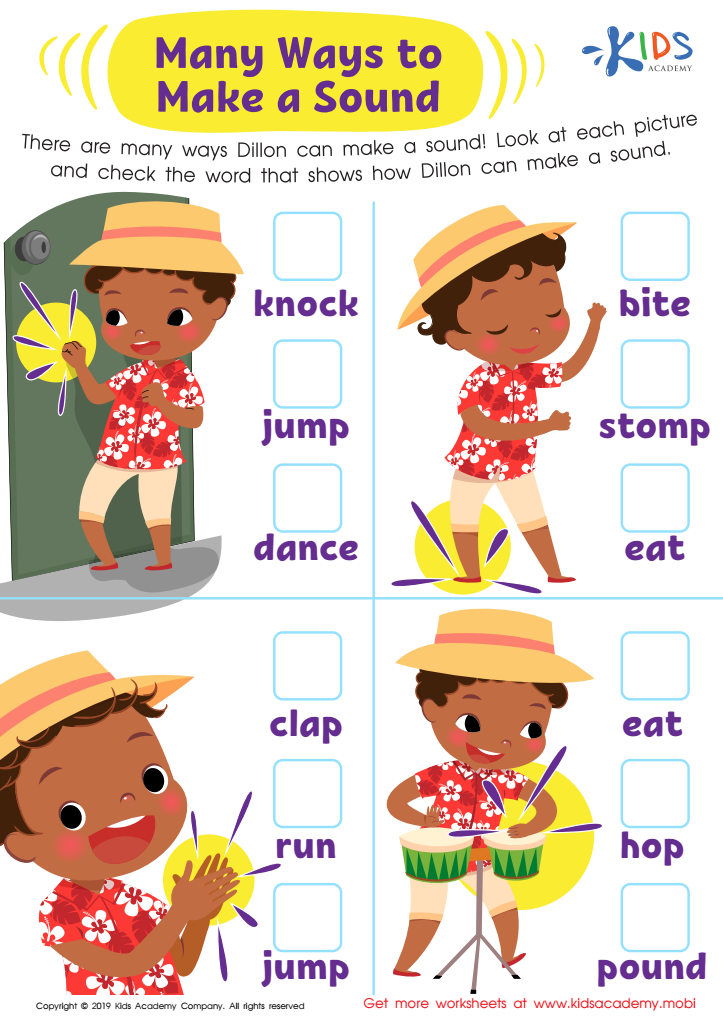
Many Ways to Make a Sound Worksheet
This interactive worksheet encourages creativity and imagination as kids use picture clues to match sound words. It helps them identify the sound methodology and build fine motor skills. Plus, with learning through play, they'll develop stronger vocabularies without even knowing it!
Many Ways to Make a Sound Worksheet
Worksheet
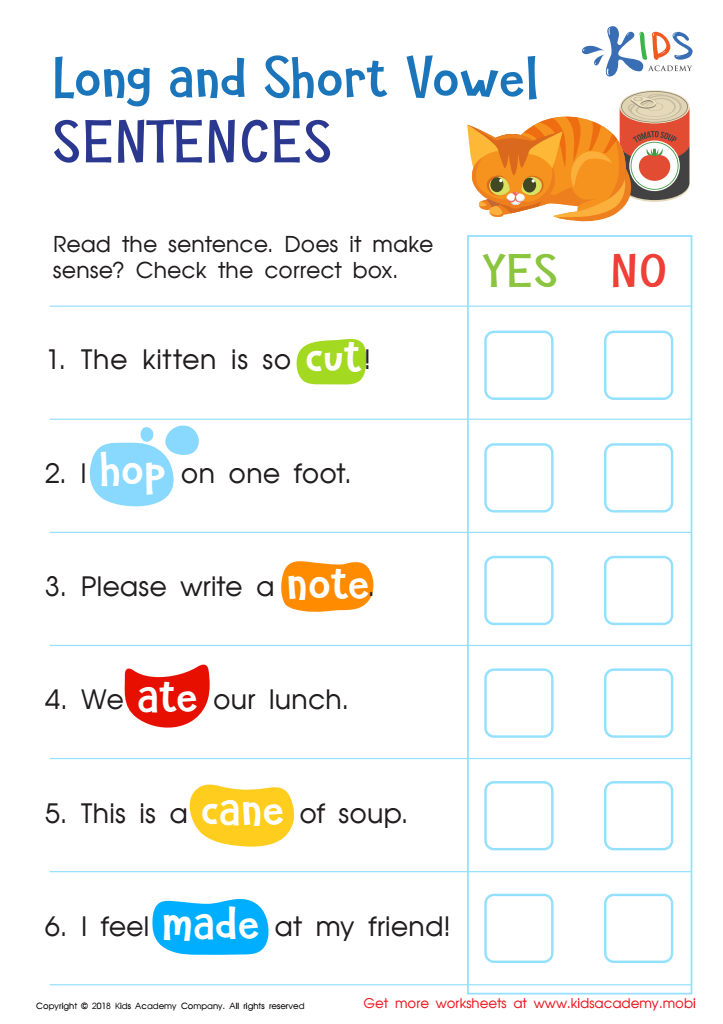
Long and Short Vowel Sentences: Assessment Worksheet
This printable worksheet helps kids practice differentiating between short and long vowel sounds. They'll use context clues to figure out which words make sense in simple sentences. A great way to build reading and writing skills!
Long and Short Vowel Sentences: Assessment Worksheet
Worksheet
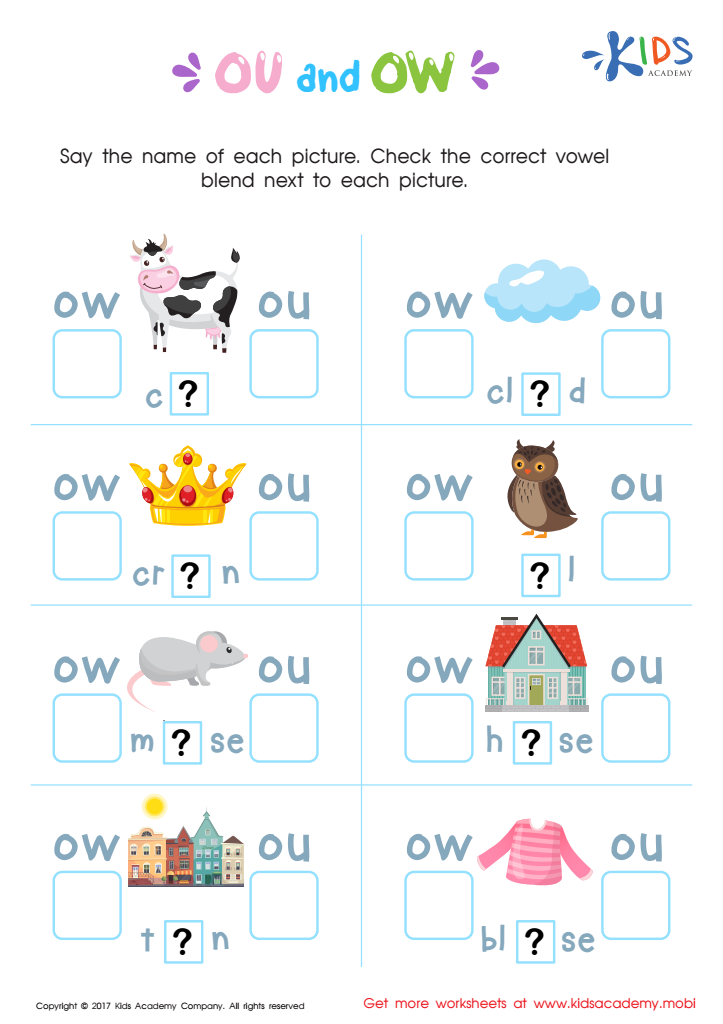
OU and OW Words Worksheet
Enhance your child's reading and spelling with this ou and ow words worksheet! Fun pictures and common words make mastering the diphthongs ou and ow easy and enjoyable.
OU and OW Words Worksheet
Worksheet
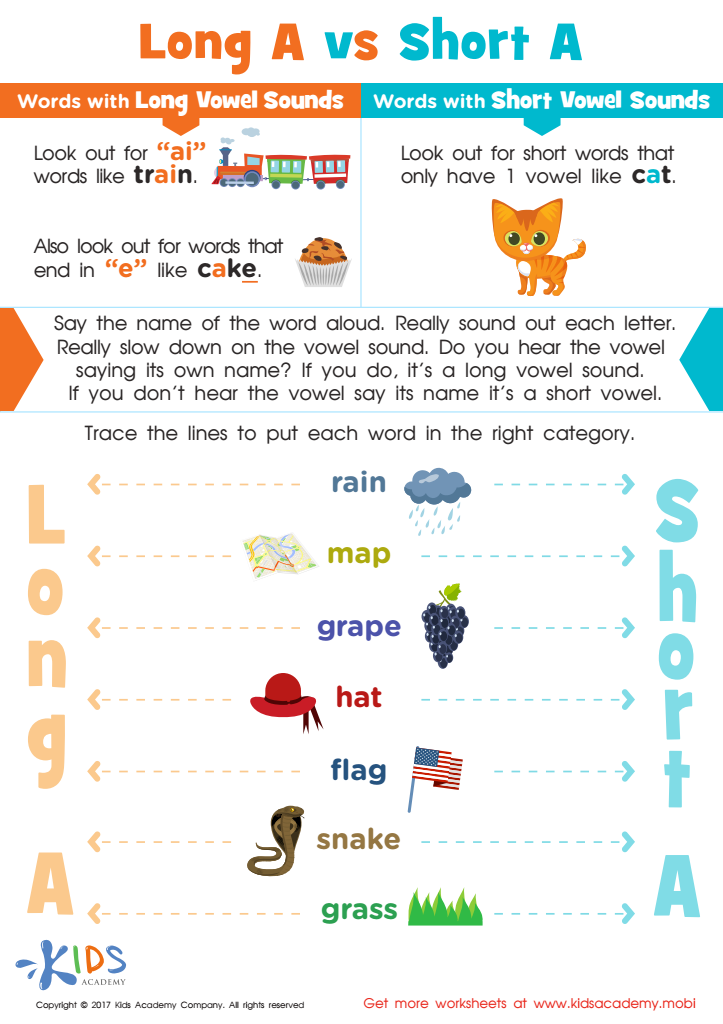
Long and Short Vowel A Spelling Worksheet
Help your child learn tricky spellings by focusing on vowel sounds. Read about each one, see examples and work through the long and short vowel A worksheet. Your child will be able to sound out words to determine if the vowel is long or short.
Long and Short Vowel A Spelling Worksheet
Worksheet
Join Kids Academy for Free
Who is primarily going to use this learning content?








Sound differentiation is crucial for children aged 4-9 as it plays a foundational role in their literacy development. At this stage, students are beginning to learn to read and write, and the ability to distinguish between different sounds – or phonemes – is essential for recognizing letters and words. When children can identify and manipulate these sounds, they develop stronger decoding skills, which are vital for effective reading.
Furthermore, sound differentiation contributes to vocabulary growth and overall language comprehension. Children exposed to diverse sounds expand their auditory discrimination, guiding them in understanding the nuances of language, such as rhymes and syllables, ultimately enhancing their speaking and listening skills.
For educators and parents, fostering sound differentiation lays the groundwork for later academic success. Children with strong phonemic awareness become confident readers and communicators, reducing the risk of literacy challenges in their later education. Additionally, incorporating fun, engaging activities centered around sound differentiation can enhance motivation and enjoyment in learning.
In summary, prioritizing sound differentiation supports not just reading skills, but overall cognitive and linguistic development, providing children with essential tools for future academic achievement. Parents and teachers must collaborate to ensure children receive the guidance needed to thrive during these transformative years.








