Spatial Orientation Worksheets for Ages 4-9
7 filtered results
-
From - To
Enhance your child's spatial awareness with our engaging Spatial Orientation Worksheets designed for ages 4 to 9! These thoughtfully crafted activities promote essential skills such as understanding directions, positioning, and relationships between objects. Each worksheet is filled with fun exercises like mazes, matching games, and puzzles that challenge young minds while keeping learning enjoyable. Perfect for preschoolers and early elementary students, our resources cater to different learning styles. Boost cognitive development and prepare your child for greater challenges in math and science with these comprehensive, easy-to-use worksheets. Discover the joy of learning together and watch your little one flourish in their understanding of space!
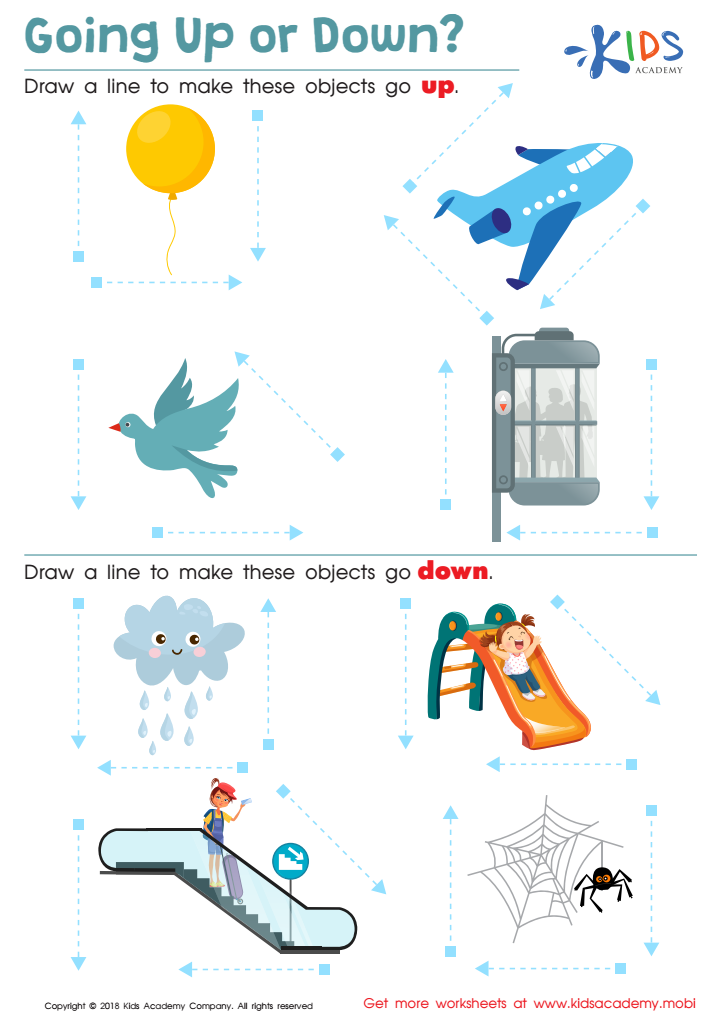
Going up or Down? Worksheet
 Assign to My Students
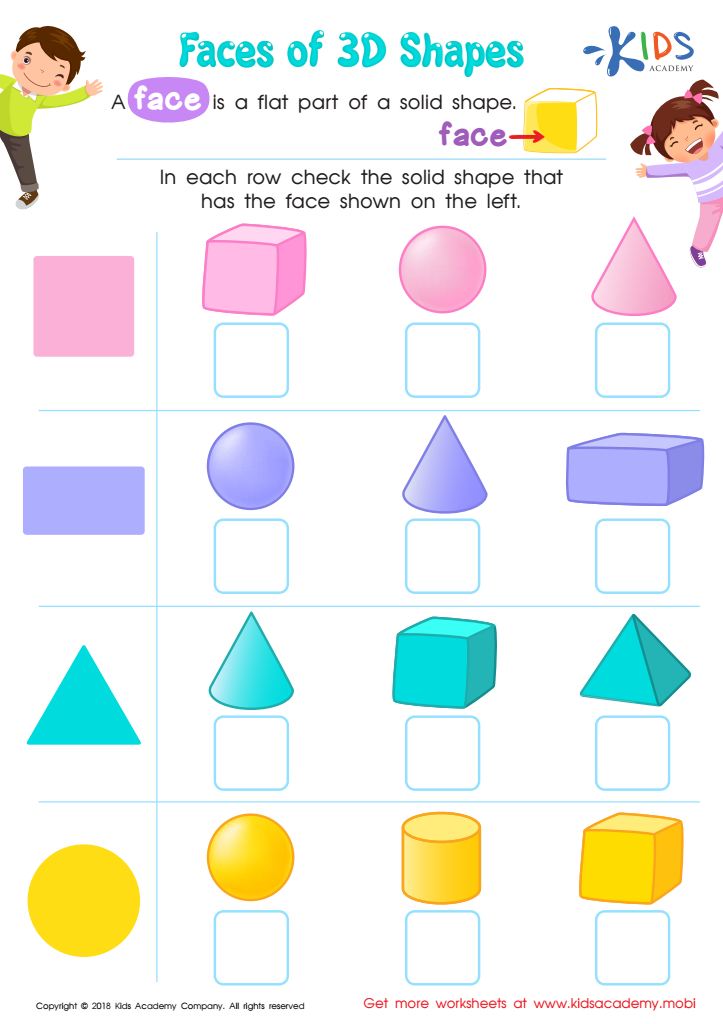
Faces of 3D Shapes Worksheet
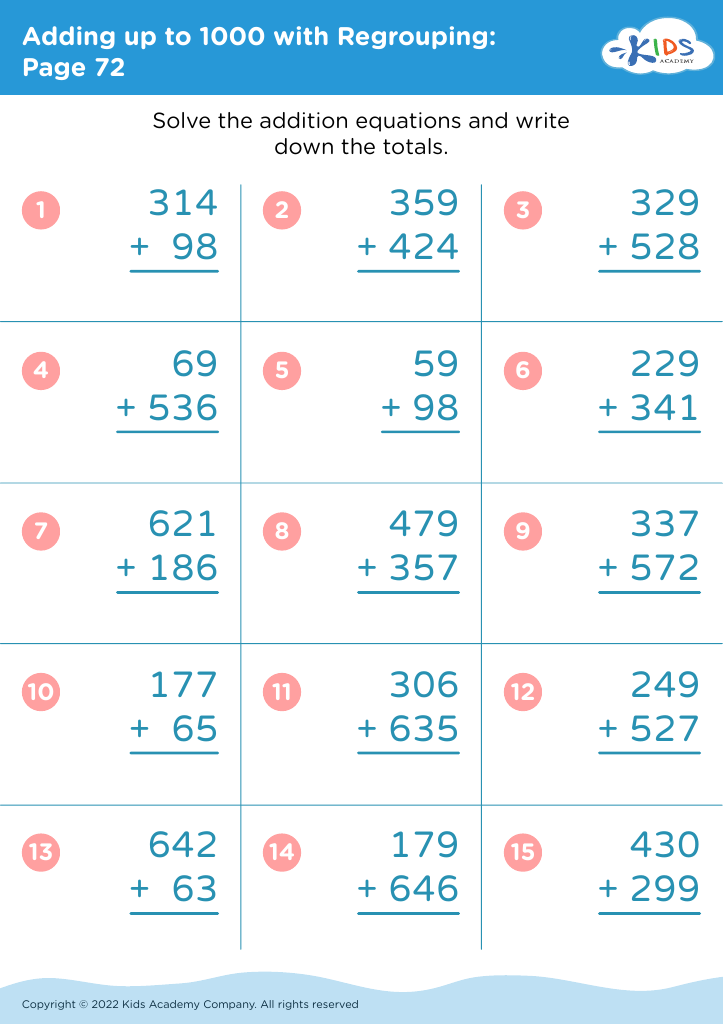
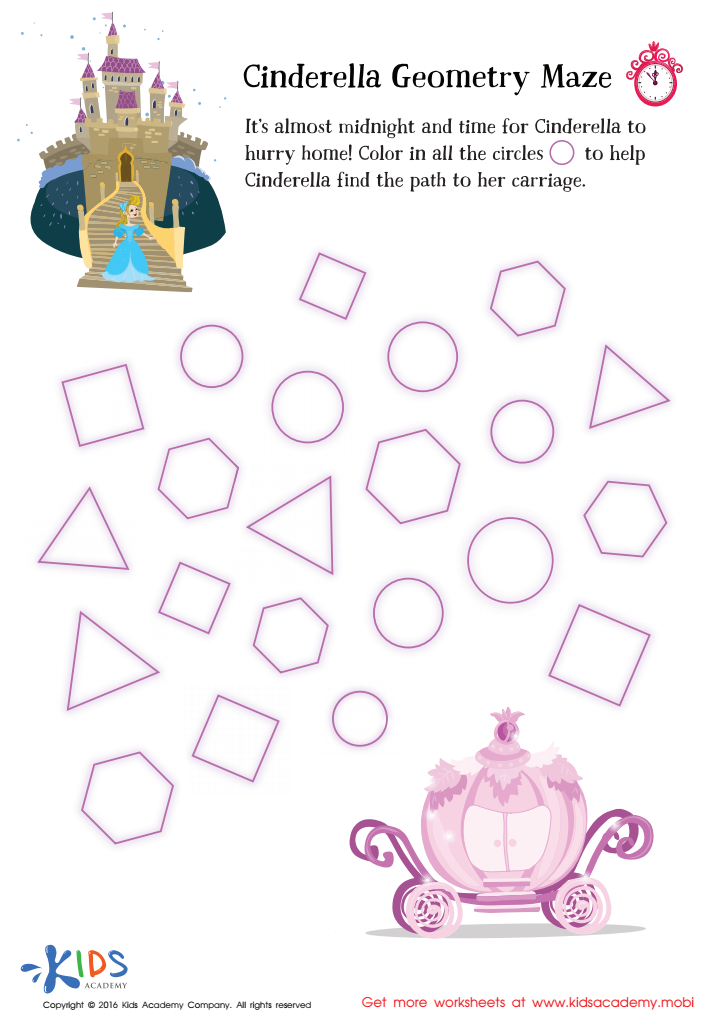
Cinderella Geometry Maze Worksheet
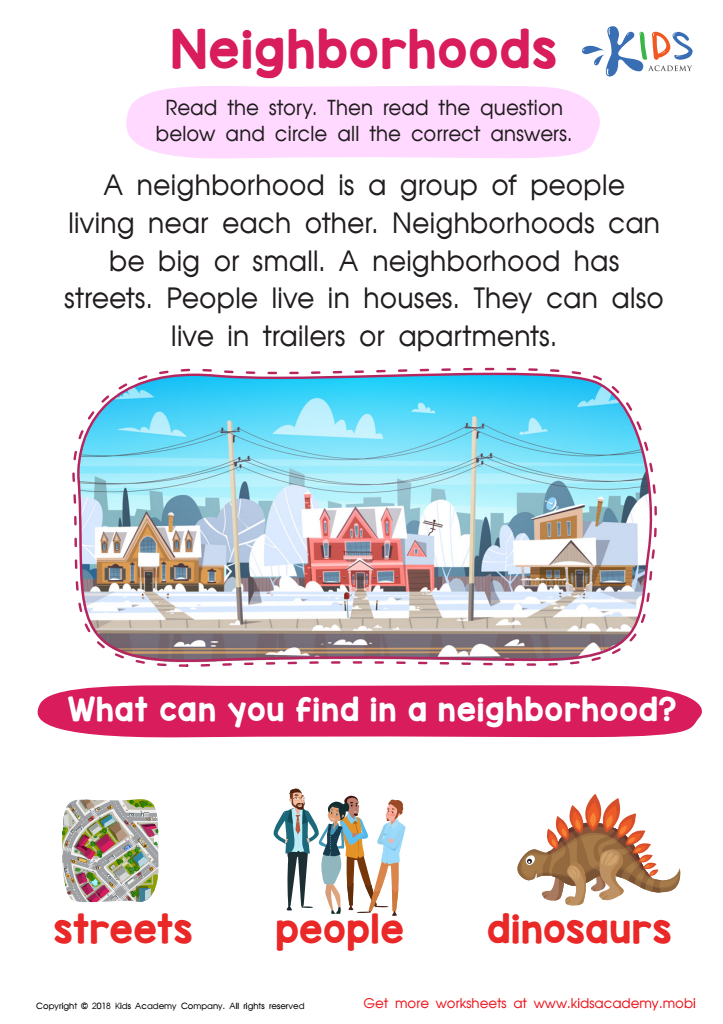
Neighborhoods Worksheet
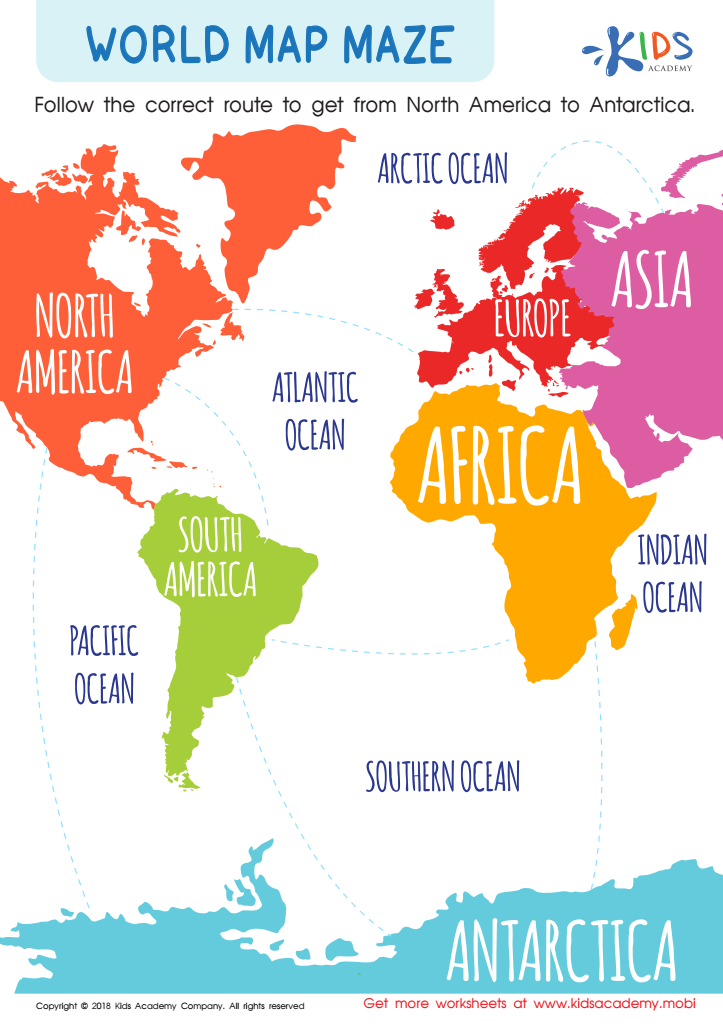
World Map Maze Worksheet
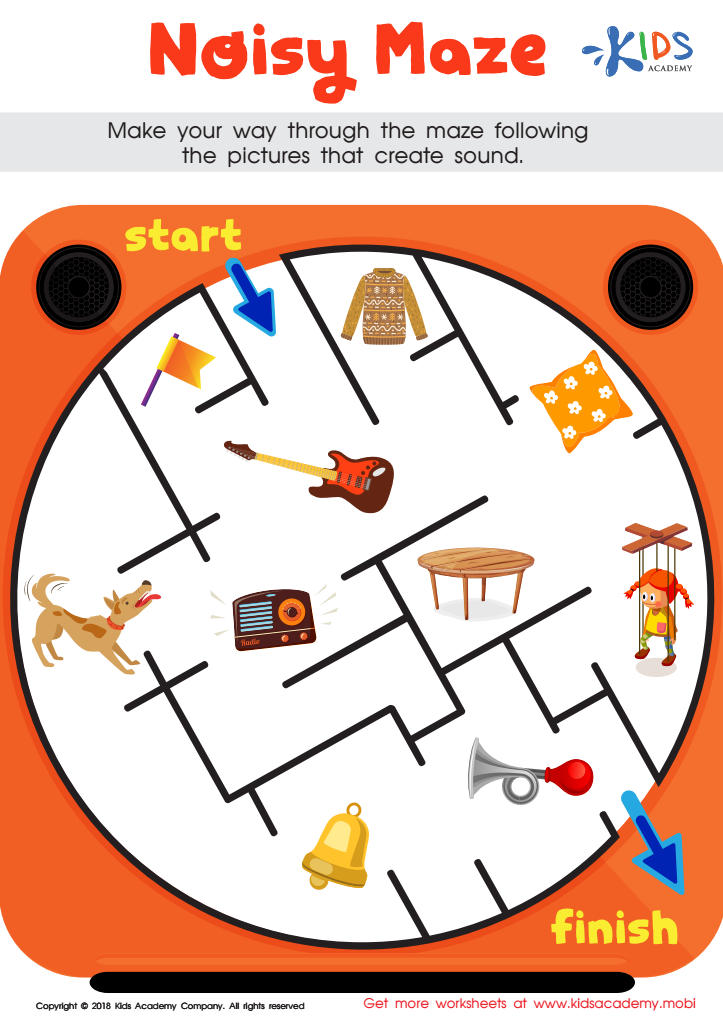
Noisy Maze Worksheet





.jpg)


Spatial orientation is a crucial cognitive skill that involves understanding the relationships between objects and oneself in physical space. For children ages 4-9, developing spatial orientation contributes significantly to their overall cognitive development, problem-solving abilities, and academic success.
Parents and teachers should prioritize fostering this skill for several reasons. First, spatial orientation is foundational for early mathematics, as it enables children to grasp concepts such as shapes, sizes, and measurements. Proficiency in these areas lays the groundwork for more advanced mathematical thinking.
Moreover, strong spatial skills enhance literacy, as children use mental imagery to visualize stories and understand textual content better. This dual benefit of spatial orientation supports well-rounded cognitive growth, essential for later learning.
Additionally, spatial orientation plays a role in enhancing motor skills through activities that require movement and positioning, such as sports and dance, which not only promote physical health but also boost self-confidence and social skills.
Lastly, in a rapidly advancing technological world, spatial awareness is critical for navigating everyday life, particularly with technology that relies on spatial reasoning, like maps or augmented reality. Thus, nurturing this skill in young children is necessary for their current and future success.








