Understanding division Worksheets for Ages 4-9
9 filtered results
-
From - To
Our "Understanding Division Worksheets for Ages 4-9" provide young learners with a fun and engaging way to grasp basic division concepts. These printable sheets are specially designed to introduce children to how division works through visual aids, interactive problems, and relatable scenarios. Whether they're sharing toys among friends or dividing a pizza into equal slices, kids will find the activities both entertaining and educational. Perfect for home or classroom use, our worksheets aim to build confidence in math skills while laying a solid foundation for future learning. Start your child’s journey toward division mastery today!
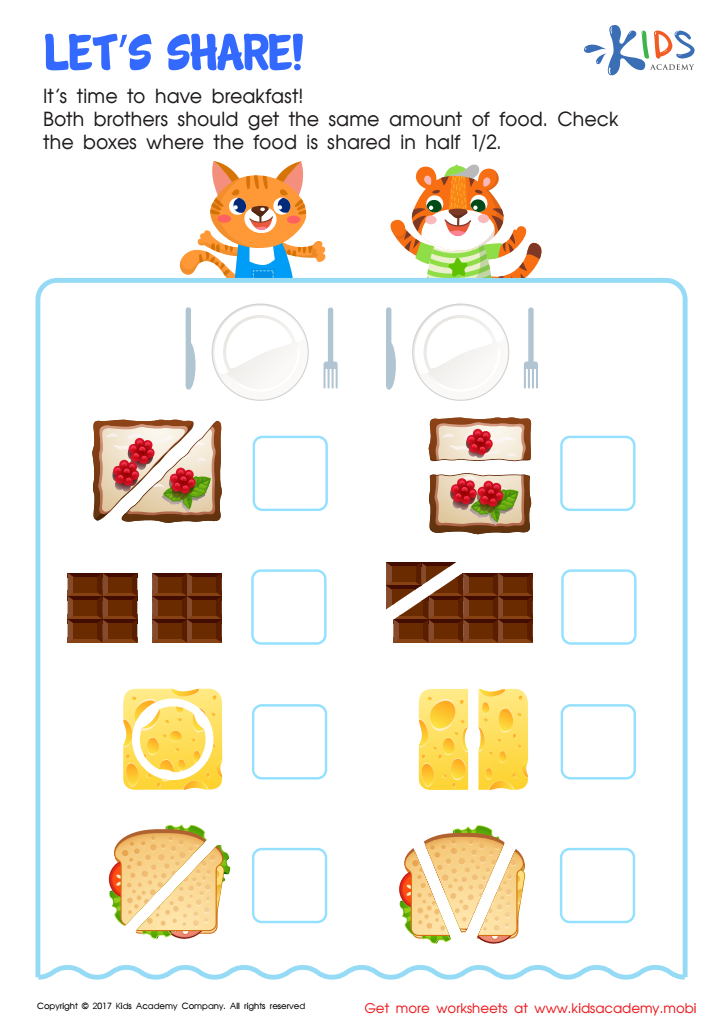
Let's Share Worksheet
 Assign to My Students
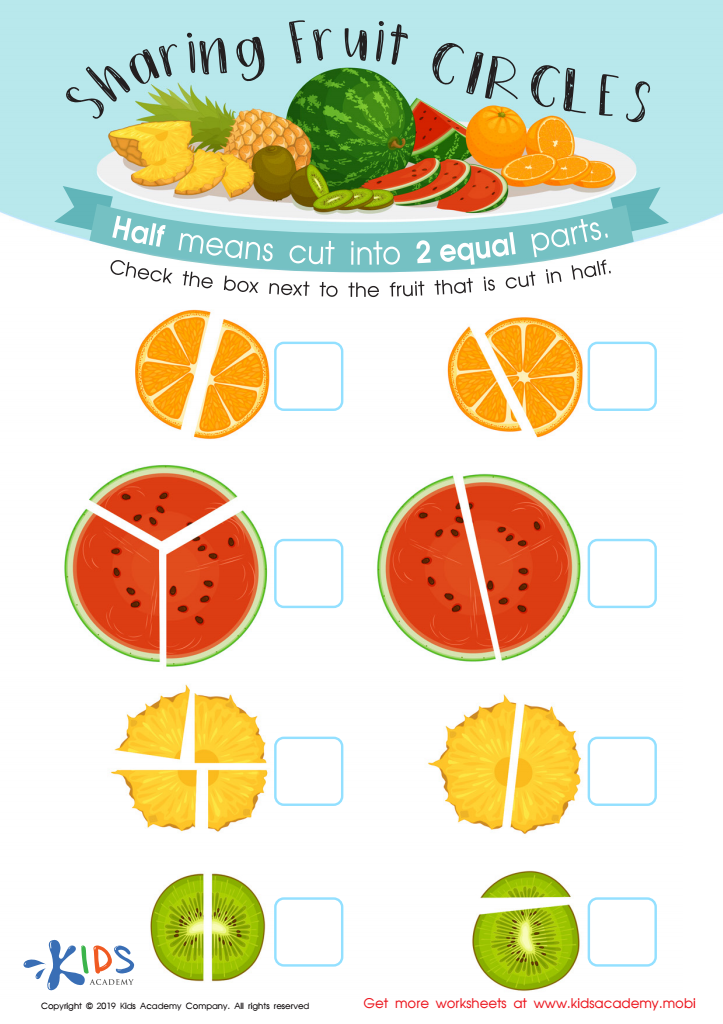
Sharing Fruit Circles Worksheet
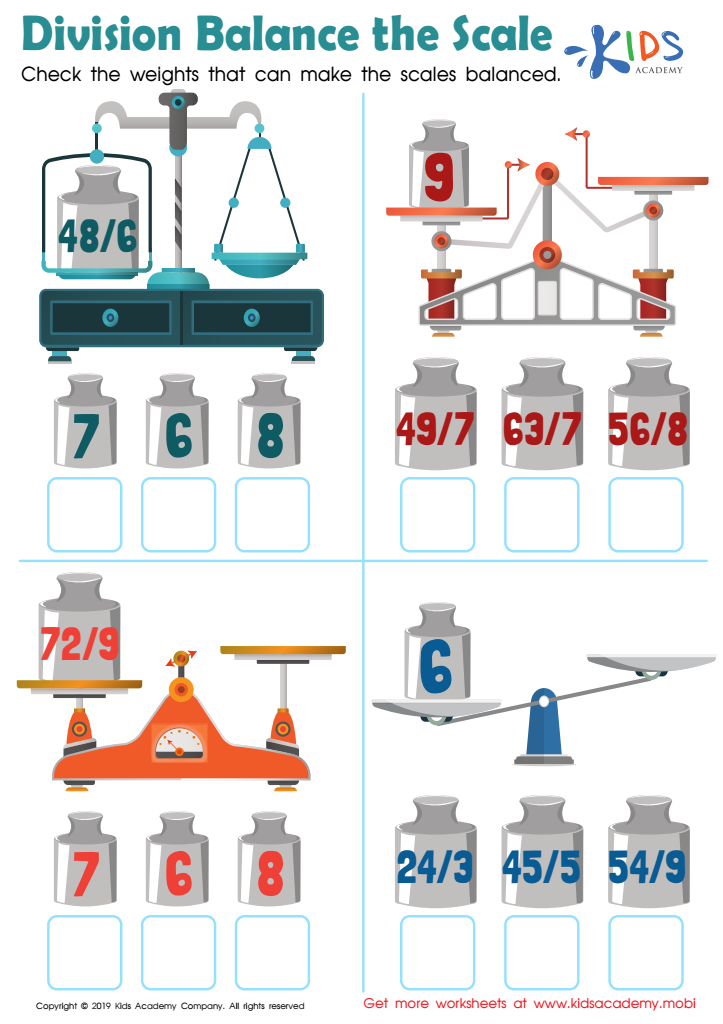
Division Balance the Scale Worksheet



.jpg)


.jpg)

Understanding division at an early age is crucial for several developmental reasons, benefiting both parents and teachers to engage children aged 4-9 in foundational mathematical concepts. First and foremost, division is a fundamental arithmetic skill that forms the basis for more advanced mathematical operations. Gaining a solid grasp of simple division helps young learners improve their problem-solving abilities, boosting their confidence and enthusiasm for mathematics.
Additionally, division cultivates logical thinking and reasoning skills. It teaches children the concept of fair sharing, fractional parts of wholes, and introduces them to ratios — all essential in real-world contexts. For instance, understanding half a chocolate bar or splitting toys equally among friends provides practical, relatable experiences that empower children to apply mathematical ideas in everyday situations.
For parents and teachers, supporting early comprehension of division helps create a lifelong interest in and enthusiasm for learning. When children conquer basic mathematical concepts early, they are better positioned for academic success in later years, leading to a more positive and enriched educational experience. Active participation in a child's early mathematical journey fosters critical thinking, confidence, and a strong academic foundation, making understanding division an invaluable investment in a child’s future.








