
Understanding plant growth Worksheets for Ages 4-9
3 filtered results
Difficulty Level
Grade
Age
-
From - To
Subject
Activity
Standards
"Understanding Plant Growth Worksheets for Ages 4-9" guide children through the fascinating world of botany. These engaging worksheets, designed to match young learners' developmental stages, make learning about how plants grow, their life cycles, and needs effortless and fun. Encouraging hands-on activities and visually appealing illustrations help children ages 4-9 develop essential skills in observation, critical thinking, and environmental awareness. Each worksheet is crafted to foster curiosity about nature and promote interactive learning both at home and in the classroom. Kids will love discovering the wonders of plant growth with these carefully curated educational resources.
Favorites
With answer key
Interactive
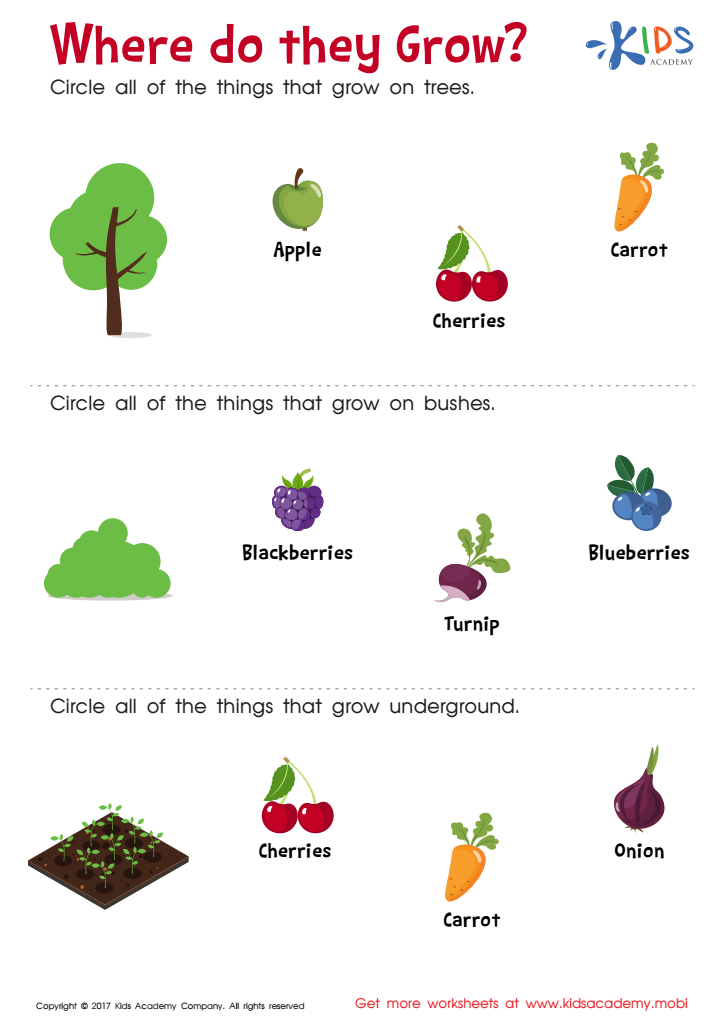
Where Do They Grow Worksheet
With this worksheet, your child can learn about apples, cherries, and blueberries and gain important science skills.
 Assign to My Students
Where Do They Grow Worksheet
Worksheet
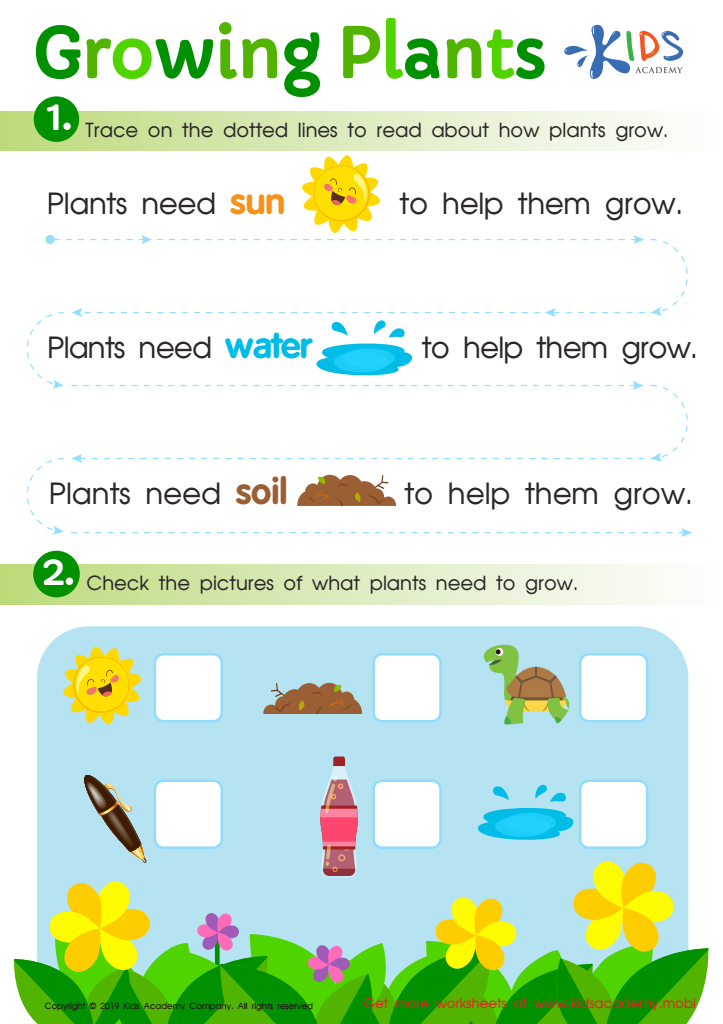
Growing Plants Worksheet
Young gardeners and scientists can learn about what helps plants grow with this fun PDF worksheet. Kids will trace lines to practice left-to-right patterning and use pictures from the rebus story to guide them. Learn that plants need sunshine, water and soil, then check off pictures of what each plant needs. It's an engaging and educational way to help their plants become big and strong.
Growing Plants Worksheet
Worksheet
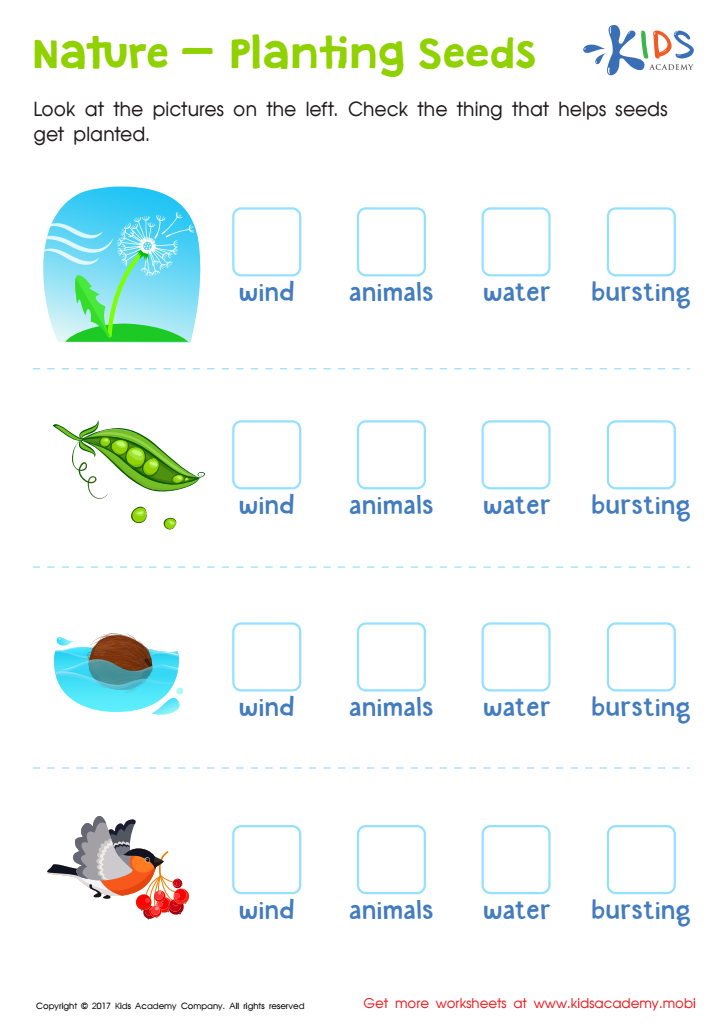
Nature Planting Seeds Worksheet
Help your child explore the fascinating cycle of plants and seeds with this worksheet. They'll learn how plants grow and how seeds travel to the ground. Challenge them to identify the right way each seed gets planted!
Nature Planting Seeds Worksheet
Worksheet
Join Kids Academy for Free
Who is primarily going to use this learning content?







Understanding plant growth is crucial for young children, ages 4-9, as it lays the foundation for numerous educational and developmental benefits. This early exposure fosters curiosity and nurtures their innate sense of wonder about the natural world. First, learning about plant growth enhances children’s understanding of basic scientific concepts like life cycles, photosynthesis, and ecosystems, making it easier for them to grasp more complex lessons in the future.
Second, hands-on activities, such as planting seeds and observing their growth, cultivate essential skills such as patience, responsibility, and observation. These activities encourage children to care for living things, promoting empathy and a sense of stewardship for the environment.
Furthermore, gardening and plant study can be integrated into various subjects, enriching children’s learning experiences in math, through measuring growth; literacy, by writing or reading about plants; and art, by drawing or painting plant parts. This multidisciplinary approach enhances cognitive development and retention of knowledge.
Lastly, spending time outdoors and engaging with nature has been shown to reduce stress and improve well-being. Encouraging children’s interaction with plants provides them with a healthy, screen-free hobby that can foster lifelong interests in science, nutrition, and sustainability. Therefore, parents and teachers should prioritize understanding plant growth as a vital aspect of early education.








