Understanding Sequences Worksheets for Ages 4-9 - Page 2
29 filtered results
-
From - To
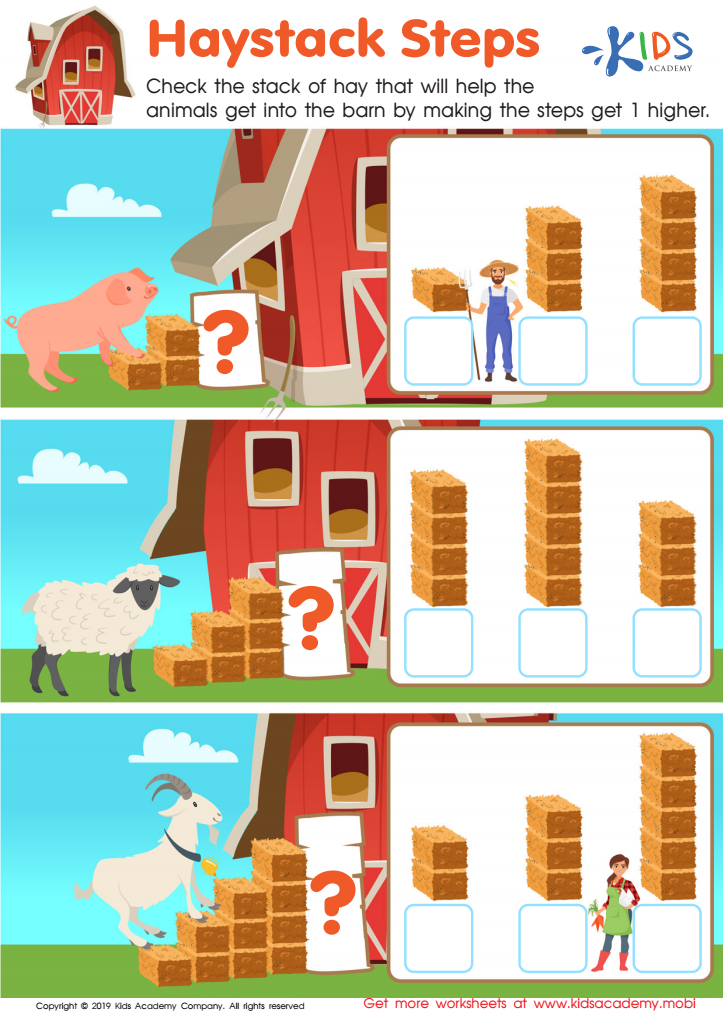
Haystack Steps Worksheet
 Assign to My Students







Understanding sequences is critical for children aged 4-9, serving as a foundation for more complex mathematical concepts and cognitive skills. Parents and teachers should care because mastering sequences enhances logical thinking and problem-solving abilities. Children learn to recognize patterns and predict outcomes, skills that are essential not only in math but also in daily life.
Early familiarity with sequences supports literacy development, as children start noticing word patterns, sentence structures, and the chronological order of events in stories. This insight into sequencing improves their reading comprehension and storytelling skills, fostering a love for language.
Moreover, teaching kids about sequences cultivates patience and perseverance, as they learn to follow multi-step processes to achieve a goal, whether that's completing a puzzle or following a recipe. These skills further promote responsibility as children become aware of the importance of sequence in project completion.
Engaging with sequences through playful activities like patterns in nature, musical rhythms, or even simple coding games lays the groundwork for future academic success. Therefore, both parents and teachers play a pivotal role in nurturing children’s understanding of sequences, equipping them with invaluable skills for their educational journey and life.








