
Understanding weather conditions Worksheets for Ages 4-9
3 filtered results
Difficulty Level
Grade
Age
-
From - To
Subject
Activity
Standards
Explore our engaging "Understanding Weather Conditions" worksheets designed for children aged 4-9! These educational resources help young learners grasp essential concepts about weather, including types of weather, seasonal changes, and daily forecasts. With interactive activities like matching games and coloring pages, children will develop observational skills while having fun. These worksheets foster creativity and critical thinking, making them perfect for home or classroom use. Encourage your child's curiosity about the environment as they discover the fascinating world of weather. Download our free, printable worksheets today and watch them blossom into little meteorologists! Ideal for enhancing learning through play.
Favorites
With answer key
Interactive
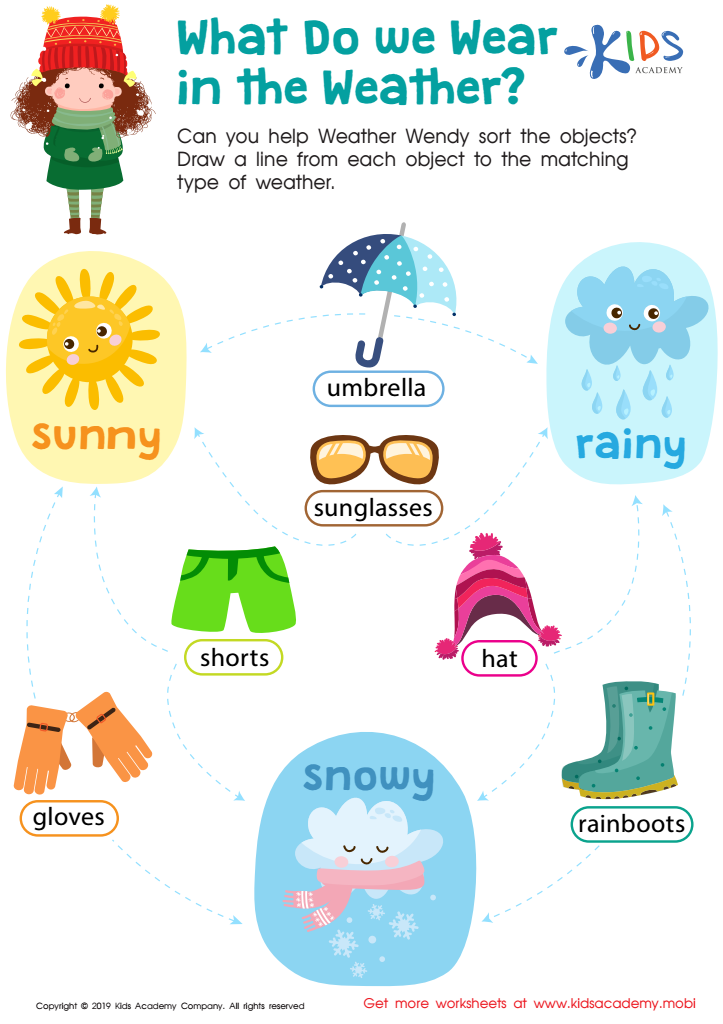
What Do We Wear in the Weather? Worksheet
This worksheet boosts young learners' everyday vocab with fun high-frequency weather words. They'll see and match familiar pictures to the words they read. Plus, it helps them develop fine motor skills. Perfect for preschoolers.
 Assign to My Students
What Do We Wear in the Weather? Worksheet
Worksheet
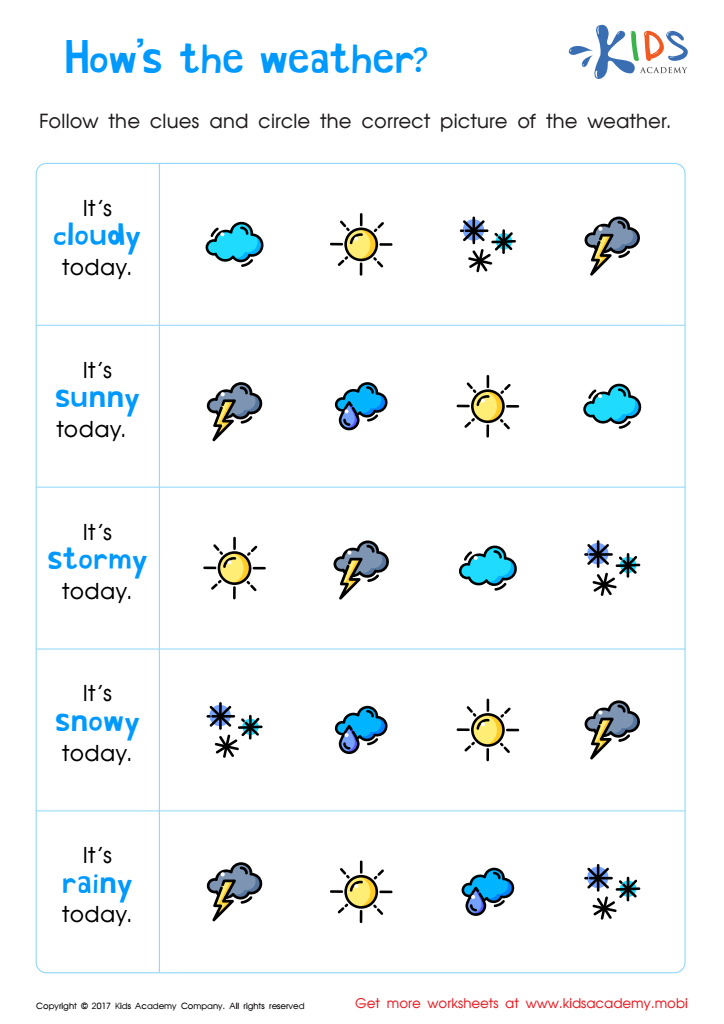
Hows the Weather Worksheet
Teaching kids about weather is a fun way to start science learning. This worksheet helps recognize symbols, literacy skills and make real world connections. Your child will love it!
Hows the Weather Worksheet
Worksheet
Join Kids Academy for Free
Who is primarily going to use this learning content?







Understanding weather conditions is vital for children aged 4-9 because it cultivates curiosity, promotes safety, and encourages critical thinking. At this developmental stage, children are naturally inquisitive about their surroundings. Teaching them about weather patterns fosters an appreciation for nature and its phenomena, making learning engaging and interactive.
Moreover, knowledge of weather conditions is crucial for safety. As children play outdoors, understanding concepts like rain, storms, or extreme heat helps them make informed decisions, such as dressing appropriately or seeking shelter. This empowers them to navigate their environment responsibly.
Additionally, learning about weather introduces fundamental scientific concepts. By exploring attributes like temperature, precipitation, and climate, children begin to develop observational skills and learn cause-and-effect relationships. Activities such as tracking the weather or creating simple forecasts can enhance numeracy and literacy skills through practical applications.
Ultimately, incorporating weather education into daily life lays the groundwork for lifelong learning. It prepares children to be informed citizens who understand the impact of climate on their communities and the world around them. For parents and teachers, fostering this early understanding is a stepping stone toward developing environmentally conscious and responsible individuals.








