
Underwater animal identification Worksheets for Ages 4-9
3 filtered results
Difficulty Level
Grade
Age
-
From - To
Subject
Activity
Standards
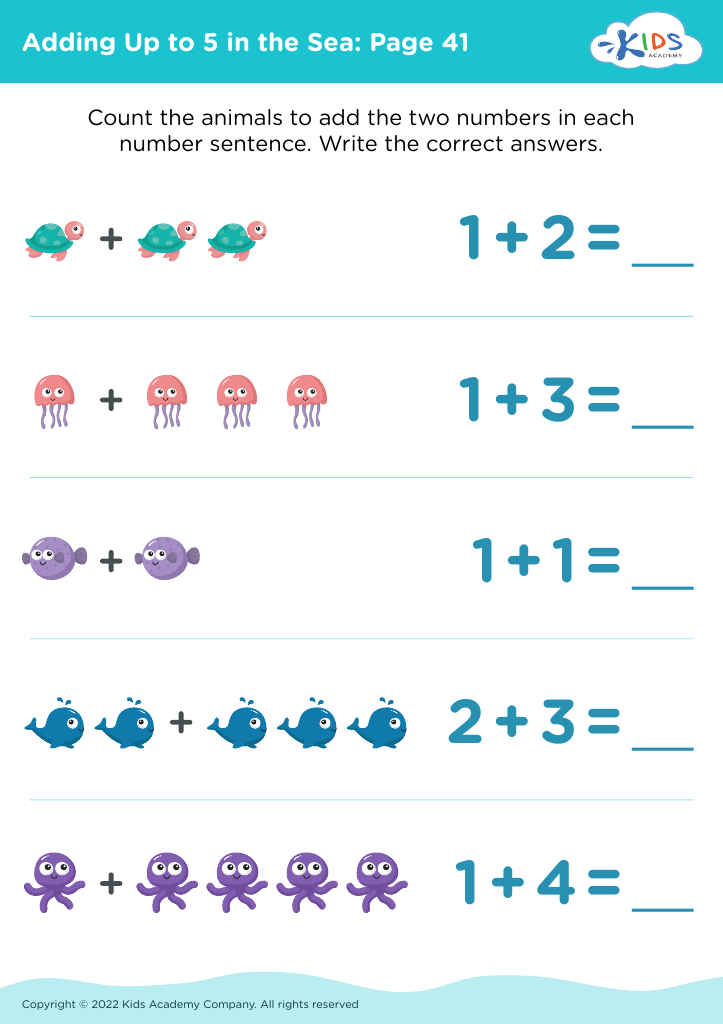
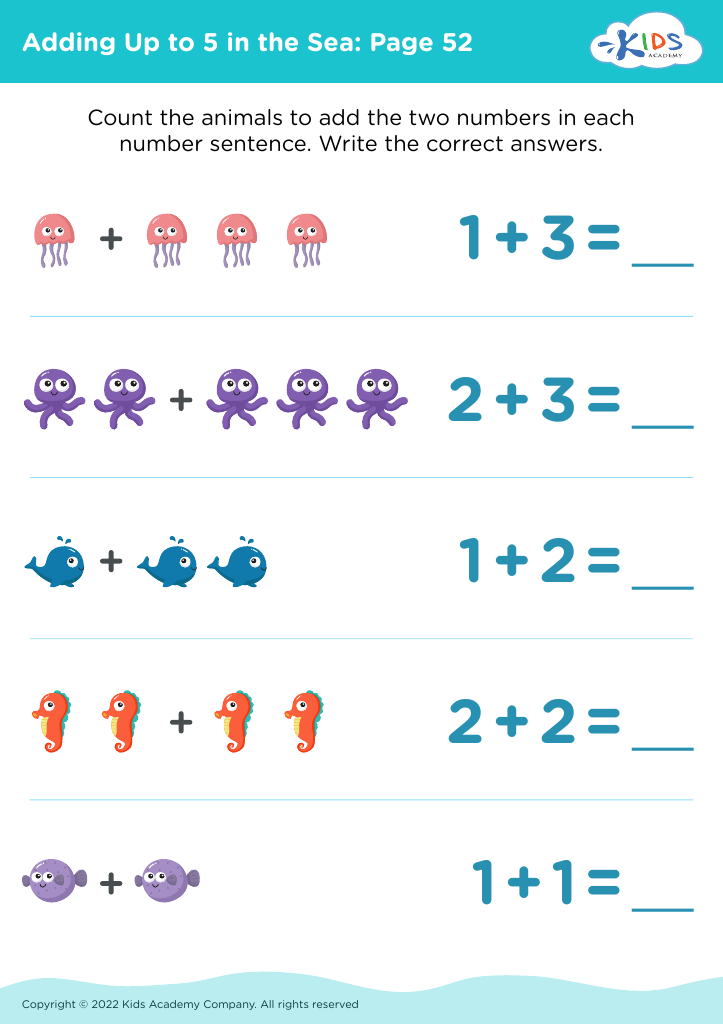
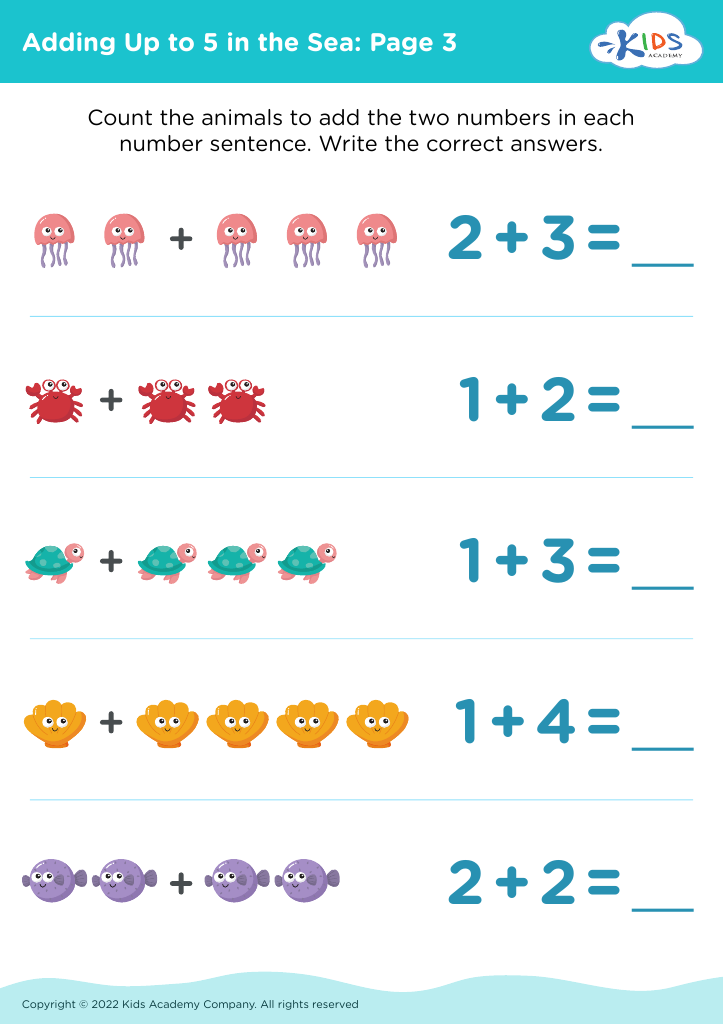
Introduce young learners to the wonders of marine life with our engaging "Underwater Animal Identification Worksheets for Ages 4-9." Designed to spark curiosity and enhance cognitive skills, these vibrant, educational worksheets help children identify various underwater creatures while developing their visual recognition and vocabulary. Perfect for both classroom and at-home learning, each activity combines fun illustrations with informative facts, promoting a deeper understanding of ocean ecosystems. Tailored for ages 4-9, our worksheets are an ideal resource for parents and educators aiming to inspire a love of marine biology in young minds. Dive into learning today!
Favorites
With answer key
Interactive
Join Kids Academy for Free
Who is primarily going to use this learning content?








Introducing children aged 4-9 to underwater animal identification fosters curiosity and a sense of wonder about the natural world. This age group is at a critical stage of cognitive and emotional development, and learning about various marine species can enhance their observational and critical thinking skills. Recognizing different underwater animals helps improve memory and attention to detail.
From an environmental perspective, understanding marine life cultivates an early appreciation for biodiversity and conservation. Children who learn about the diversity of underwater creatures and their habitats are more likely to grow into environmentally conscious adults. Additionally, knowledge about the ocean's ecosystems can inspire interest in STEM fields (Science, Technology, Engineering, and Mathematics), laying a foundation for future learning and possible careers.
For parents and teachers, teaching underwater animal identification can be an engaging, hands-on educational activity that combines fun with learning. Activities like drawing, storytelling, and interactive games related to marine life can make learning enjoyable and memorable. This engagement not only strengthens a child’s intellectual growth but also their emotional connection to the environment. By fostering these interests early, we equip children with the understanding and passion necessary to protect the oceans and their inhabitants for generations to come.








