Visual discrimination Worksheets for Ages 4-9 - Page 2
28 filtered results
-
From - To
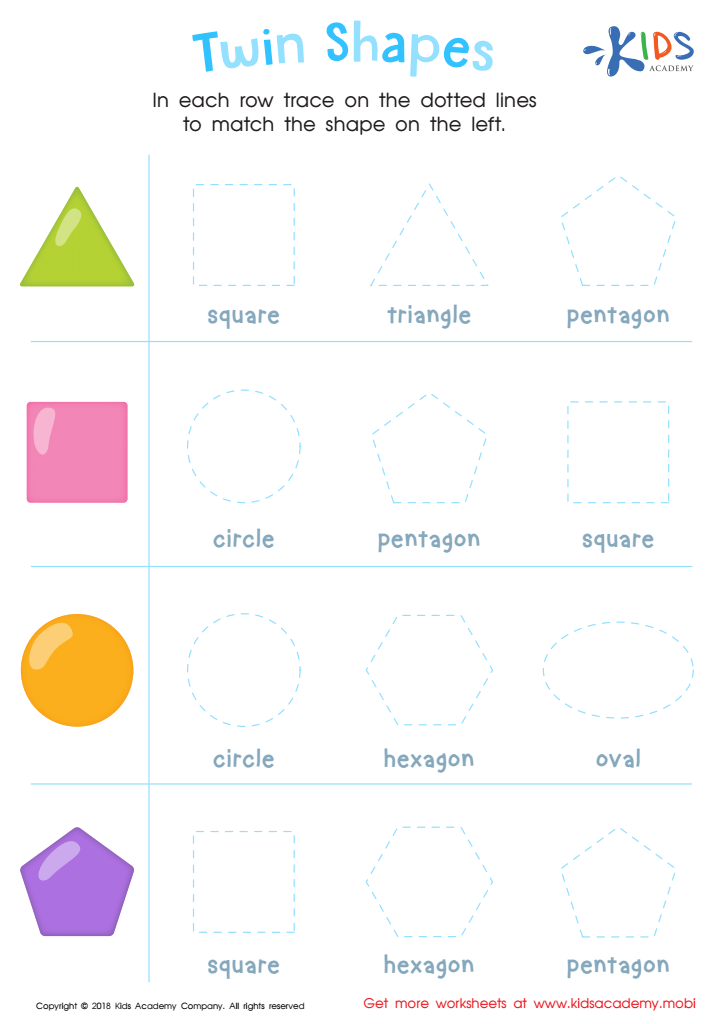
Twin Shapes Dot-to-Dot Worksheet
 Assign to My Students
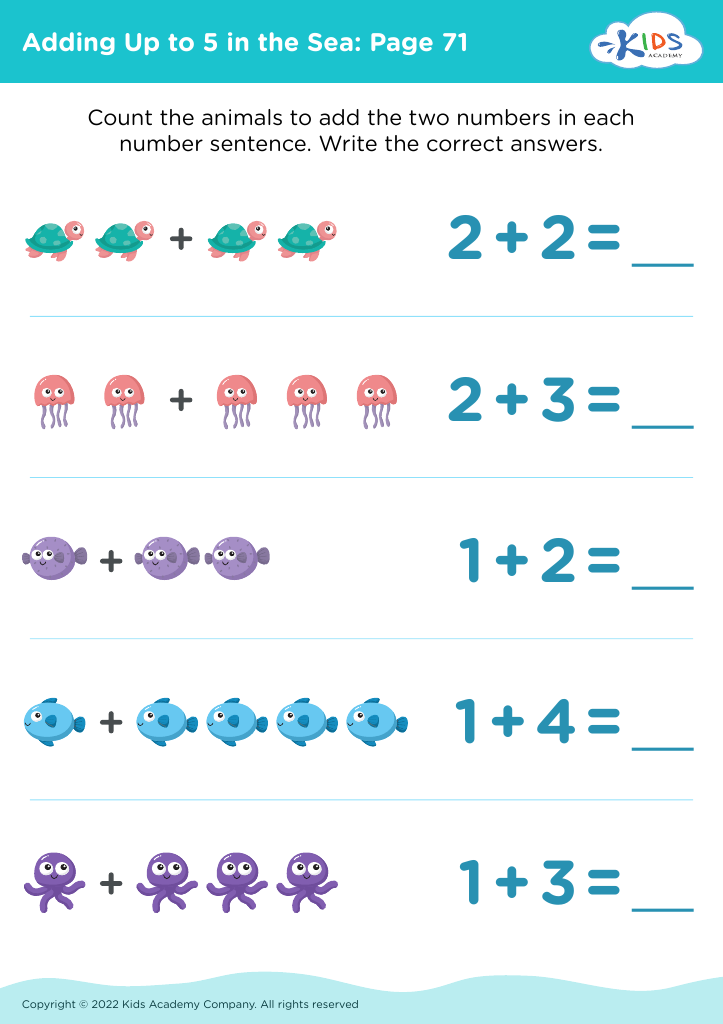
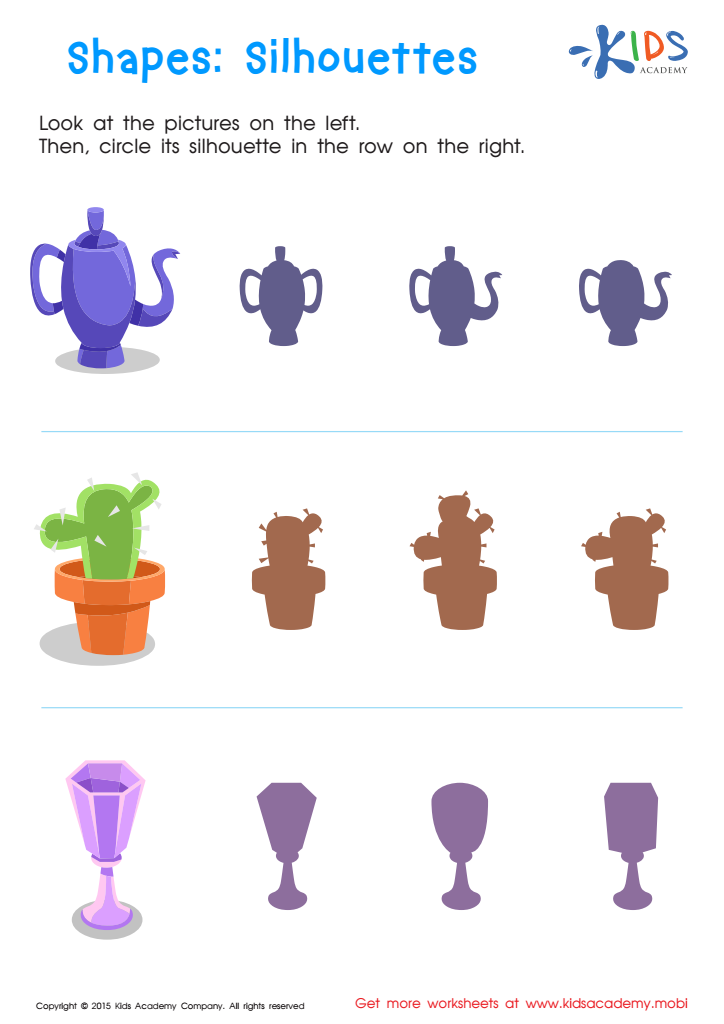
Silhouettes – Shapes Worksheet
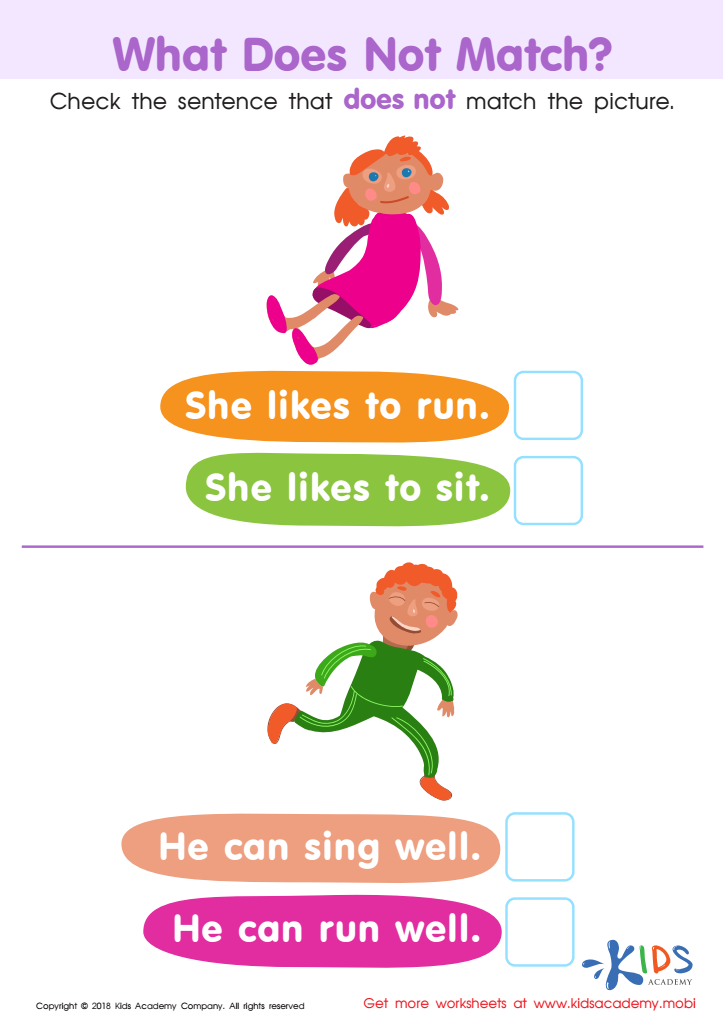
What Does Not Match? Worksheet








Visual discrimination is a crucial skill for children aged 4-9, as it involves the ability to distinguish between different shapes, colors, sizes, and spatial arrangements. This skill lays the foundation for various learning processes, particularly in literacy and mathematics. For instance, children first need to recognize different letters and numbers before they can read and calculate effectively. Improved visual discrimination fosters better phonemic awareness, helping children identify letters that have similar shapes, such as 'b' and 'd,' or 'p' and 'q.'
Furthermore, visual discrimination enhances observational skills in young learners, allowing them to engage with their environment more thoughtfully. This is essential for developing attention to detail, problem-solving abilities, and creativity—skills that are valuable in both academic settings and everyday life.
Early exposure to activities that promote visual discrimination can sharpen children's cognitive abilities, leading to increased confidence and motivation in their learning journey. Parents and teachers should incorporate games, puzzles, and hands-on activities targeting this skill, as doing so not only boosts academic success but also nurtures essential life skills. Investing in visual discrimination training early on ensures that children build a strong foundation for later complex cognitive tasks.








