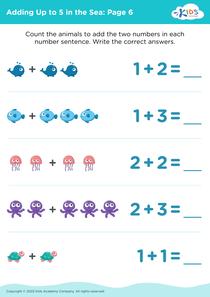
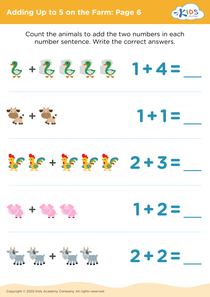
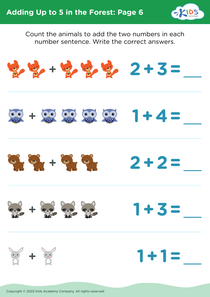
Counting practice Adding at the Zoo Worksheets for Ages 4-9
41 filtered results
-
From - To
Introduce your child to the exciting world of math with our "Counting Practice Adding at the Zoo Worksheets" designed for ages 4-9. These engaging worksheets combine fun zoo-themed visuals with addition exercises to reinforce essential counting skills. Ideal for early learners, each page makes math practice enjoyable by associating numbers with animals they love. Tailored to various skill levels, our colorful and interactive worksheets ensure gradual progression and confidence in math abilities. Perfect for both classroom and home use, these resources build strong mathematical foundations while providing endless enjoyment. Spark your child's interest in math with additive adventures at the zoo!
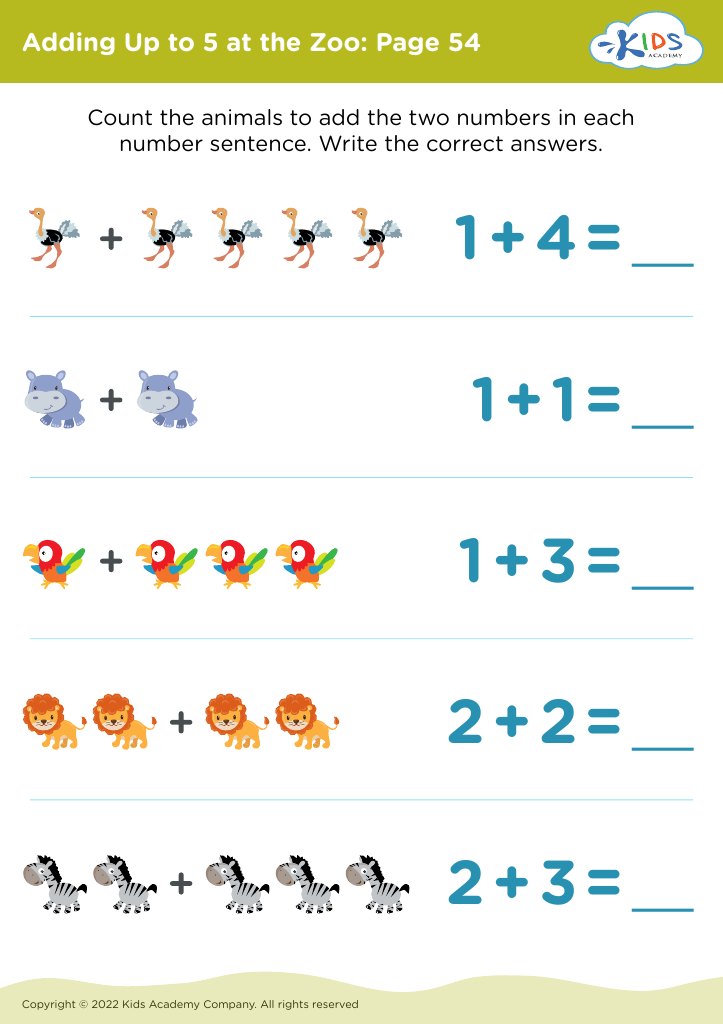
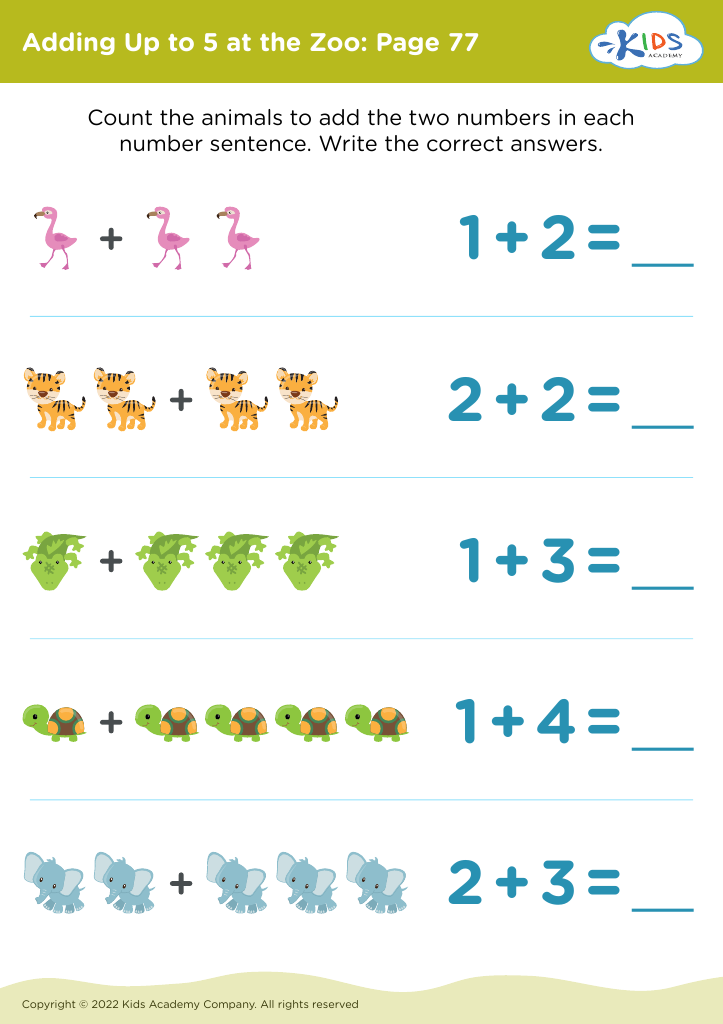
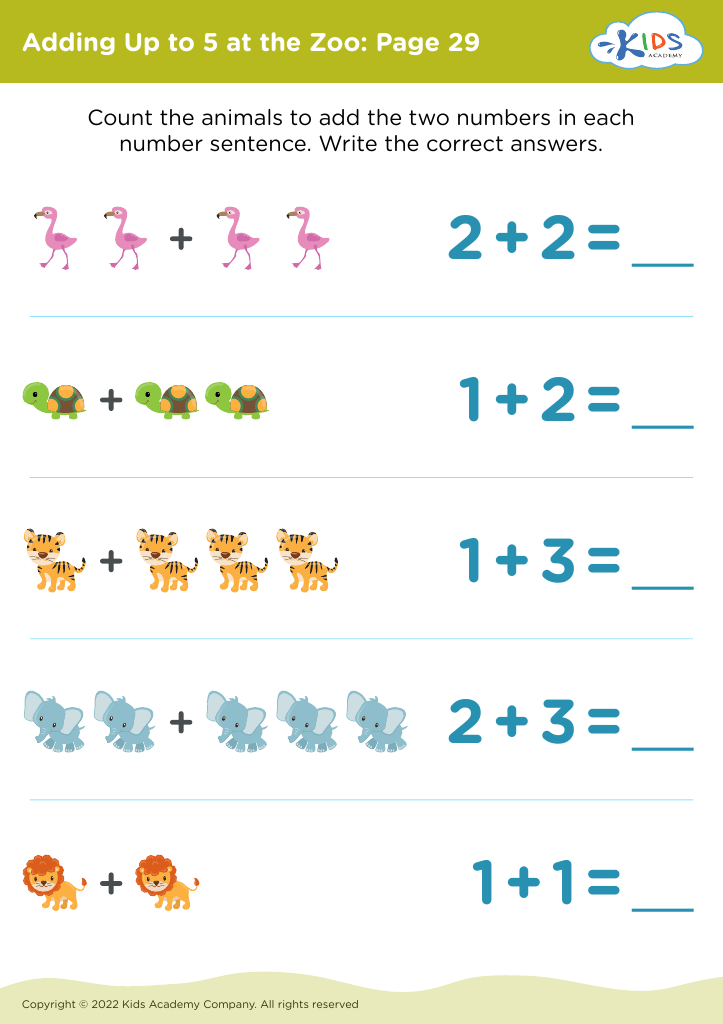
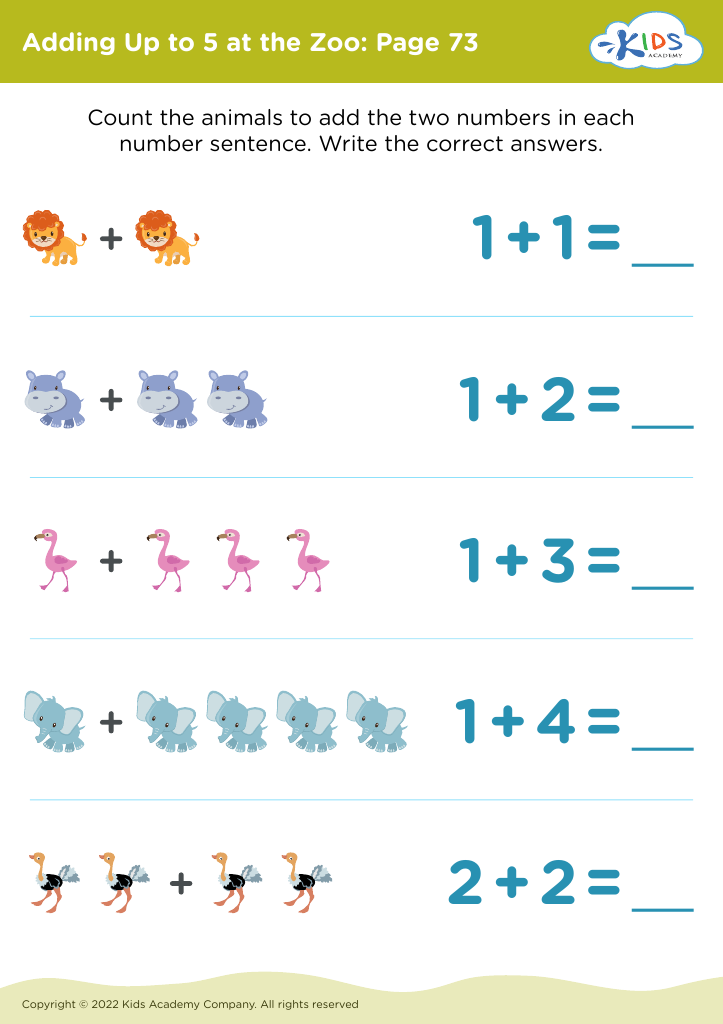
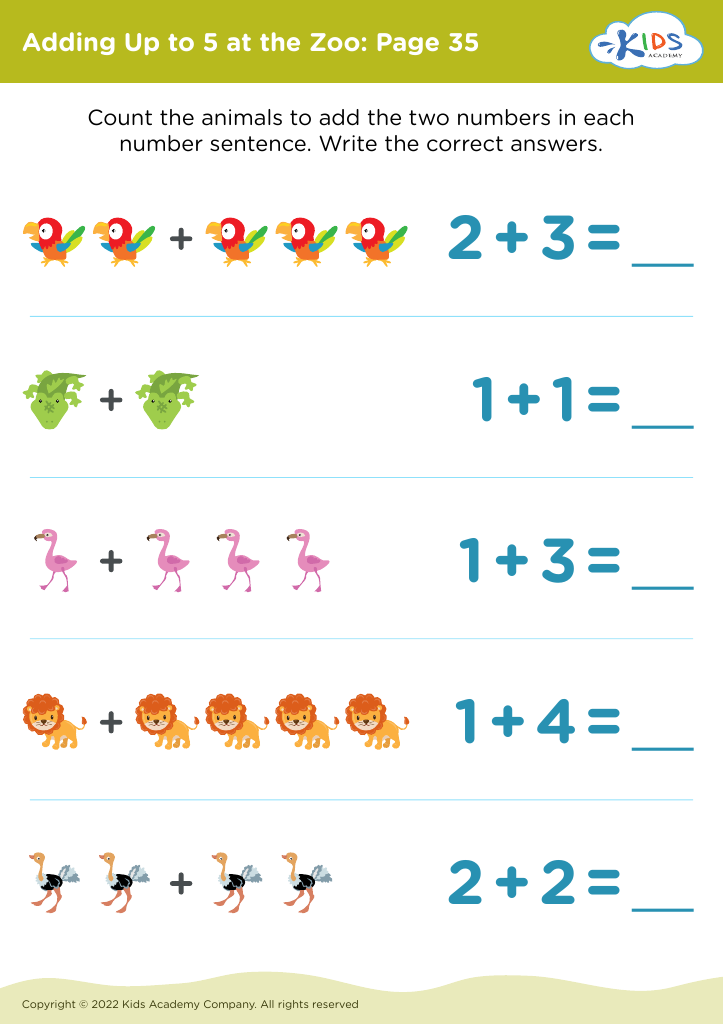
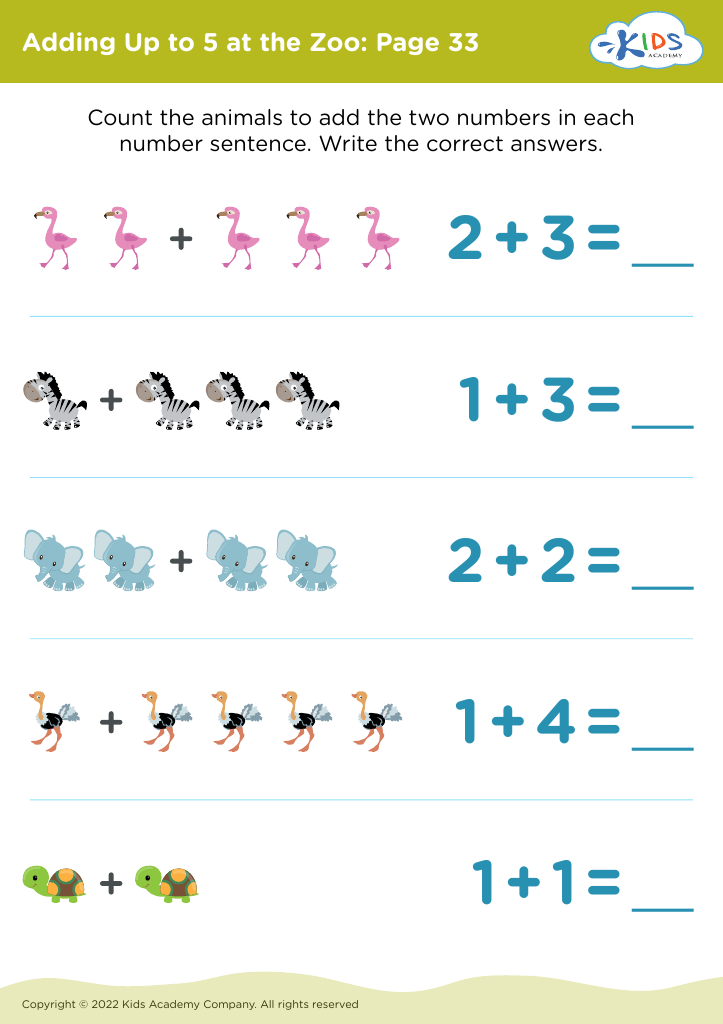
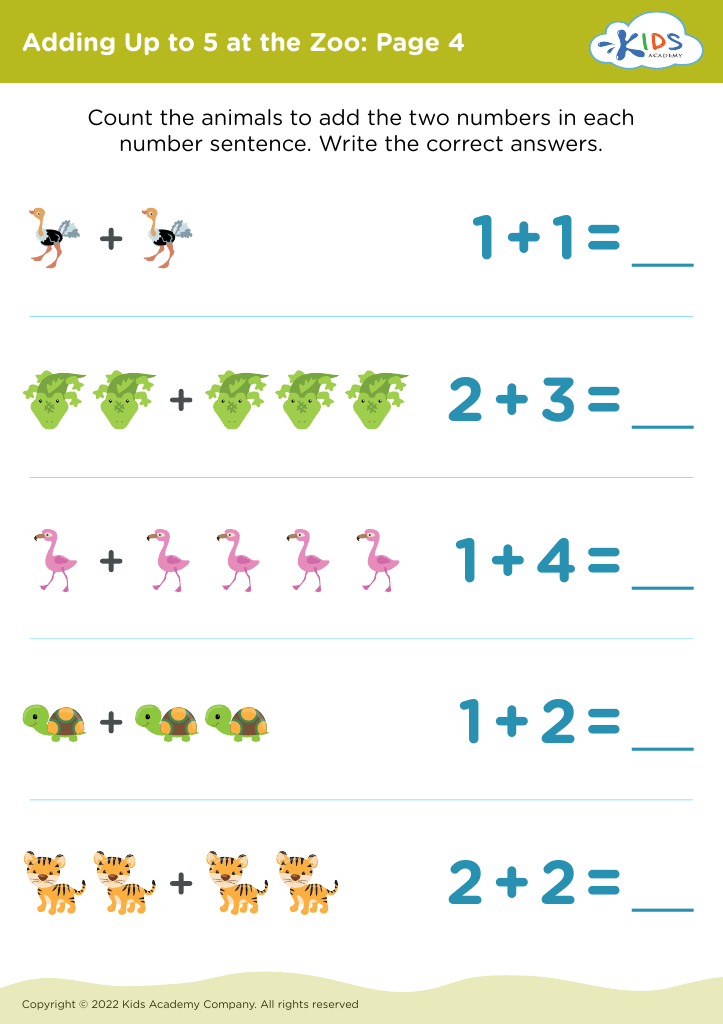
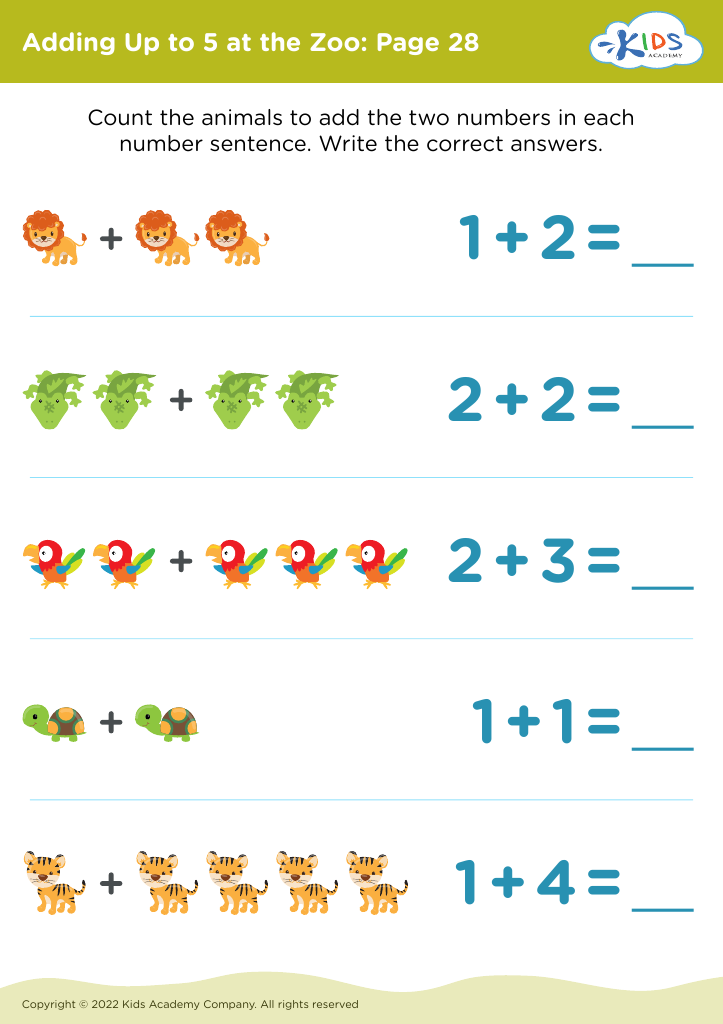
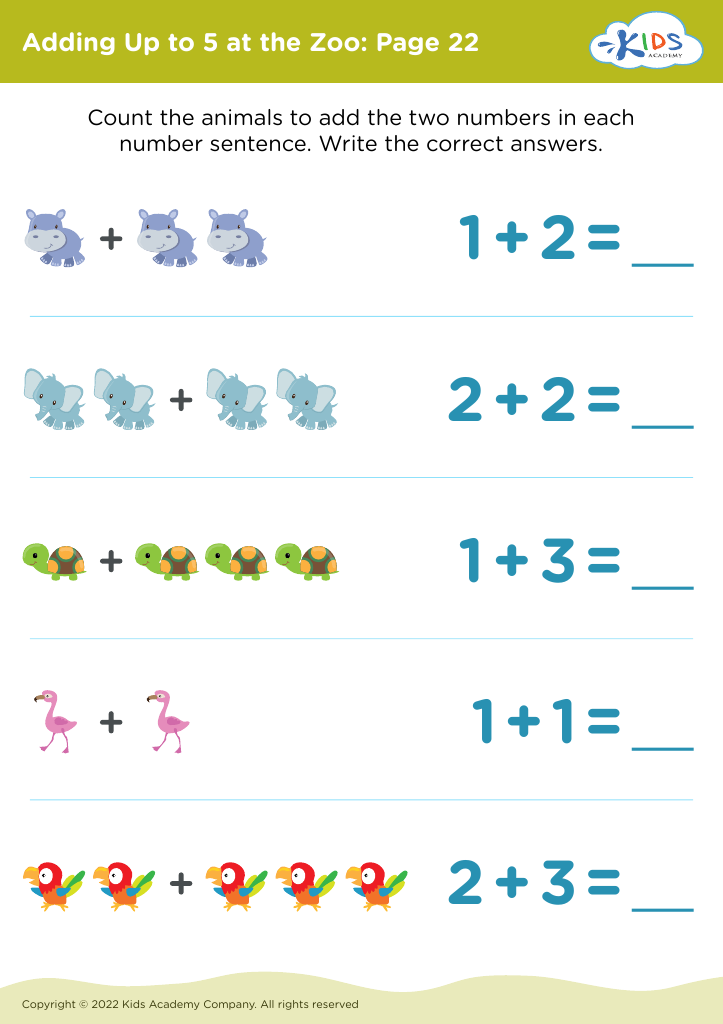
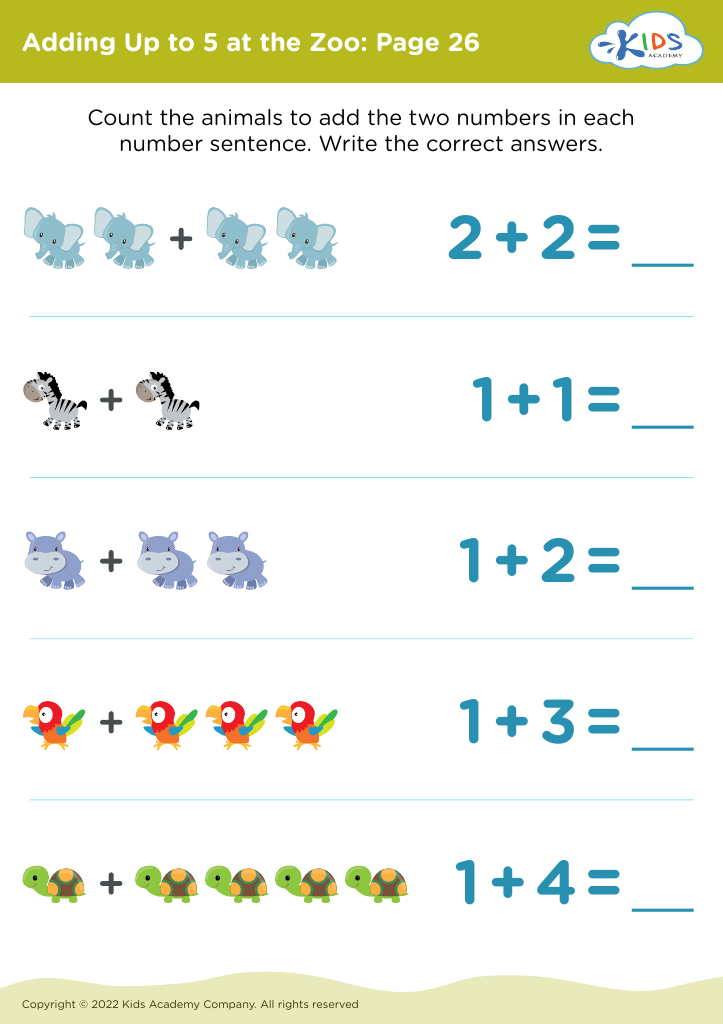
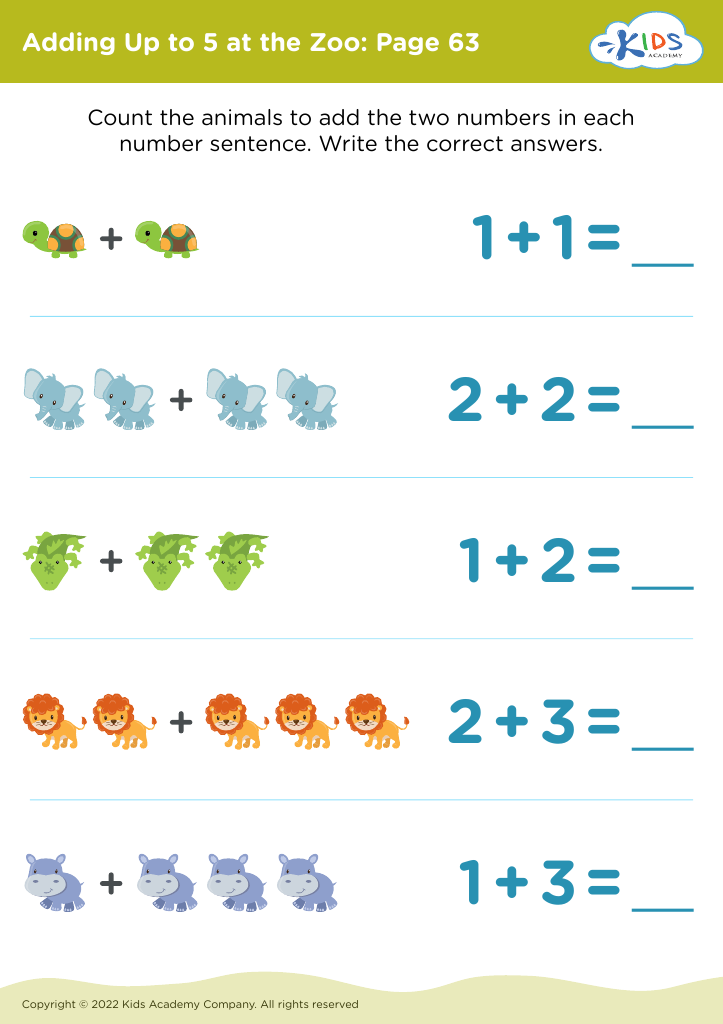
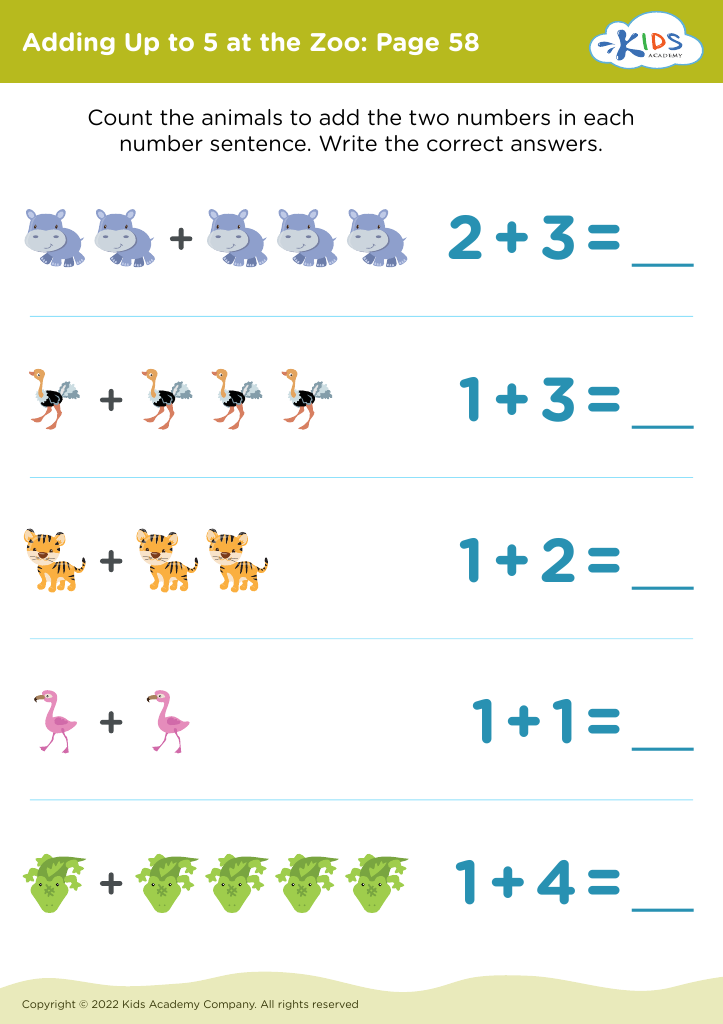
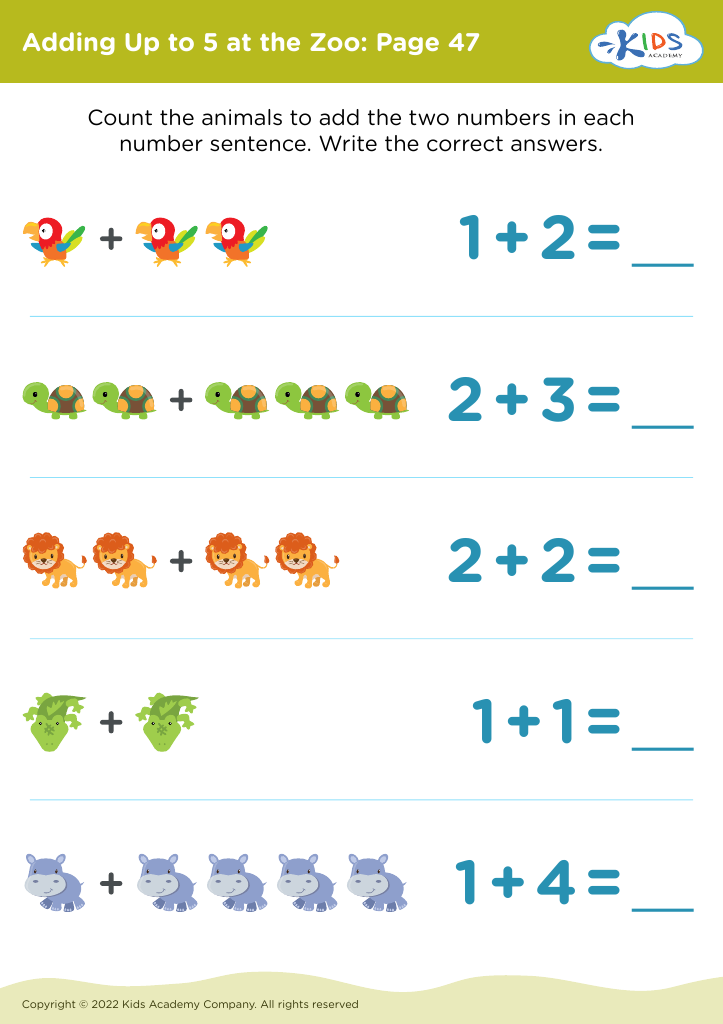
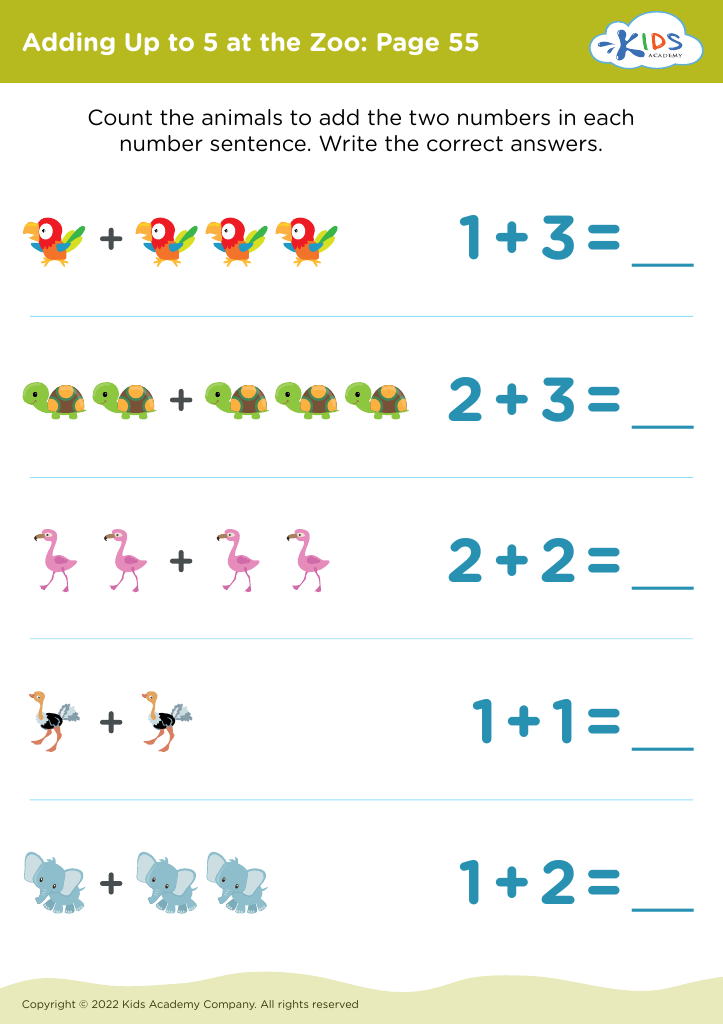
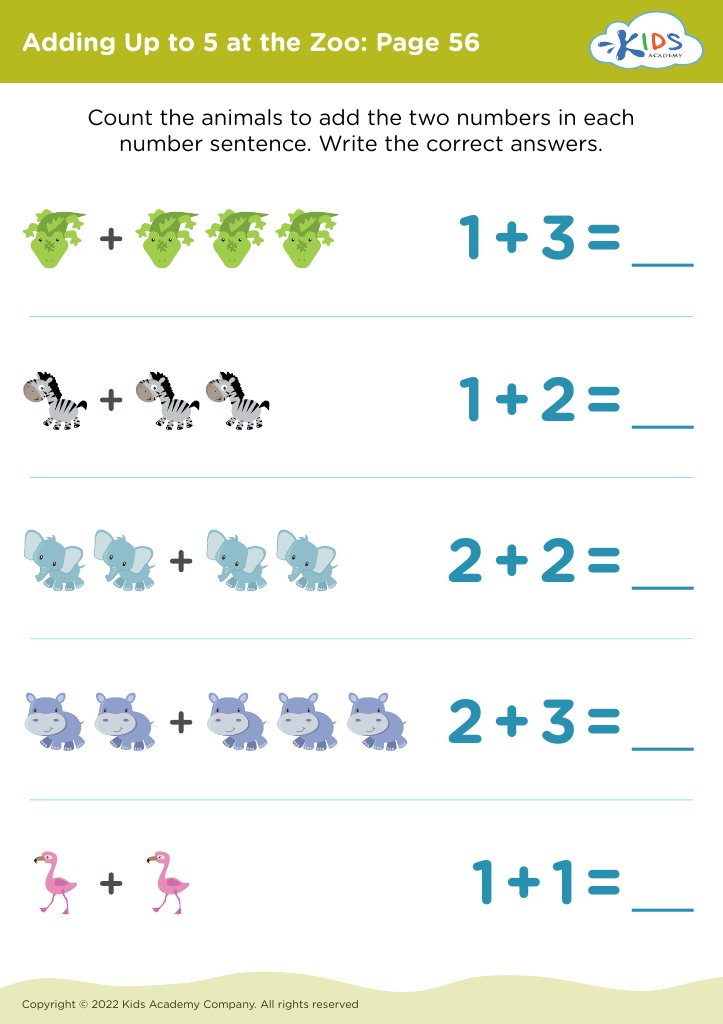
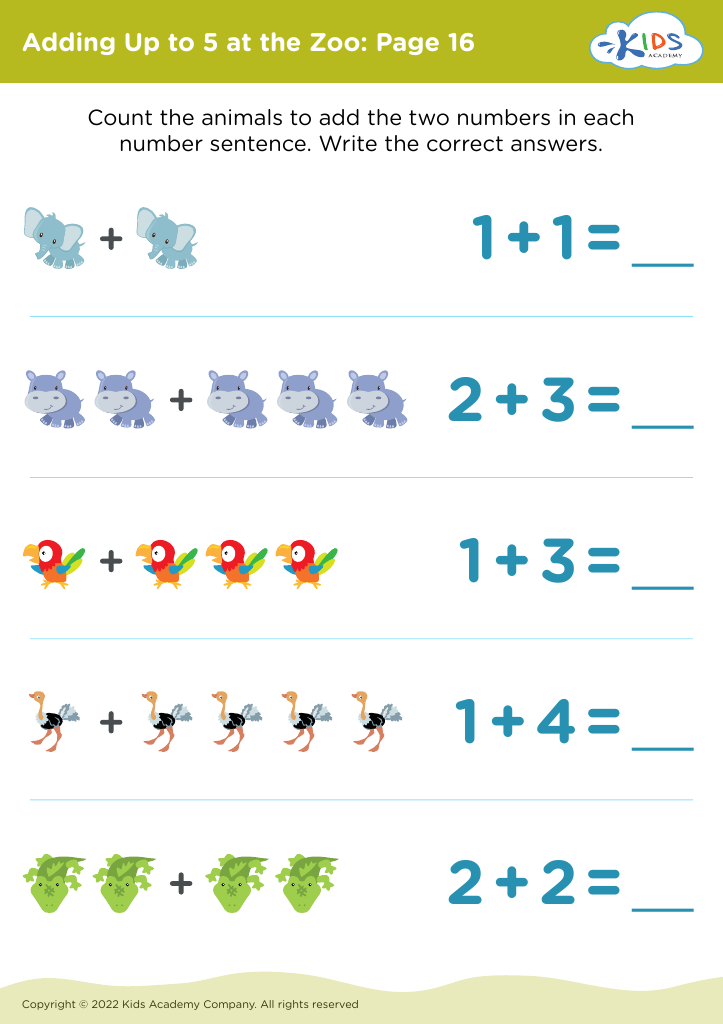
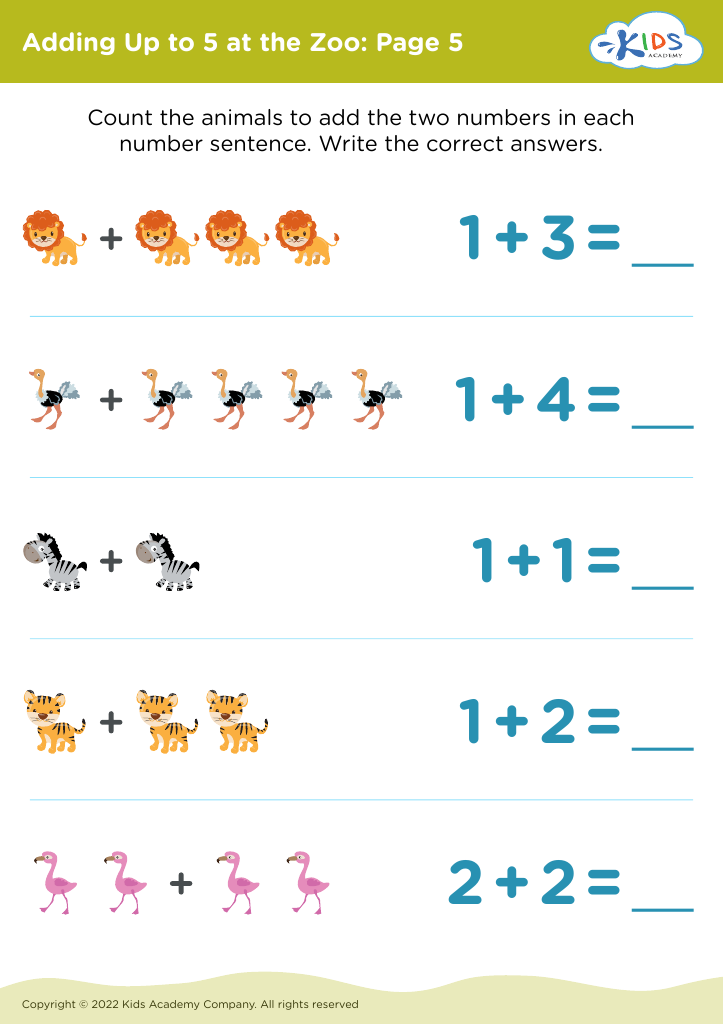
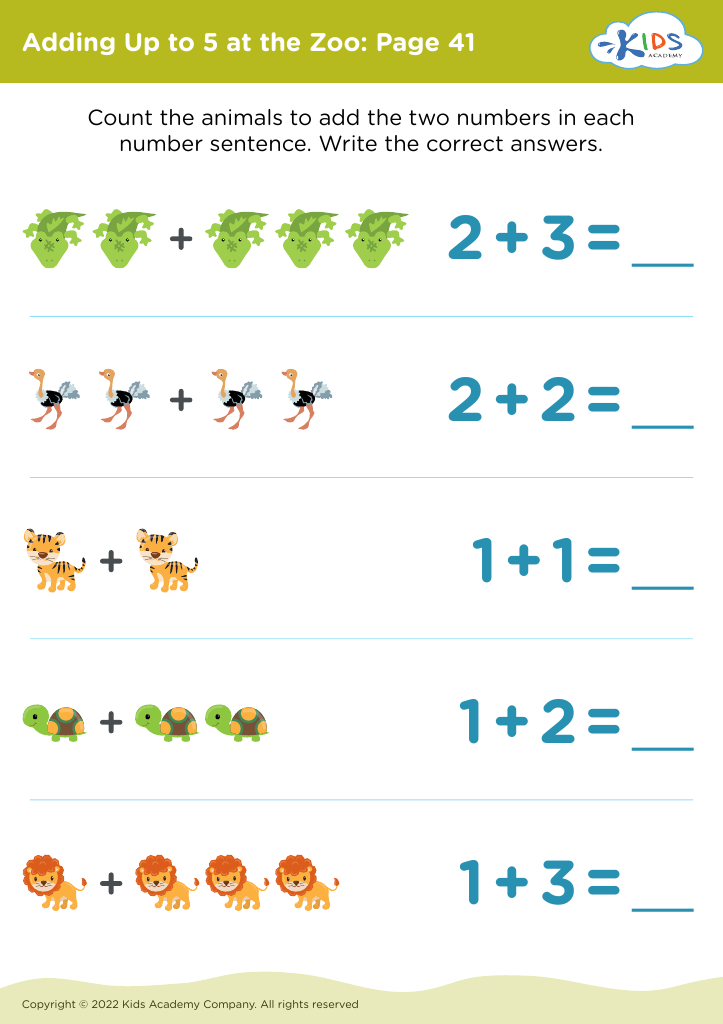
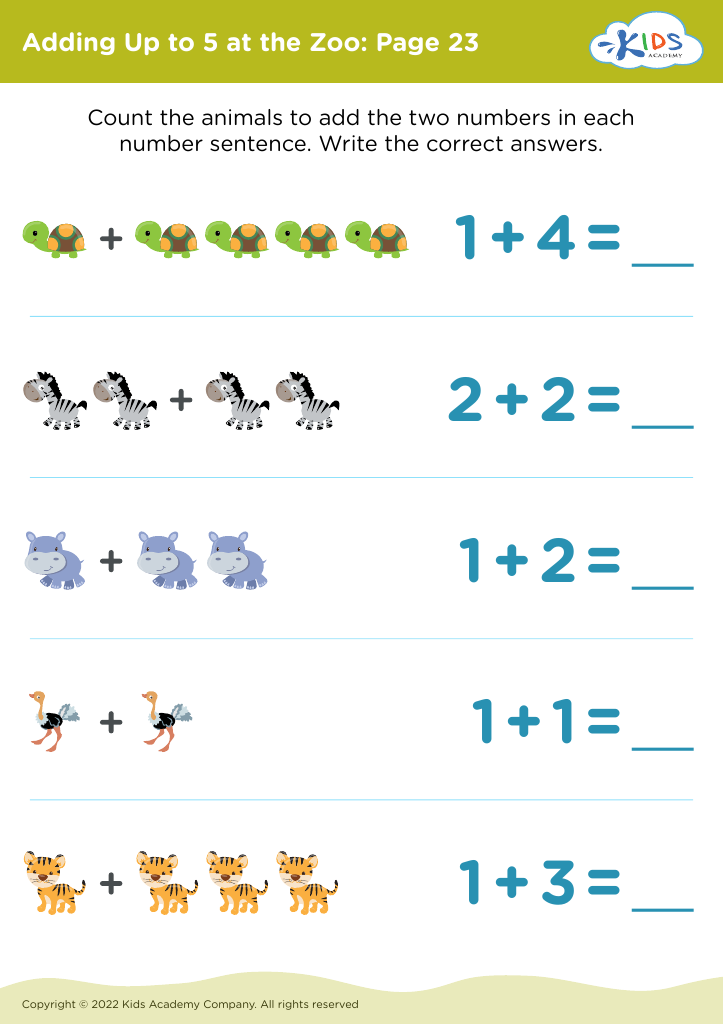
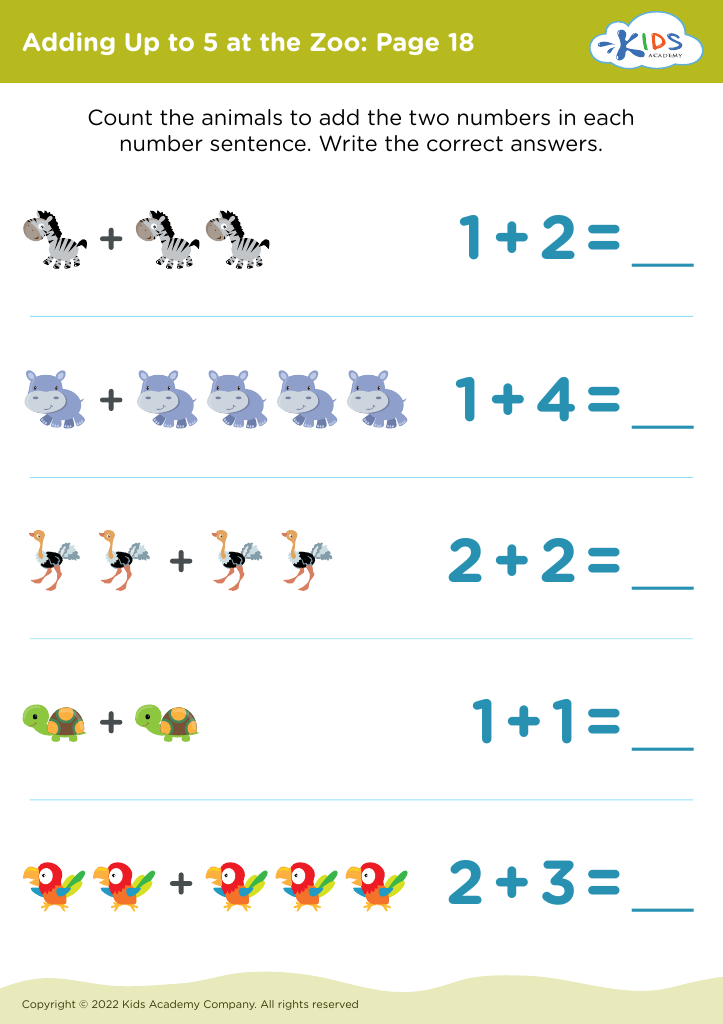
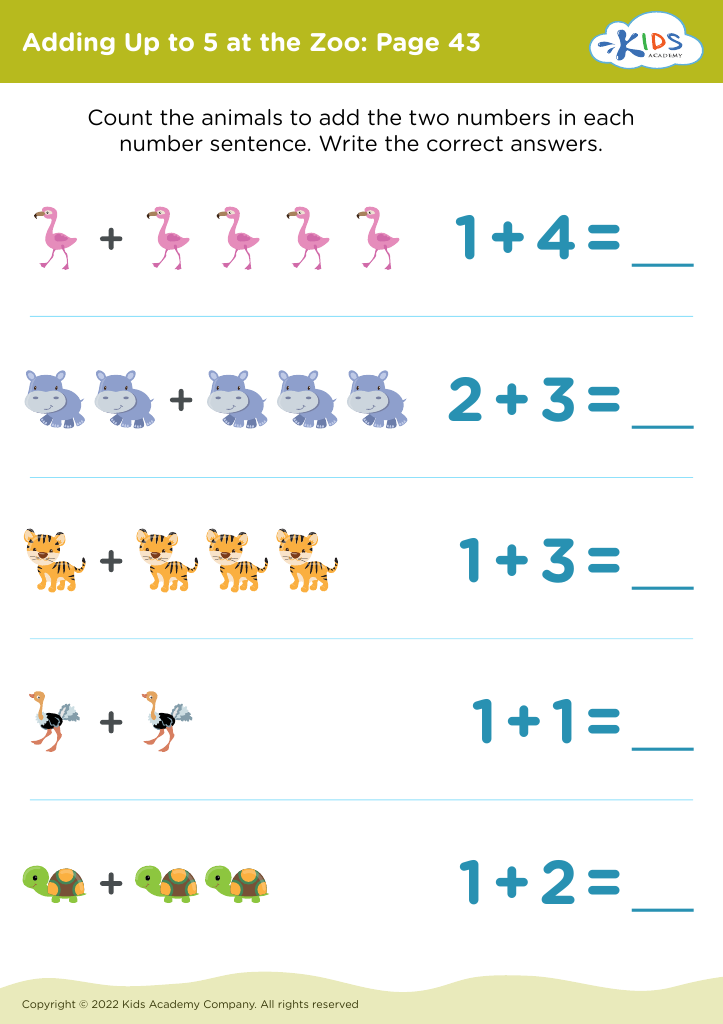
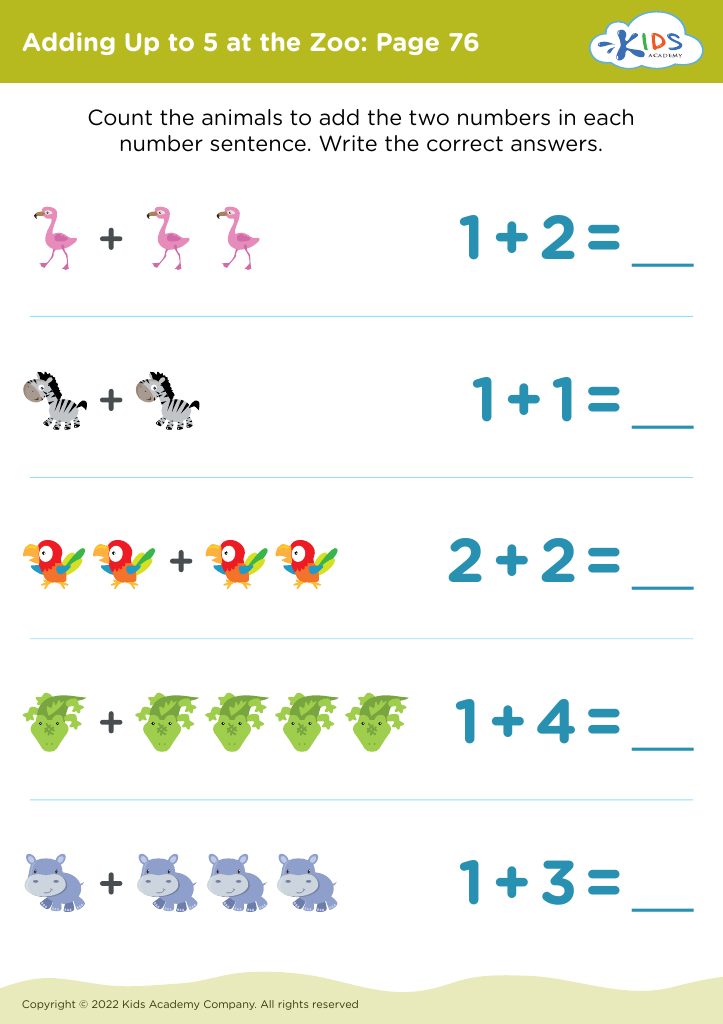
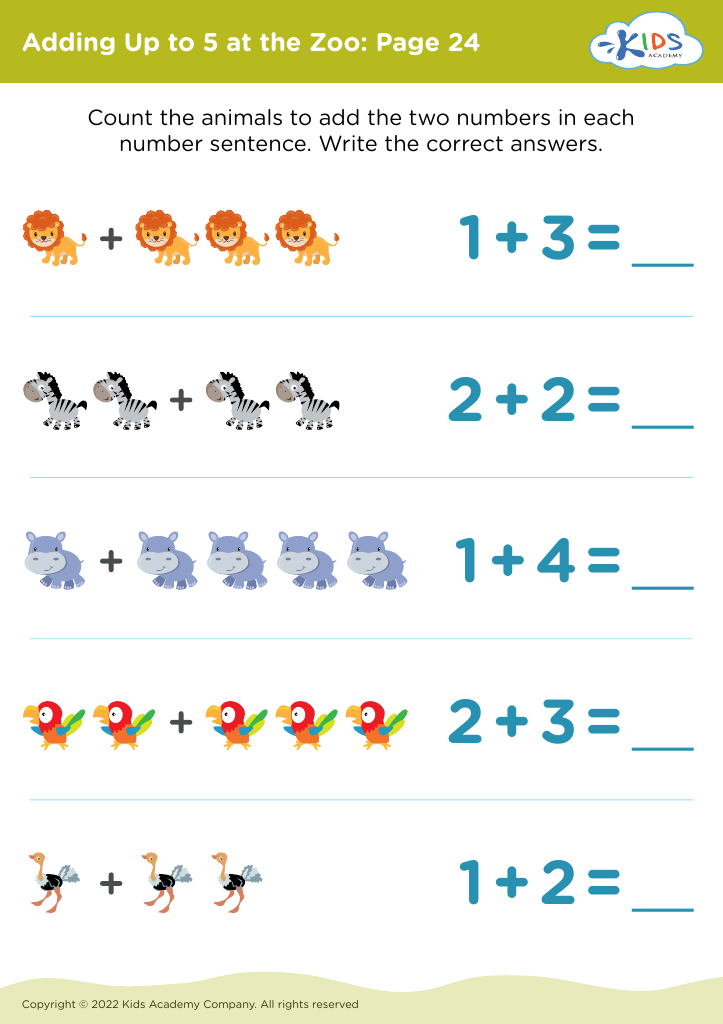
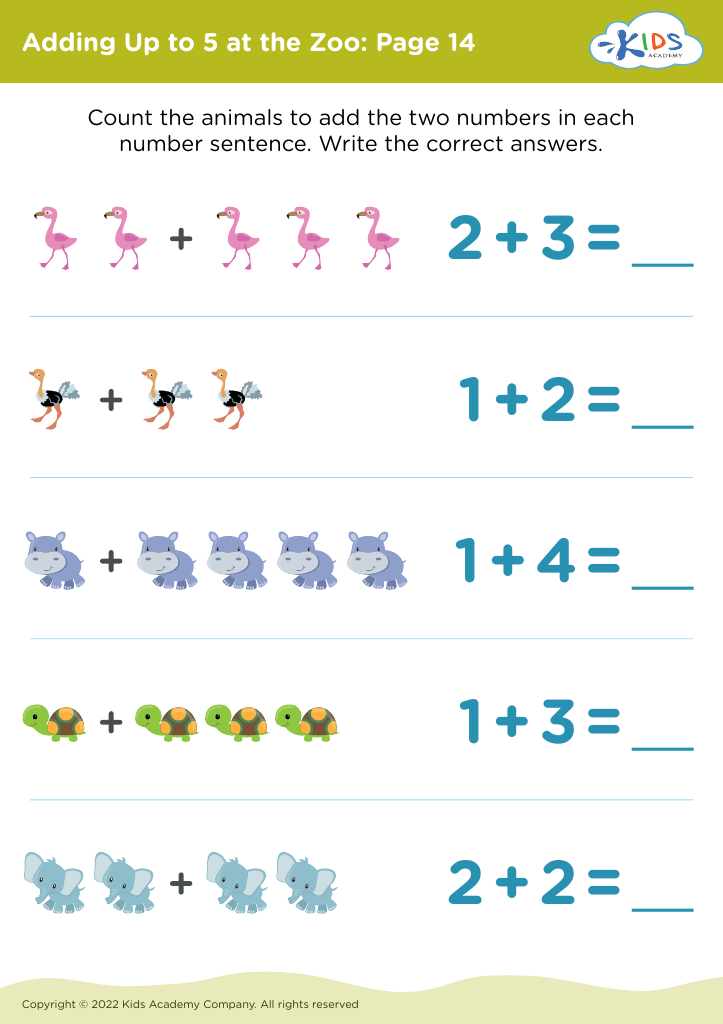



Counting practice, such as Adding at the Zoo for children ages 4-9, plays a foundational role in early childhood development and education. Engaging in counting activities at this early age helps children build essential numeracy skills that are critical for their future academic success. Integrating counting with a fun and relatable theme like animals at the zoo not only makes learning enjoyable but also enhances a child's ability to grasp and retain mathematical concepts.
Children learn best through play, and by counting animals or adding zoo scenarios, they associate numbers with real-life contexts, which fosters better comprehension. This type of practice encourages the development of cognitive abilities such as number recognition, one-to-one correspondence, and basic addition. Moreover, it lays the groundwork for more advanced mathematical concepts that children will encounter as they progress in their education.
Parents and teachers who invest time in counting practices like Adding at the Zoo help children develop critical thinking skills, problem-solving abilities, and a love for learning. Early positive experiences with math can dispel anxiety and build confidence in their mathematical capabilities. Additionally, interactive counting activities support fine motor skills development, language skills, and socio-emotional growth as children navigate sharing and cooperation in group settings.