Improve reading skills Adding up to 1000 Worksheets for Ages 4-9
13 filtered results
-
From - To
Enhance your child's reading and math proficiency with our Adding up to 1000 worksheets designed for ages 4-9! Our expertly crafted exercises combine fundamental arithmetic with engaging reading activities to boost comprehension and analytical skills. Each worksheet provides clear instructions and varied challenges, ensuring a balanced learning experience that keeps young minds captivated. Ideal for building confidence in problem-solving and critical thinking, these resources offer a well-rounded educational journey. Perfect for home or classroom use, they cater to diverse learning styles, making reading an enjoyable and fruitful activity. Elevate your child's educational development by exploring our comprehensive worksheets today!
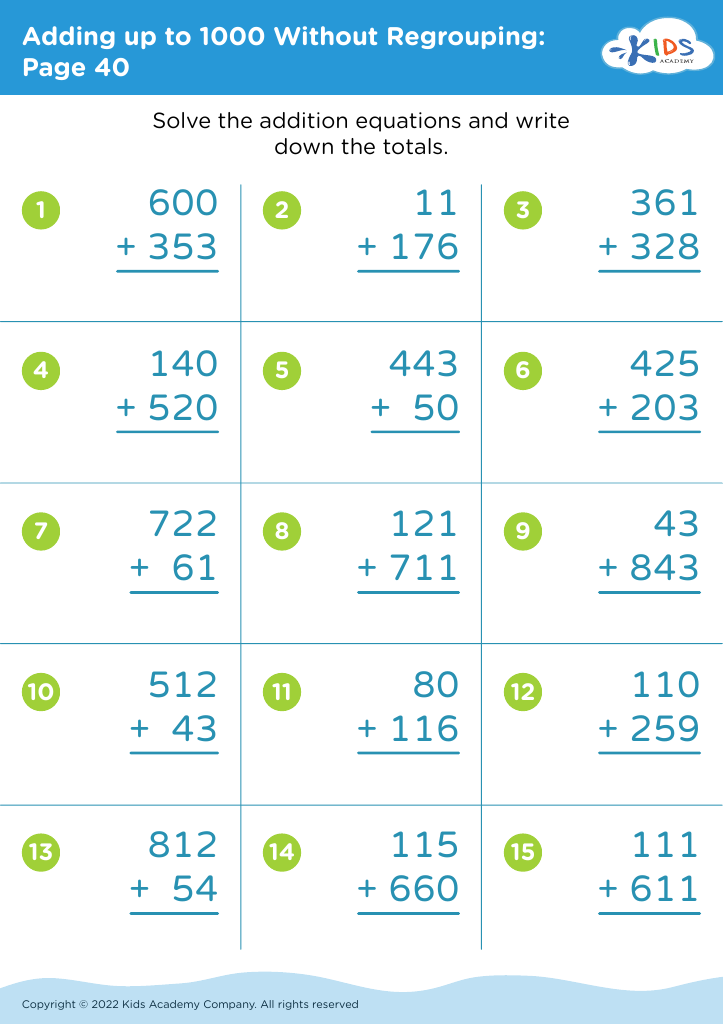
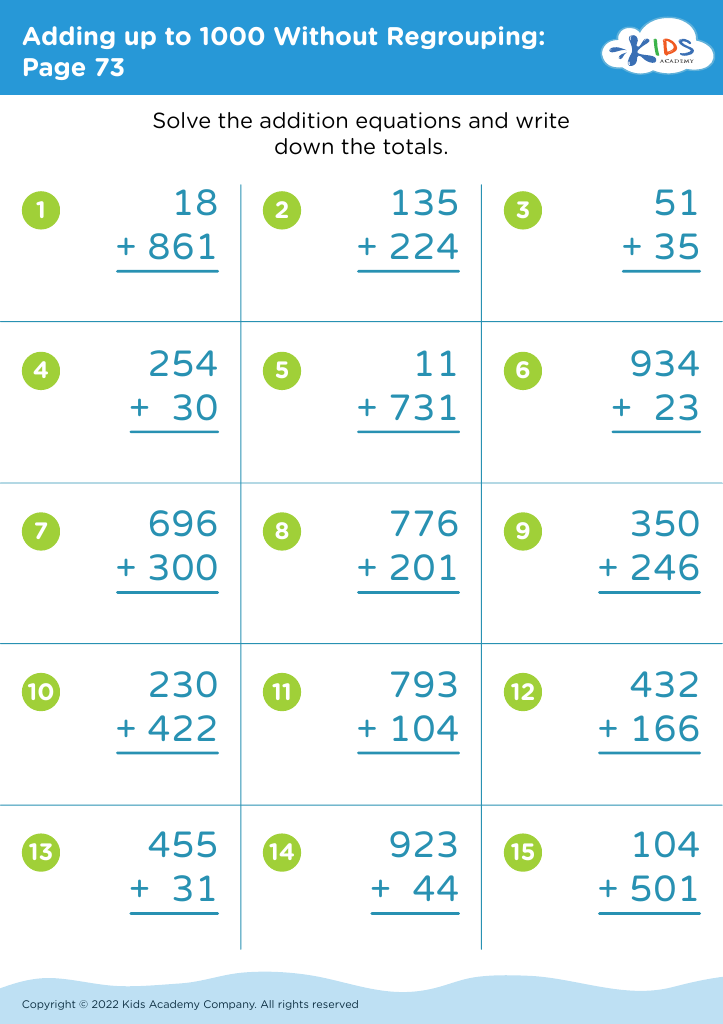
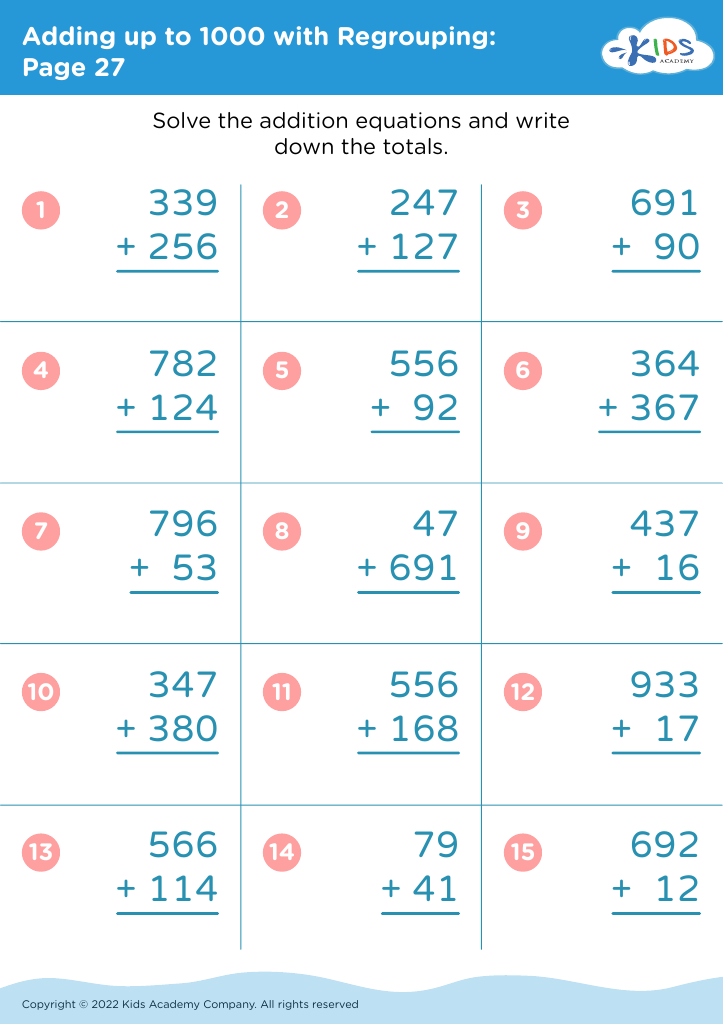
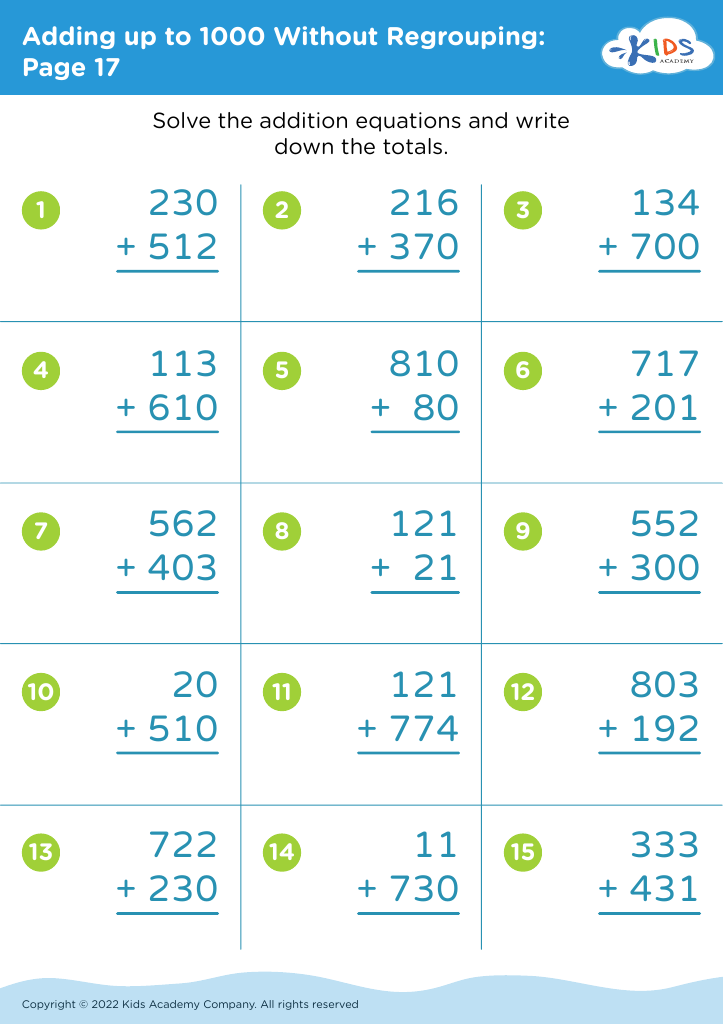
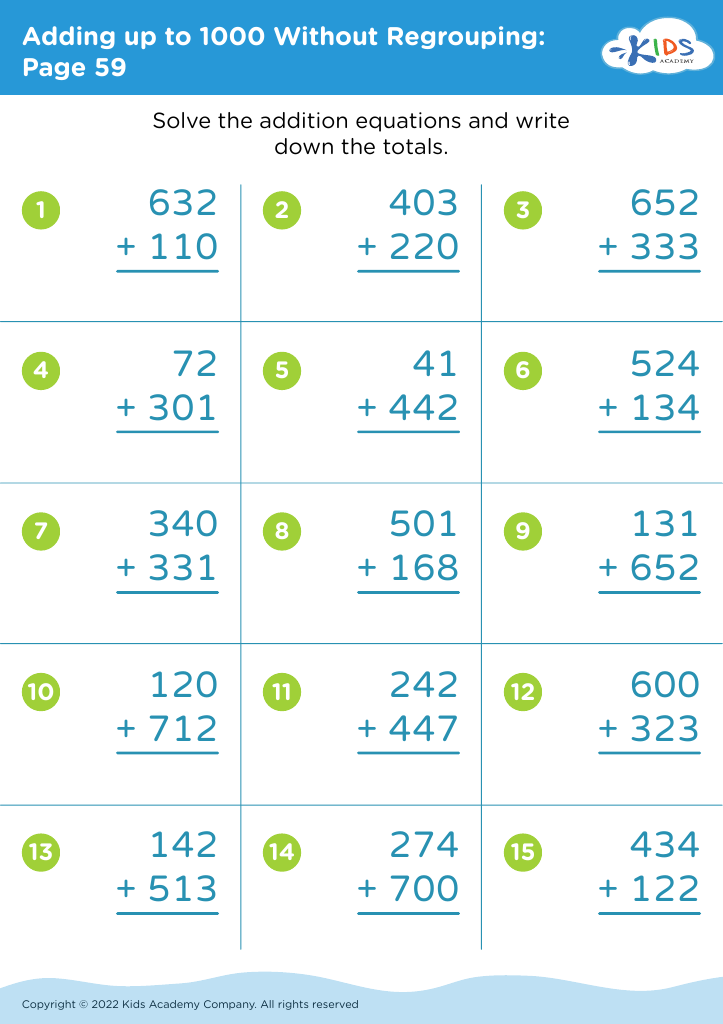
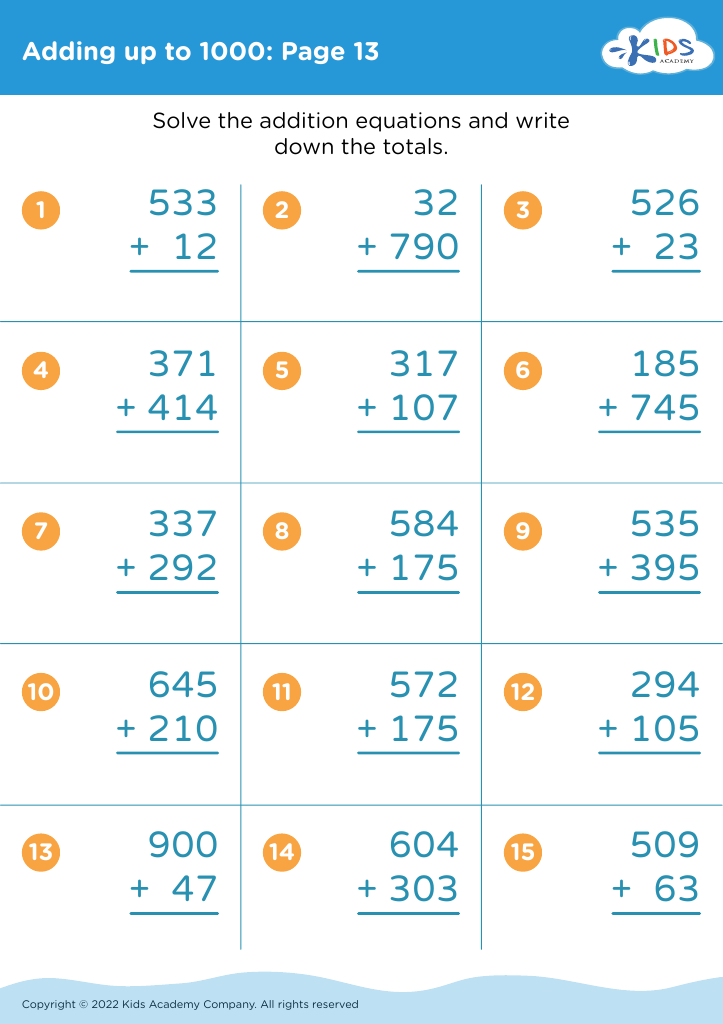
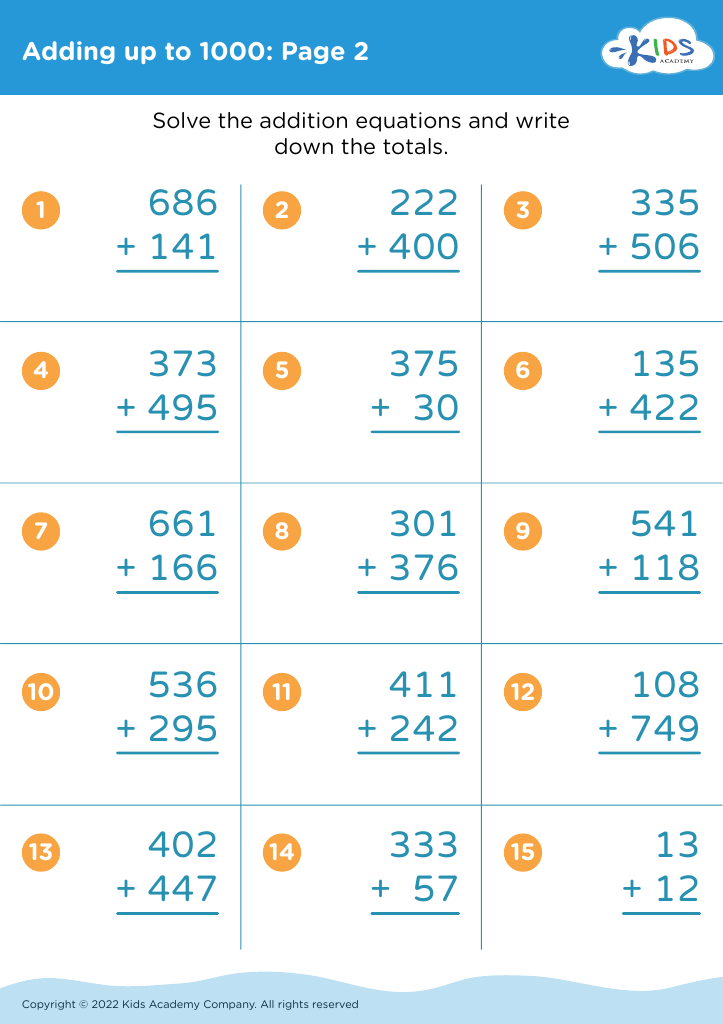
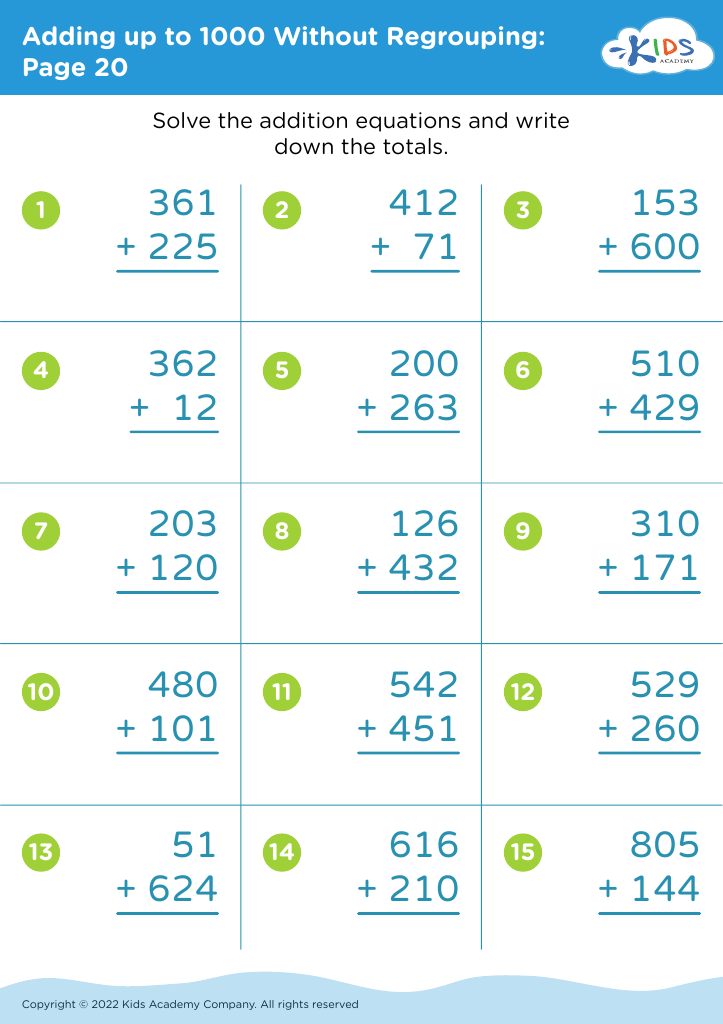
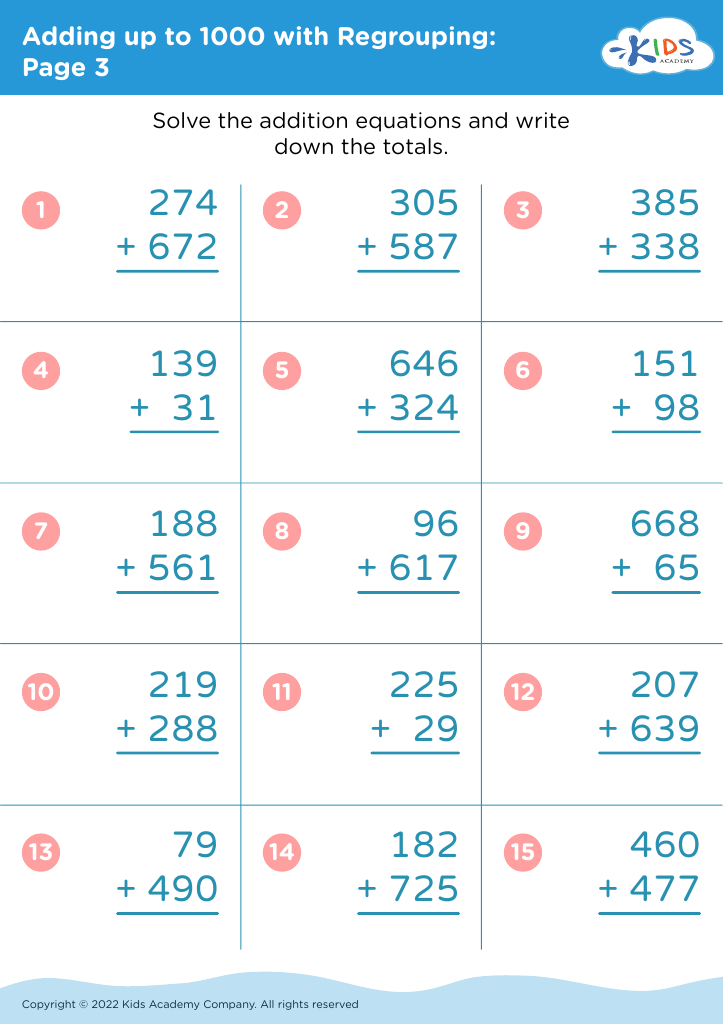
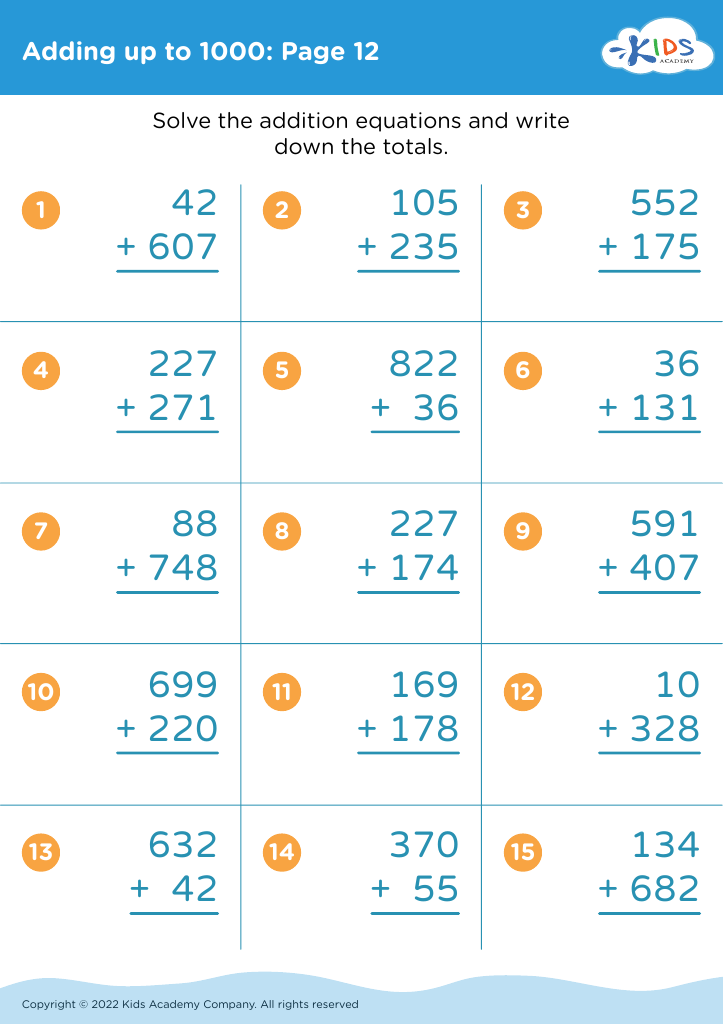
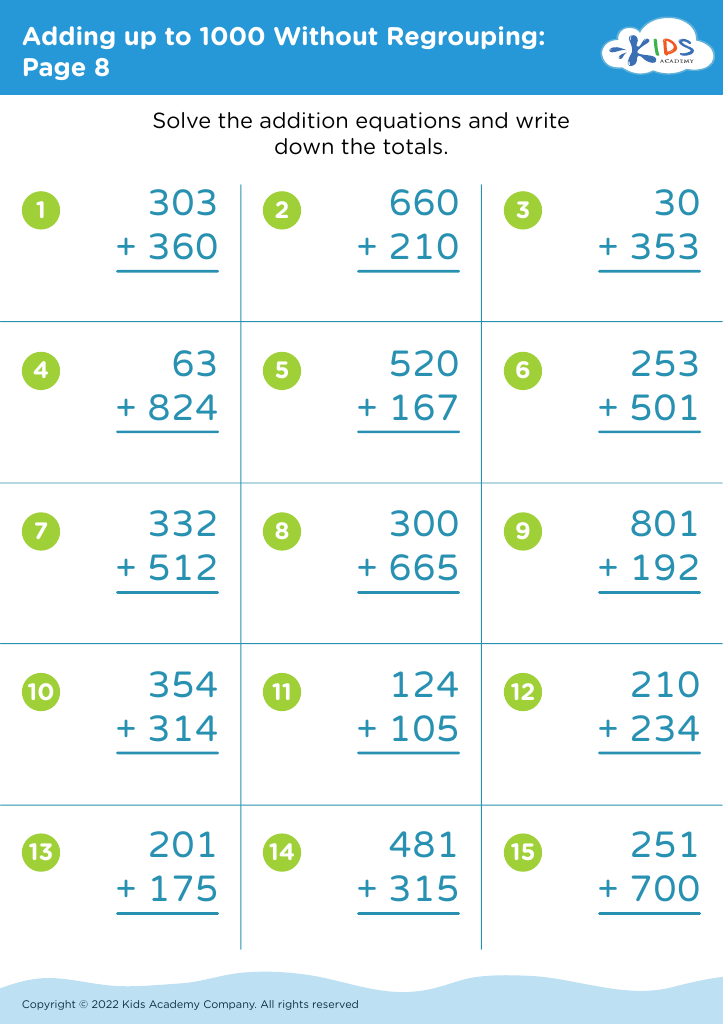
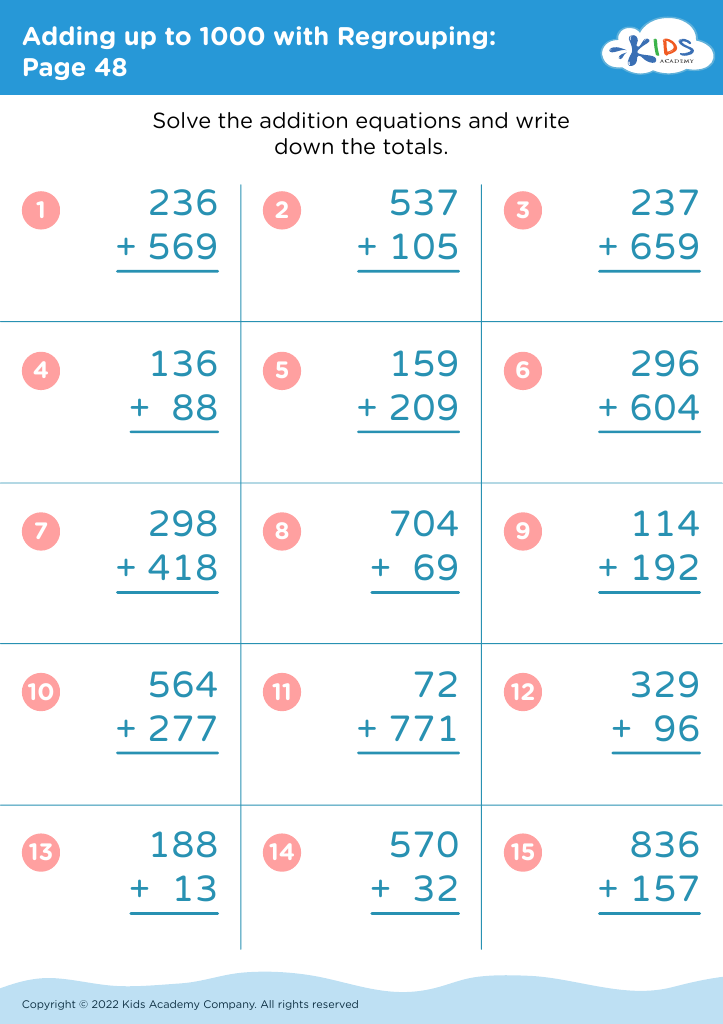
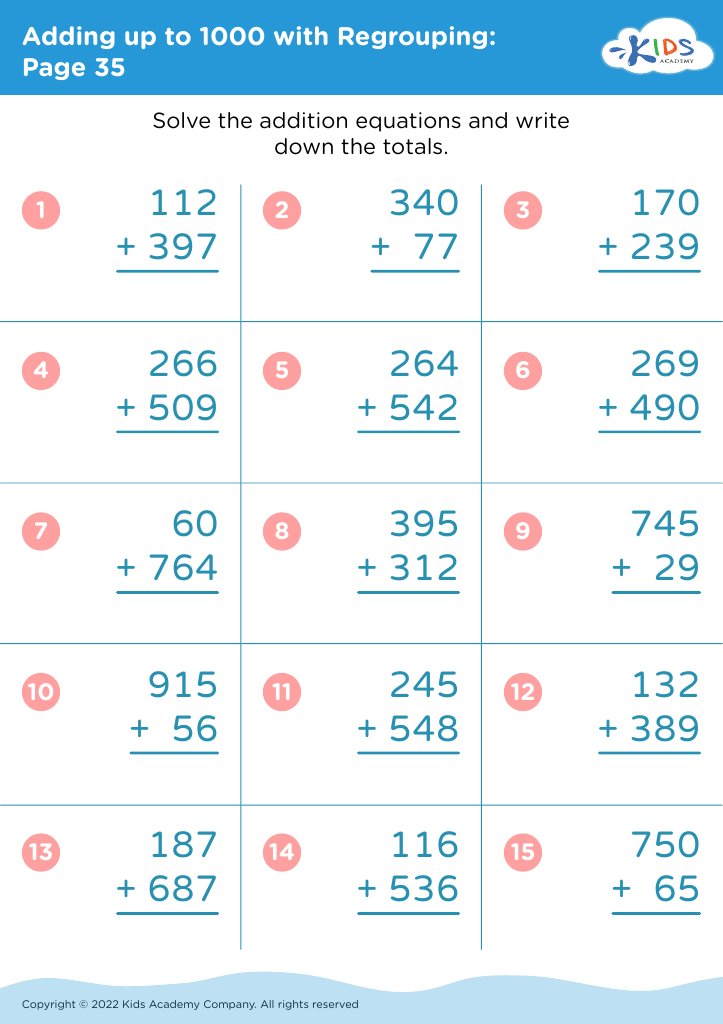



Fostering reading skills and understanding basic addition up to 1000 during early childhood education is essential for laying a strong academic foundation. Ages 4-9 are critical for cognitive development, and during this period, children's brains are highly receptive to learning new concepts. Reading skills are fundamental for success in every subject area, enhancing comprehension, critical thinking, and communication abilities. When children become skilled readers, they are more likely to perform well academically, develop a love for learning, and achieve high self-esteem.
Similarly, understanding addition up to 1000 equips children with essential math skills needed for everyday life and future academic pursuits. Mastering these numerical concepts reinforces logical reasoning, problem-solving abilities, and a foundational understanding of more complex mathematical principles encountered later in their education.
Parents and teachers play a crucial role in providing support, encouragement, and stimulating learning environments for children. By emphasizing reading skills and numerical proficiency, they ensure that young learners build confidence and competence in tackling academic challenges. Through engaging activities, effective teaching methods, and nurturing positive attitudes towards learning, educators and parents can help children unlock their full potential, setting them up for a lifetime of educational success and personal growth.








