Filters

90 filtered results

Clear all filters
Favorites
With answer key
Interactive

90 filtered results

Difficulty Level

Grade


Check out this FREE Trial Lesson on Adding Up to 5 for age 4-9!

Z

Favorites
With answer key
Interactive
  • 4-9
  • Animal recognition
  • Adding Up to 5
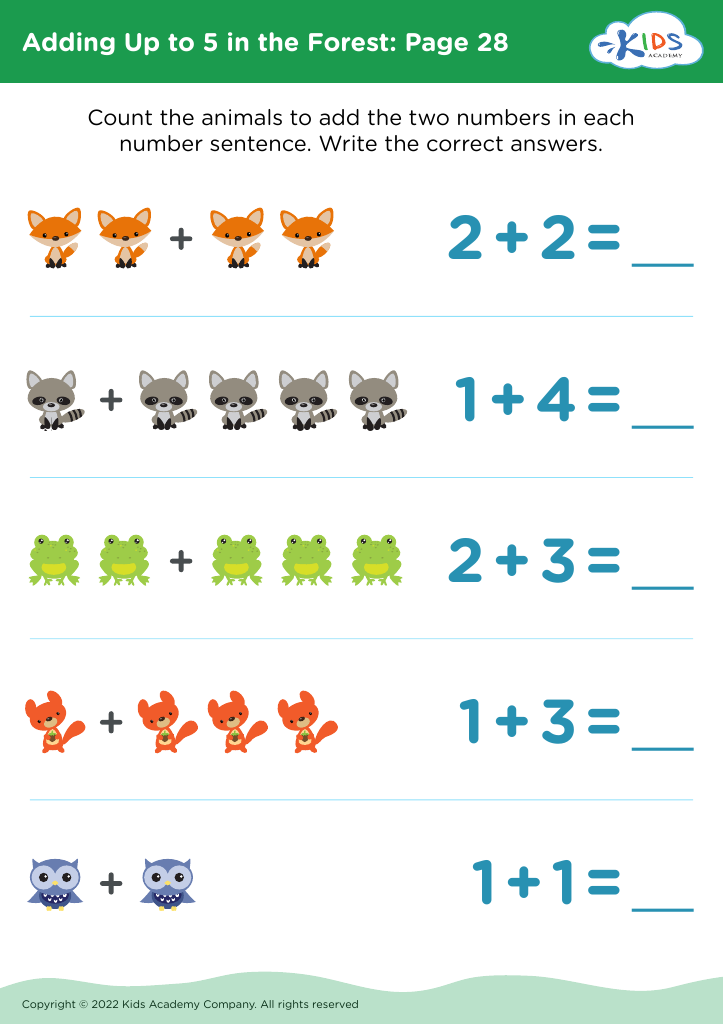
Adding Up to 5 in the Forest: Page 28
Worksheet
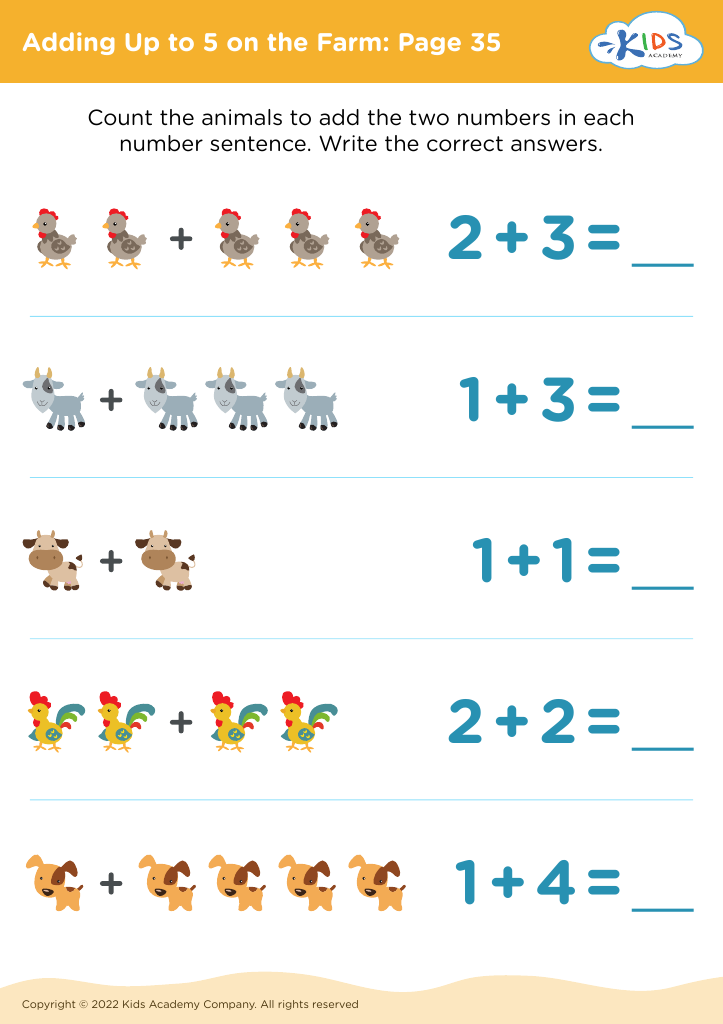
Adding Up to 5 on the Farm: Page 35
Worksheet
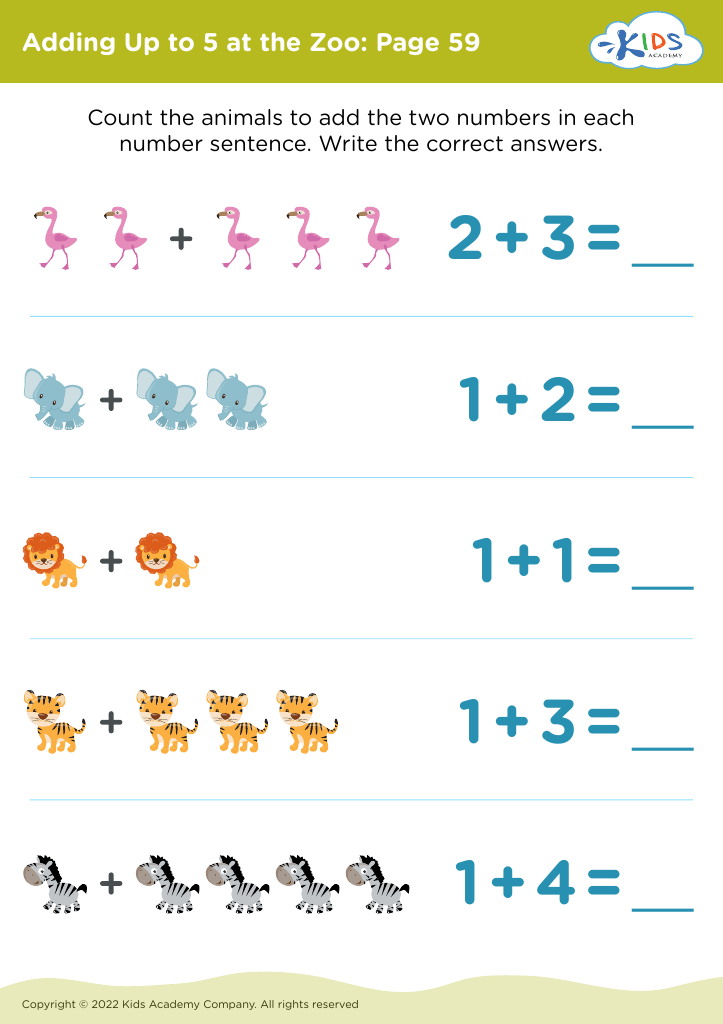
Adding Up to 5 at the Zoo: Page 59
Worksheet
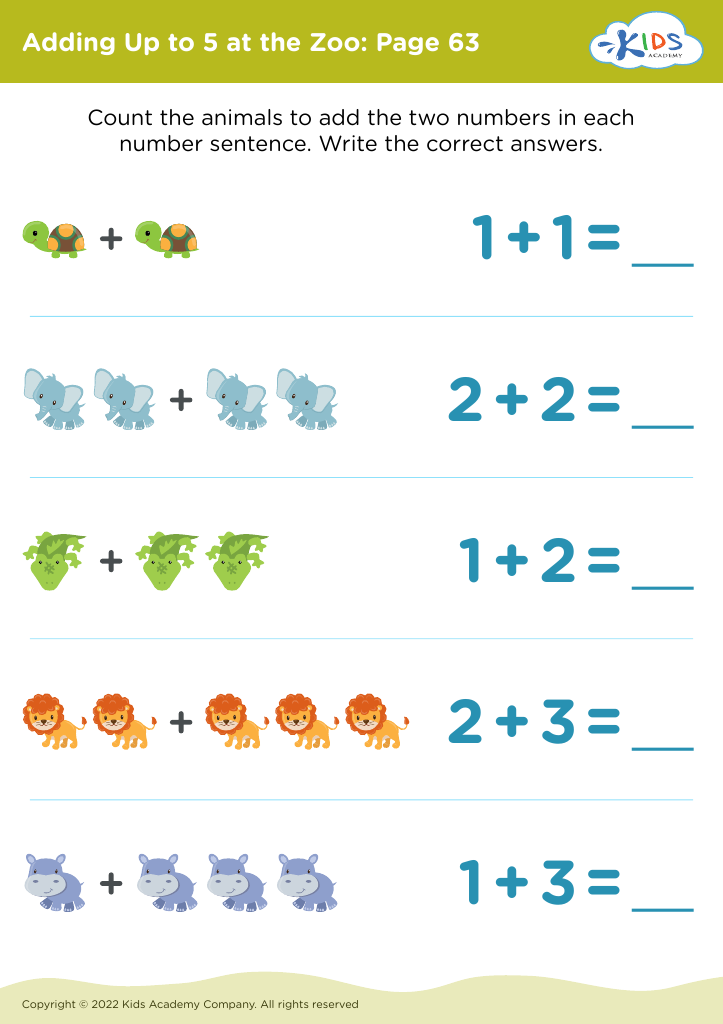
Adding Up to 5 at the Zoo: Page 63
Worksheet
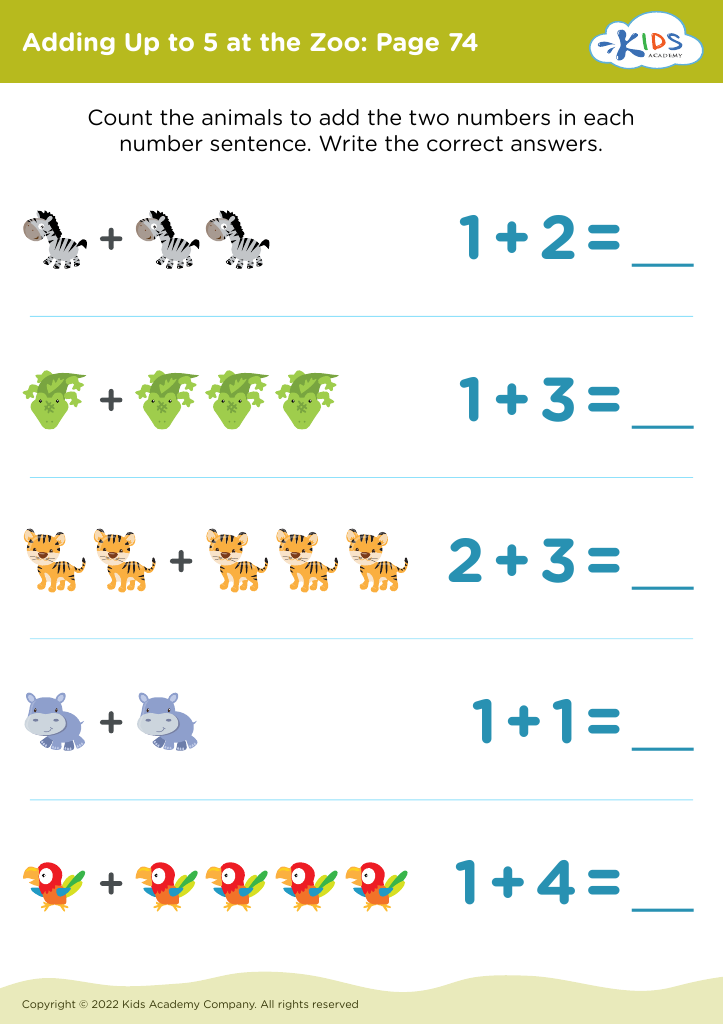
Adding Up to 5 at the Zoo: Page 74
Worksheet
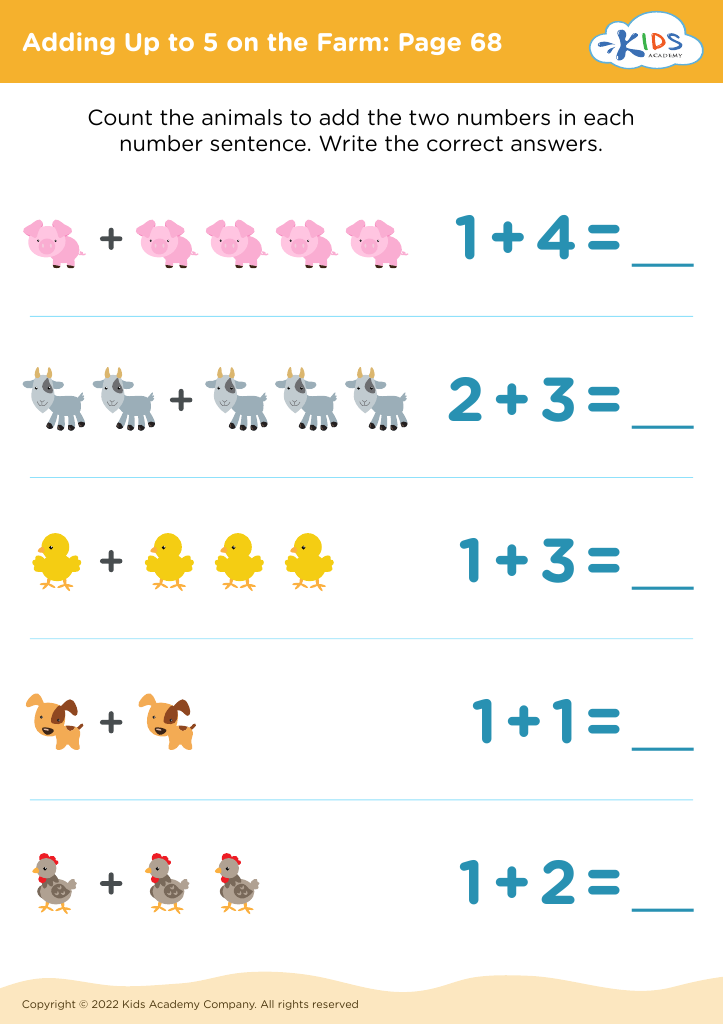
Adding Up to 5 on the Farm: Page 68
Worksheet
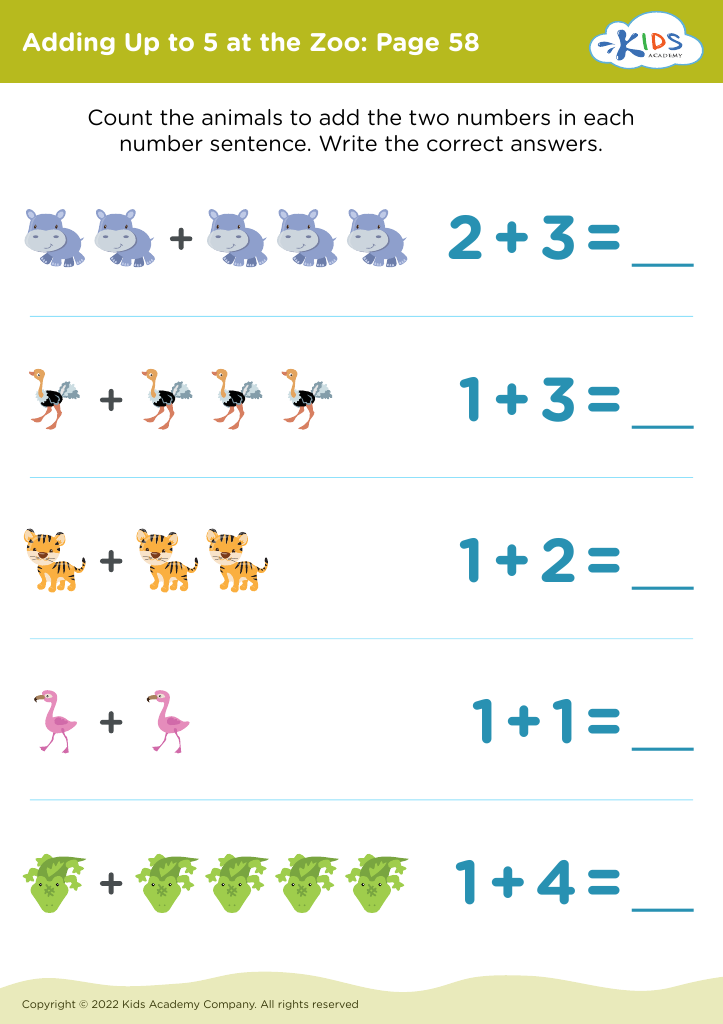
Adding Up to 5 at the Zoo: Page 58
Worksheet
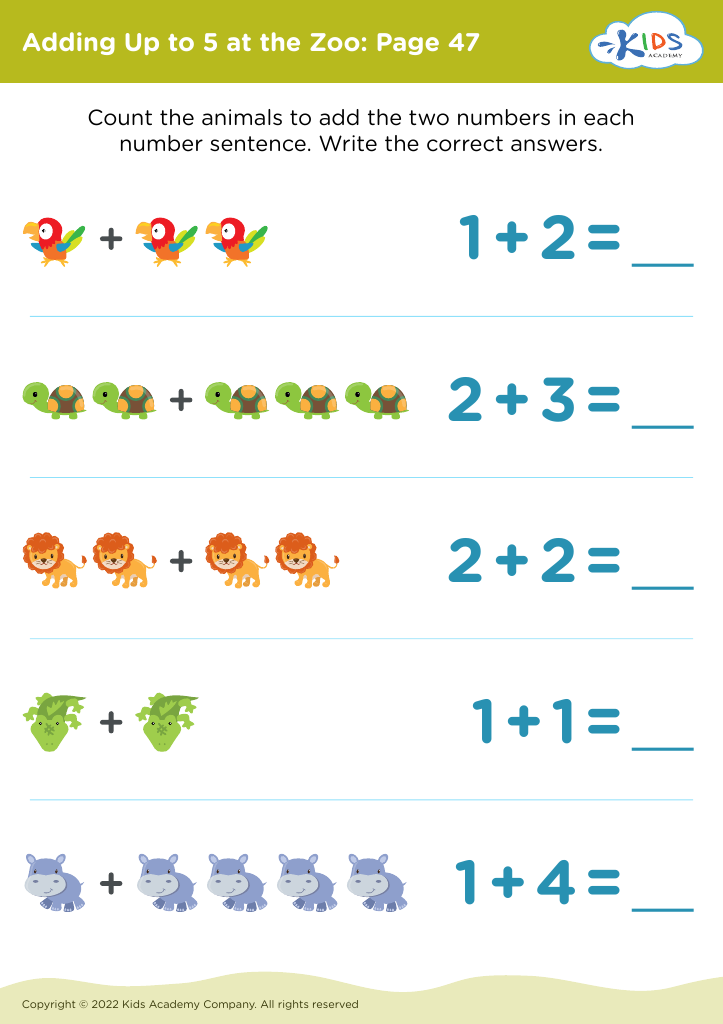
Adding Up to 5 at the Zoo: Page 47
Worksheet
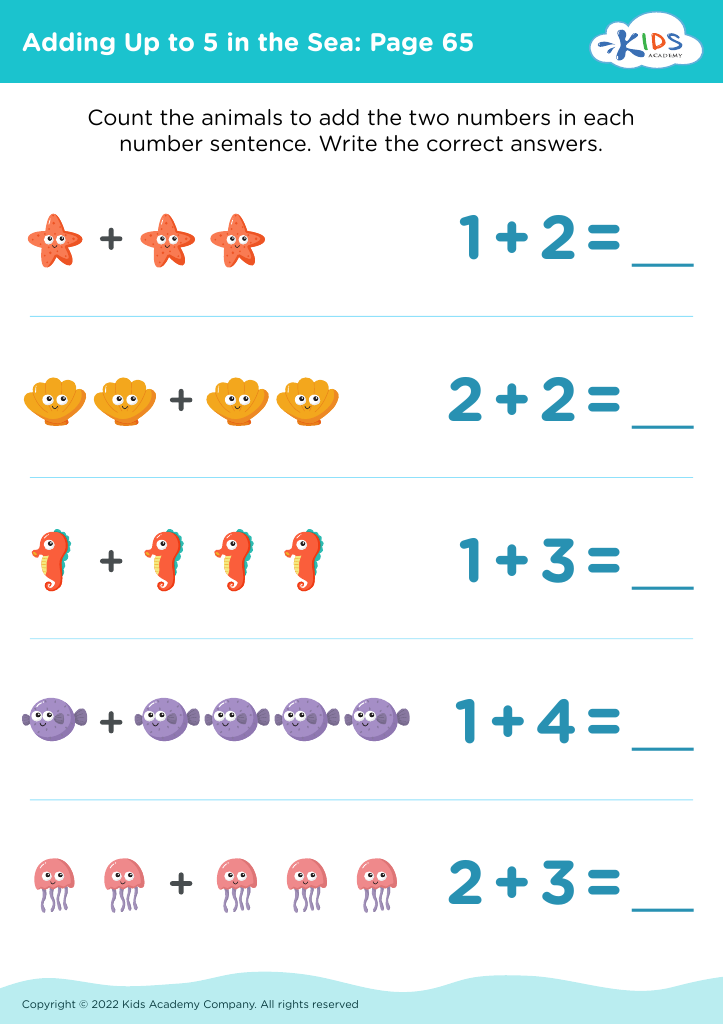
Adding Up to 5 in the Sea: Page 65
Worksheet
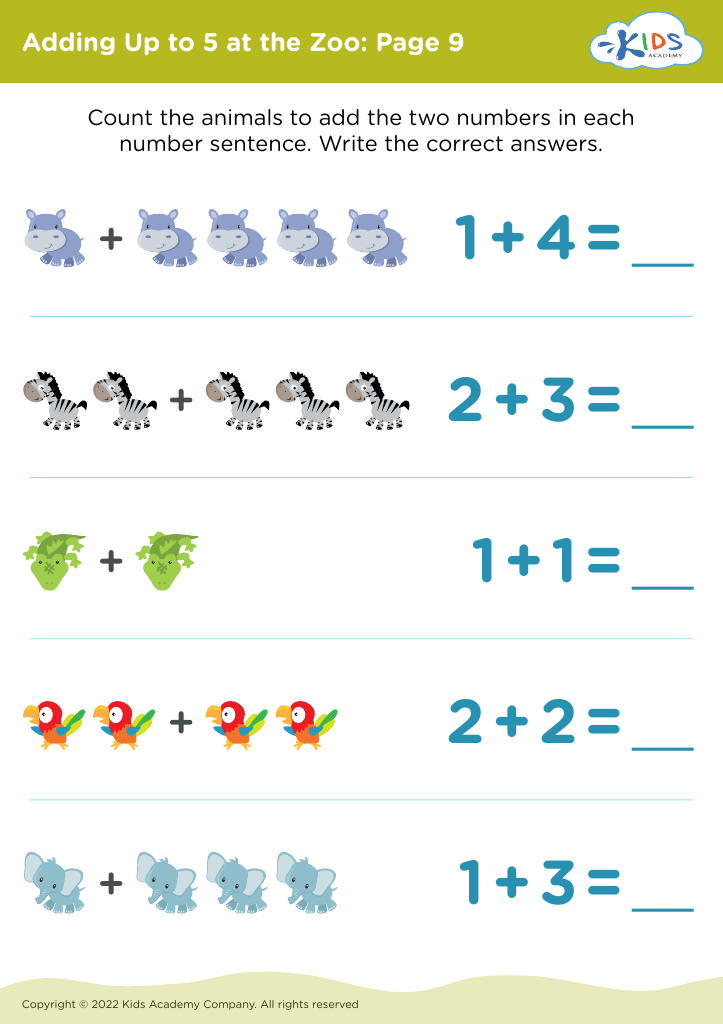
Adding Up to 5 at the Zoo: Page 9

Adding Up to 5 at the Zoo: Page 9

Adding Up to 5 at the Zoo: Page 9
Worksheet
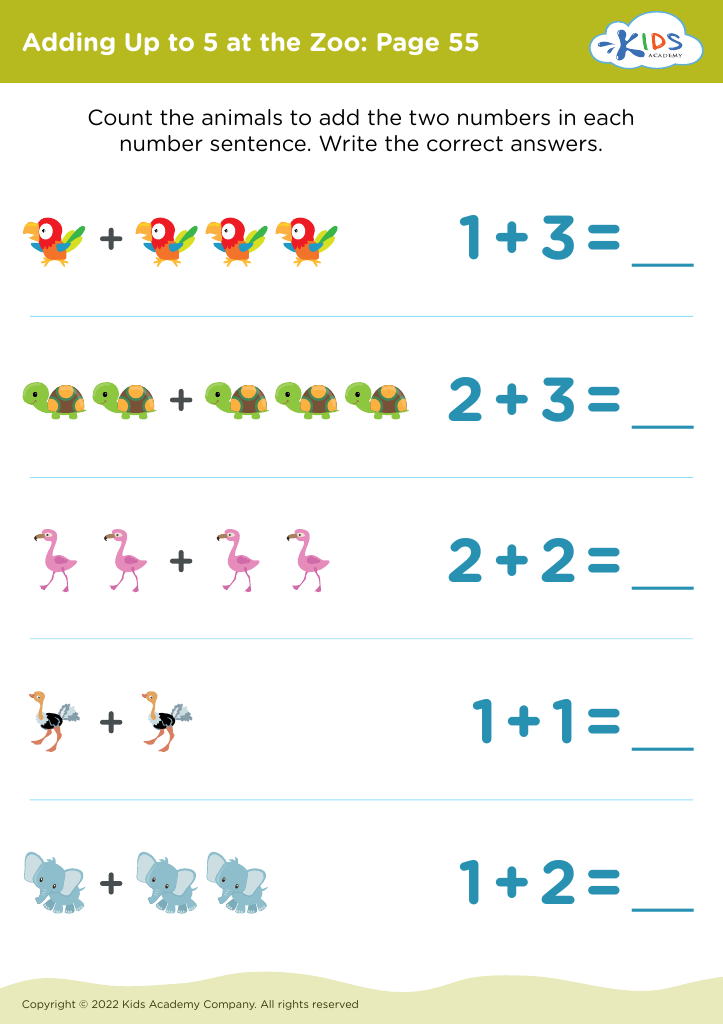
Adding Up to 5 at the Zoo: Page 55
Worksheet
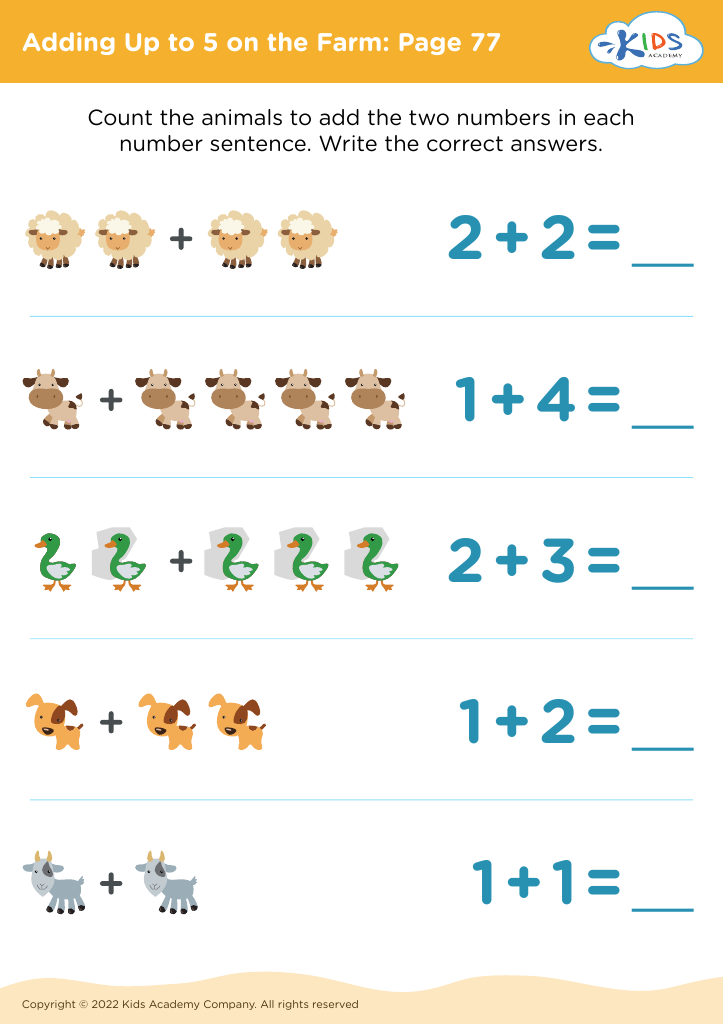
Adding Up to 5 on the Farm: Page 77
Worksheet
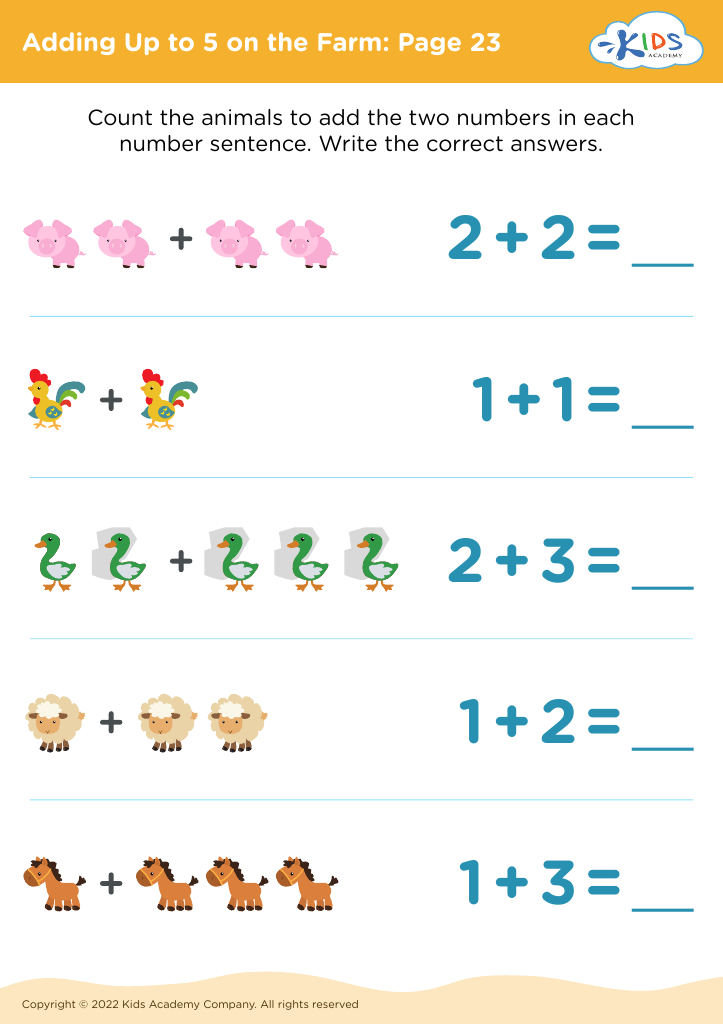
Adding Up to 5 on the Farm: Page 23
Worksheet
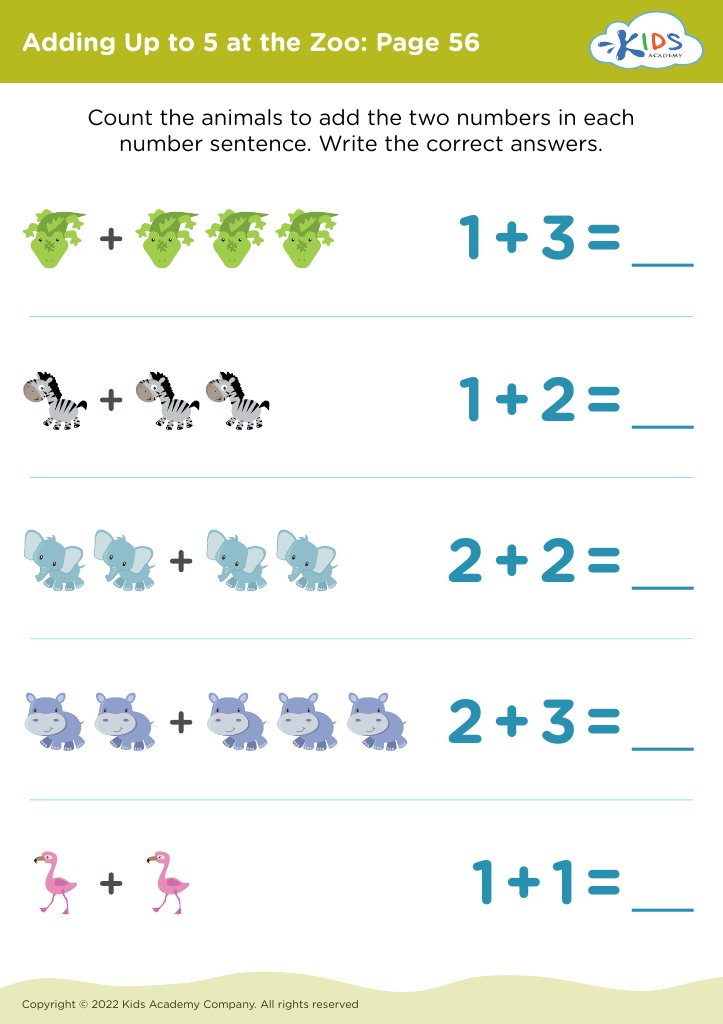
Adding Up to 5 at the Zoo: Page 56
Worksheet
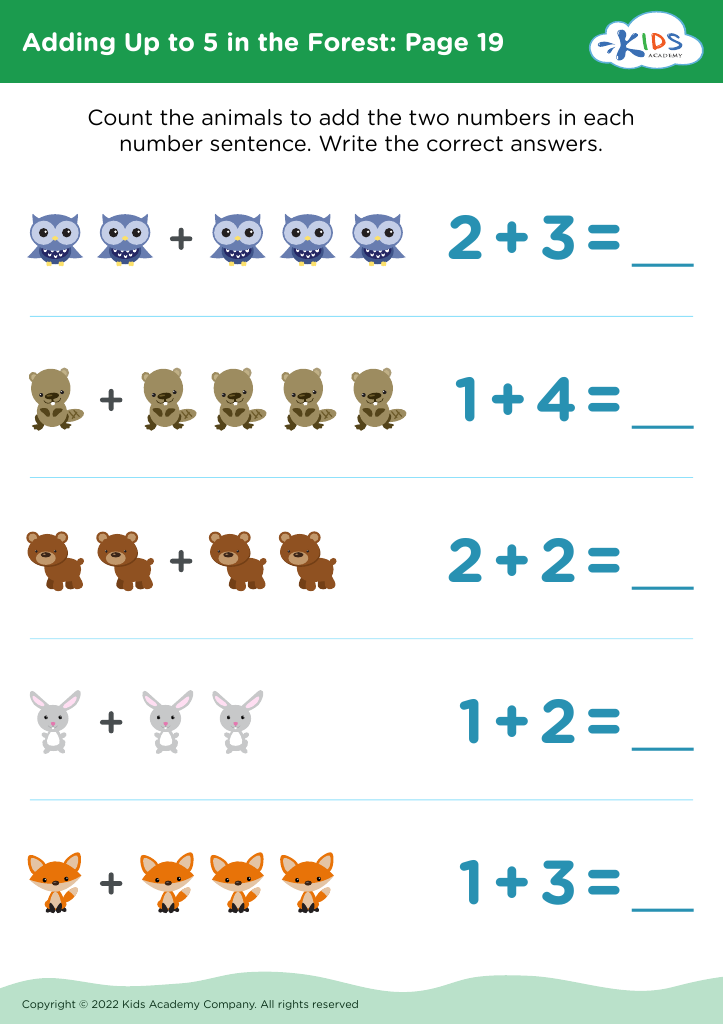
Adding Up to 5 in the Forest: Page 19
Worksheet
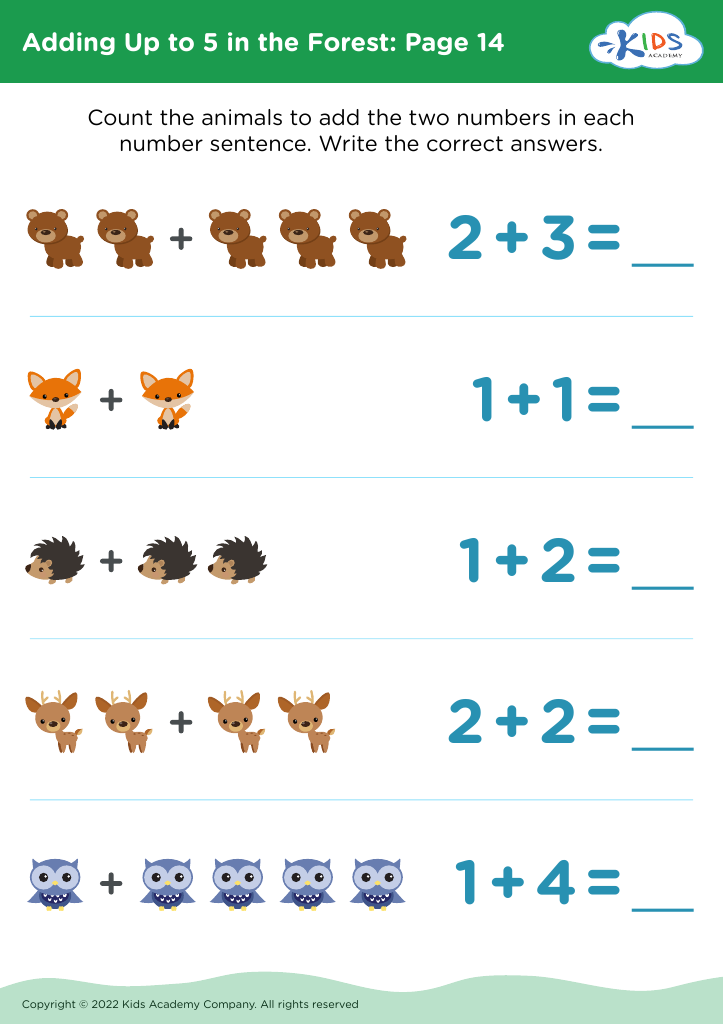
Adding Up to 5 in the Forest: Page 14
Worksheet
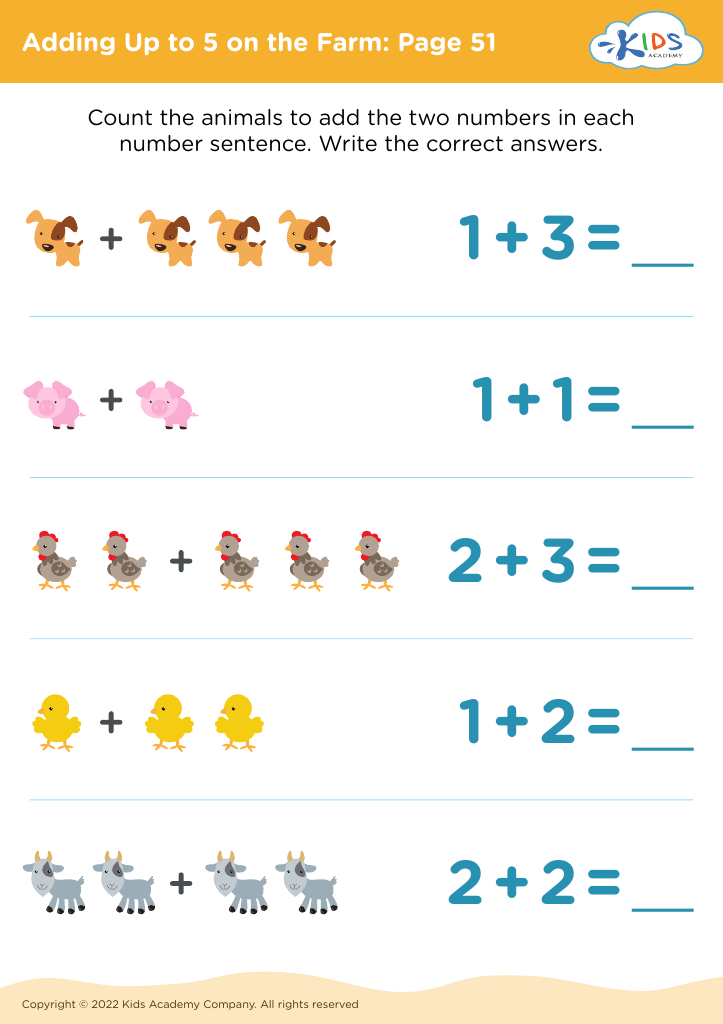
Adding Up to 5 on the Farm: Page 51
Worksheet
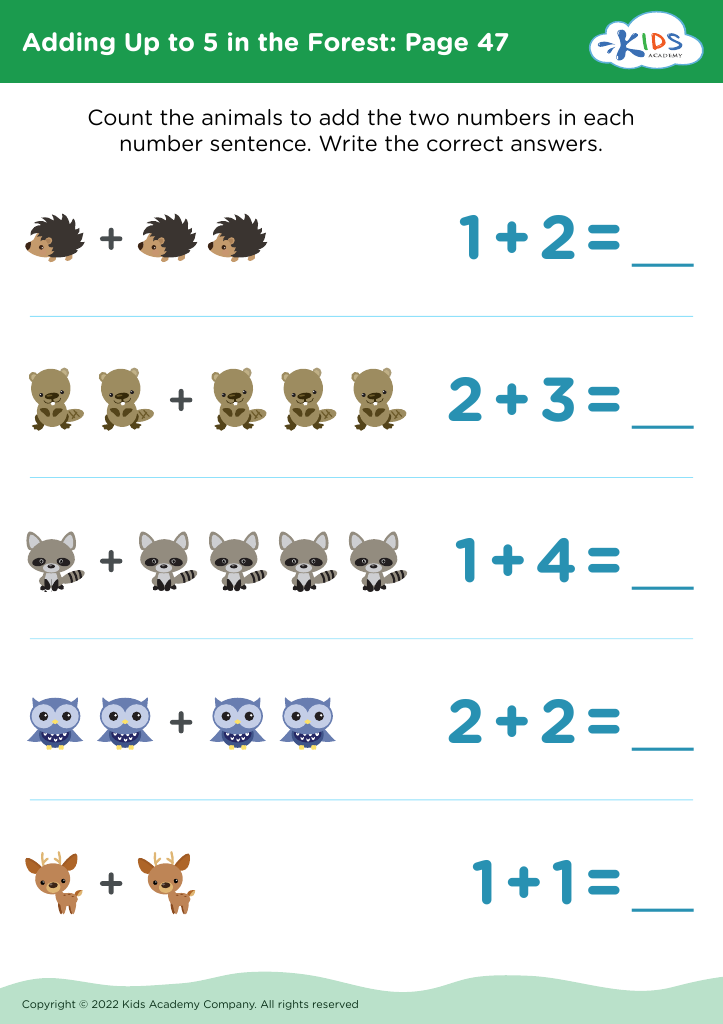
Adding Up to 5 in the Forest: Page 47
Worksheet
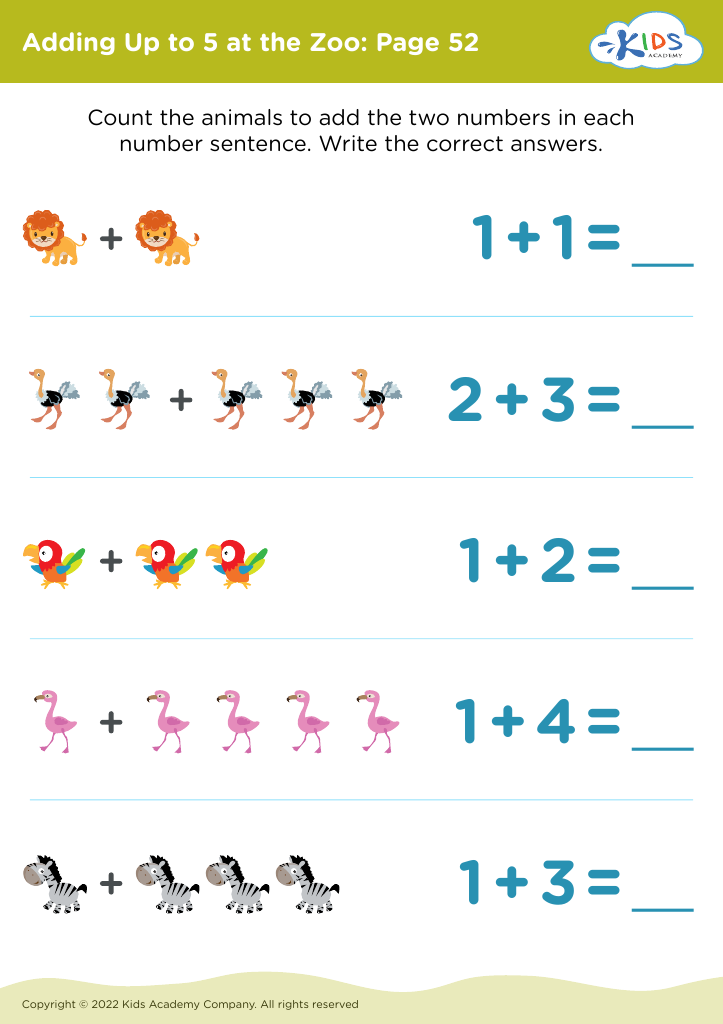
Adding Up to 5 at the Zoo: Page 52
Worksheet
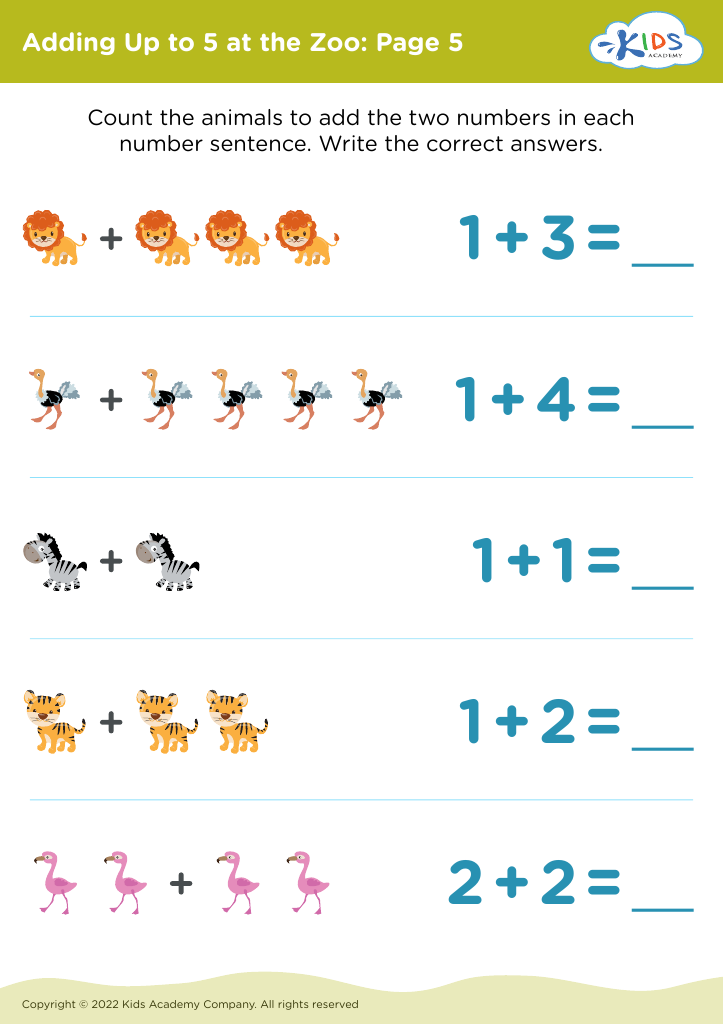
Adding Up to 5 at the Zoo: Page 5

Adding Up to 5 at the Zoo: Page 5

Adding Up to 5 at the Zoo: Page 5
Worksheet
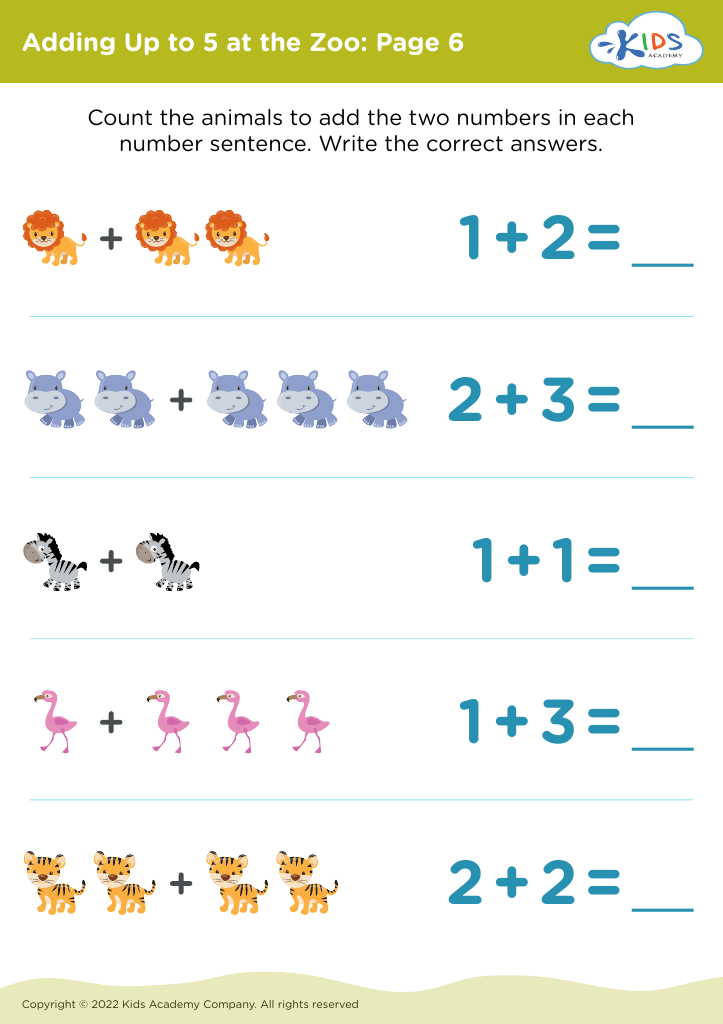
Adding Up to 5 at the Zoo: Page 6

Adding Up to 5 at the Zoo: Page 6

Adding Up to 5 at the Zoo: Page 6
Worksheet
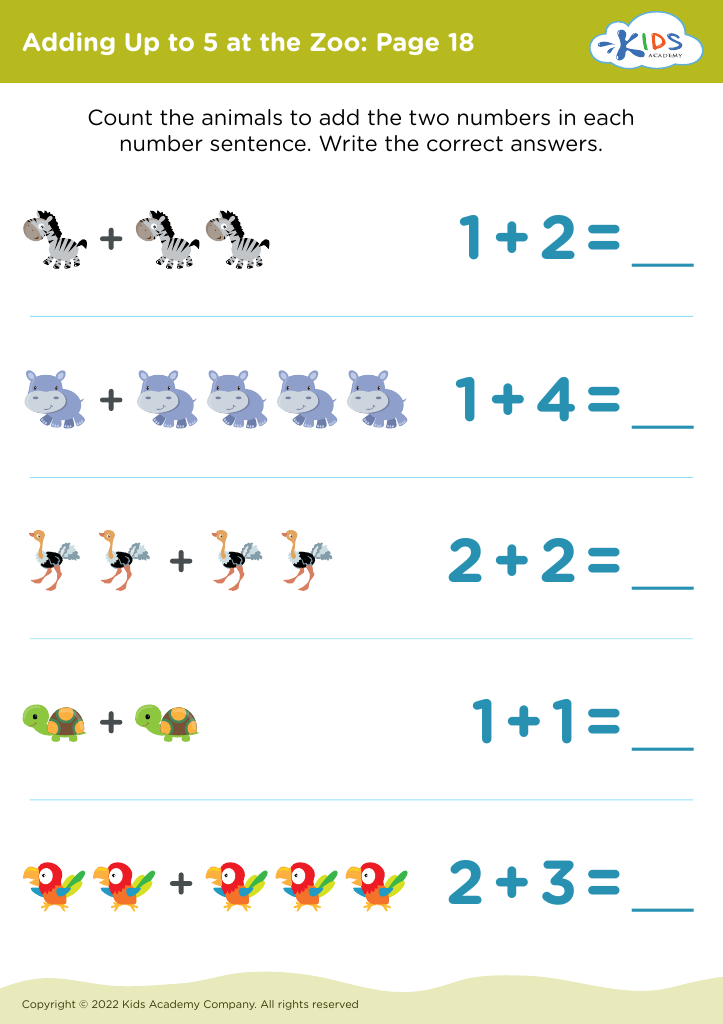
Adding Up to 5 at the Zoo: Page 18
Worksheet
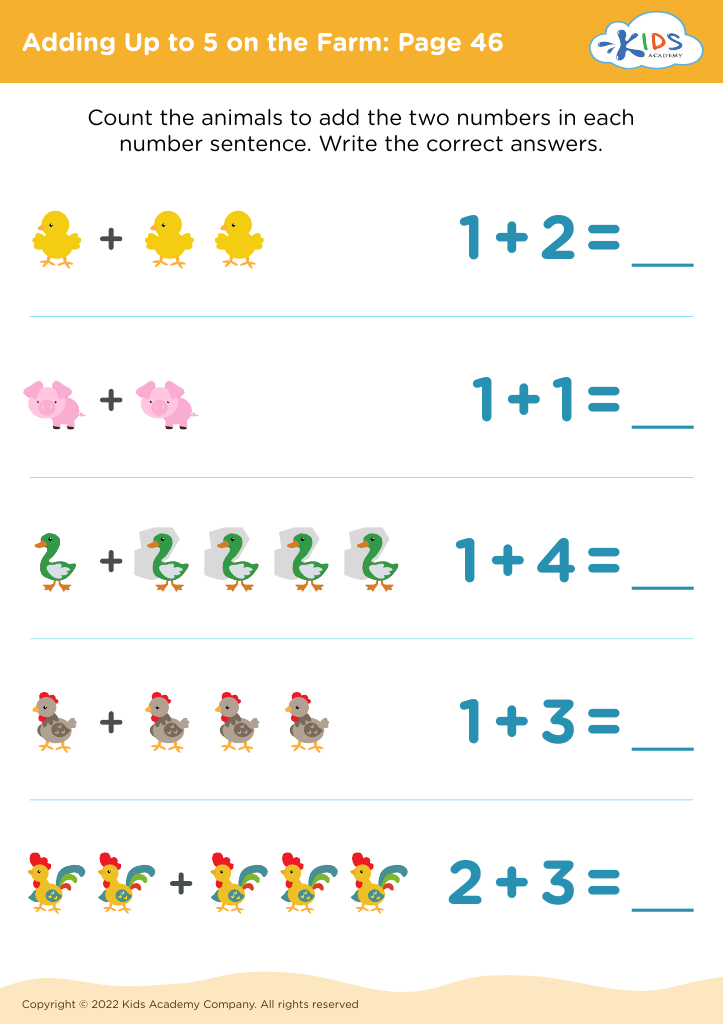
Adding Up to 5 on the Farm: Page 46
Worksheet
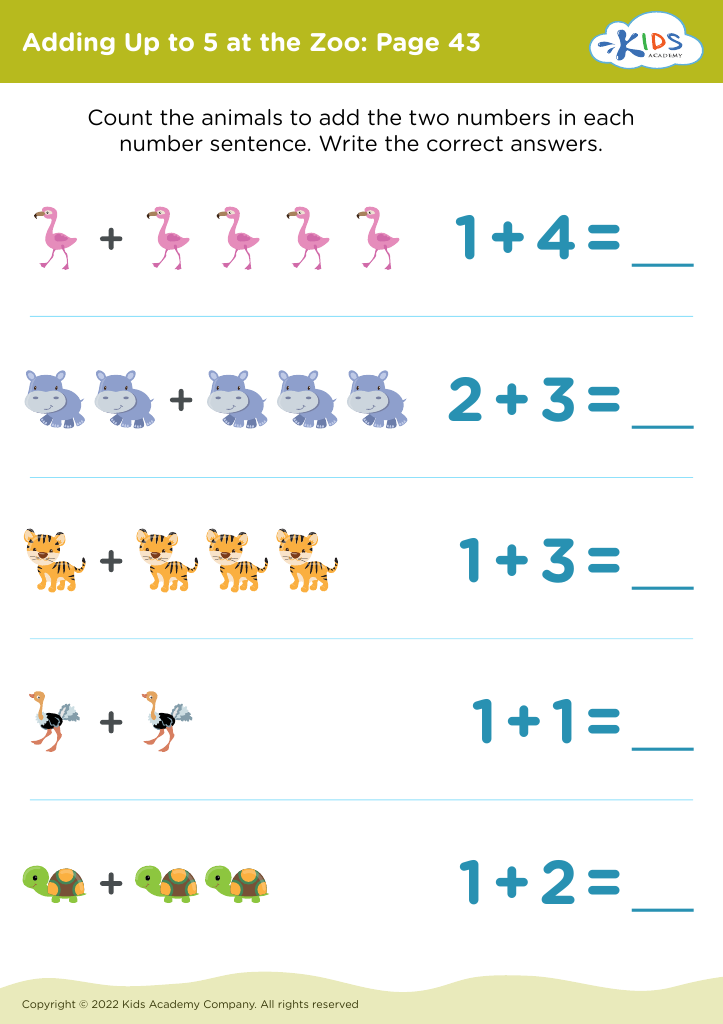
Adding Up to 5 at the Zoo: Page 43
Worksheet


Animal recognition and addition skills are essential for children's development, especially for ages 4-9, as they blend cognitive learning with engagement. Understanding different animals helps children develop observational skills, enrich their vocabulary, and foster a sense of curiosity about the natural world. By identifying animals, children also learn about biodiversity and the importance of conservation, nurturing empathy and respect for living beings.

Integrating animal recognition with math skills such as counting and adding up to 5 can create a playful learning environment. For example, counting the number of animals in a picture or using animal figures to solve simple addition problems combines math with visual recognition, making learning more interactive and enjoyable. This multisensory approach caters to various learning styles and reinforces both subjects simultaneously, making it easier for students to comprehend abstract concepts.

Moreover, collaborative activities that involve parents or teachers, such as animal-themed games or storytelling, can enhance social skills and family bonding. Overall, fostering animal recognition along with basic math lays the foundation for critical thinking, problem-solving, and relational skills—all essential for future learning. Engaging young learners in these activities fuels their imagination and helps them grow as informed, responsible individuals.