Basic addition practice Adding Up to 5 Worksheets for Ages 4-9
9 filtered results
-
From - To
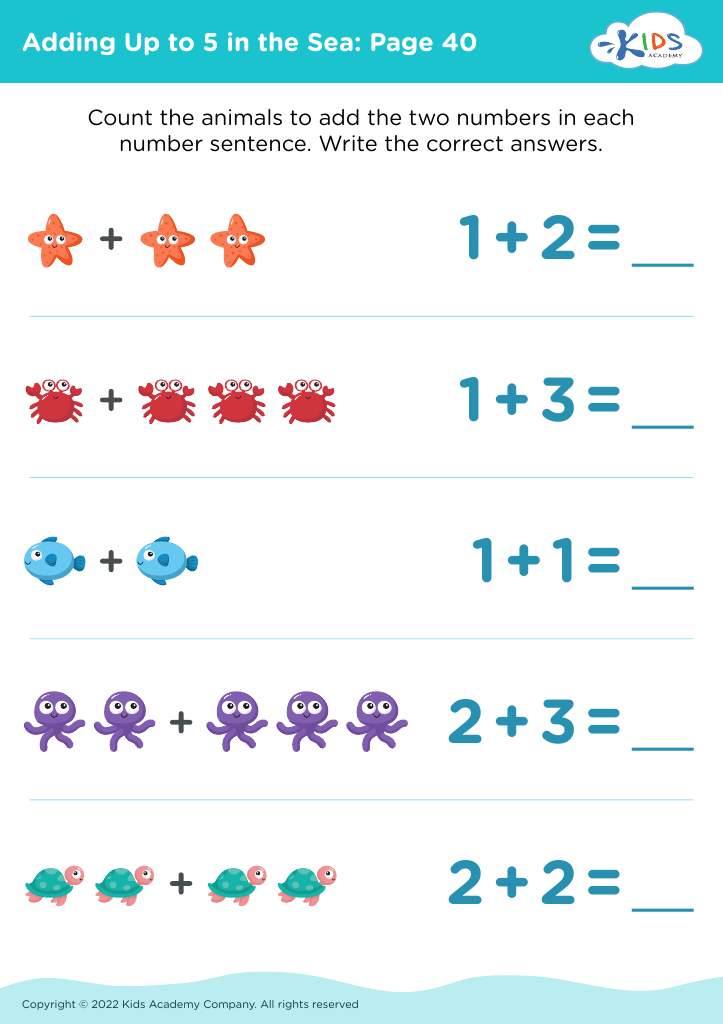
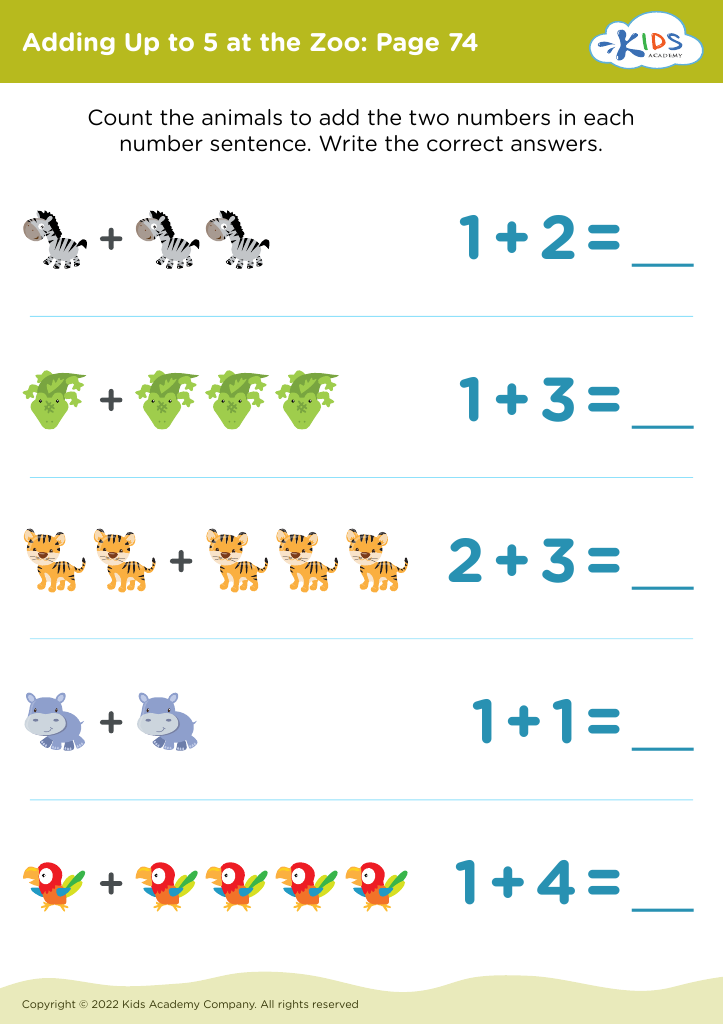
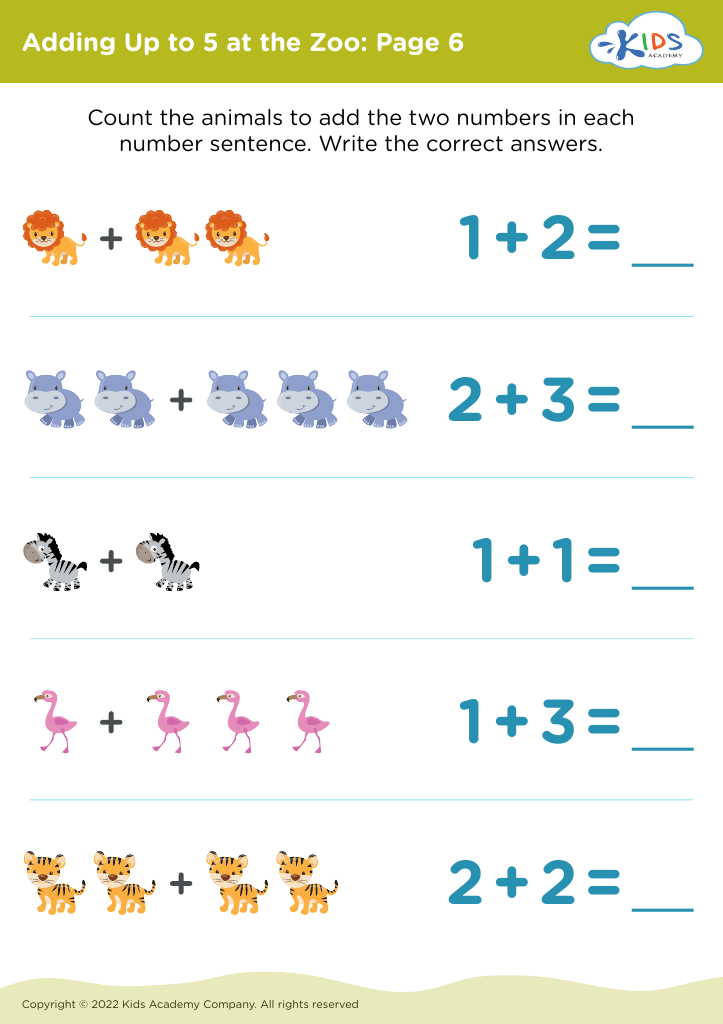
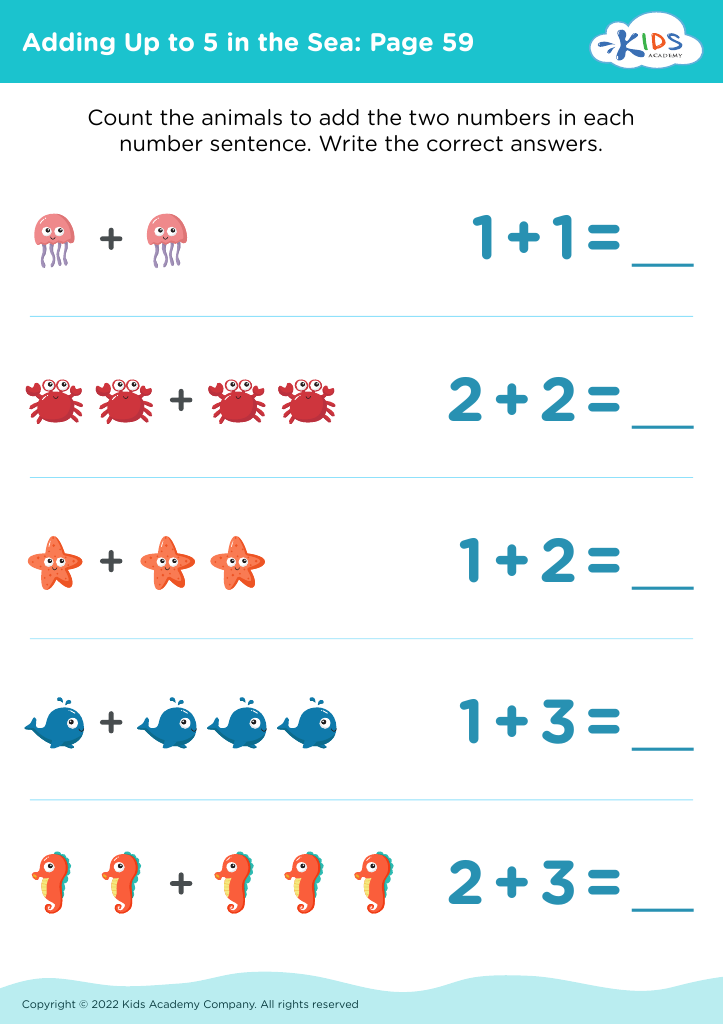
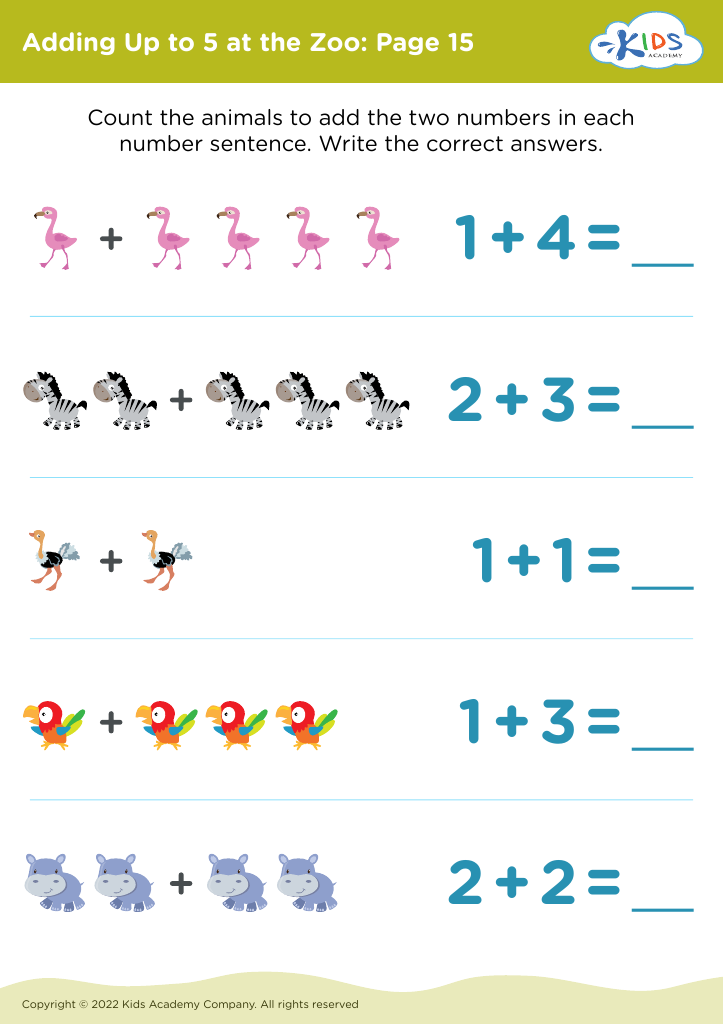
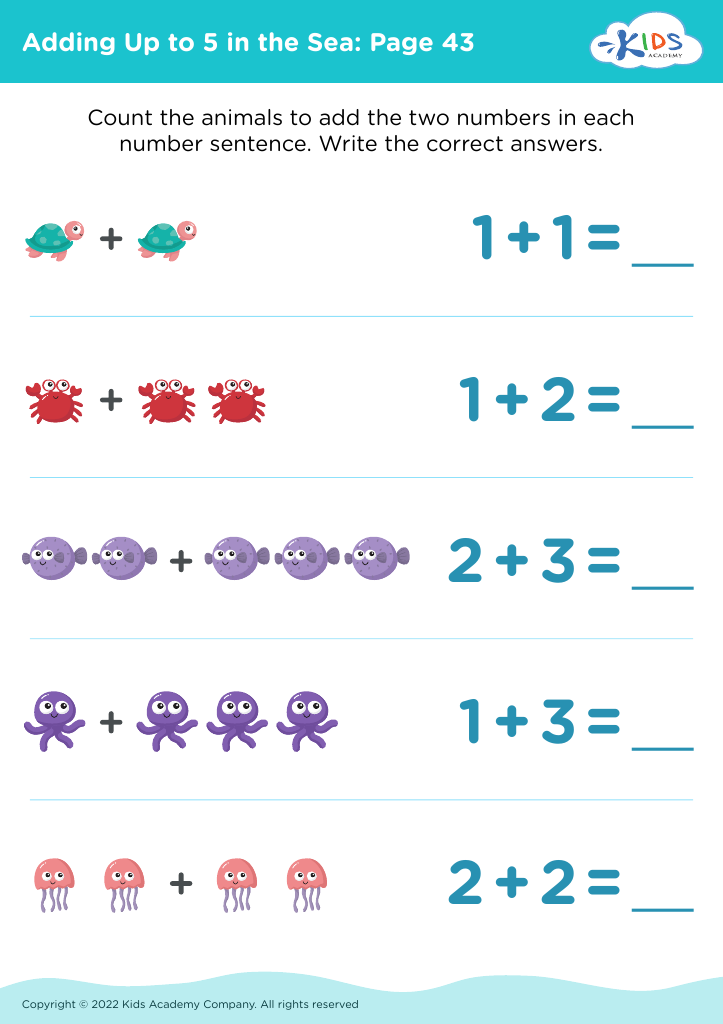
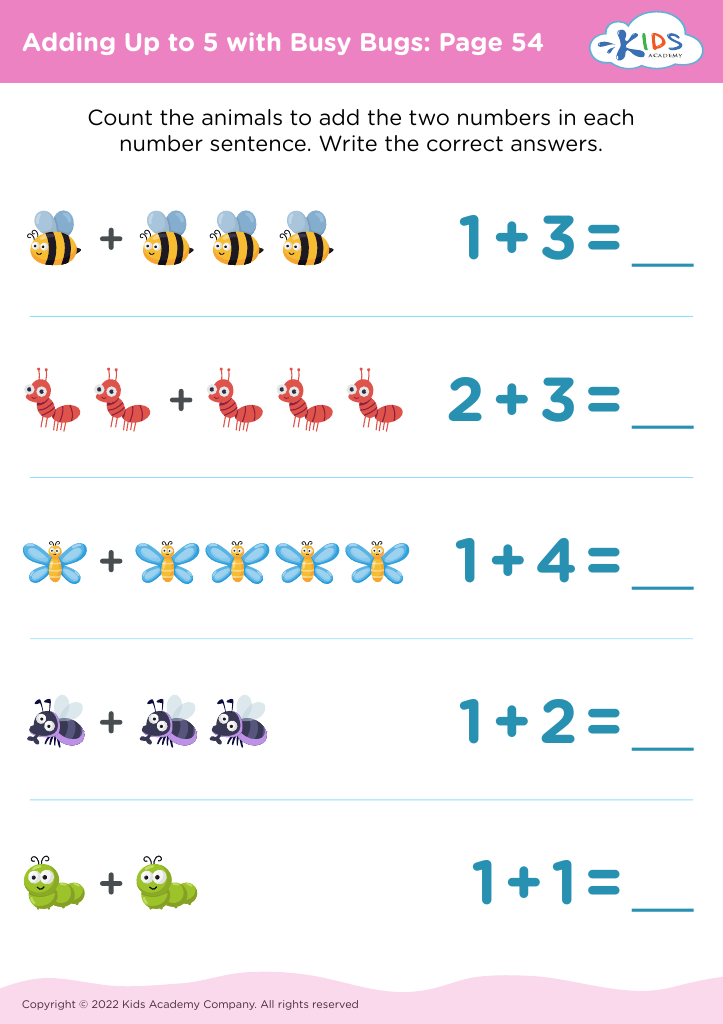
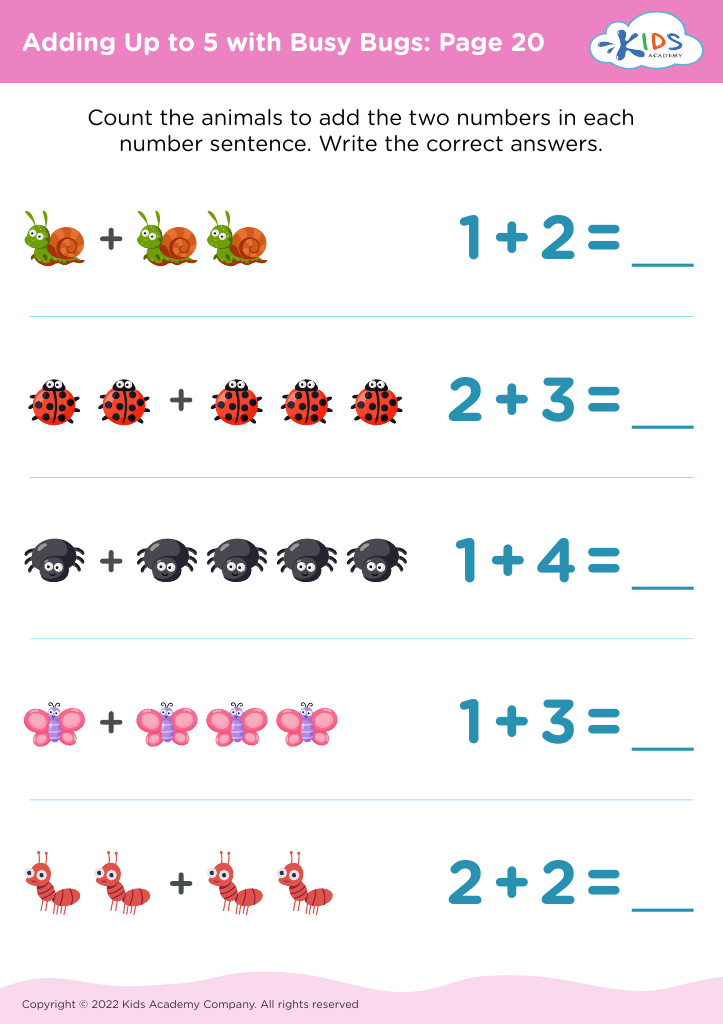
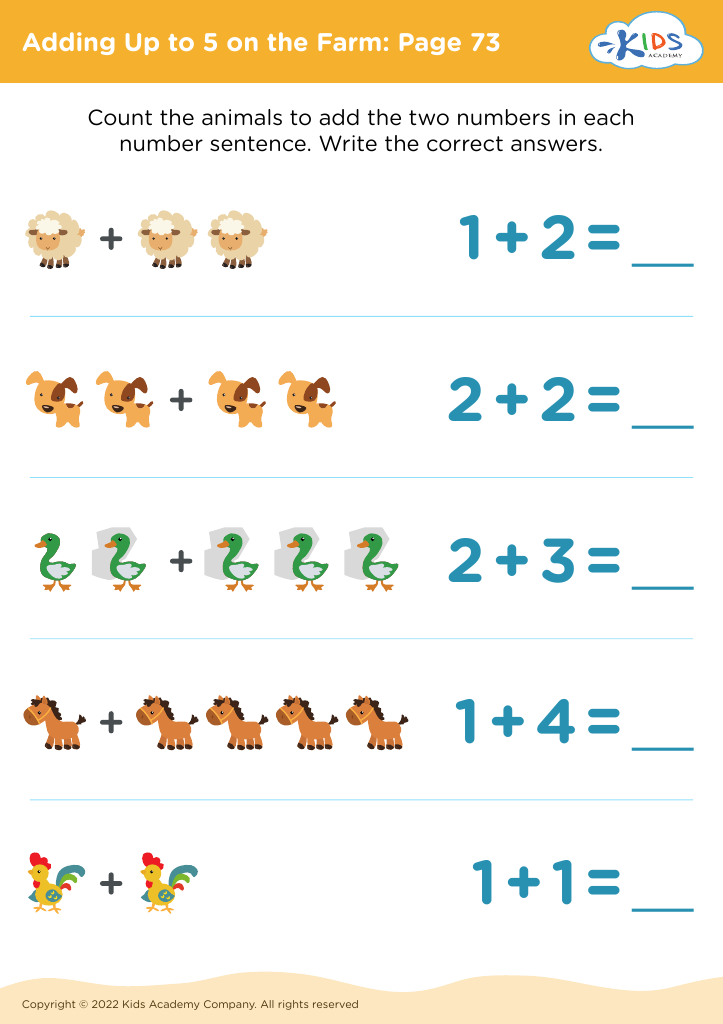
Discover engaging and educational "Basic Addition Practice: Adding Up to 5" worksheets designed specifically for children aged 4-9. These interactive worksheets make learning fun and effective, helping young learners grasp fundamental addition skills with numbers up to 5. Each activity is thoughtfully crafted to enhance critical thinking, number sense, and early math proficiency through colorful visuals and relatable scenarios. Perfect for home or classroom use, these resources support diverse learning styles, encouraging hands-on practice and independent learning. Equip your child with essential math foundations and boost their confidence in arithmetic with our easy-to-follow worksheets that foster both understanding and enjoyment!







%20(1).jpg)
Basic addition practice, particularly for adding up to 5, is crucial for young children aged 4-9. At this developmental stage, foundational math skills directly influence a child's future learning trajectory. Early introduction to addition enhances number sense, fostering confidence and curiosity about math concepts.
Understanding addition up to 5 is not just about learning to calculate; it's about cultivating critical thinking, problem-solving abilities, and numerical fluency. This foundational skill promotes cognitive development, aiding children in recognizing patterns and relationships within numbers. When children grasp simple addition, they build a strong base for more complex math operations later on.
Additionally, practice activities can enhance children's reasoning and communication skills as they articulate their thought processes. Engaging in addition exercises with parents or teachers encourages bonding and promotes a positive attitude toward math. Moreover, mastering basic addition can alleviate future apprehension towards mathematics, reducing math anxiety as they advance in school.
Ultimately, ensuring children are proficient in basic addition before moving on to more complex concepts will pave the way for academic success and foster a lifelong appreciation for learning. Therefore, parents and teachers should prioritize these essential skills that are critical for unlocking a child’s full potential in math.








