Basic Arithmetic Adding Up to 5 Worksheets for Ages 4-9 - Page 2
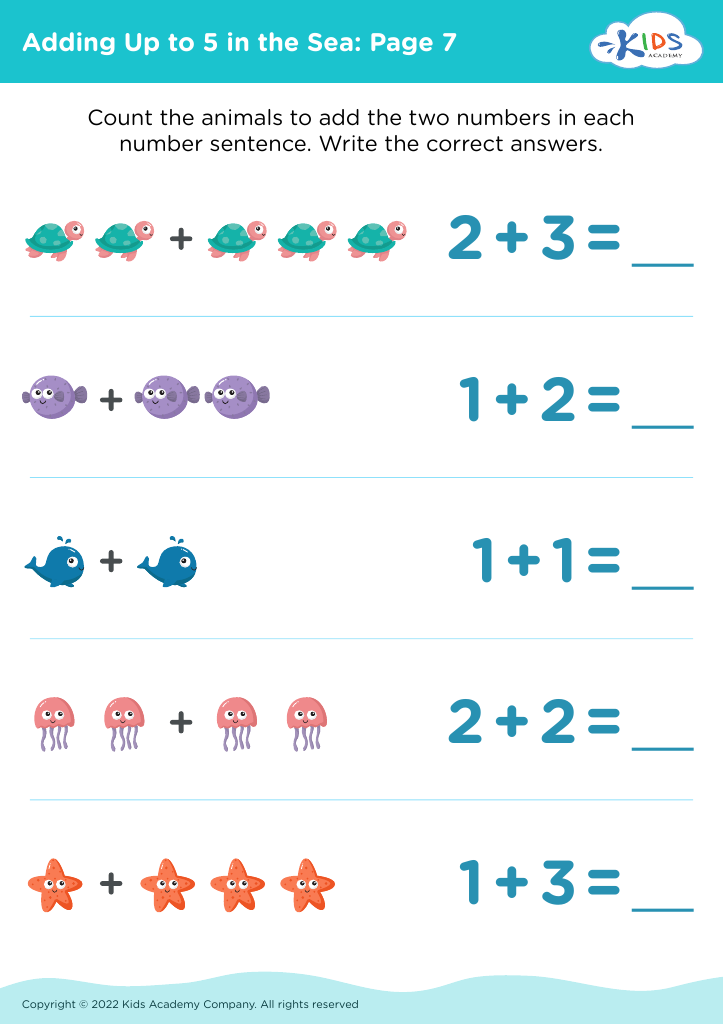
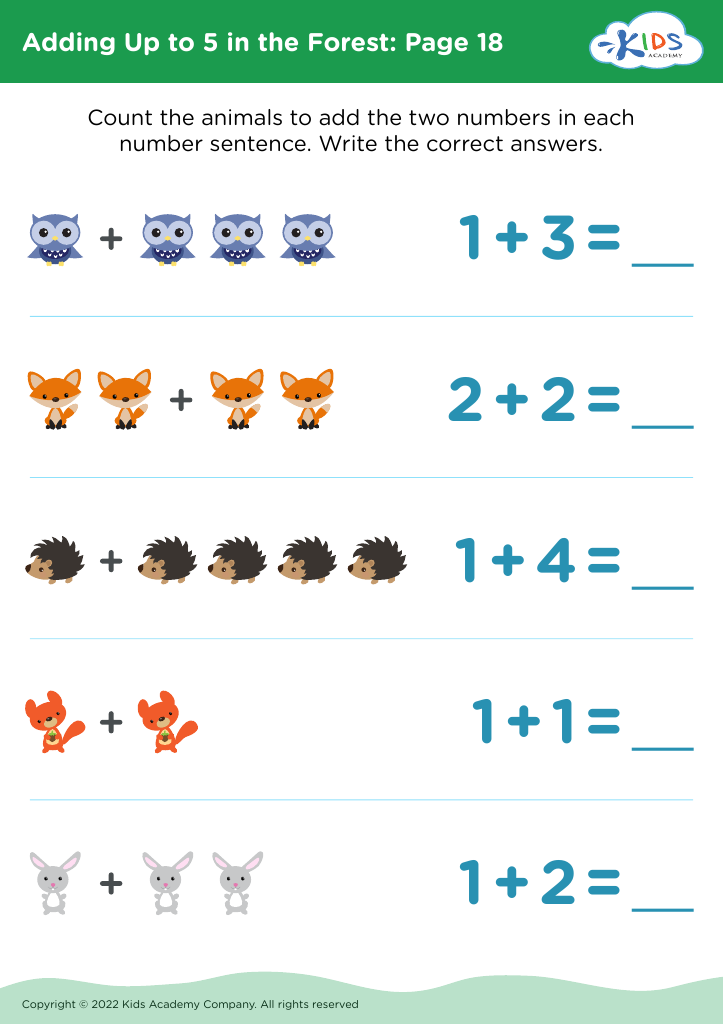
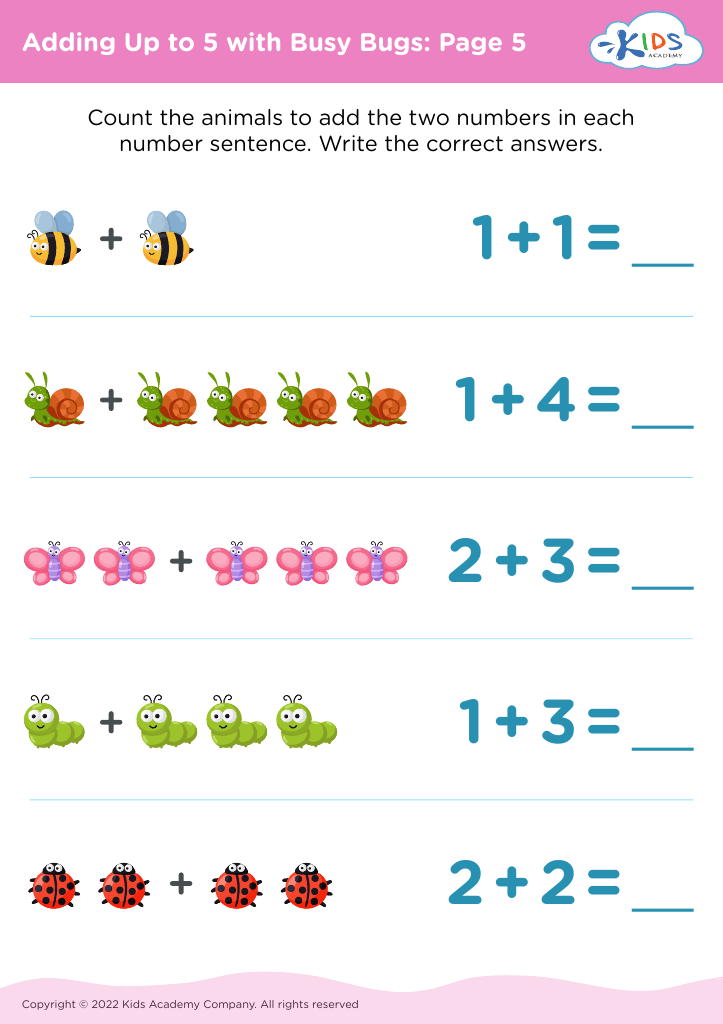
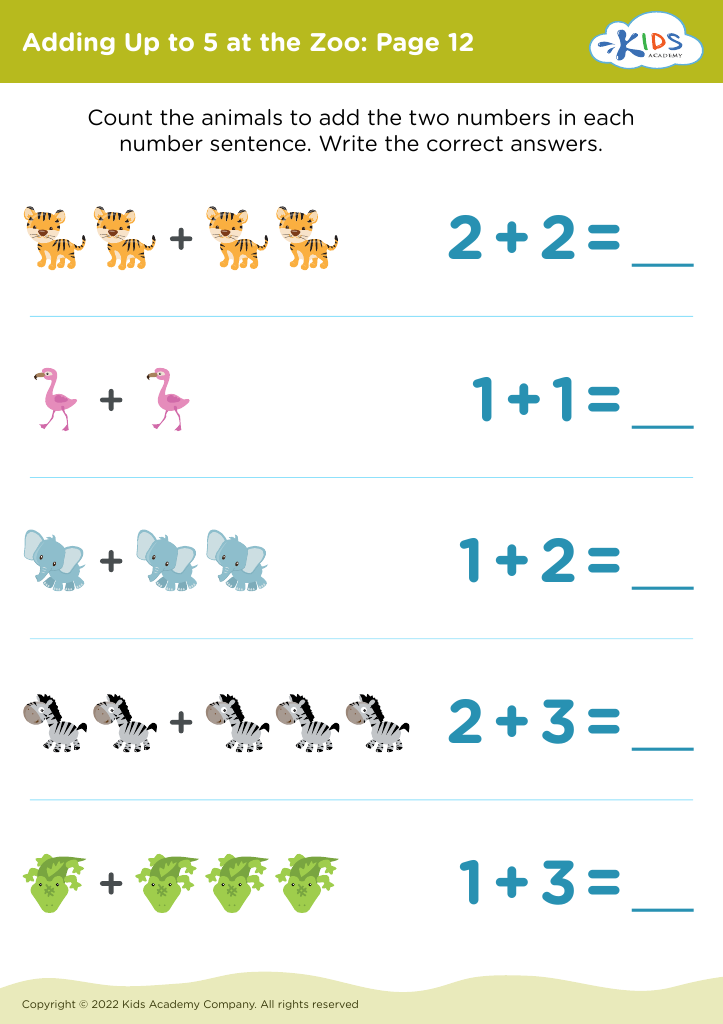




.jpg)



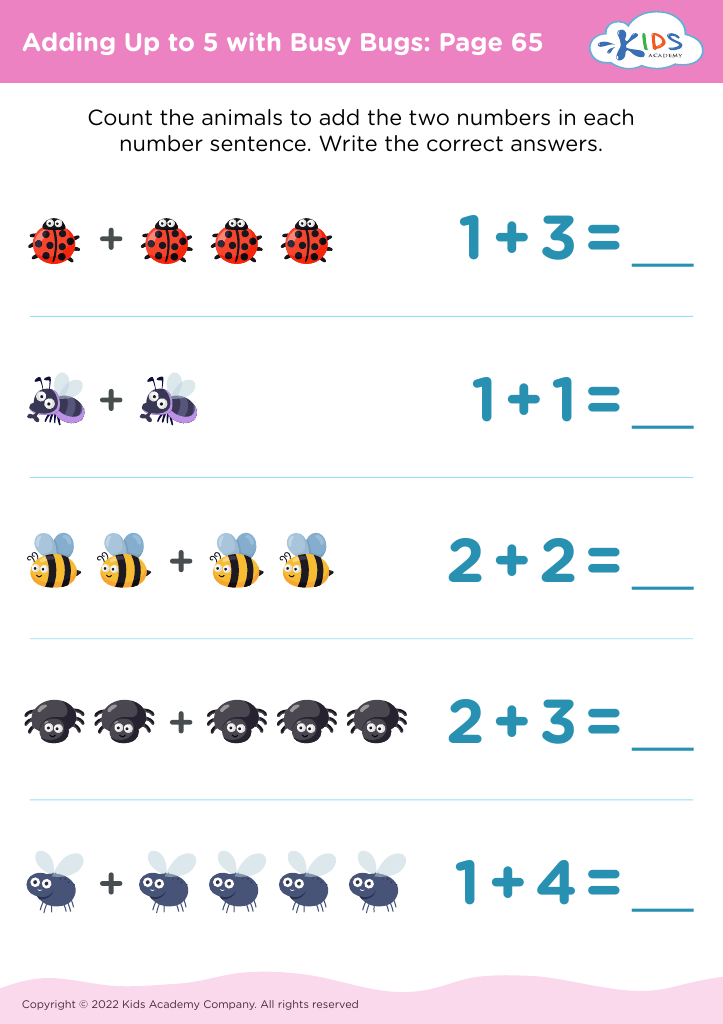
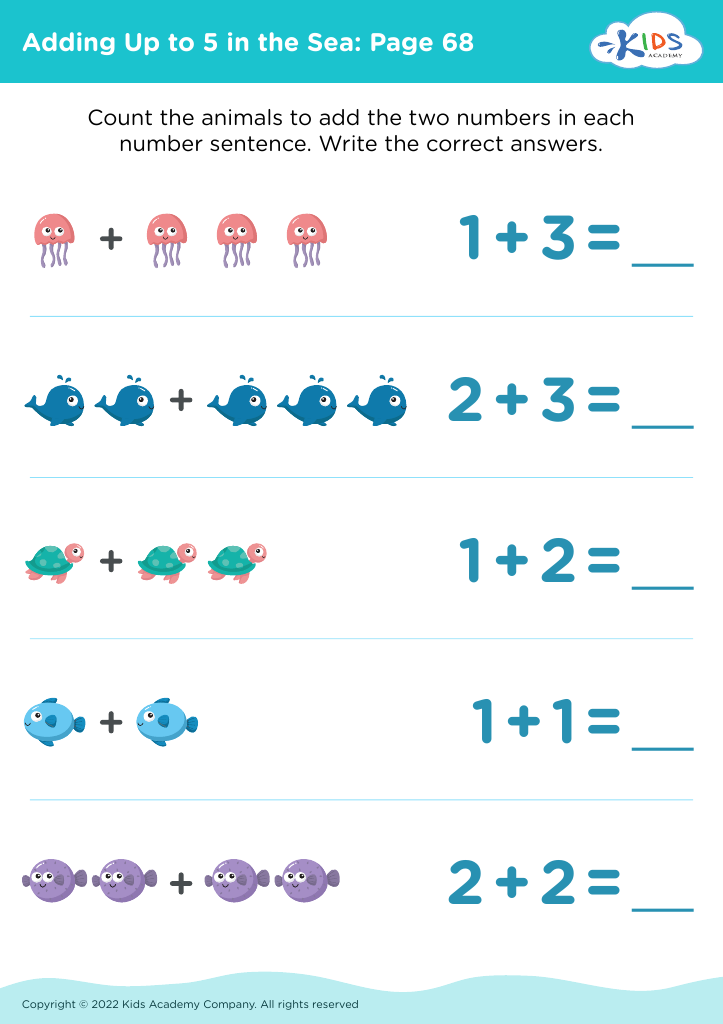
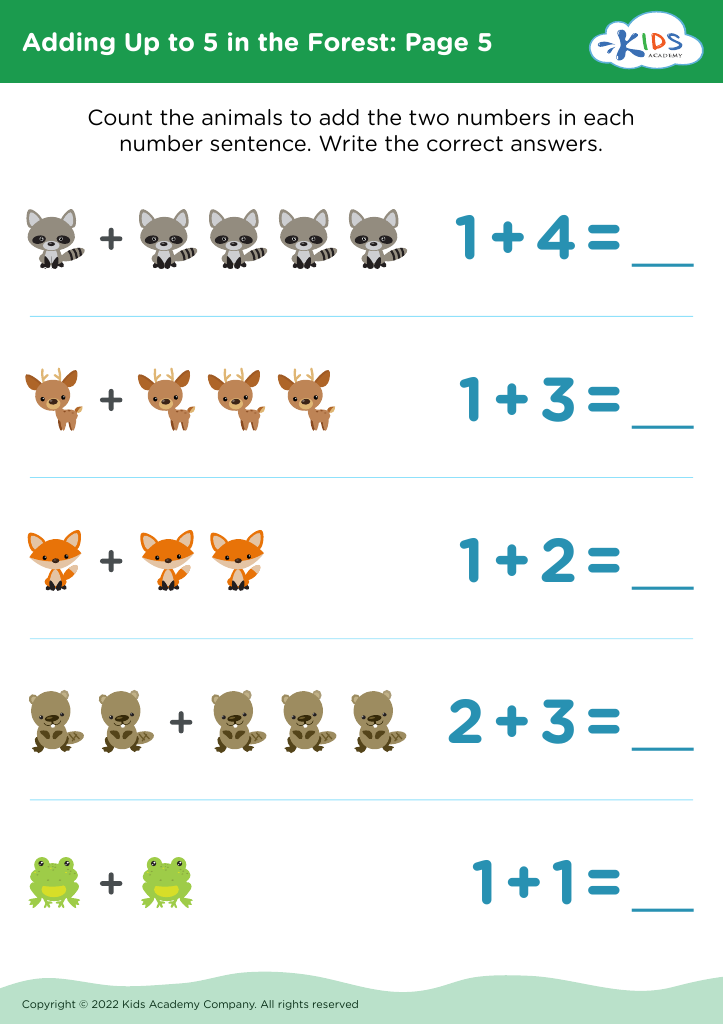
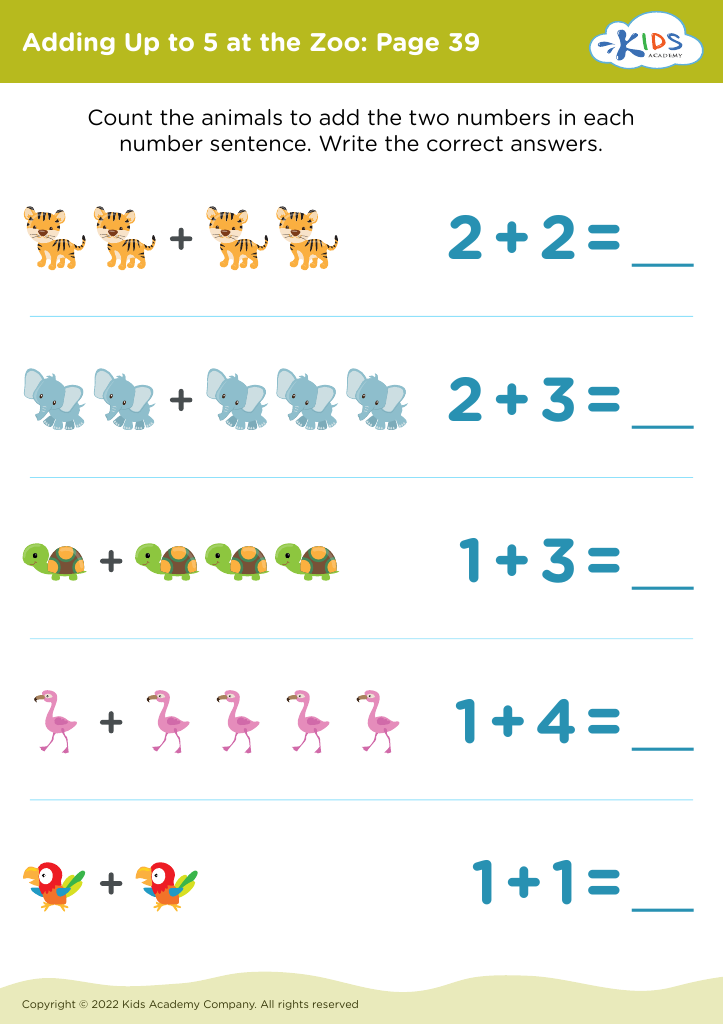
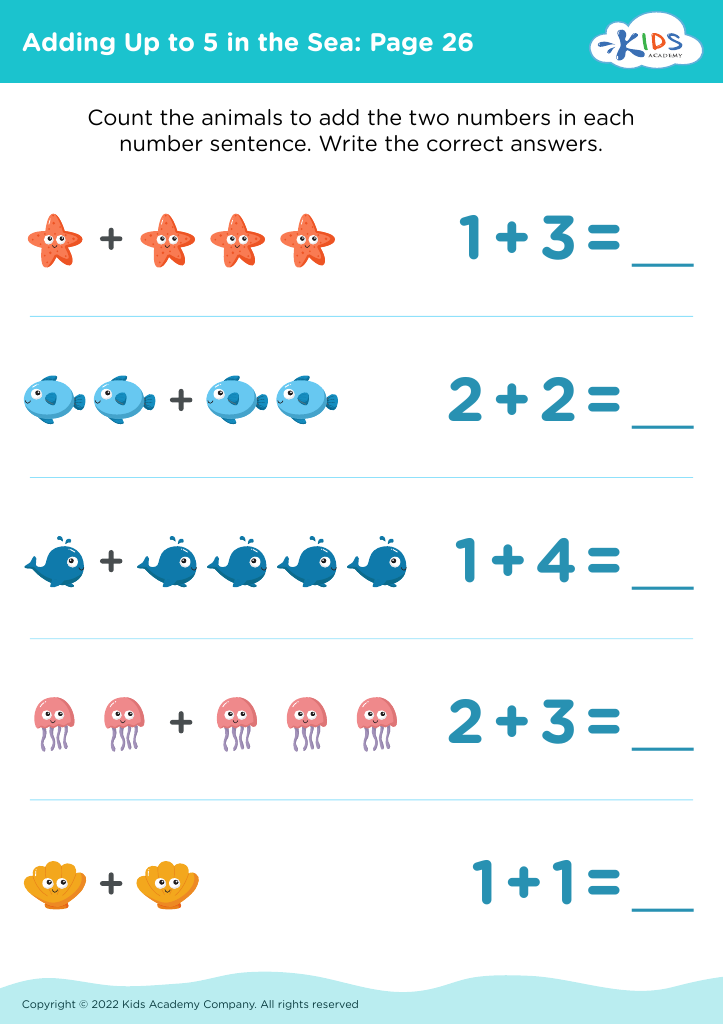
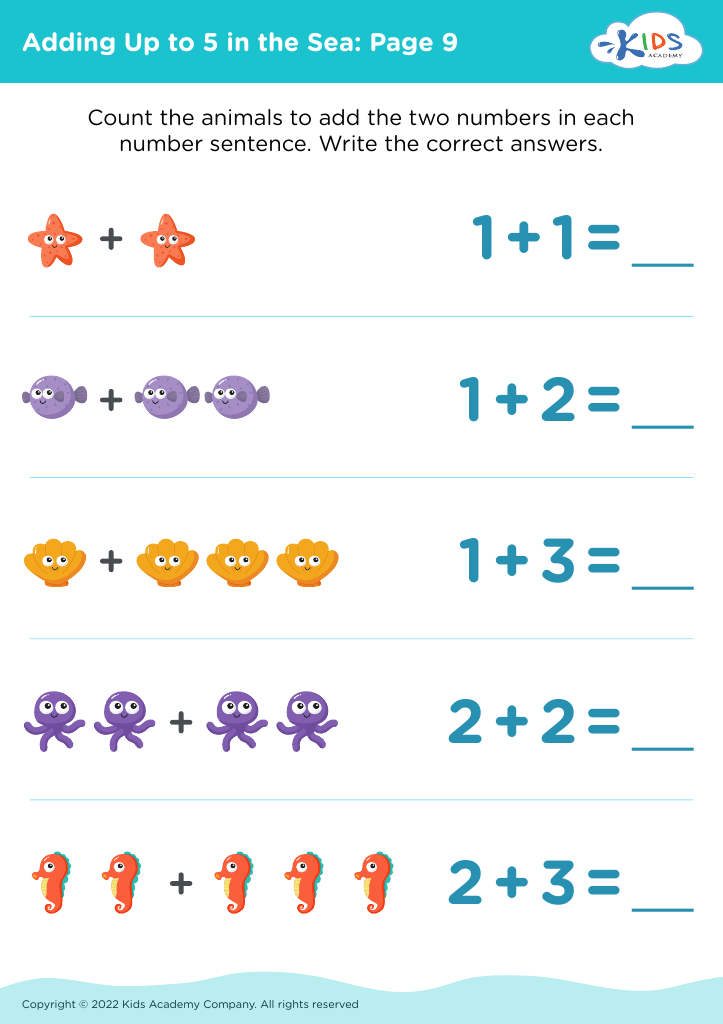
Basic arithmetic, especially adding up to 5, is a foundational skill critical for children's early mathematical development. Understanding addition prepares young learners for more complex math concepts they'll encounter as they progress through school. For children ages 4-9, mastering these basic calculations fosters confidence and a sense of accomplishment, which can motivate them to engage more actively in learning.
Parents and teachers should care about this area for several reasons. Firstly, it helps develop critical thinking and problem-solving skills. Young children learn to recognize patterns, understand quantities, and relate numbers to their environment, which can improve their cognitive abilities.
Additionally, early success in math builds a positive attitude towards the subject. Strong early arithmetic skills also enhance overall academic performance and pave the way for future learning in math and other disciplines.
Moreover, engaging in such activities together can strengthen parent-child and teacher-student relationships, as it creates opportunities for interaction, discussion, and collaborative learning. Ultimately, nurturing these basic arithmetic skills reduces math anxiety in children and sets them on a more successful educational journey, fostering their growth into confident, competent learners.








