Filters

21 filtered results

Clear all filters
Favorites
With answer key
Interactive

21 filtered results

Difficulty Level

Grade


Unlock your child’s mathematical potential with our "Basic Math Skills Adding Up to 5 Worksheets" designed for ages 4-9! These engaging and colorful worksheets help young learners master the fundamentals of addition through fun activities that promote critical thinking and problem-solving skills. With a focus on adding numbers up to 5, children will build confidence while developing their mathematical abilities. Our worksheets are not only educational but also enjoyable, ensuring that learning math feels like play. Download and print these resources today to give your child a strong foundation in essential math concepts that will last a lifetime!
Check out this FREE Trial Lesson on Adding Up to 5 for age 4-9!

P

Favorites
With answer key
Interactive
  • 4-9
  • Basic Math Skills
  • Adding Up to 5
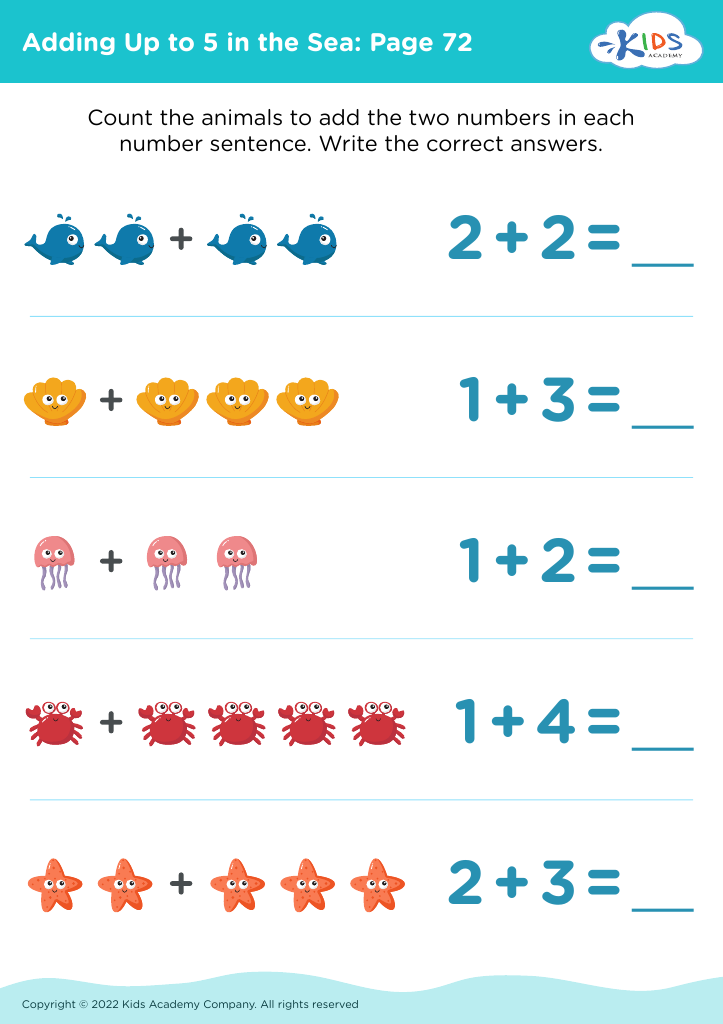
Adding Up to 5 in the Sea: Page 72
Worksheet
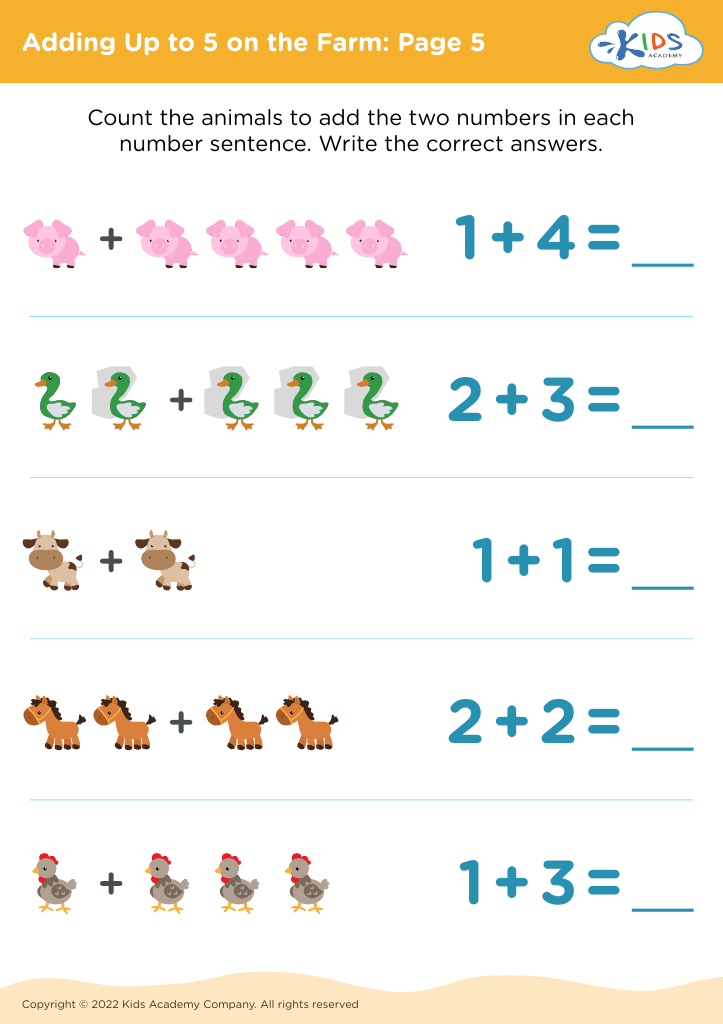
Adding Up to 5 on the Farm: Page 5
Worksheet
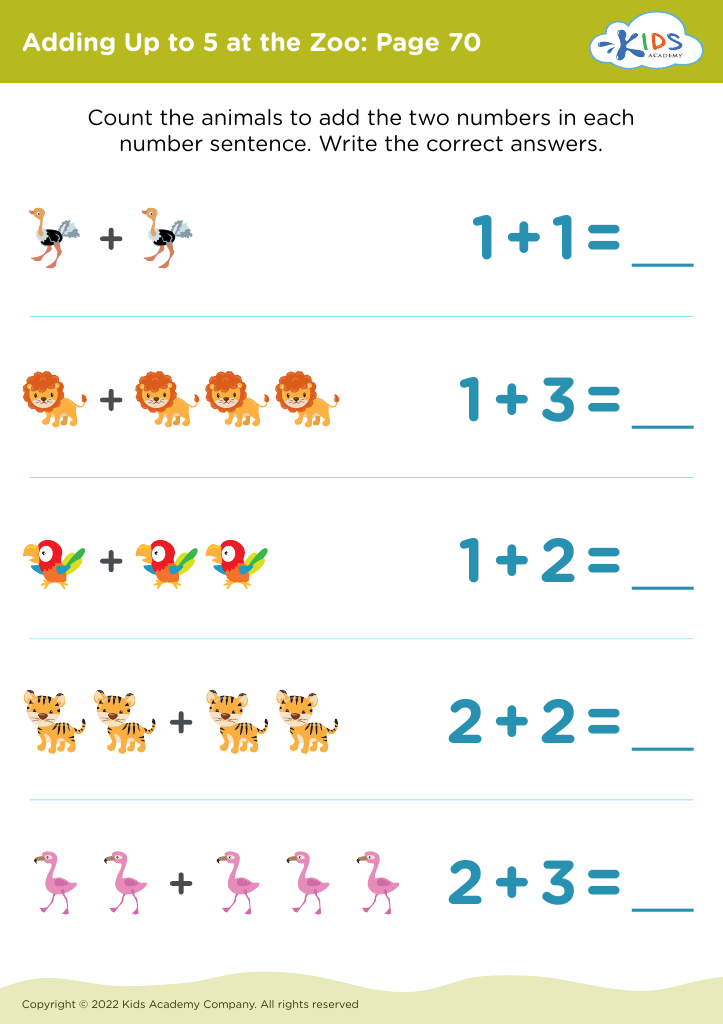
Adding Up to 5 at the Zoo: Page 70
Worksheet
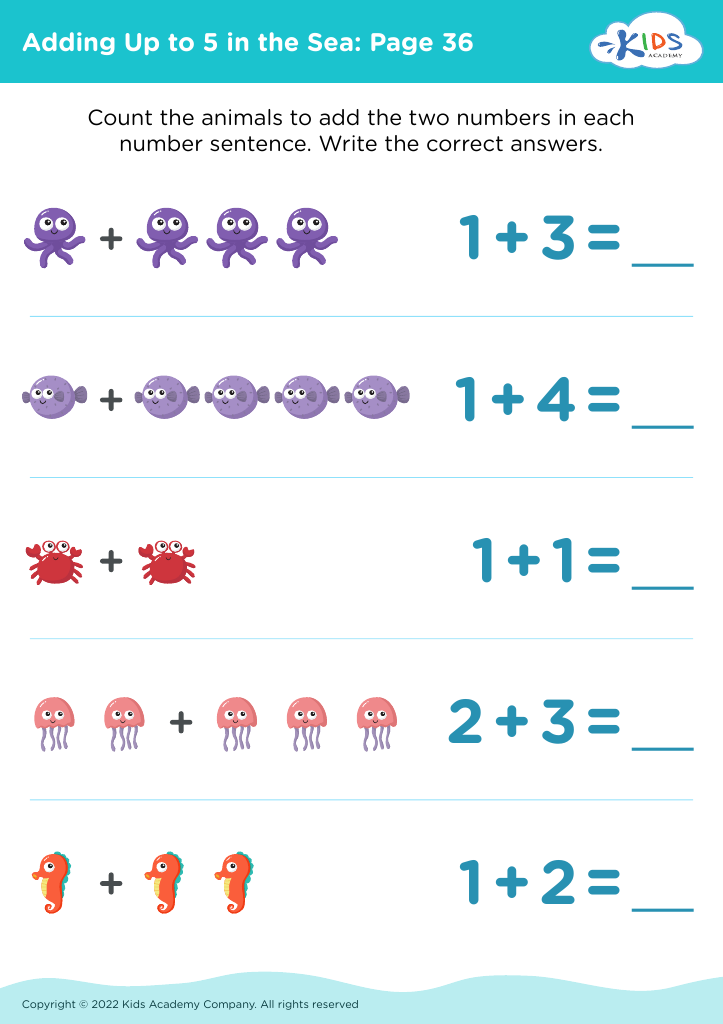
Adding Up to 5 in the Sea: Page 36
Worksheet
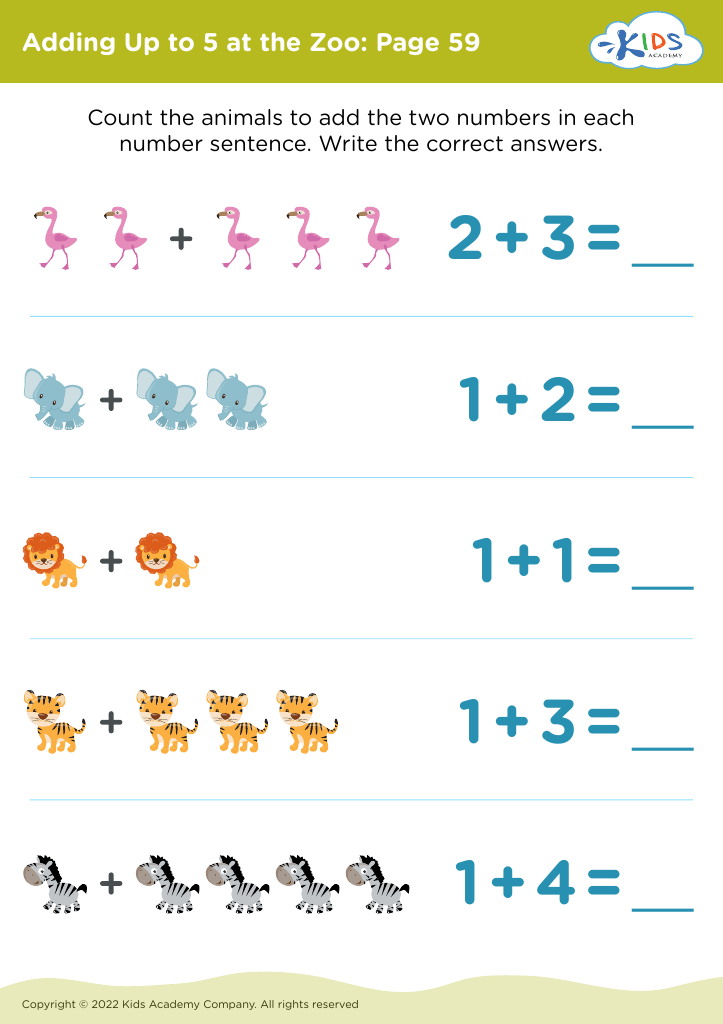
Adding Up to 5 at the Zoo: Page 59
Worksheet
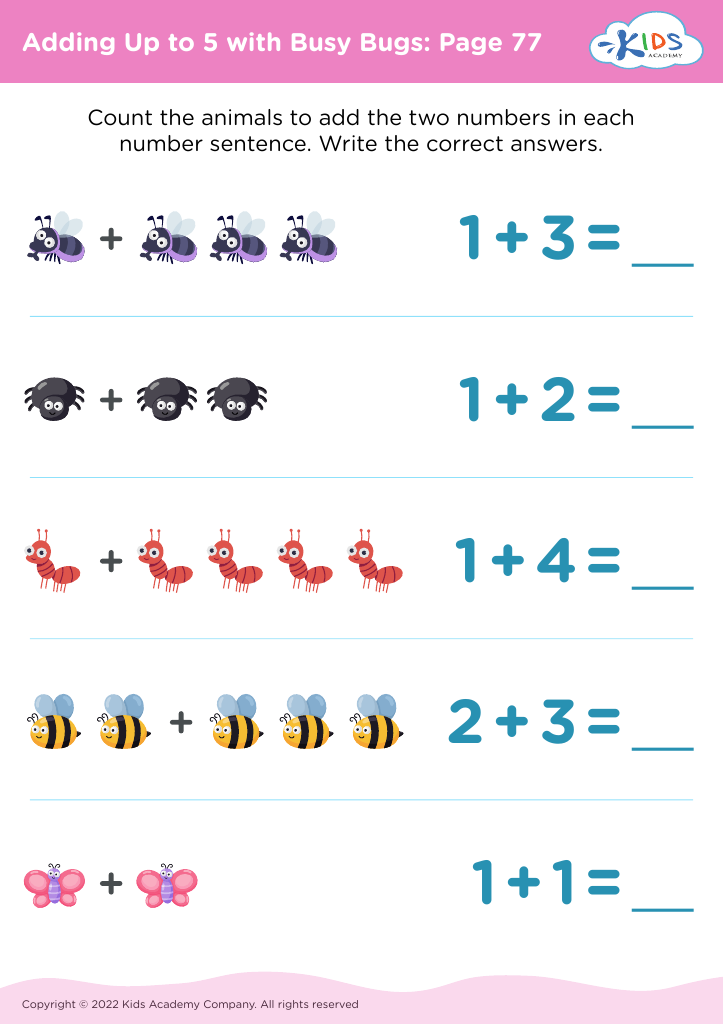
Adding Up to 5 with Busy Bugs: Page 77
Worksheet
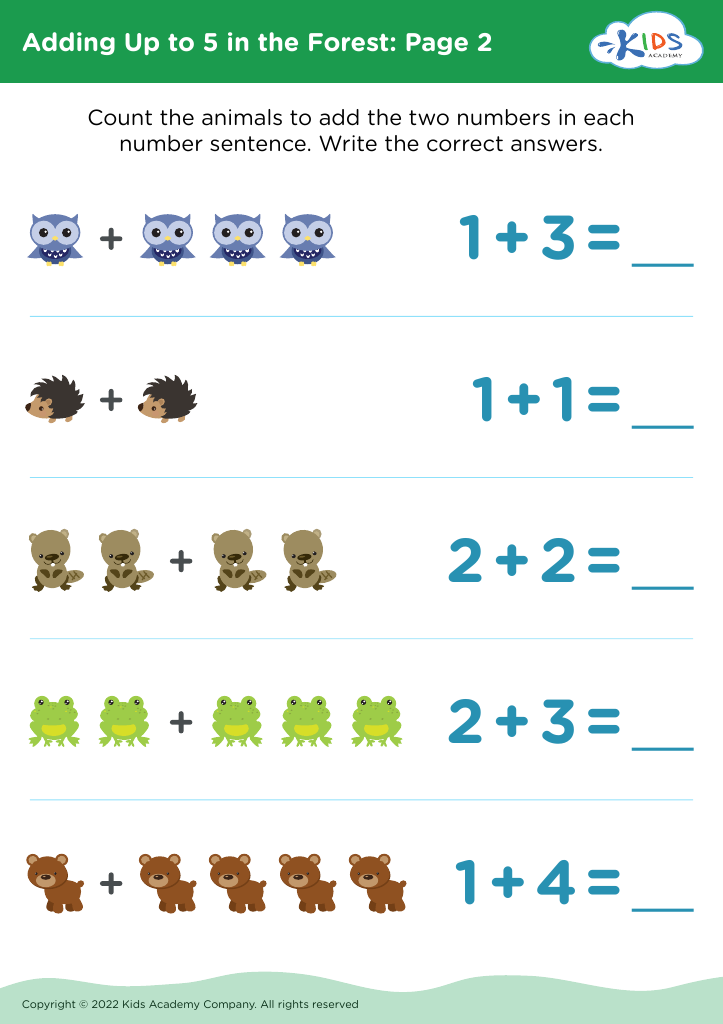
Adding Up to 5 in the Forest: Page 2
Worksheet
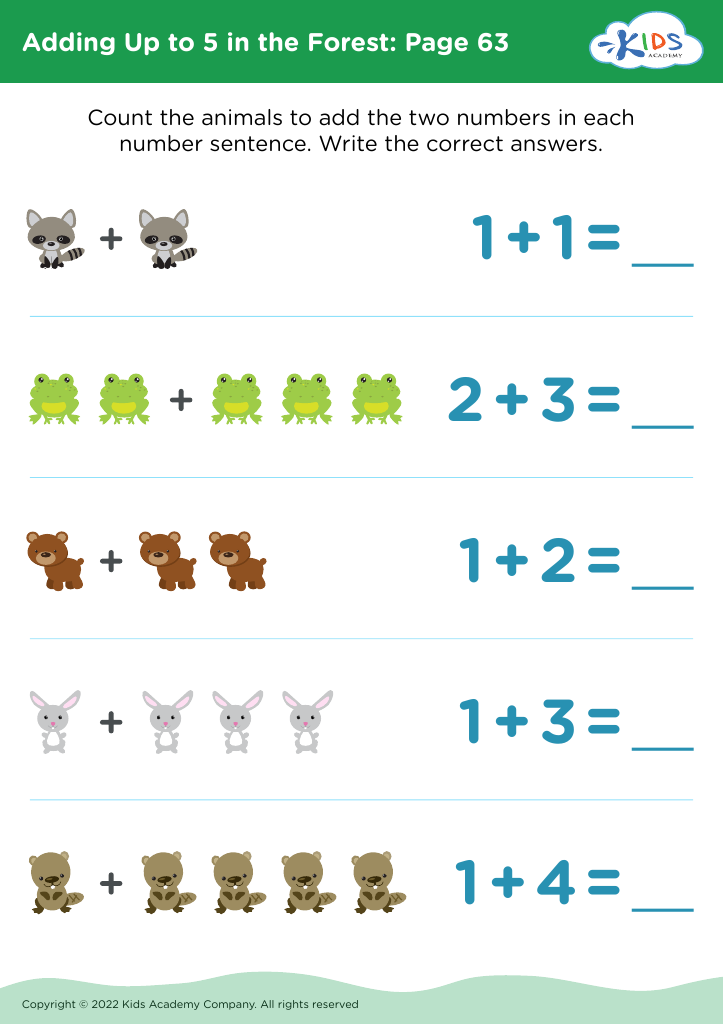
Adding Up to 5 in the Forest: Page 63
Worksheet
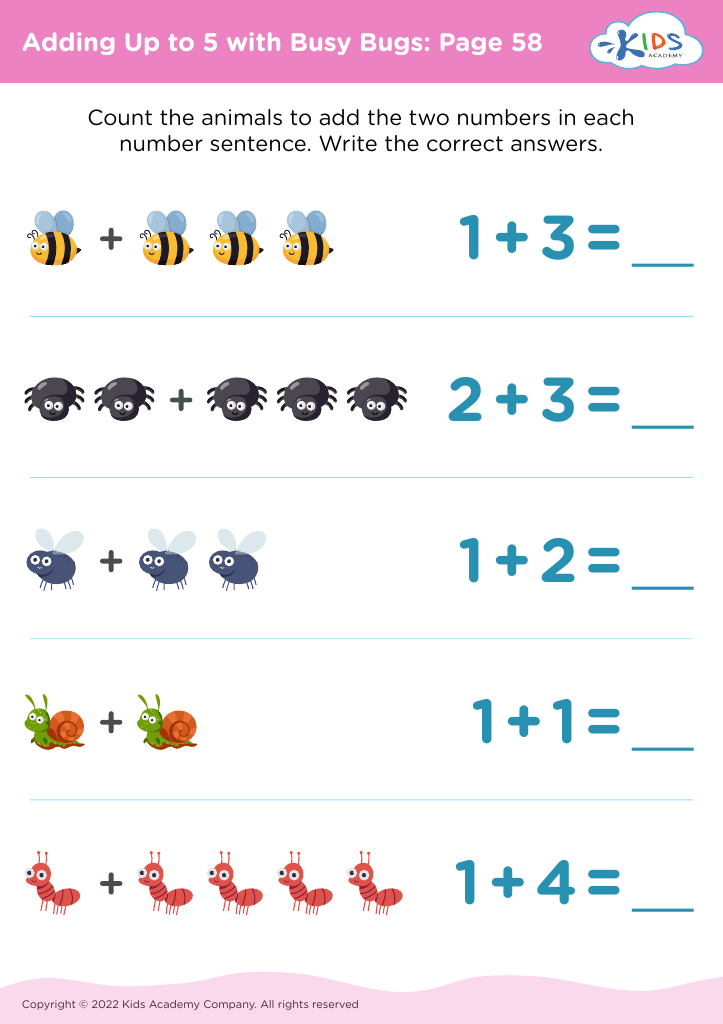
Adding Up to 5 with Busy Bugs: Page 58
Worksheet
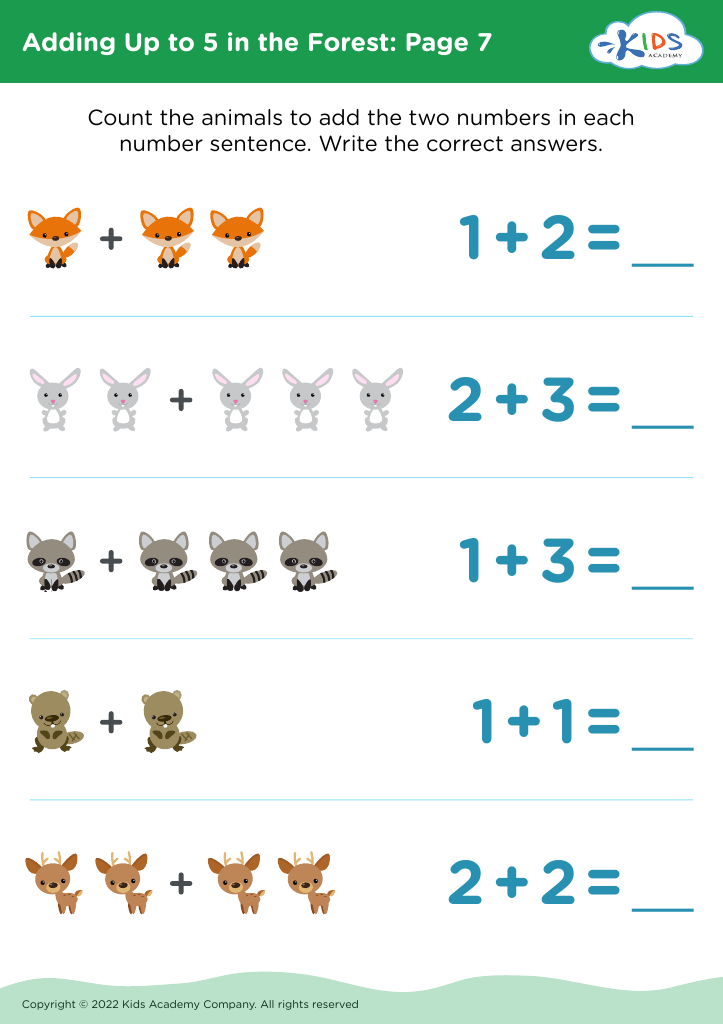
Adding Up to 5 in the Forest: Page 7
Worksheet
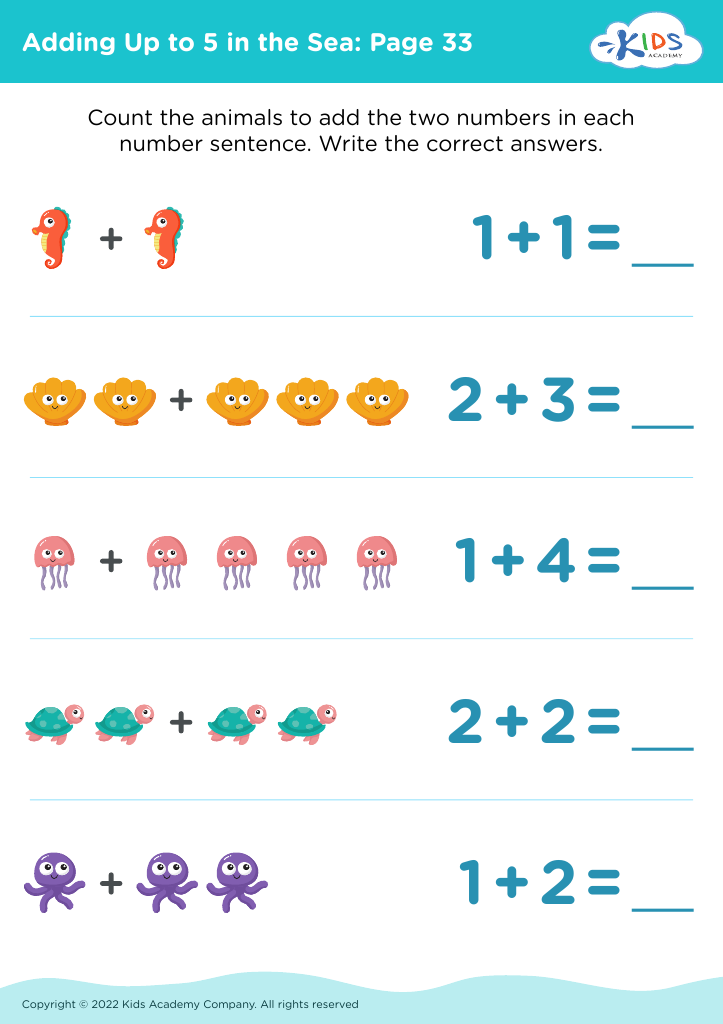
Adding Up to 5 in the Sea: Page 33
Worksheet
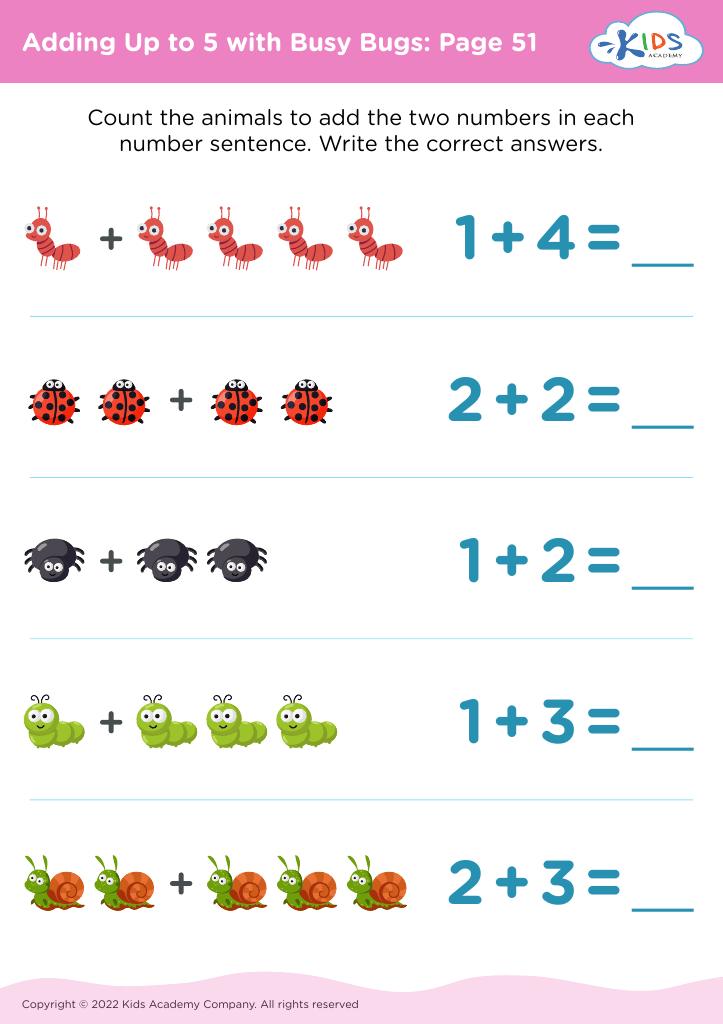
Adding Up to 5 with Busy Bugs: Page 51
Worksheet
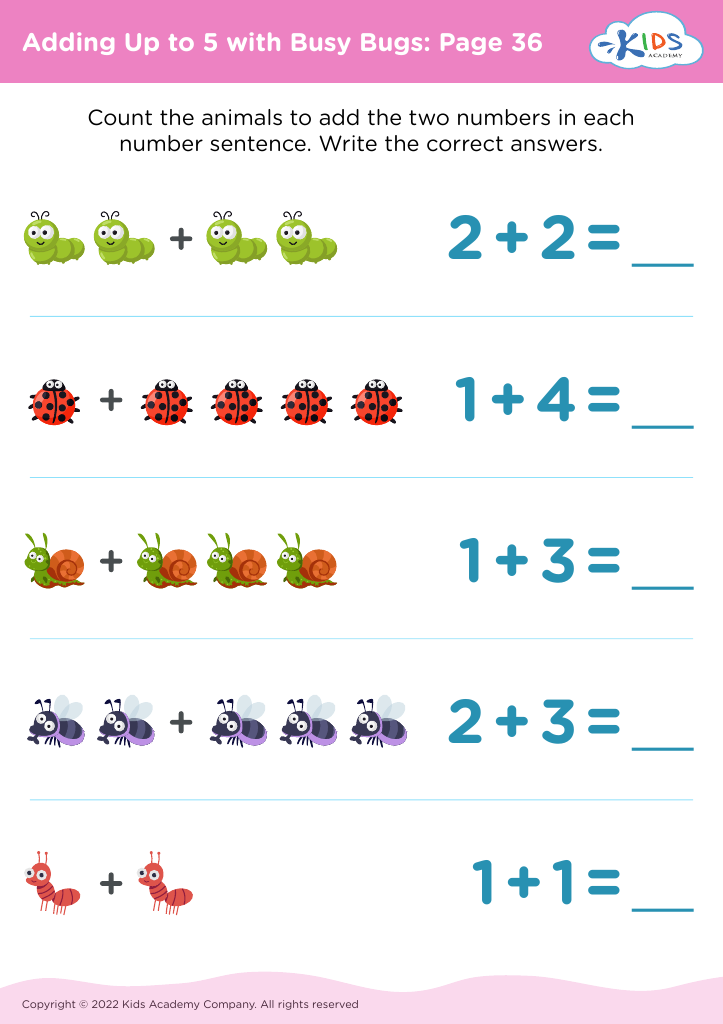
Adding Up to 5 with Busy Bugs: Page 36
Worksheet
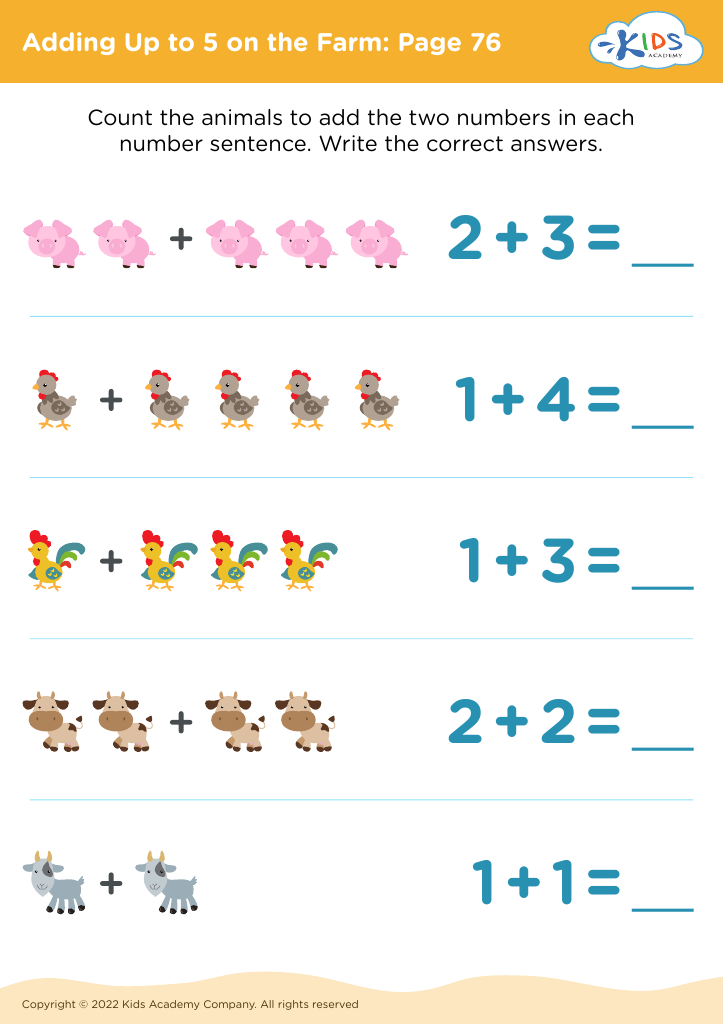
Adding Up to 5 on the Farm: Page 76
Worksheet
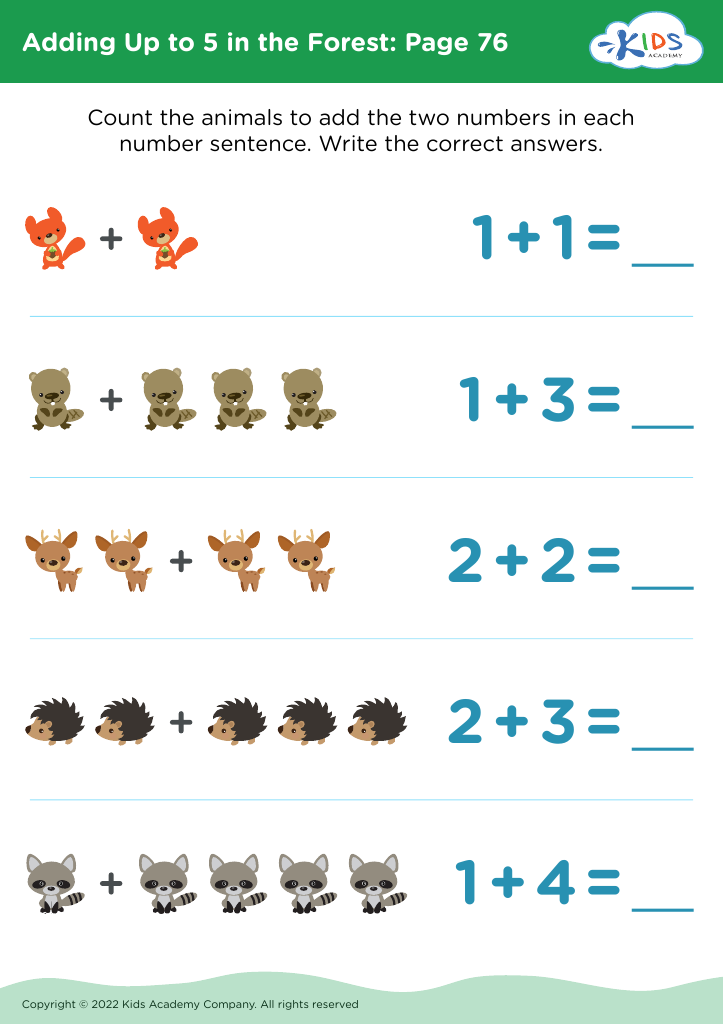
Adding Up to 5 in the Forest: Page 76
Worksheet
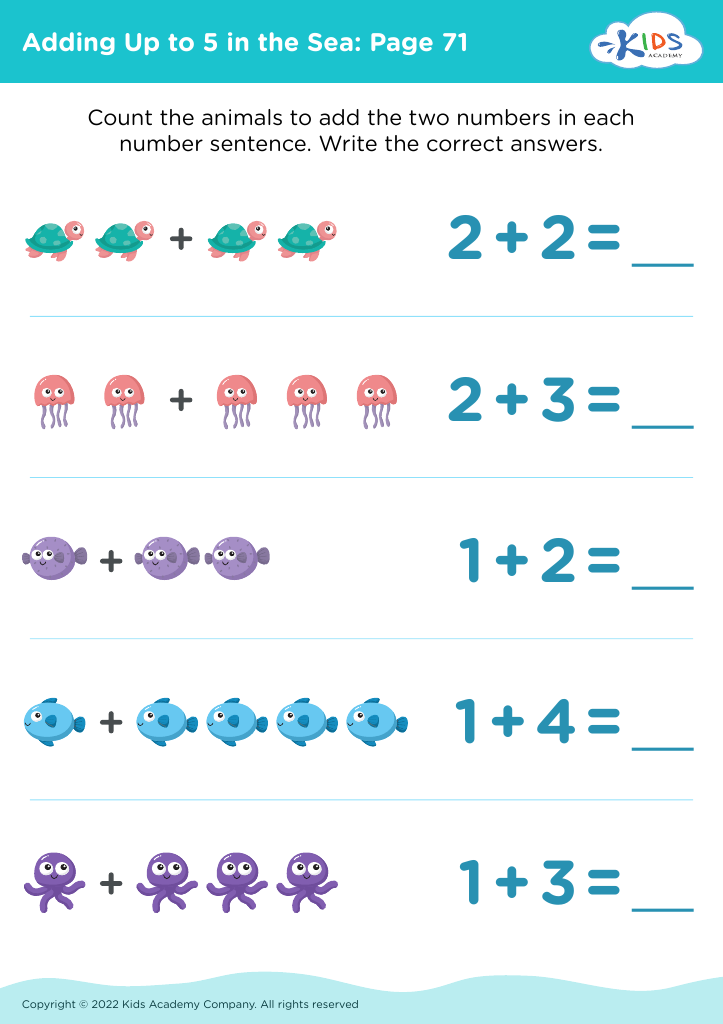
Adding Up to 5 in the Sea: Page 71
Worksheet
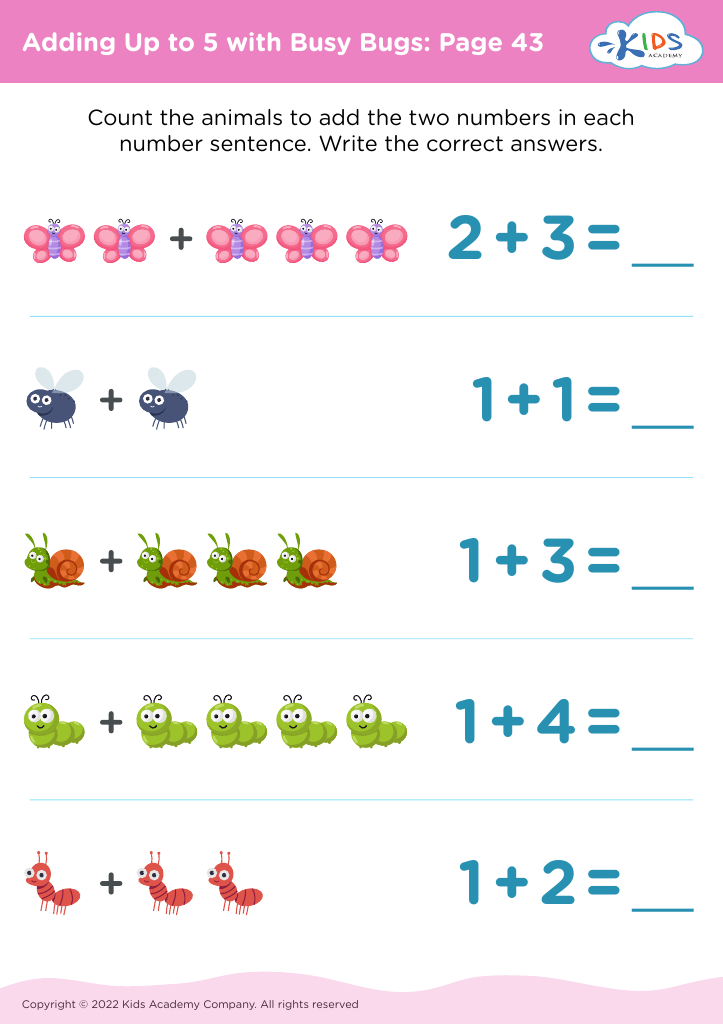
Adding Up to 5 with Busy Bugs: Page 43
Worksheet
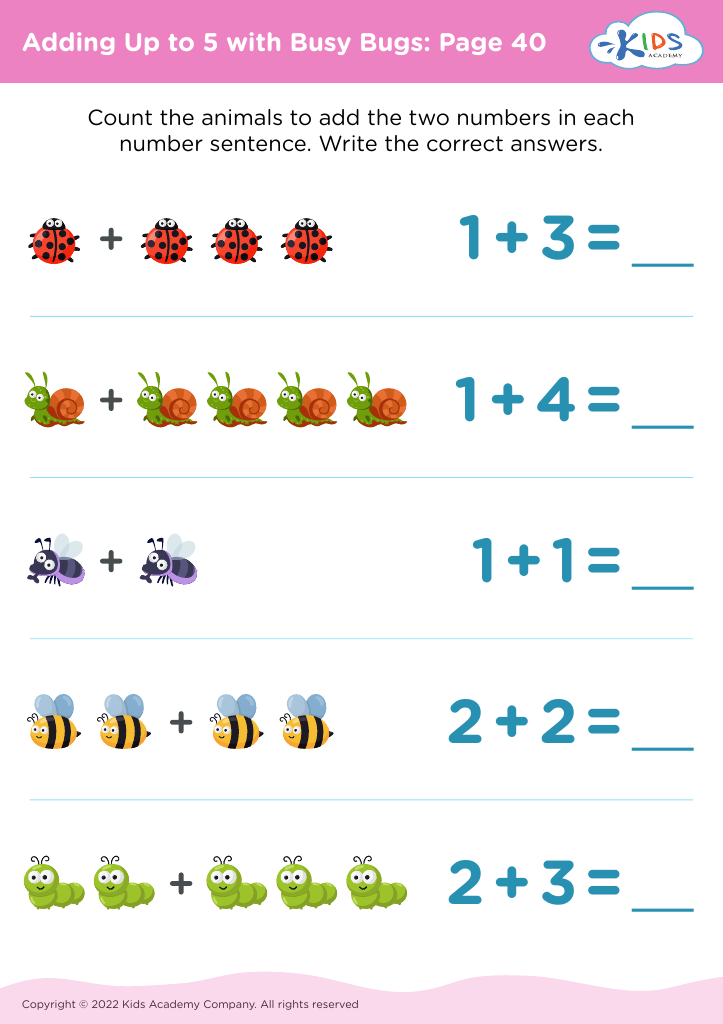
Adding Up to 5 with Busy Bugs: Page 40
Worksheet
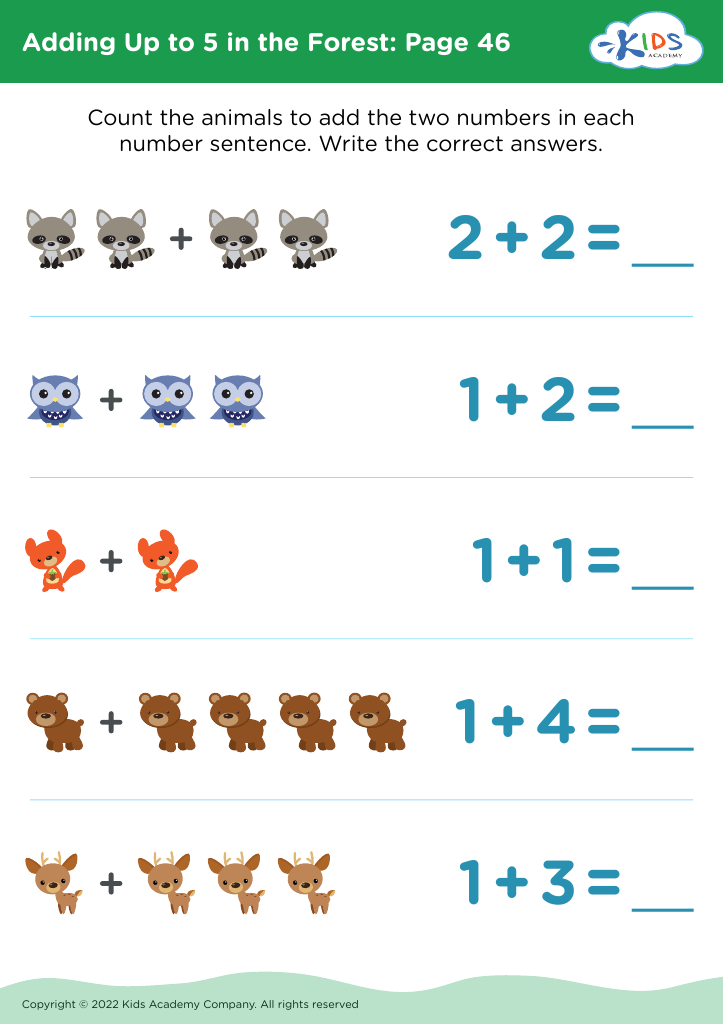
Adding Up to 5 in the Forest: Page 46
Worksheet
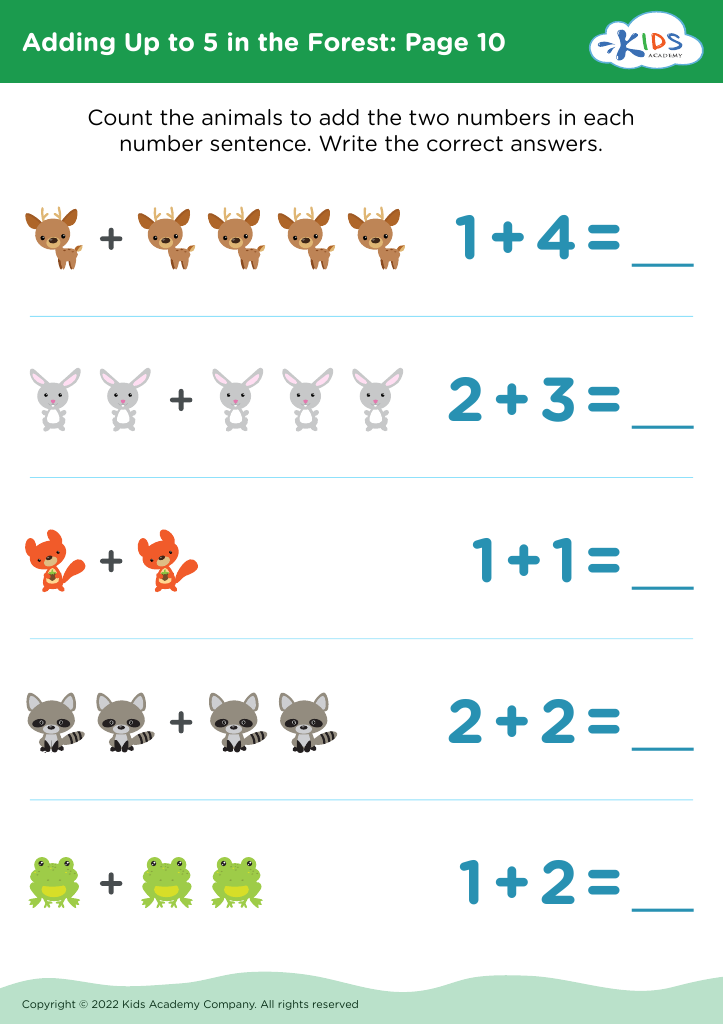
Adding Up to 5 in the Forest: Page 10
Worksheet
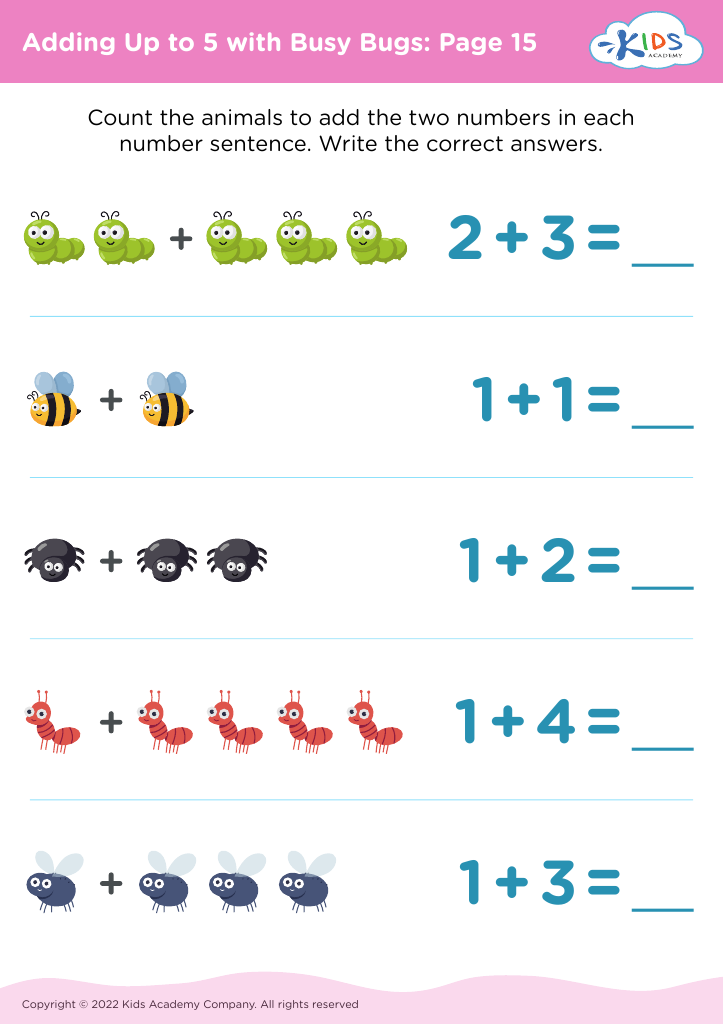
Adding Up to 5 with Busy Bugs: Page 15
Worksheet


Basic math skills, particularly the ability to add up to 5, are foundational for children ages 4-9. Understanding this concept is critical because it forms the building blocks for more complex mathematical concepts later in life. When children learn to add small numbers, they develop not only numerical fluency but also critical thinking and problem-solving skills.

For parents and teachers, fostering this skill can enhance children’s confidence and reduce anxiety around math. Early mastery can lead to a positive attitude towards mathematics, helping them to view it as an engaging and enjoyable subject. It also prepares them for real-world applications, such as handling money, understanding time, and measuring objects, fostering independence and life skills.

Additionally, teaching basic math encourages essential social skills, as students often engage in collaborative activities that require counting and sharing. Moreover, those with a solid grasp of these skills tend to perform better academically in later grades. Thus, both parents and teachers should prioritize this area of learning, ensuring that children have opportunities to practice and consolidate their skills in a variety of fun and interactive contexts, ultimately laying a strong foundation for lifelong mathematical understanding.