Developing Concentration Adding Up to 5 Worksheets for Ages 4-9
5 filtered results
-
From - To
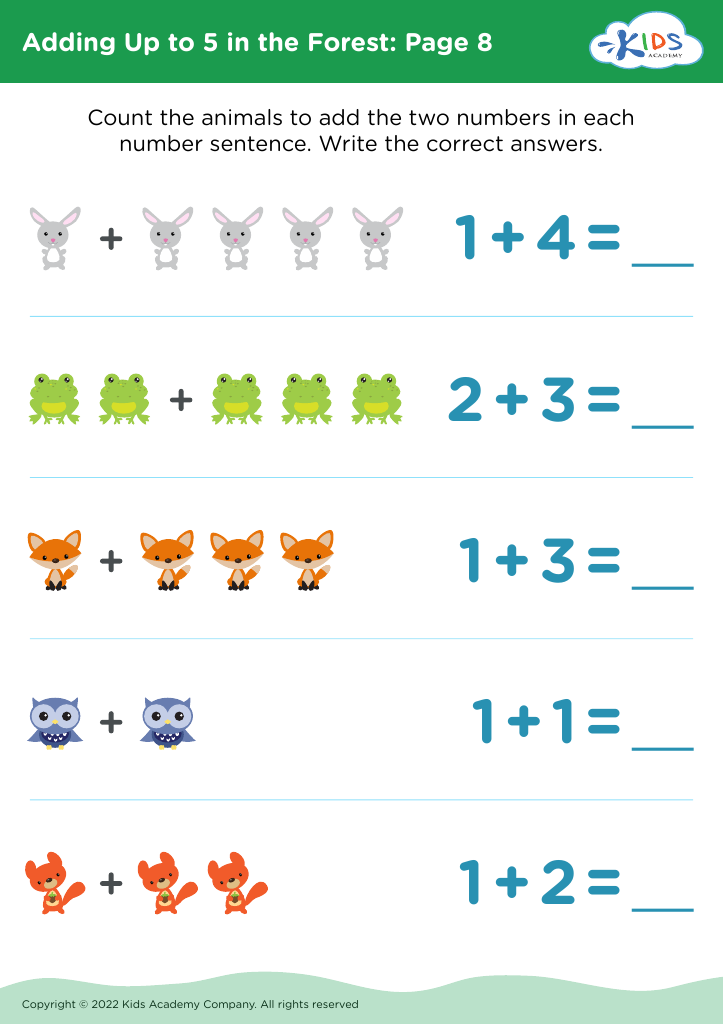
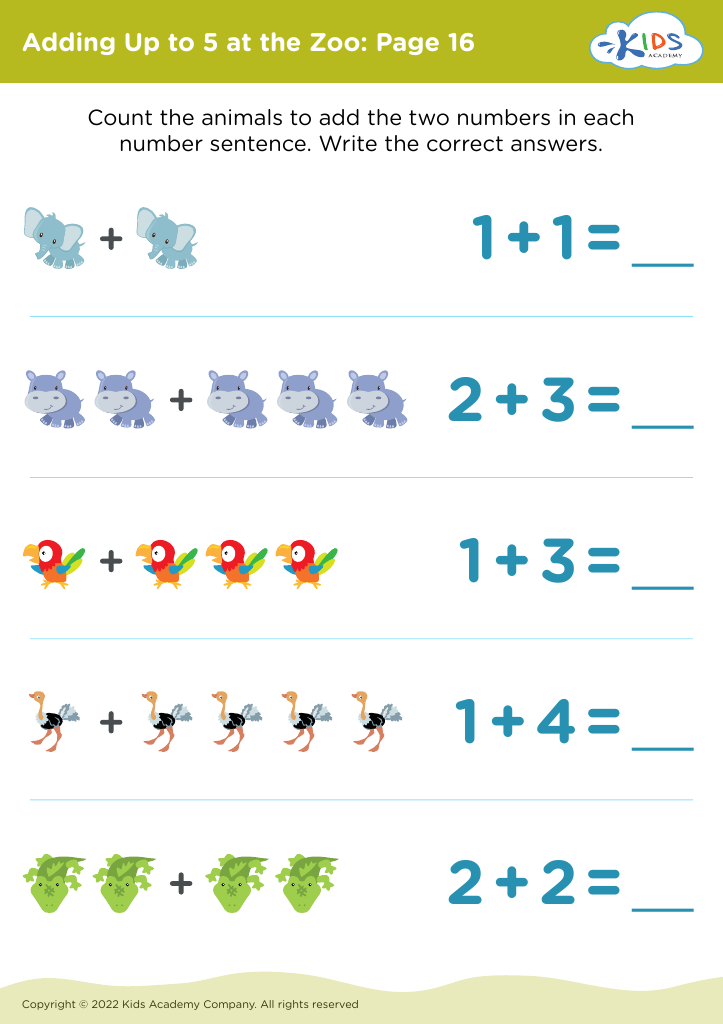
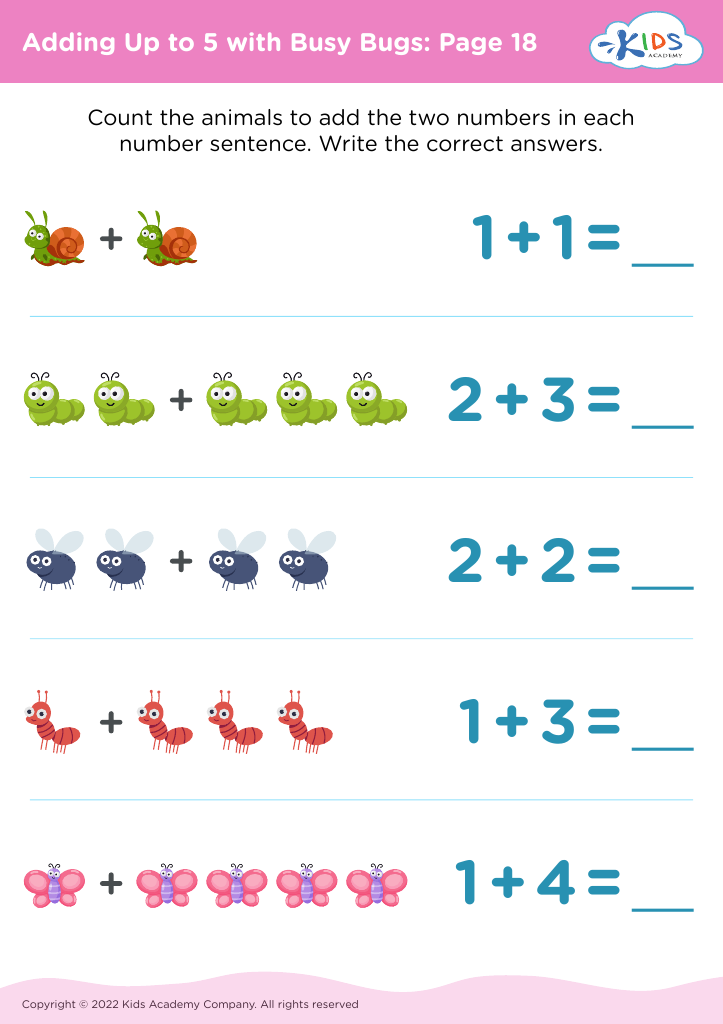
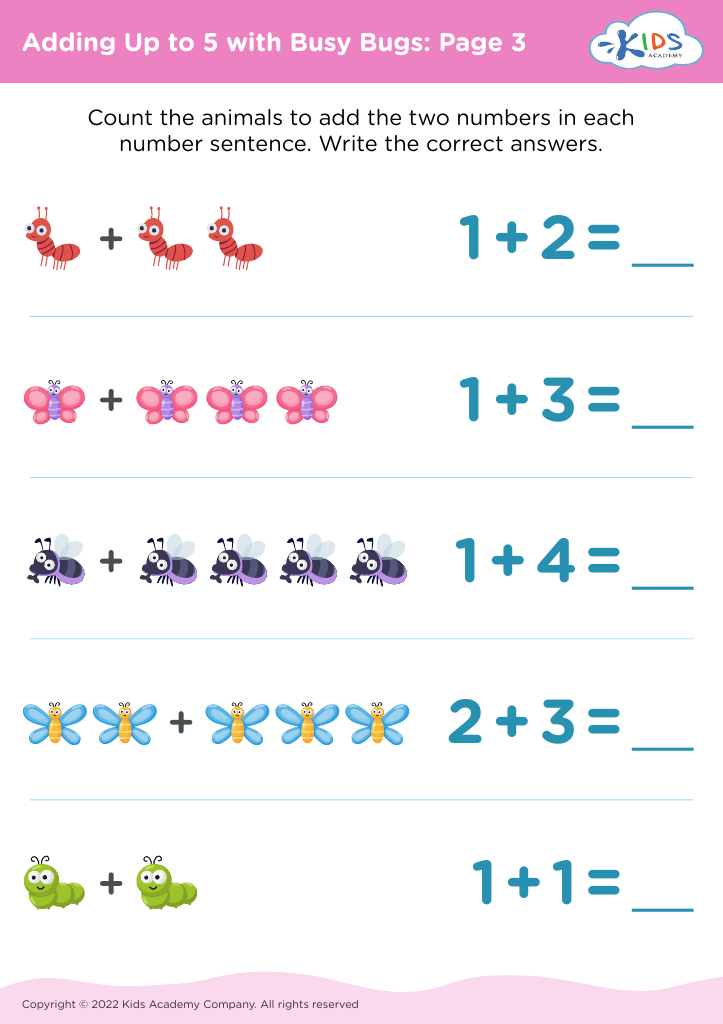
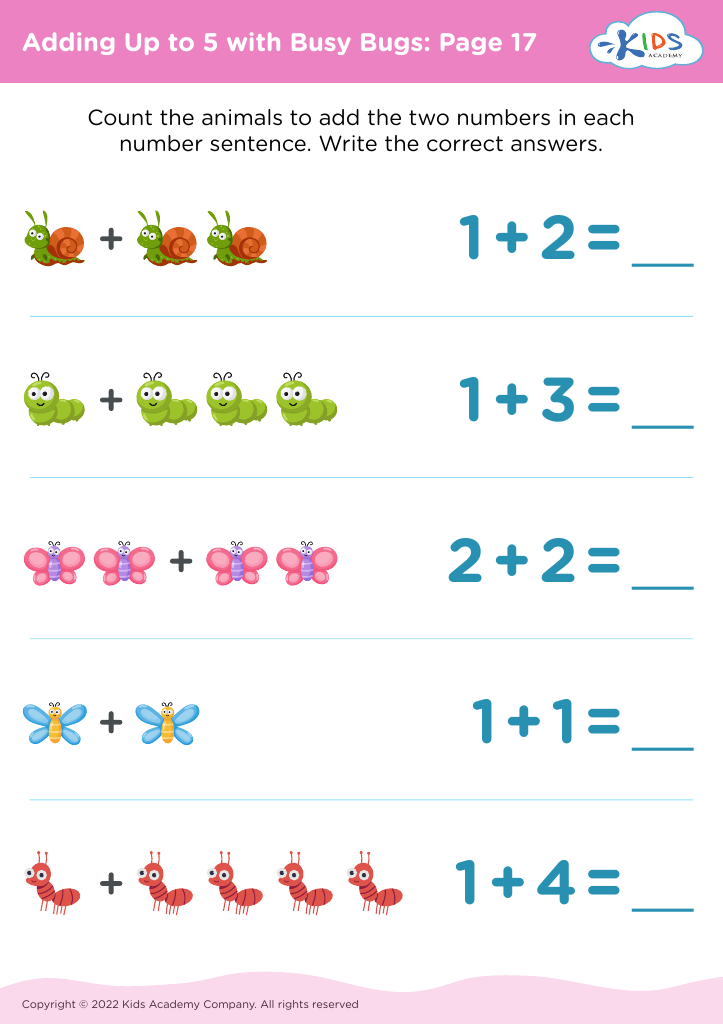
Welcome to our "Developing Concentration Adding Up to 5 Worksheets" designed for children ages 4-9! These engaging worksheets help young learners build essential concentration skills while mastering simple addition up to 5. Each activity encourages focus and attention, fostering a strong mathematical foundation in a fun way. Perfect for home or classroom use, our worksheets feature colorful illustrations and varied formats to keep kids motivated. Watch your child enhance their concentration abilities while becoming confident in their addition skills. Start your journey towards improved learning and fun with these thoughtfully designed worksheets today! Explore and watch your child's confidence soar!


%20(1).jpg)


.jpg)


Developing concentration in young children, particularly in the context of mathematical skills like adding up to 5, is crucial for several reasons. First, concentration enhances a child’s ability to grasp and retain new concepts. When children learn to focus, they are better able to understand the relationship between numbers, which establishes a solid foundation for future math skills. This is especially important for ages 4-9, a formative period when cognitive abilities are rapidly developing.
Furthermore, effective concentration aids in problem-solving and critical thinking. As children learn to focus on tasks such as simple addition, they begin to explore different strategies for finding solutions, enhancing their analytical skills. Engaging in concentration-building activities can also promote longer attention spans, which is essential not just in math, but across all subjects and life skills.
Finally, supporting concentration development contributes to a child's emotional and social growth. Children who learn to stay focused often experience increased confidence, better classroom behaviors, and improved peer interactions. By fostering concentration during these early years, parents and teachers lay the groundwork for academic success and lifelong learning, making it an essential area for attention in early education.








