Fine motor skills (writing) Adding Up to 5 Worksheets for Ages 4-9 - Page 2
32 filtered results
-
From - To


%20(1).jpg)



.jpg)

Fine motor skills play a crucial role in a child's overall development, especially for those aged 4-9. As children engage in activities like writing, they enhance their hand-eye coordination, dexterity, and precision. These skills are essential not only for school-related tasks but also for daily activities like buttoning shirts or tying shoelaces.
Writing involves complex movements that require strength and coordination. When children practice writing, they learn to control their hand movements, which fosters confidence and independence. This mastery supports their ability to complete assignments, ultimately impacting their academic performance.
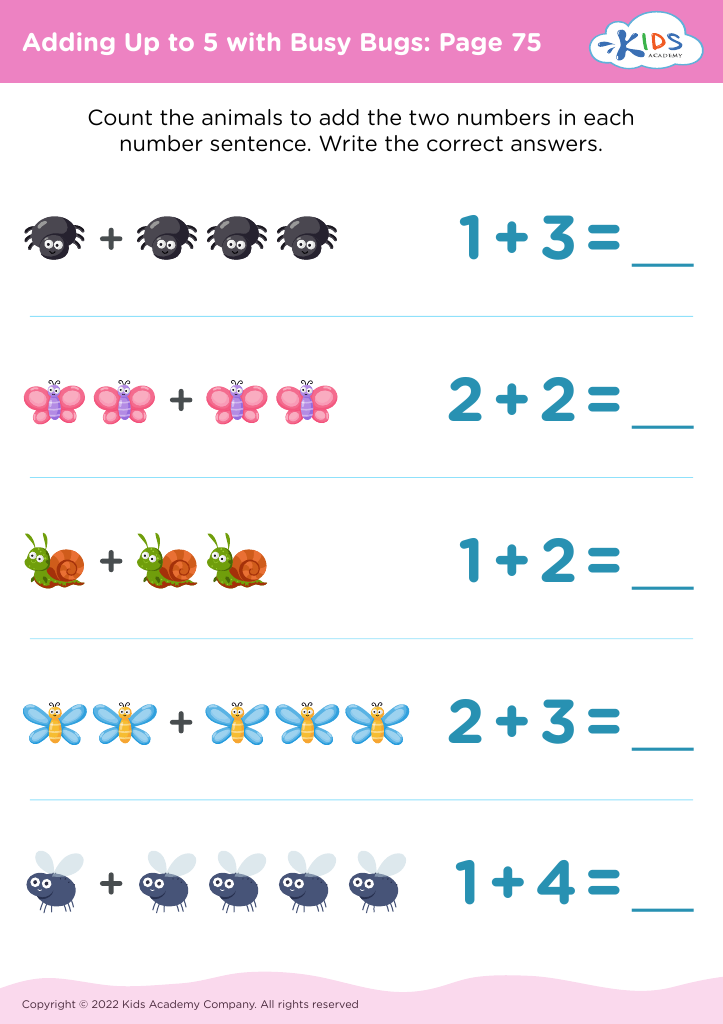
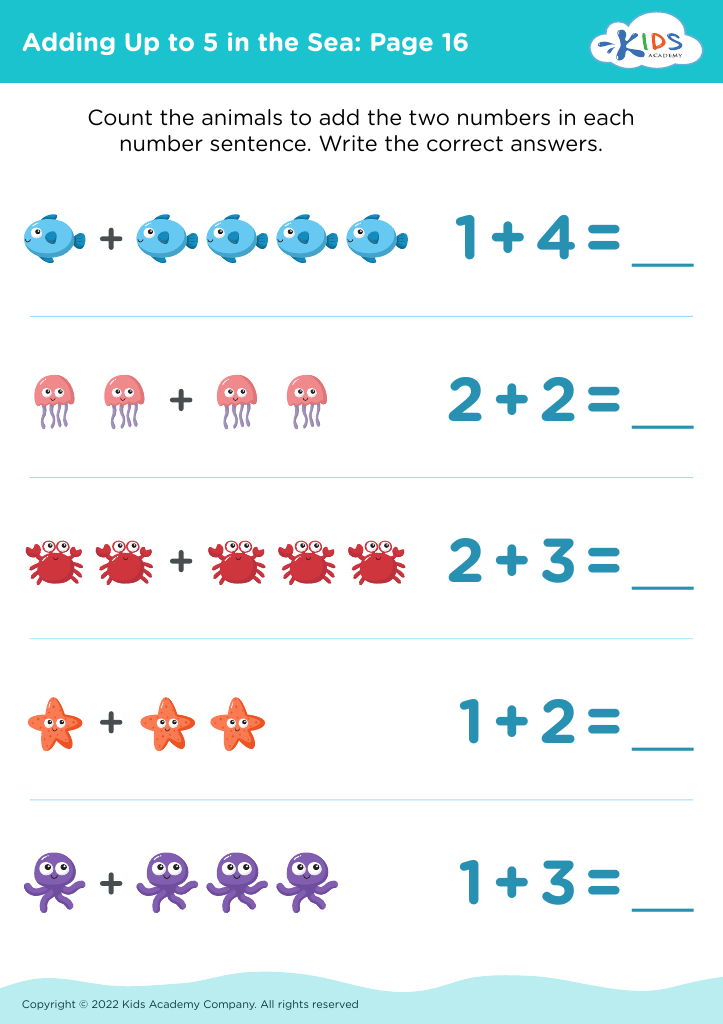
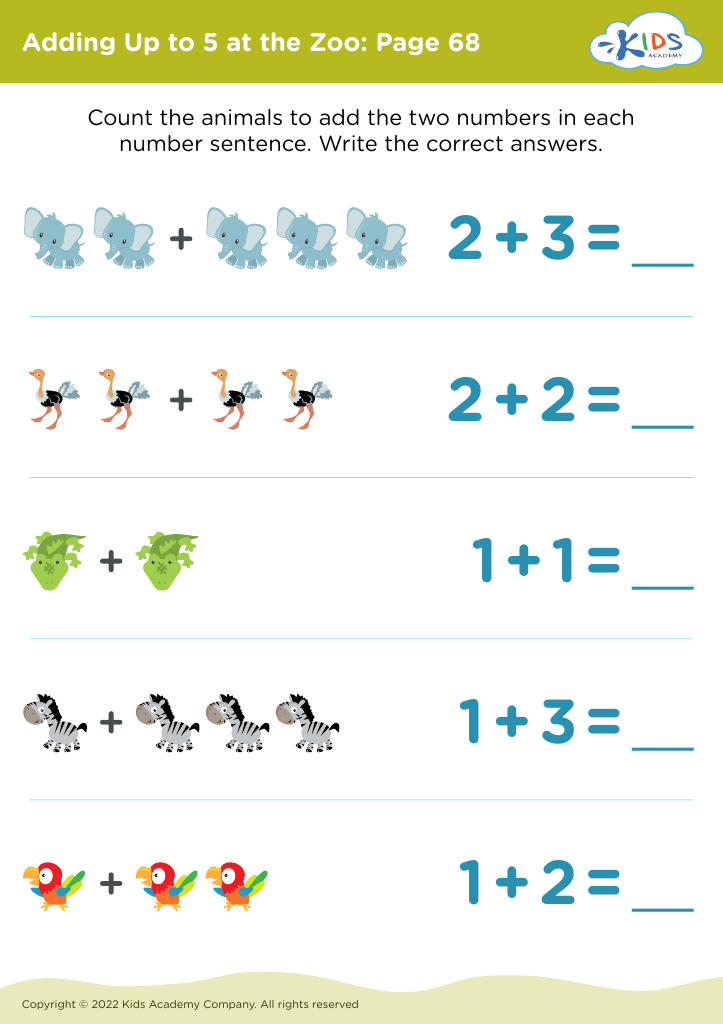
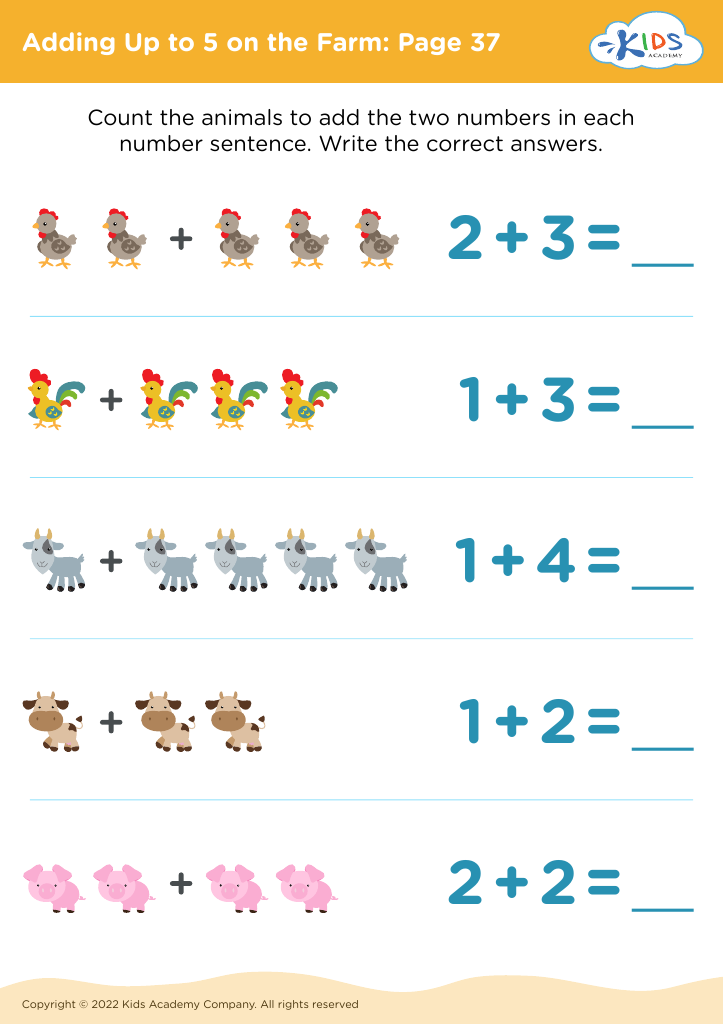
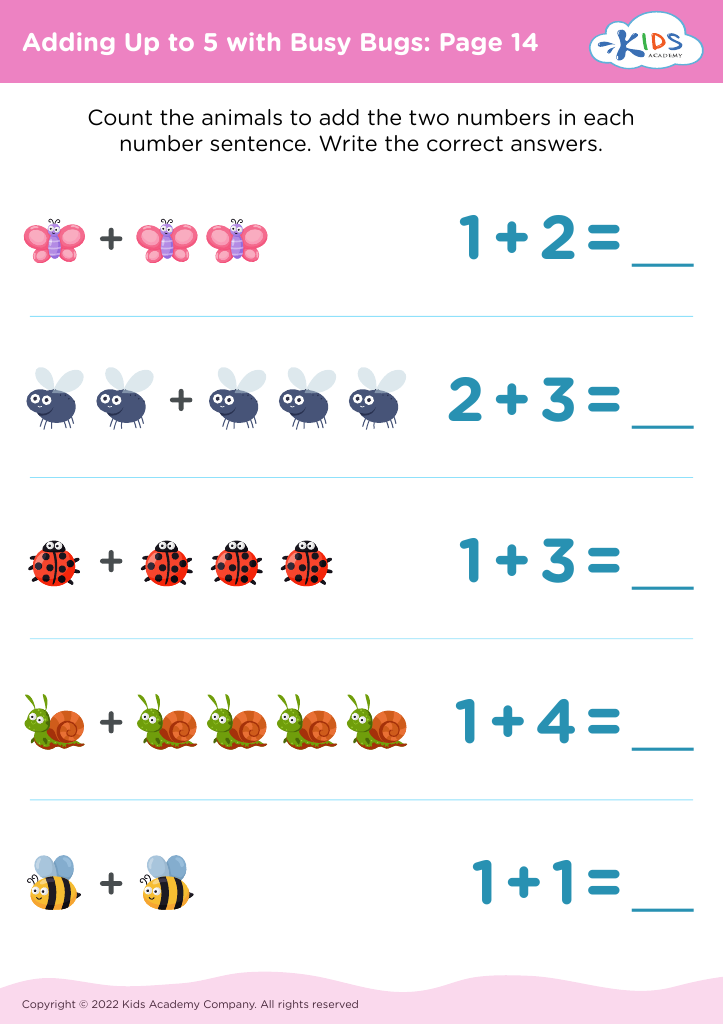
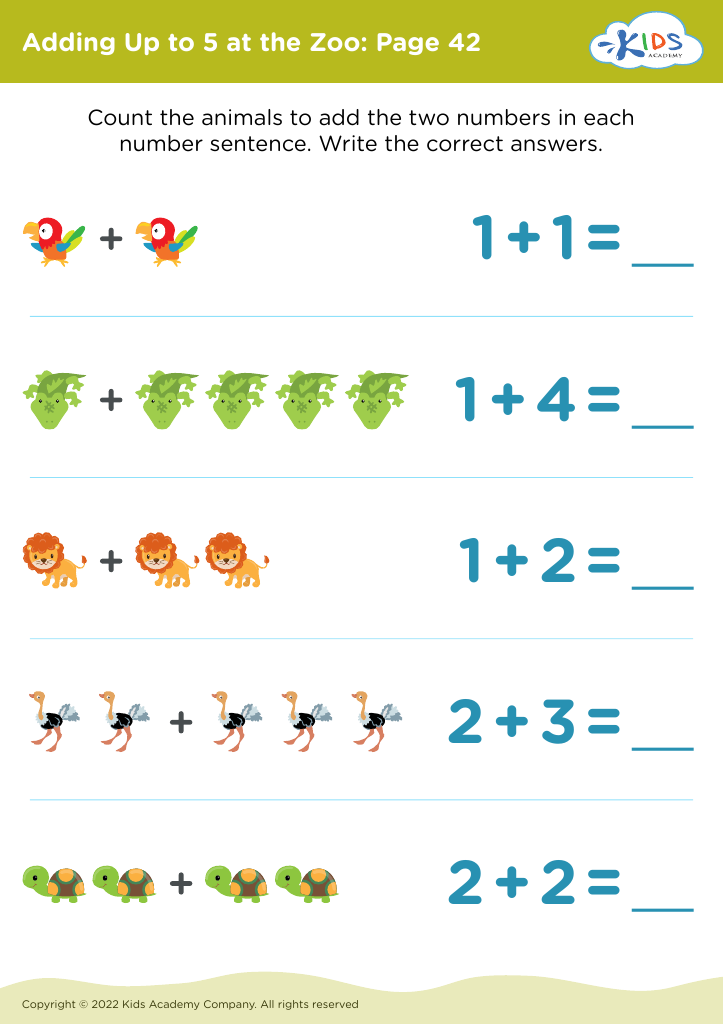
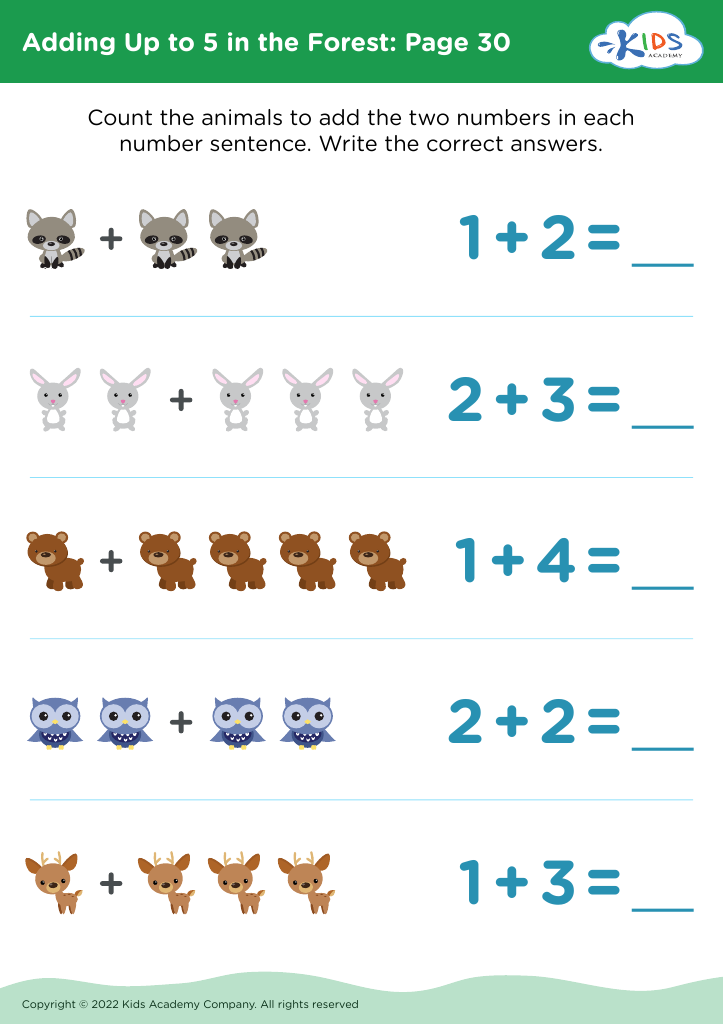
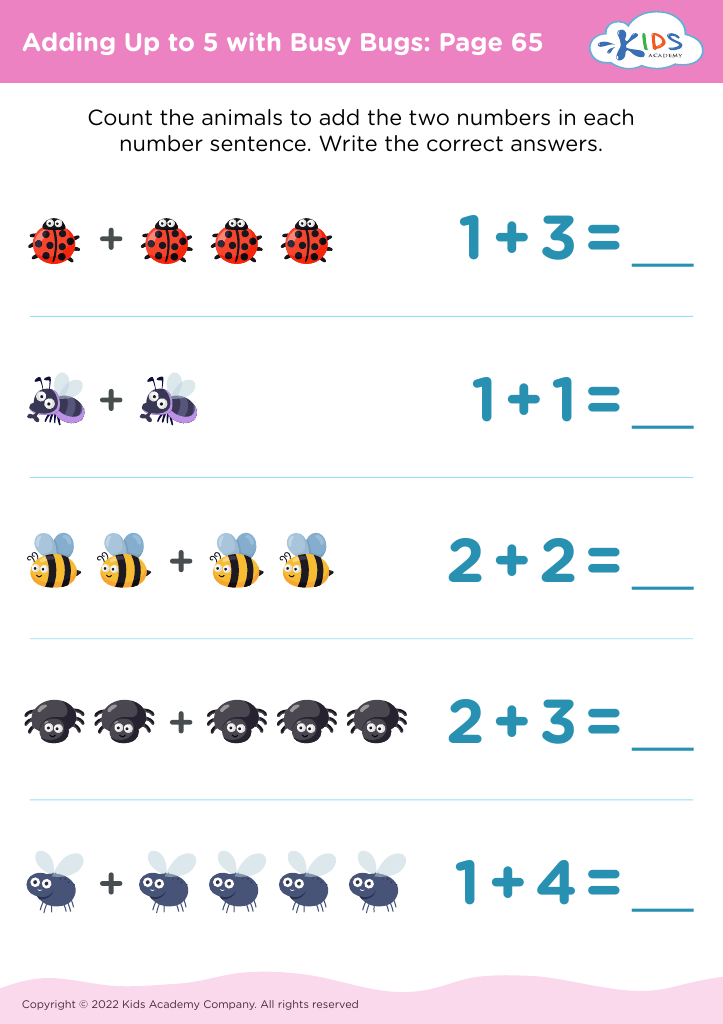
Additionally, the process of adding numbers up to 5 is intimately tied to fine motor skills. It involves clicking counters, drawing, or using fingers to count and solve simple math problems. Developing these basic math skills away from reliance on digital tools lays a solid foundation for future learning in arithmetic and problem-solving.
Overall, nurturing fine motor skills and early math abilities is essential for fostering a child's creativity, critical thinking, and lifelong learning. Parents and teachers should therefore prioritize activities that integrate these skills, creating a well-rounded environment for cognitive and physical development.








