Problem-solving abilities Adding Up to 5 Worksheets for Ages 4-9
13 filtered results
-
From - To
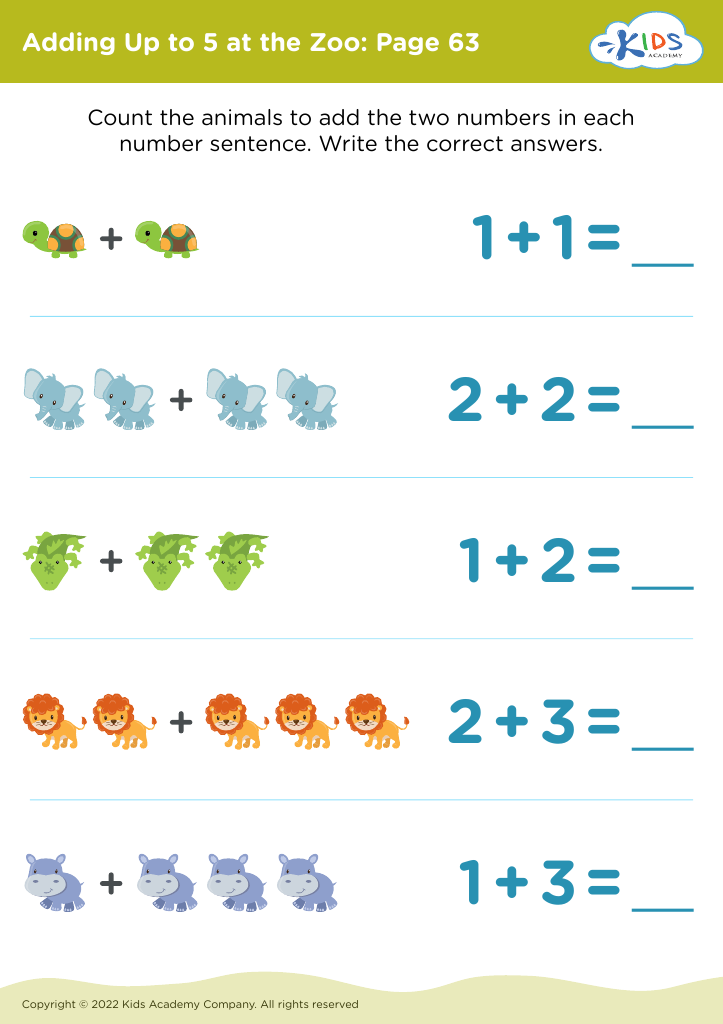
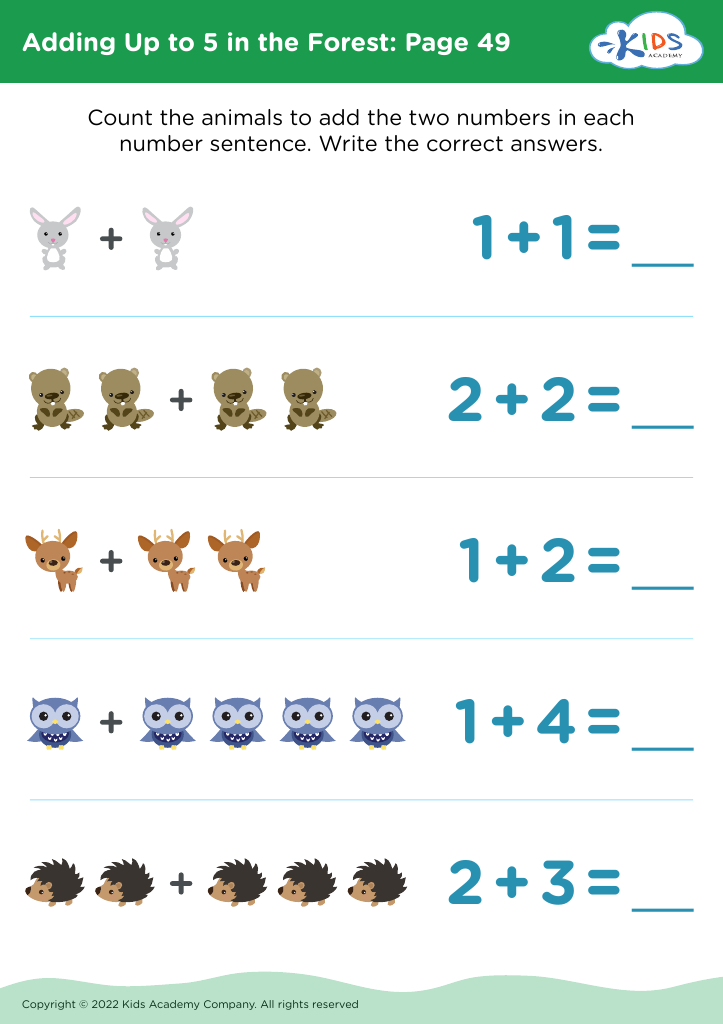
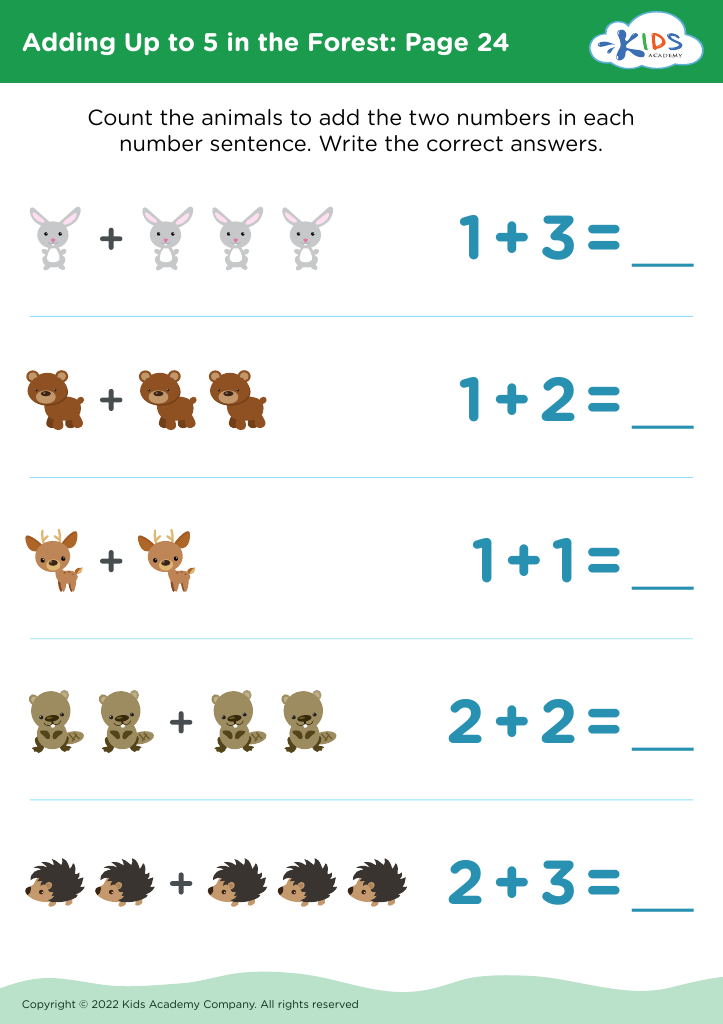
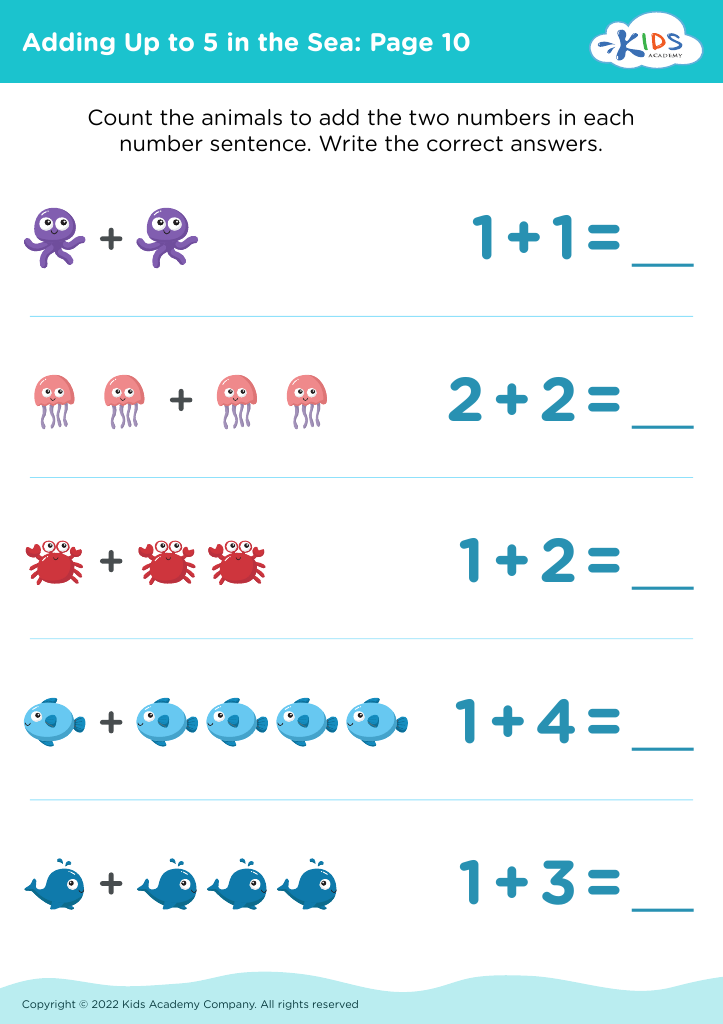
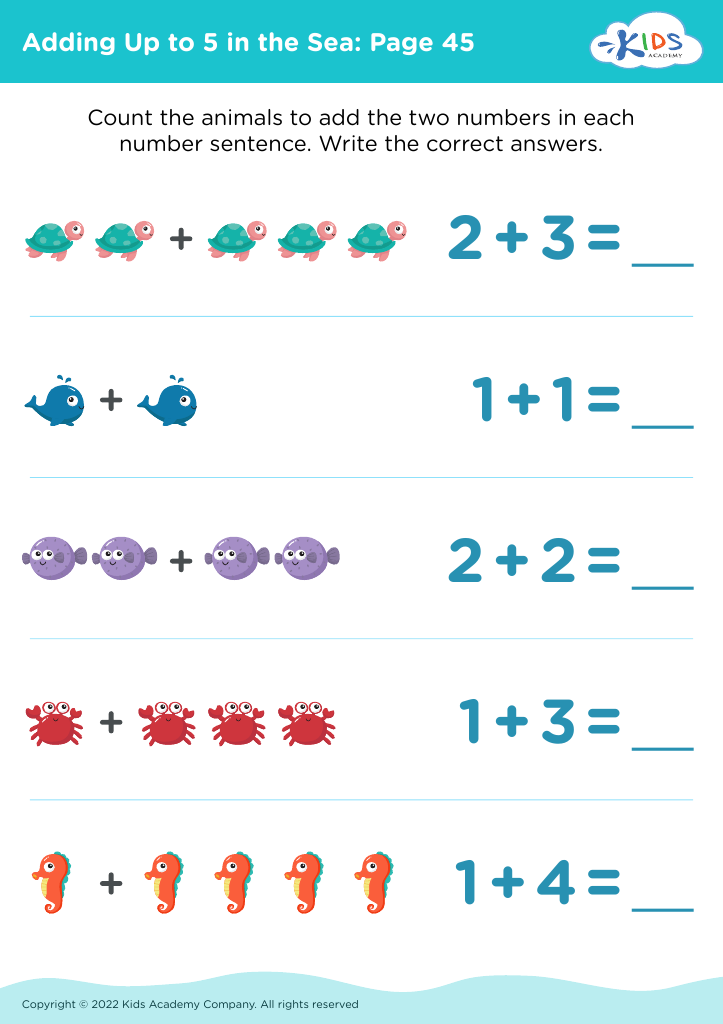
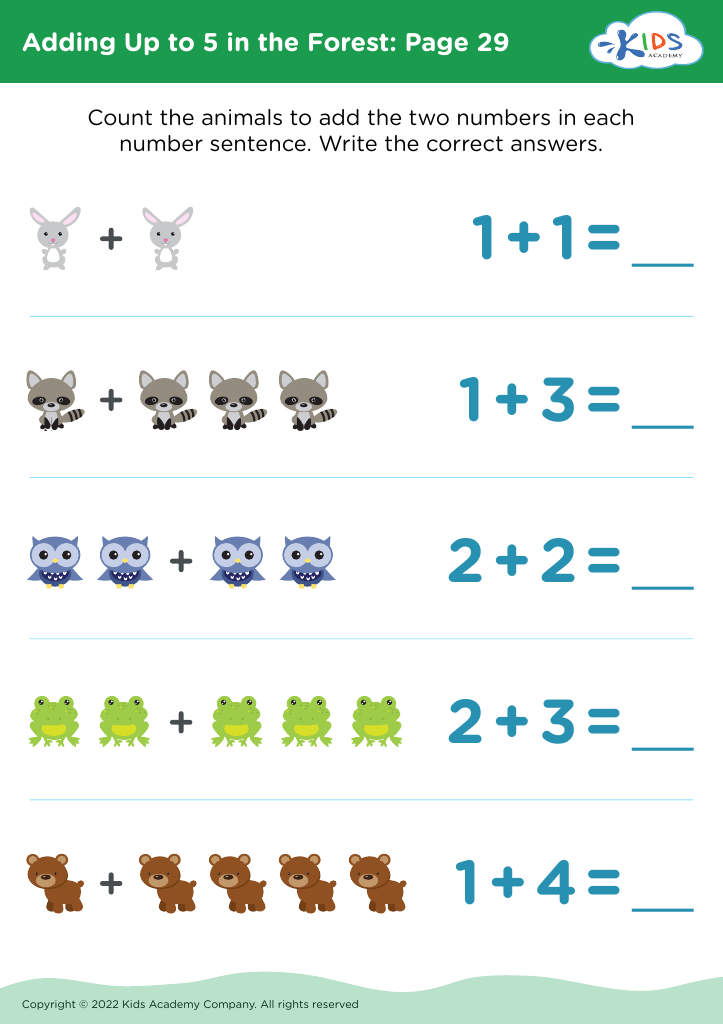
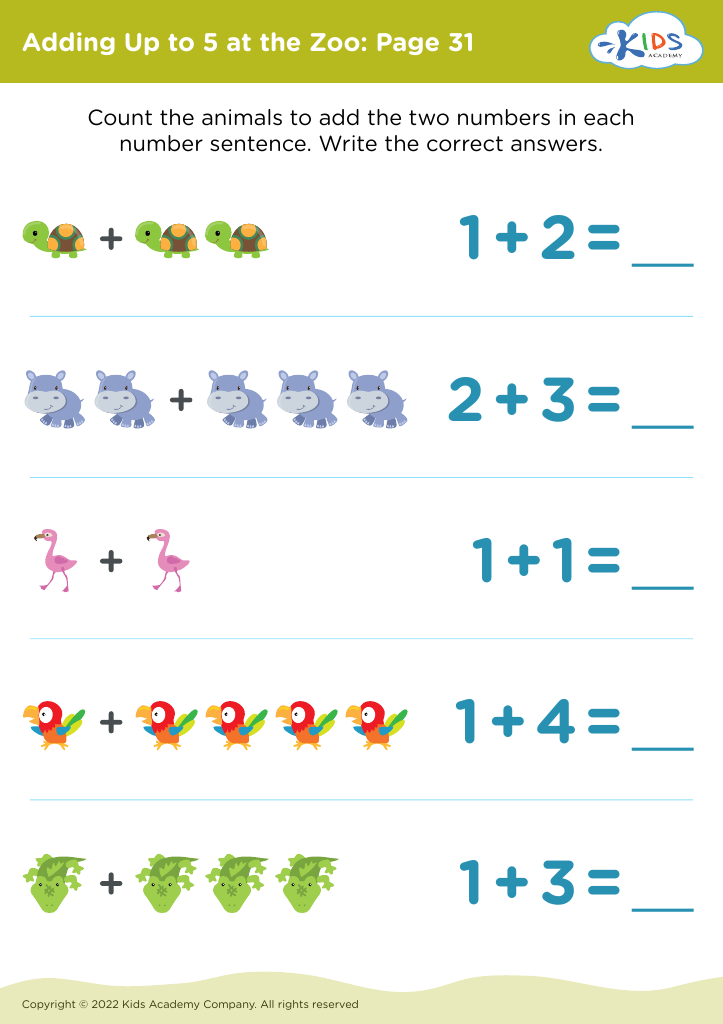
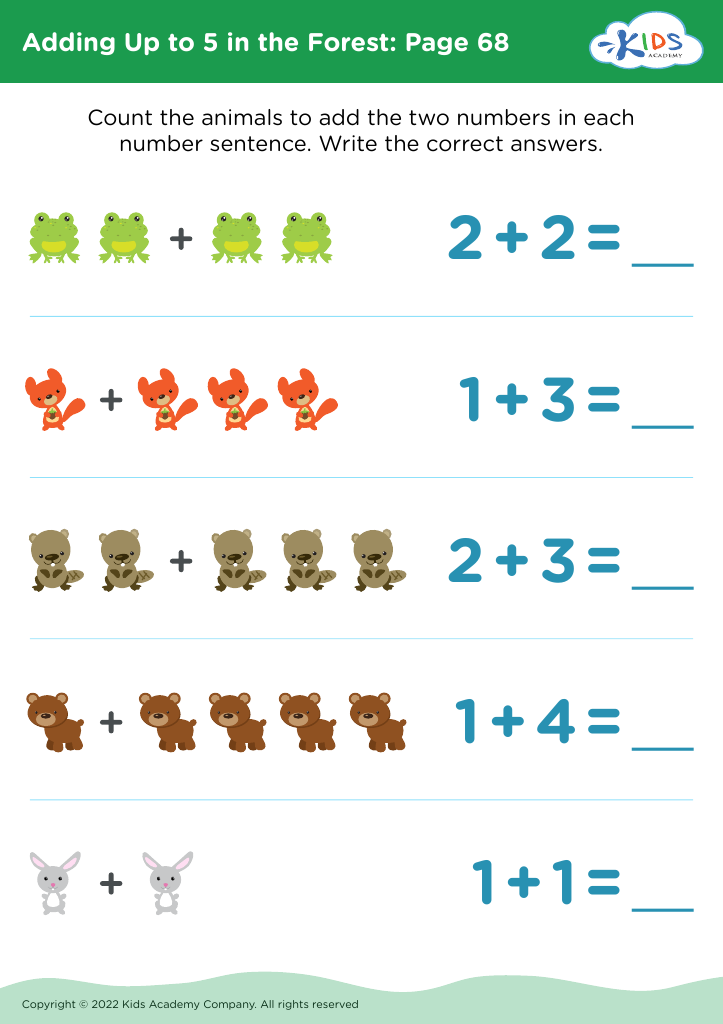
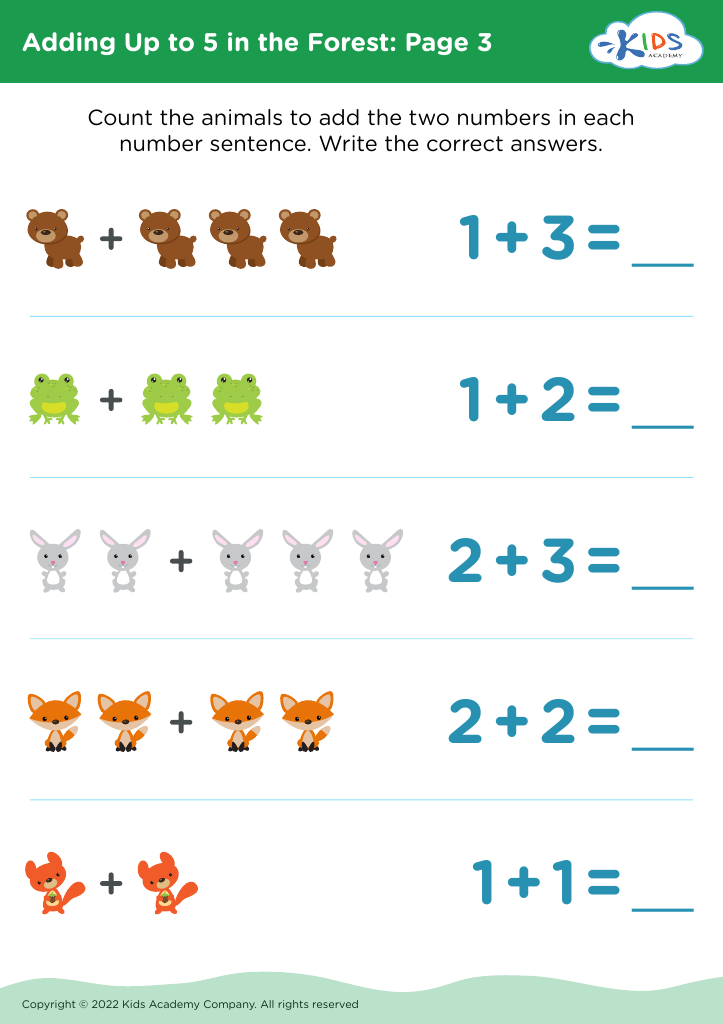
Boost your child's math skills with our "Problem-solving Abilities Adding Up to 5 Worksheets for Ages 4-9". These engaging and fun worksheets are designed to develop critical problem-solving abilities in young learners. Tailored for children aged 4 to 9, our activities focus on helping kids master addition up to 5 using a variety of methods, including visual aids and practical exercises. These worksheets not only enhance their arithmetic skills but also improve logical thinking and cognitive development. Transform learning into an enjoyable experience and set the foundation for future math success with our expertly crafted worksheets.
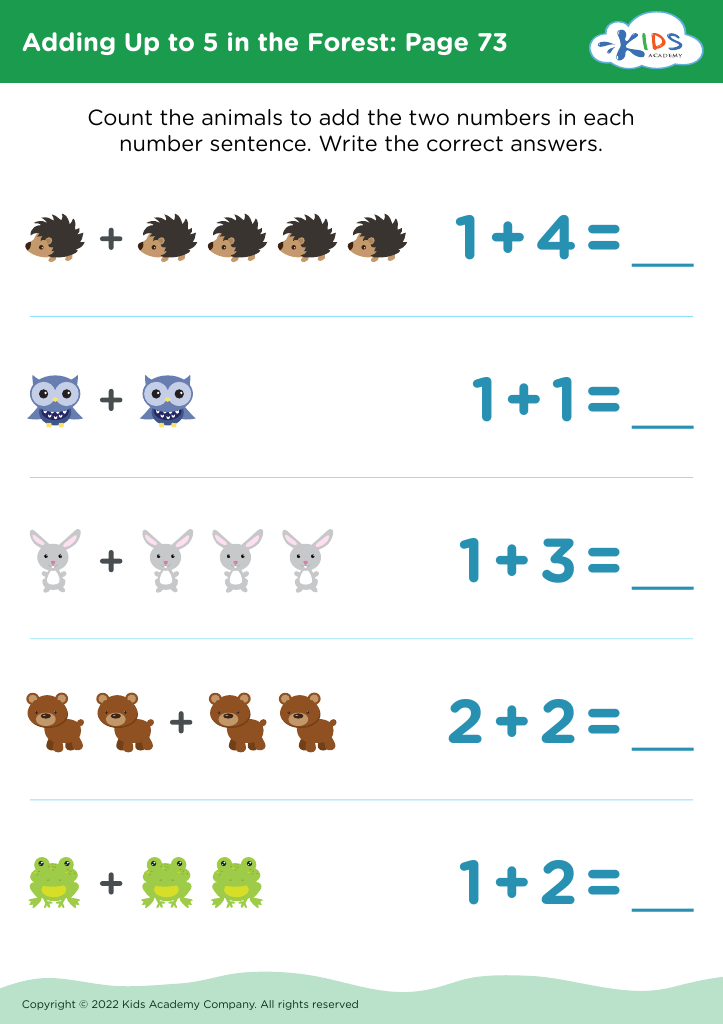
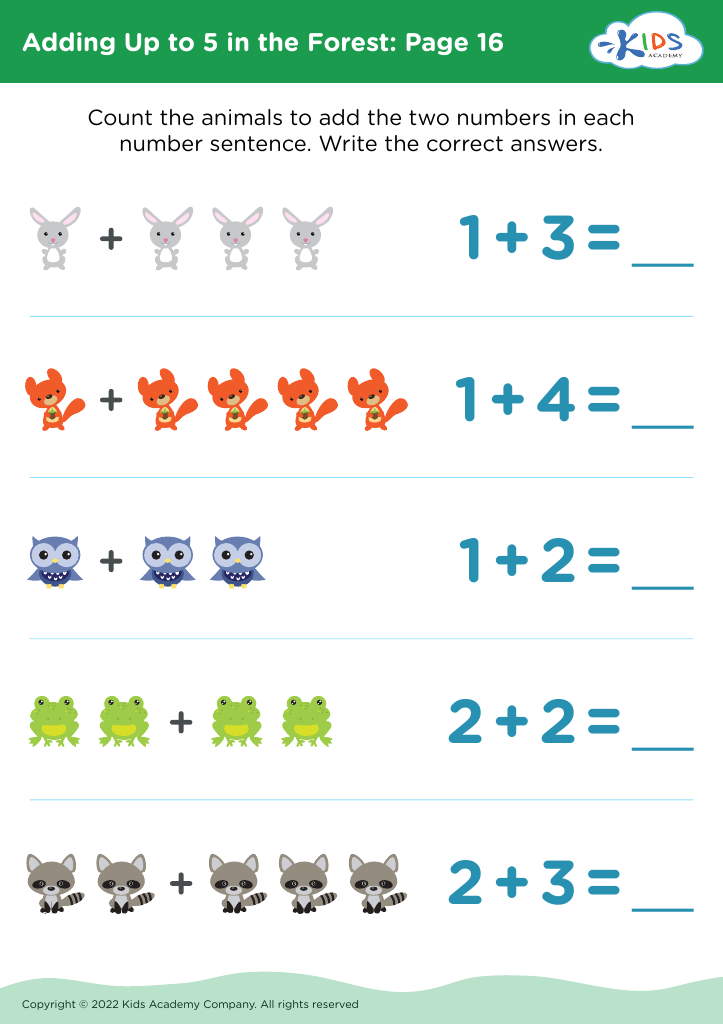
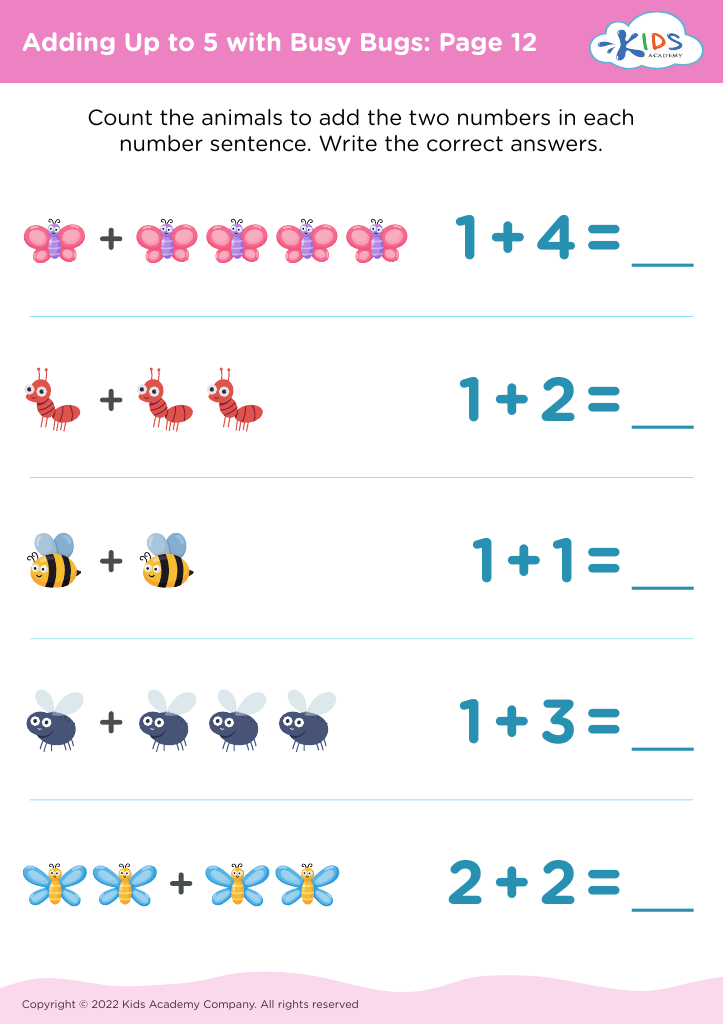
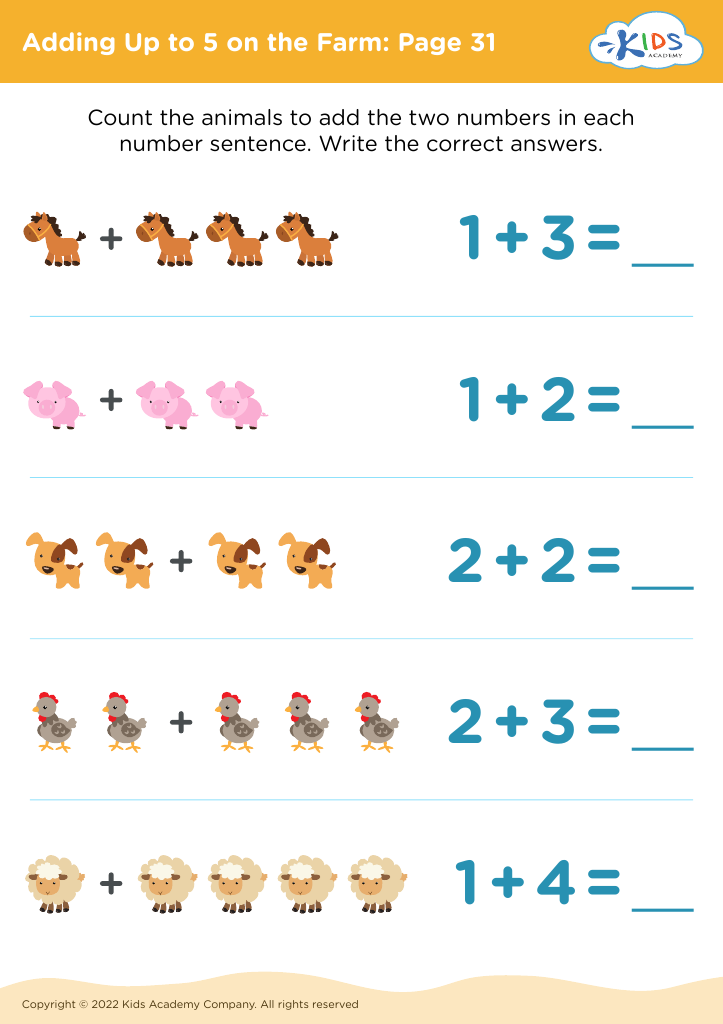





.jpg)


Developing problem-solving abilities in children, particularly with activities that involve adding up to 5, is fundamental for early cognitive development. For ages 4-9, basic arithmetic forms the bedrock of later, more complex mathematical skills. Teachers and parents should care because mastering these early math skills enhances logical thinking and helps children cultivate persistence and attention to detail.
When children solve simple addition problems, they’re not just learning math facts; they’re also practicing pattern recognition, critical thinking, and the ability to approach problems methodically — all essential for future learning. Beginning with numbers up to 5 is particularly pertinent because it is manageable and builds confidence, ensuring a positive association with math.
Additionally, these exercises prepare kids for real-life scenarios where problem-solving is necessary. Whether it’s dividing snacks among friends, counting money, or planning time, these rudimentary skills offer practical everyday benefits.
Another important aspect is the development of social skills through group problem-solving exercises, enhancing collaboration and communication. Both academic and life skills like these form a robust foundation for further education, helping children become proficient, confident learners eager to tackle new challenges.
In conclusion, focusing on early problem-solving abilities and simple addition not only fosters intellectual growth but also equips children with a toolkit for success in education and everyday life.








