Problem-Solving Skills Adding Up to 5 Worksheets for Ages 4-9 - Page 2
37 filtered results
-
From - To
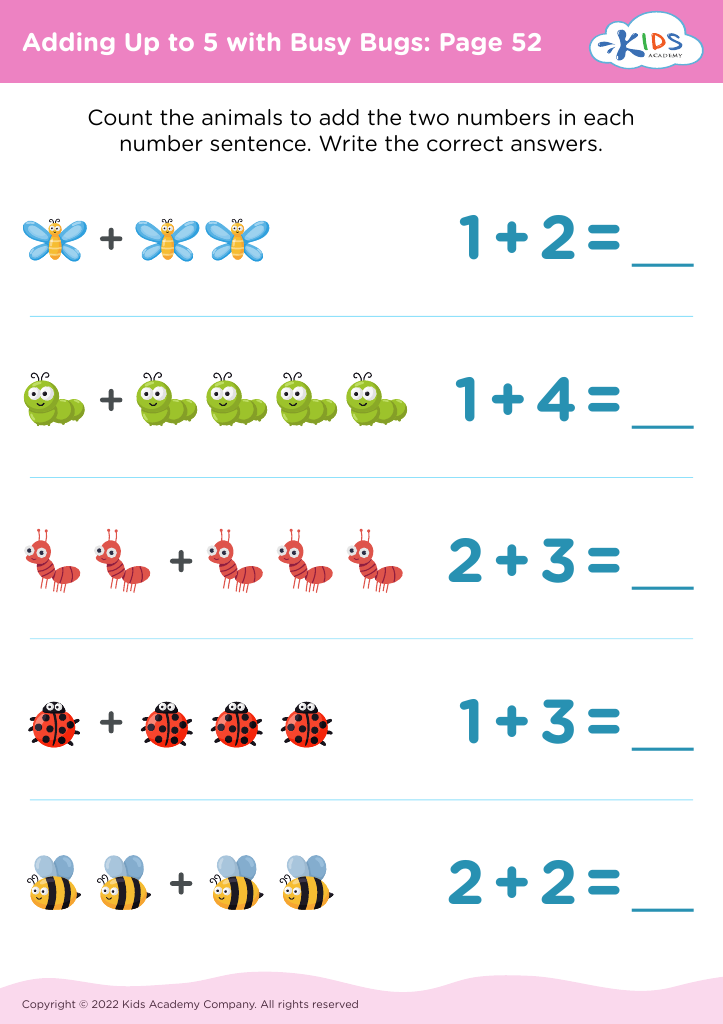





%20(1).jpg)


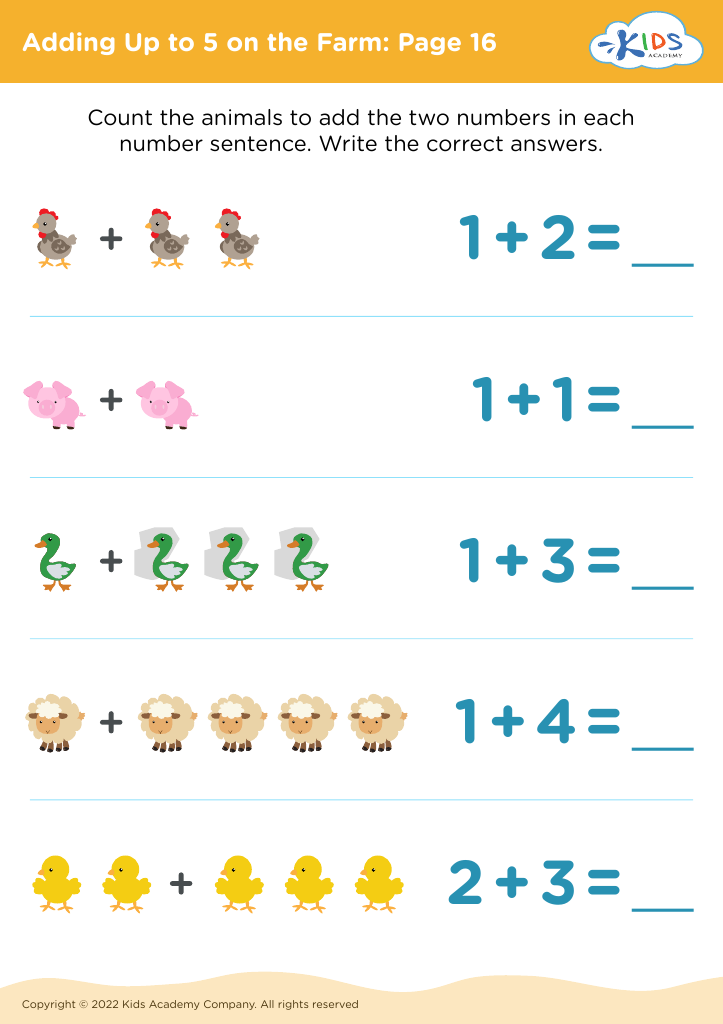
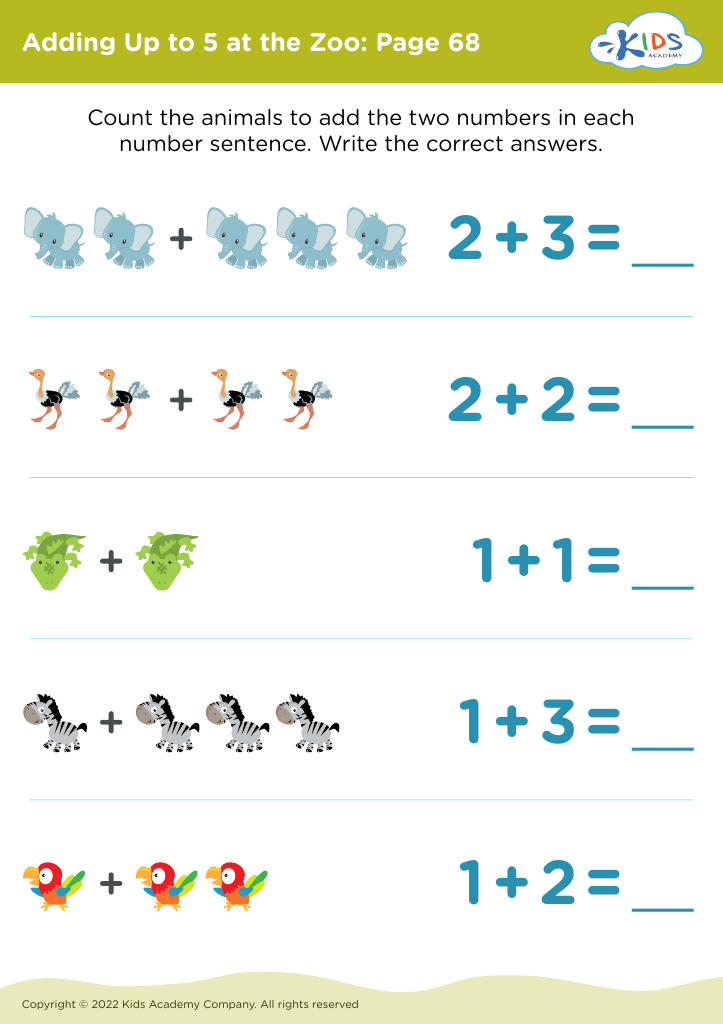
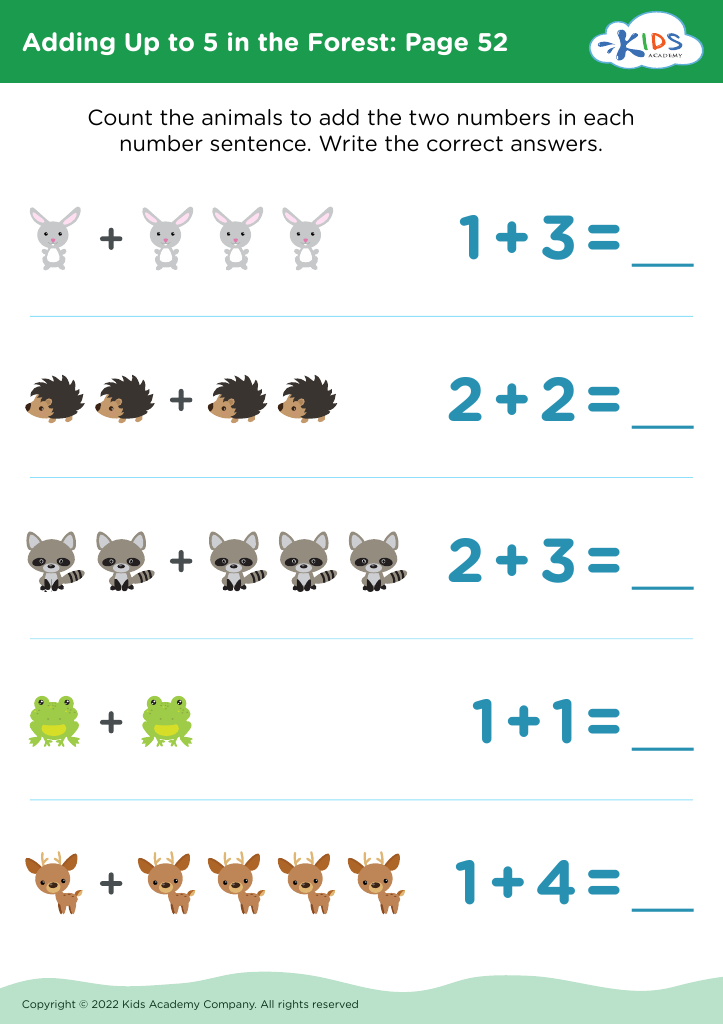
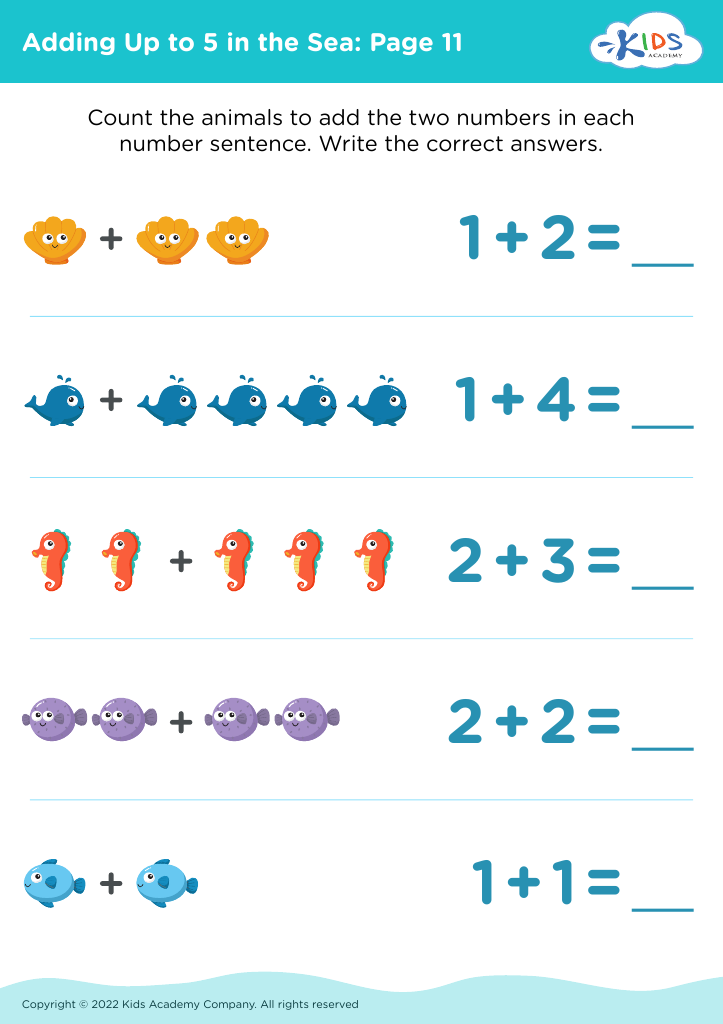
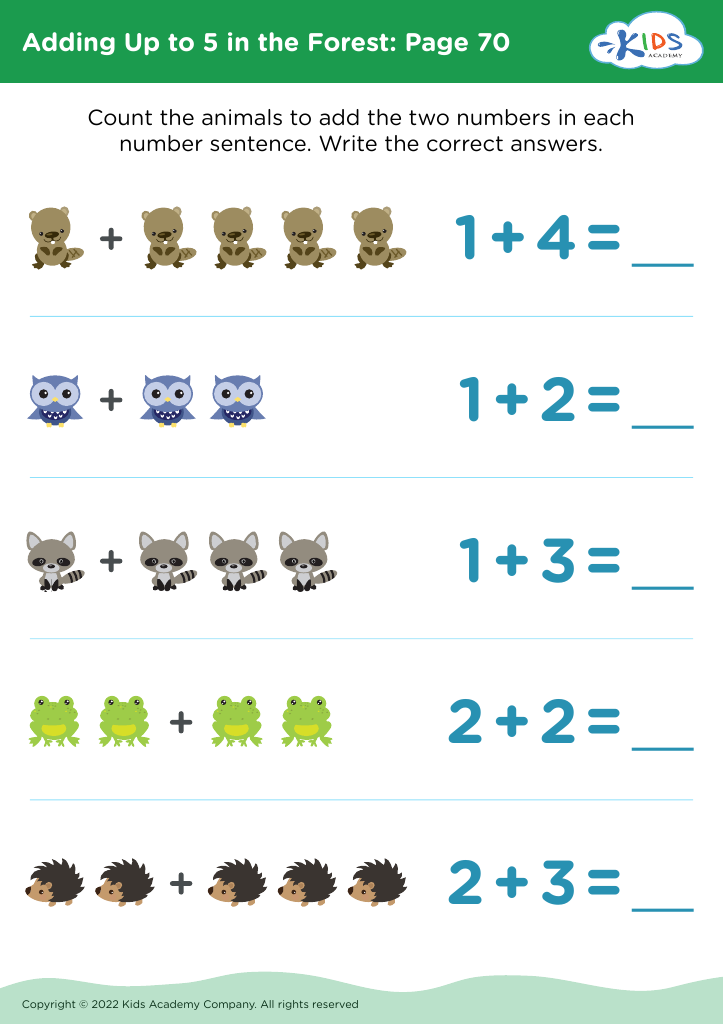
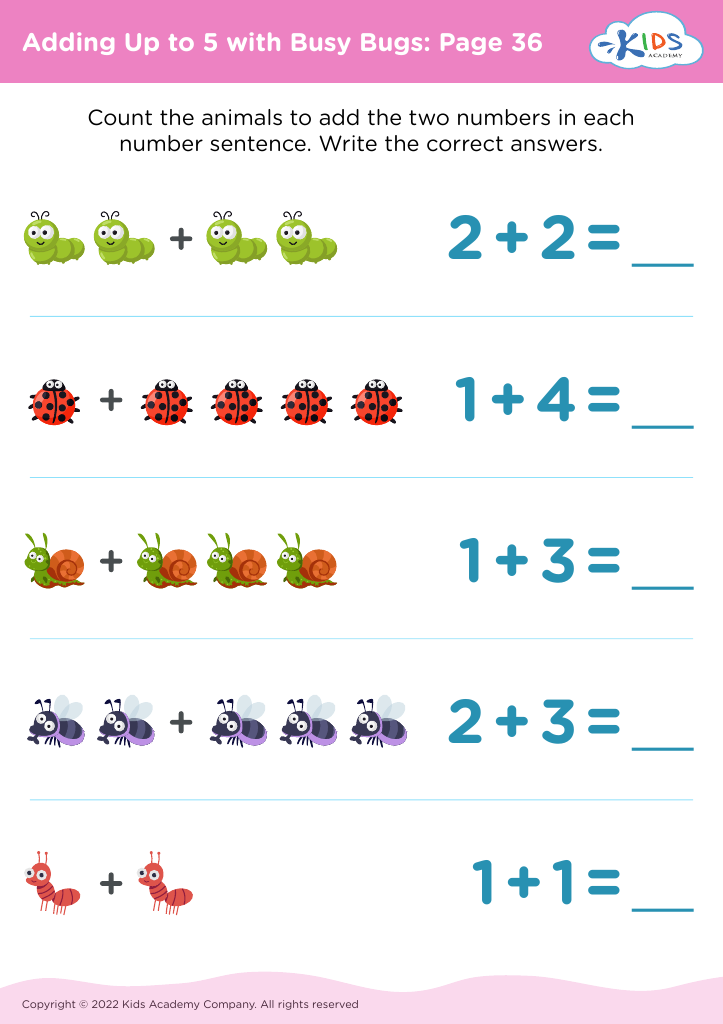
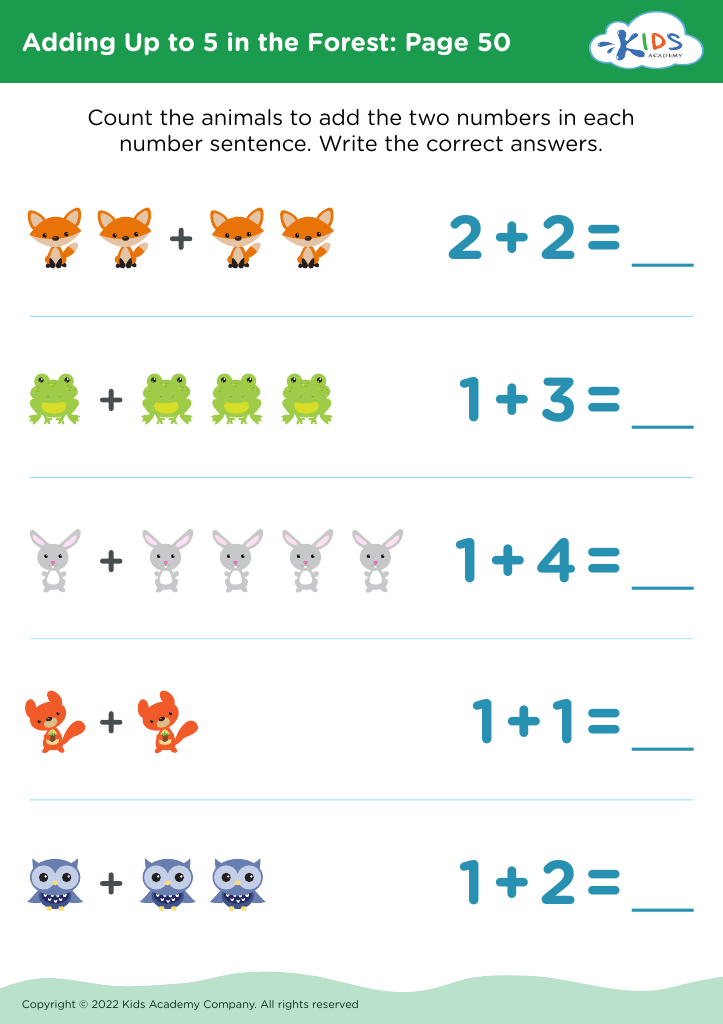
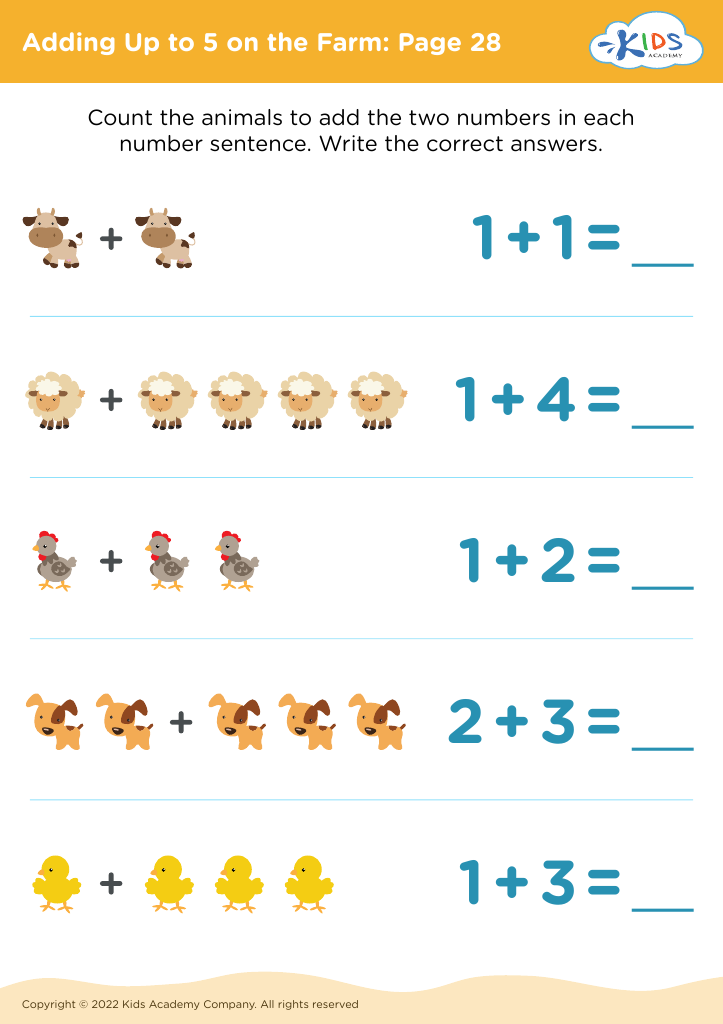
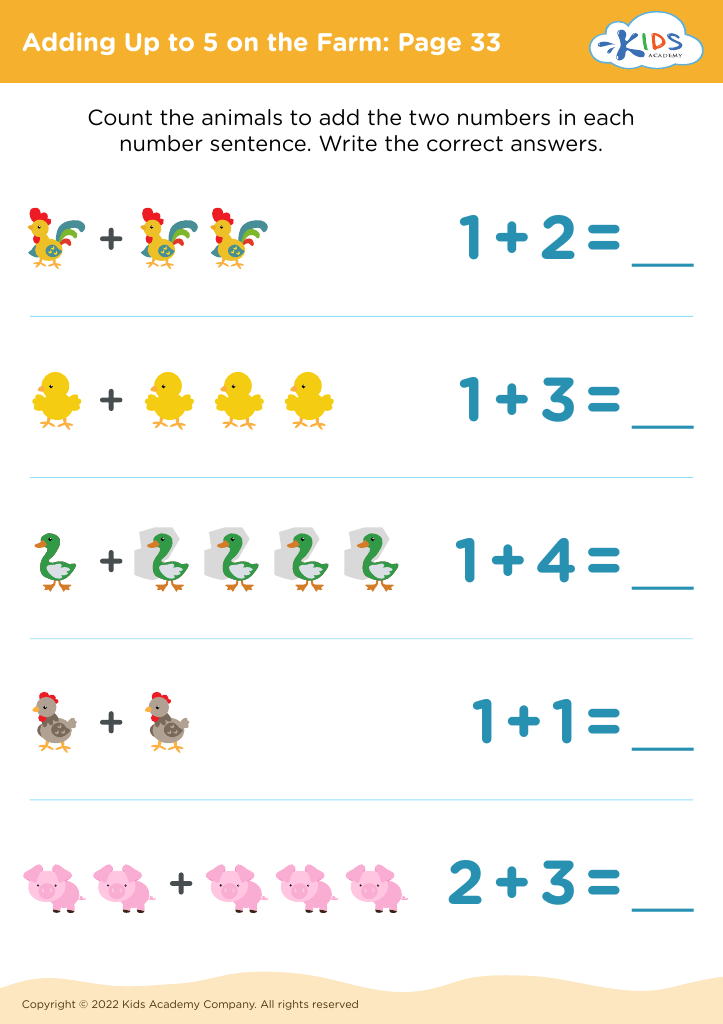
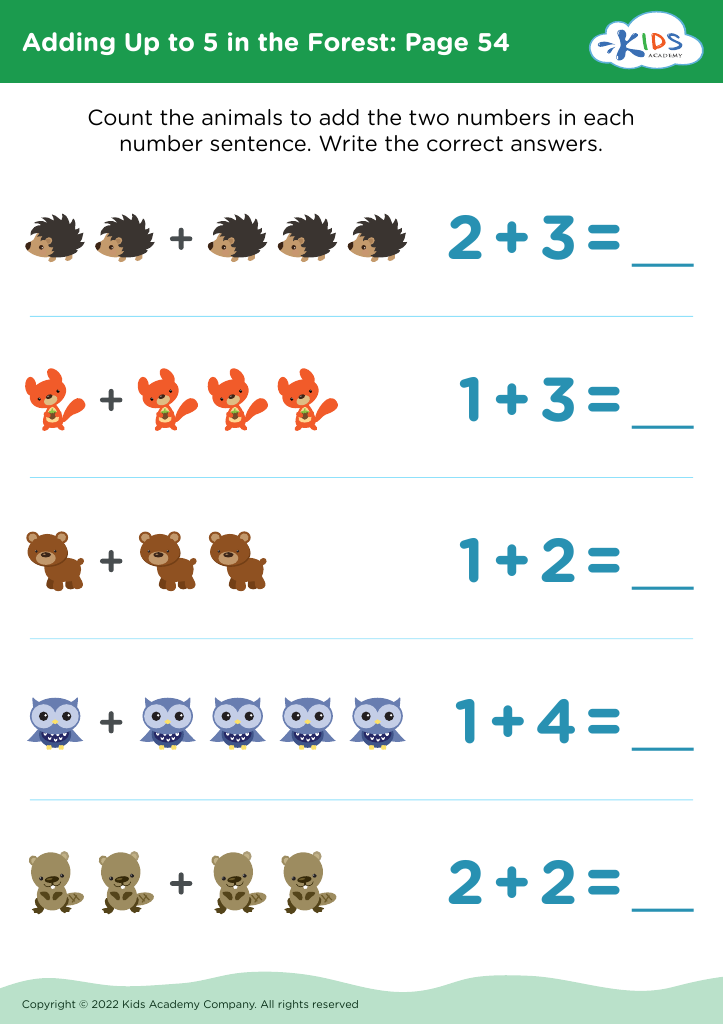
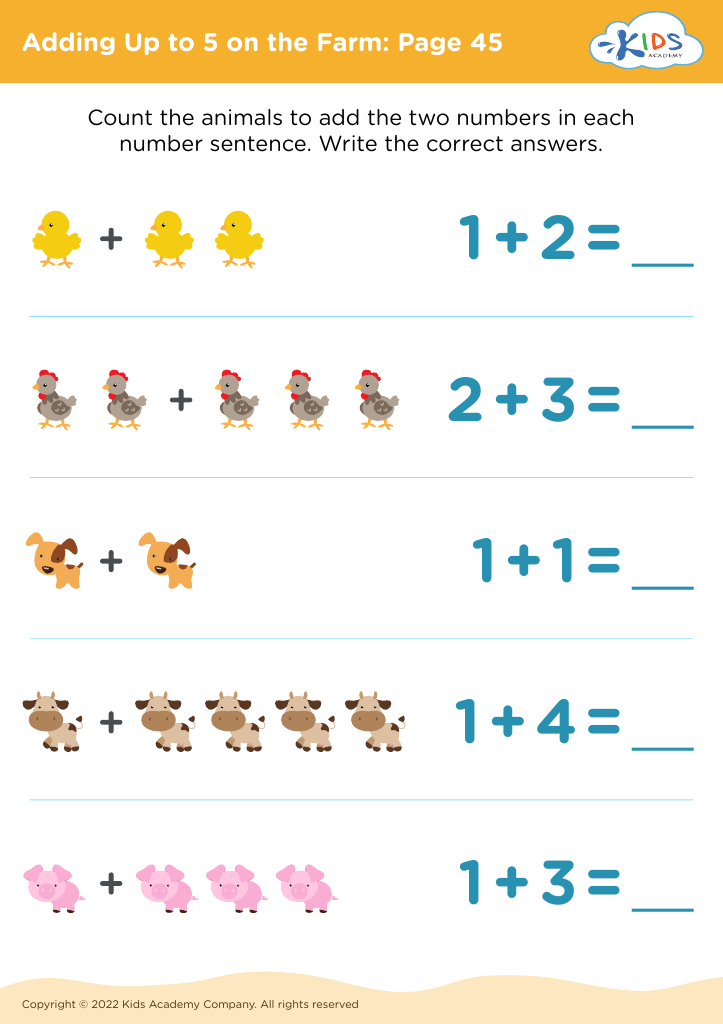
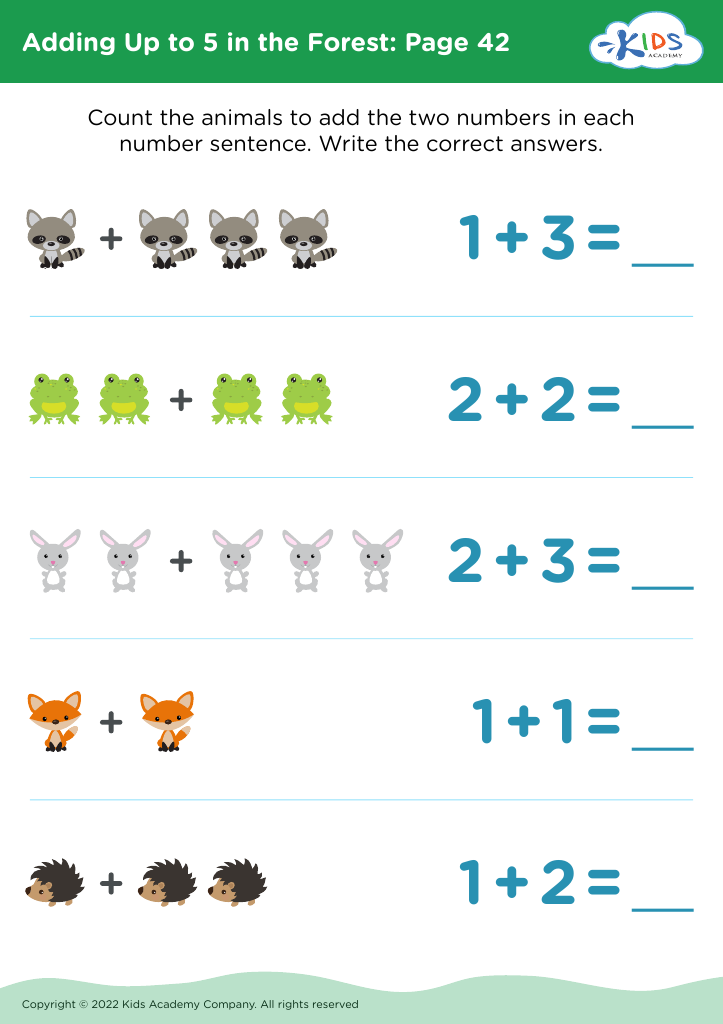
Problem-solving skills in young children, particularly the ability to add up to 5, play a critical role in early cognitive development and can have lasting benefits. This foundational math skill promotes a sharper understanding of numerical concepts and encourages logical thinking. When children learn to combine numbers to reach specific sums, they're not just memorizing facts—they're learning how to think critically and analytically.
Focusing on problem-solving skills such as adding up to 5 is particularly significant for children ages 4-9 because these early years are a crucial developmental period. Mastering such basic math skills early sets a positive trajectory for future learning. It builds their confidence and fosters a love for learning, preparing them for more complex mathematical concepts later on. Moreover, problem-solving enhances children's patience and perseverance as they work through challenges and find solutions.
Parents and teachers should value these skills as they directly relate to a child's ability to navigate daily tasks and academic challenges. By emphasizing adding up to 5, educators and guardians create an engaging and supportive environment for children, laying a stable foundation for math literacy, which is vital for both academic success and practical life skills in the future.








