Understanding number values Adding Up to 5 Worksheets for Ages 4-9
3 filtered results
-
From - To
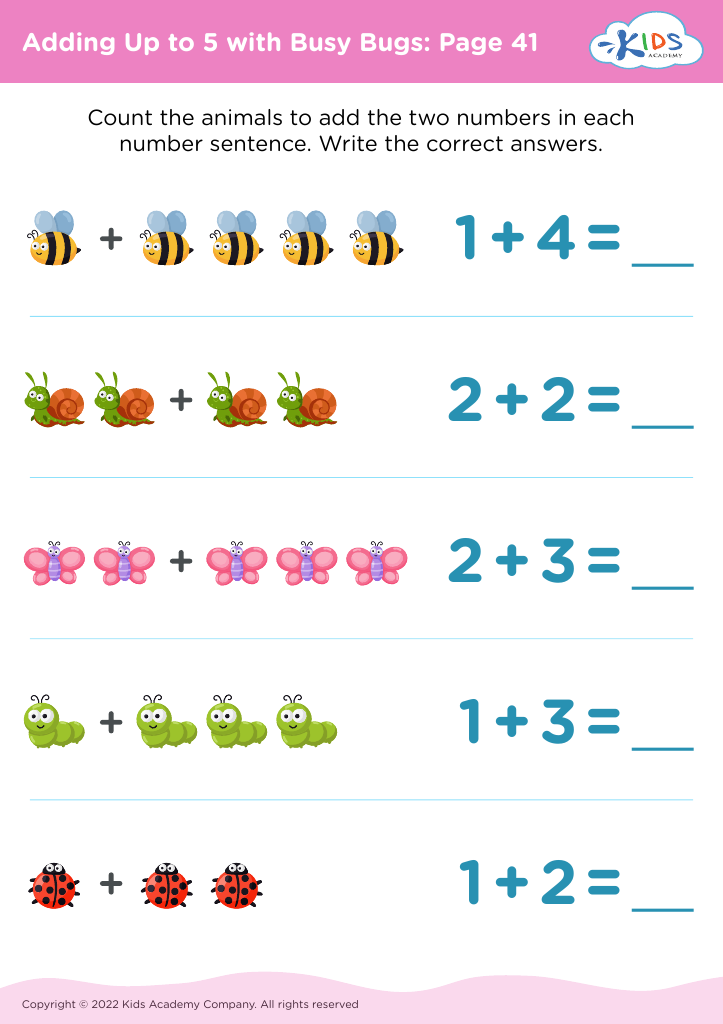
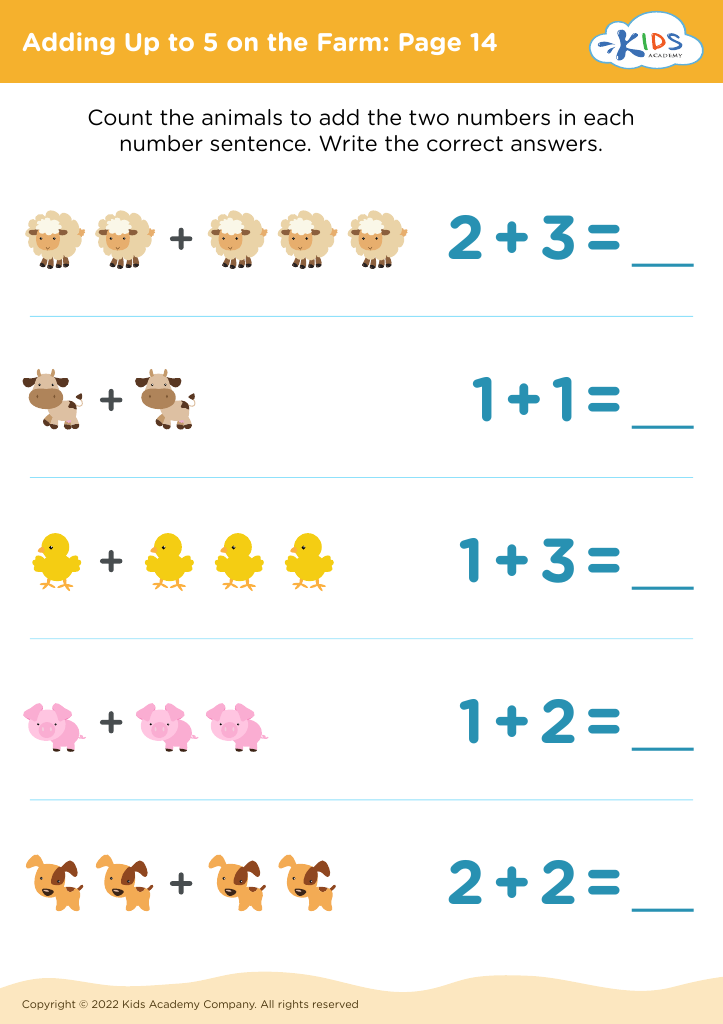
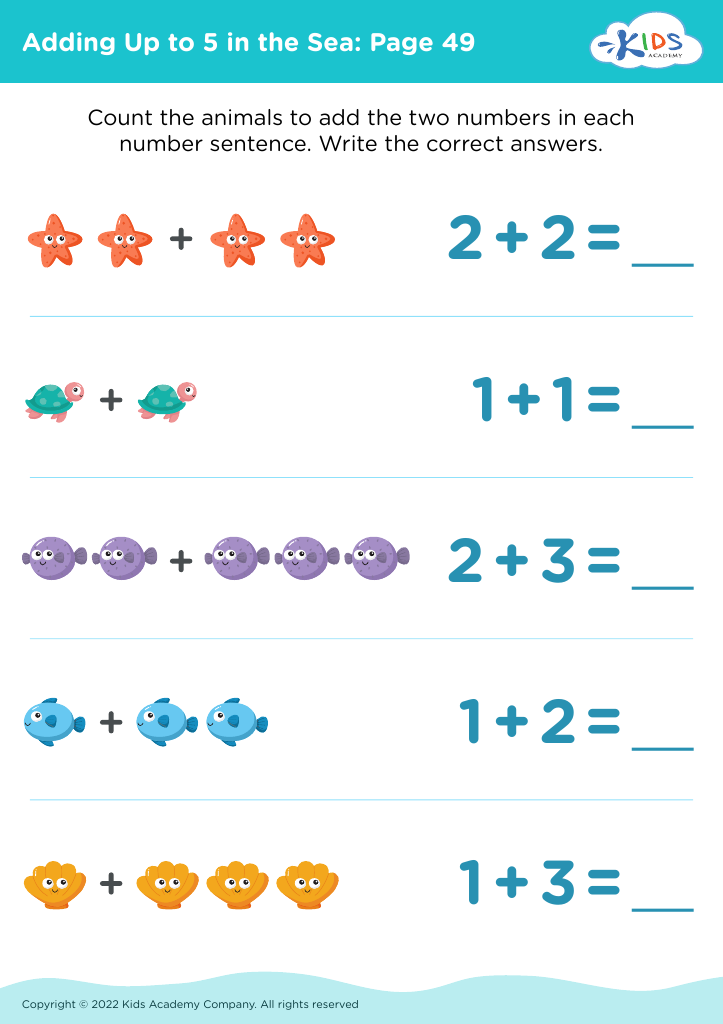
Welcome to our "Understanding Number Values: Adding Up to 5" worksheets, specially designed for children ages 4-9! These engaging, interactive resources help young learners develop essential math skills by breaking down number recognition and addition concepts with an emphasis on the number 5. Our worksheets incorporate fun activities, colorful visuals, and simple instructions to make learning enjoyable and effective. By practicing these exercises, children will build a strong foundation in number values and improve their ability to solve addition problems. Perfect for home or classroom use, these worksheets ensure your child becomes confident in their mathematical abilities. Dive into a world of numbers today!






%20(1).jpg)

Understanding number values and the ability to add up to 5 is foundational for young learners aged 4-9, as it establishes a critical building block for all future mathematics. Early mathematical skills contribute to cognitive development, enhance problem-solving abilities, and foster logical thinking. For parents and teachers, this skill is crucial for several reasons.
First, a strong grasp of number values encourages confidence in young learners, as they feel empowered to tackle more complex math concepts later on. Recognizing that different combinations can total 5—like 2+3, 1+4, and 0+5—instills a sense of flexibility in thinking, essential for both arithmetic and everyday situations.
Second, these skills serve as stepping stones for higher-level concepts such as addition, subtraction, and even early algebra. Educators and caregivers can utilize playful activities, games, and real-life situations to engage children effectively, ensuring that they learn in an enjoyable manner.
Lastly, fostering these foundational skills promotes a positive association with math, reducing anxiety and cultivating a lifelong appreciation for the subject. By prioritizing early number-value understanding, parents and teachers play a significant role in shaping students’ mathematical journeys and overall academic success.








