Filters

84 filtered results

Clear all filters
Favorites
With answer key
Interactive

84 filtered results

Difficulty Level

Grade


Check out this FREE Trial Lesson on Adding Up to 5 for age 4-9!

Sorting Objects into 3 Categories

Favorites
With answer key
Interactive
  • 4-9
  • Visual Learning
  • Adding Up to 5
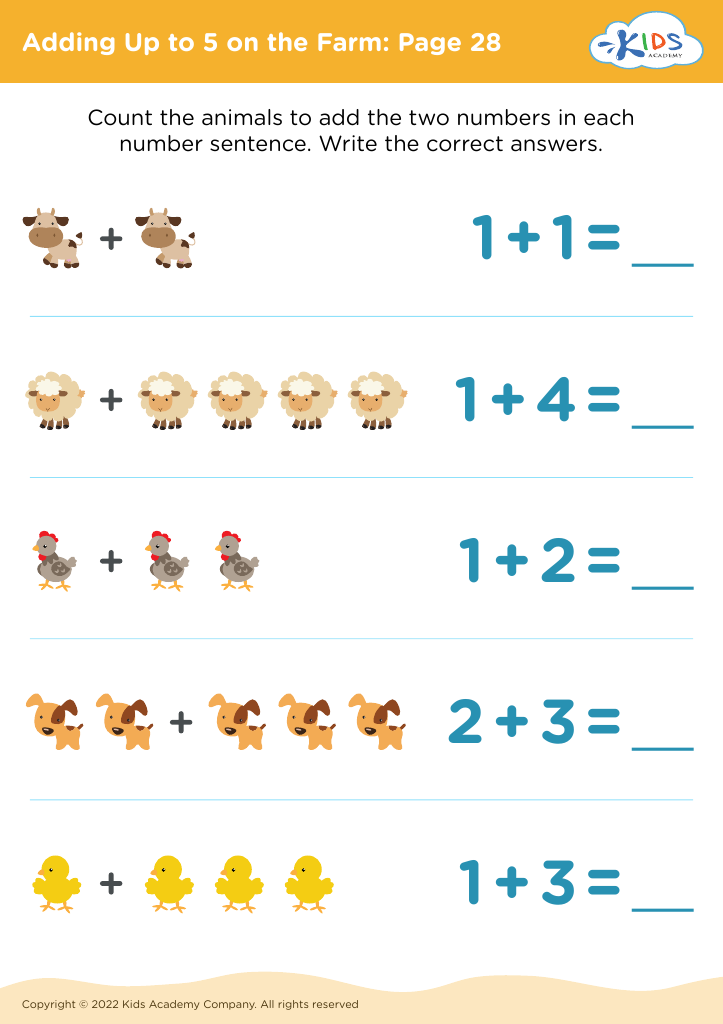
Adding Up to 5 on the Farm: Page 28
Worksheet
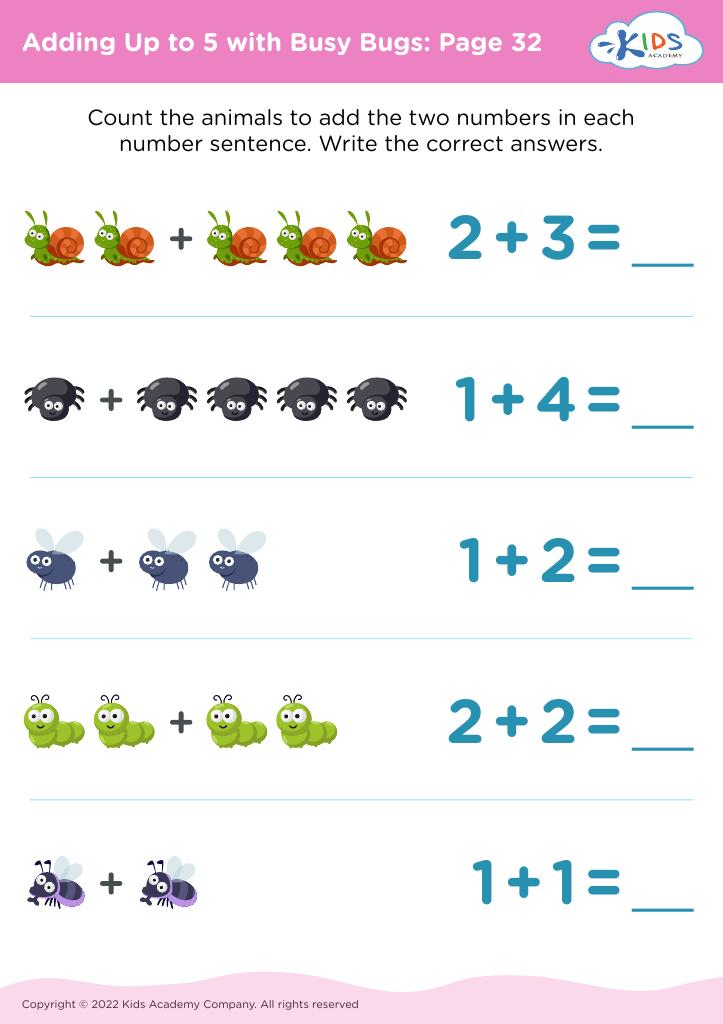
Adding Up to 5 with Busy Bugs: Page 32
Worksheet
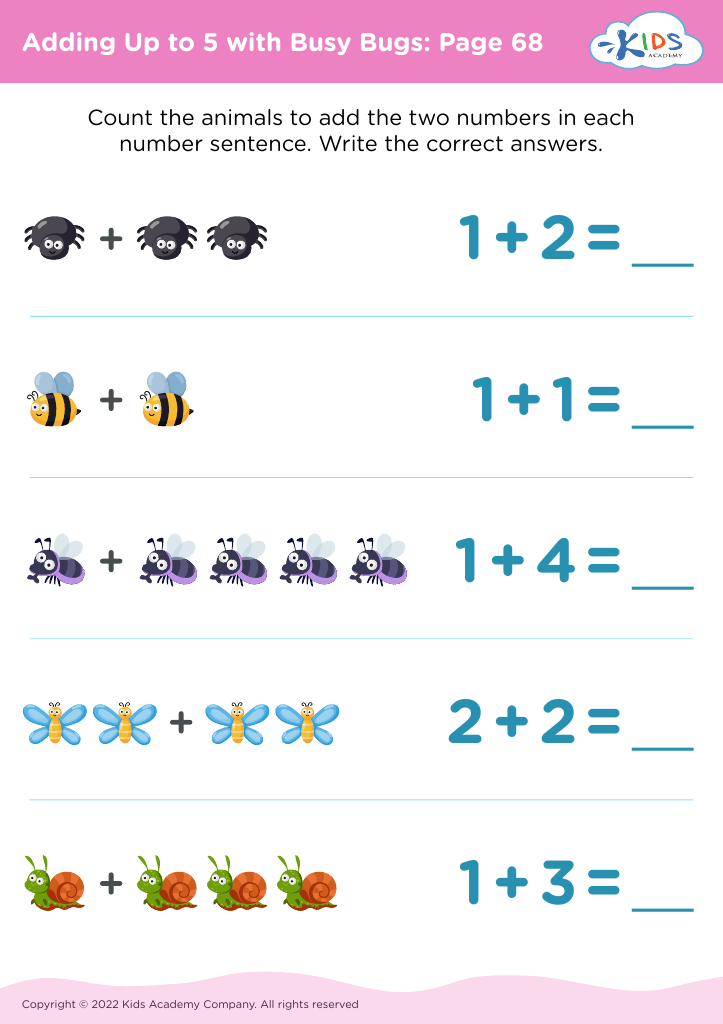
Adding Up to 5 with Busy Bugs: Page 68
Worksheet
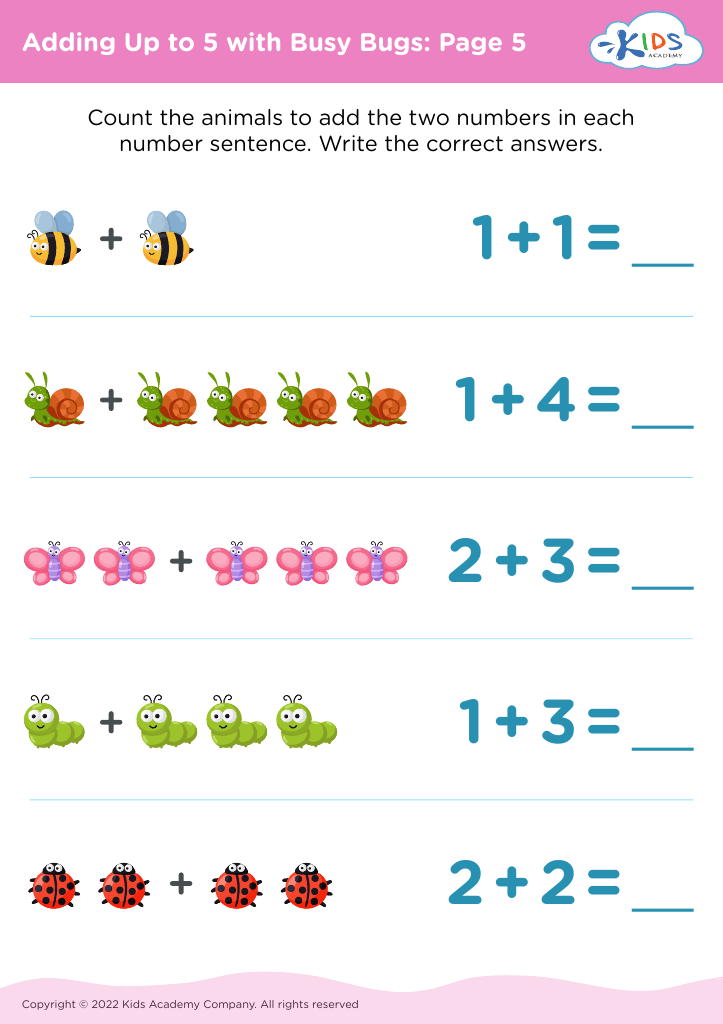
Adding Up to 5 with Busy Bugs: Page 5
Worksheet
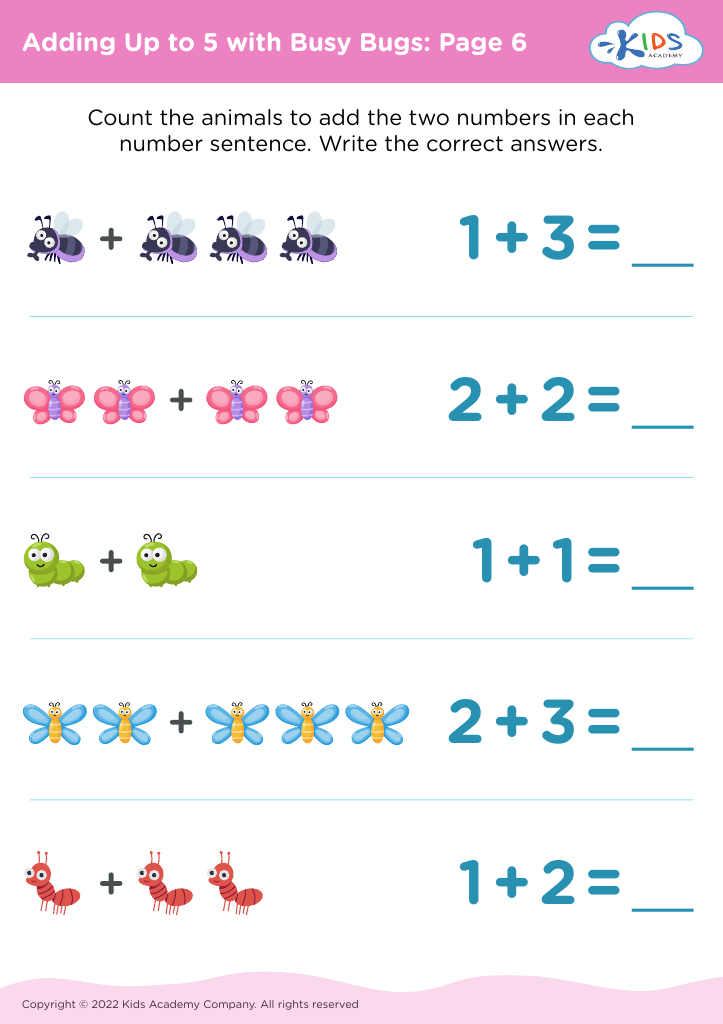
Adding Up to 5 with Busy Bugs: Page 6
Worksheet
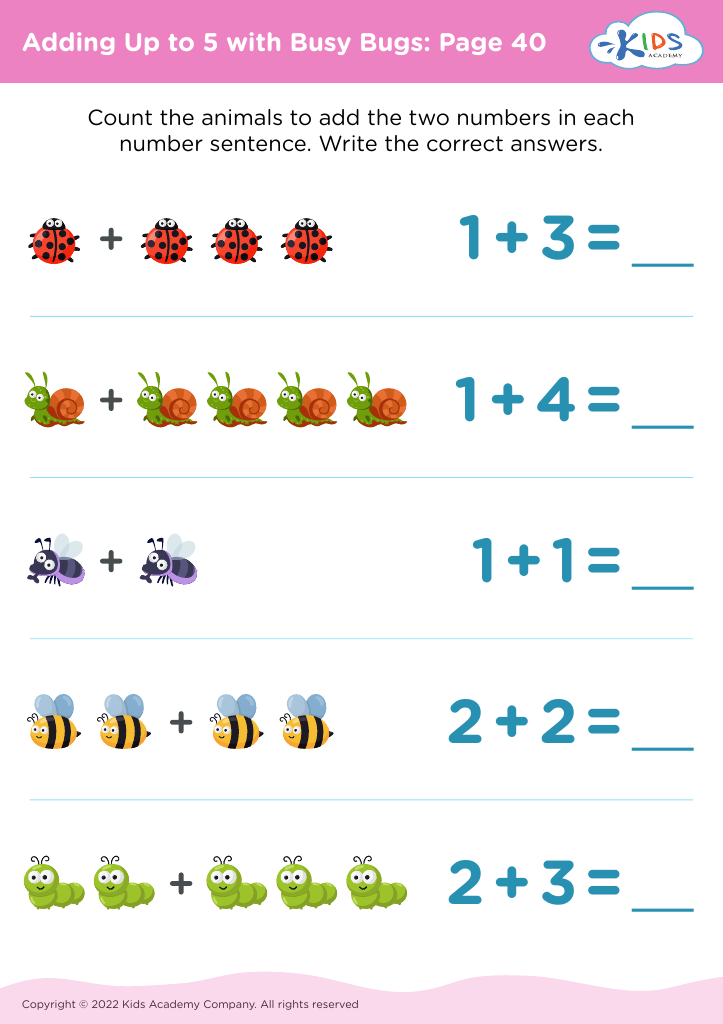
Adding Up to 5 with Busy Bugs: Page 40
Worksheet
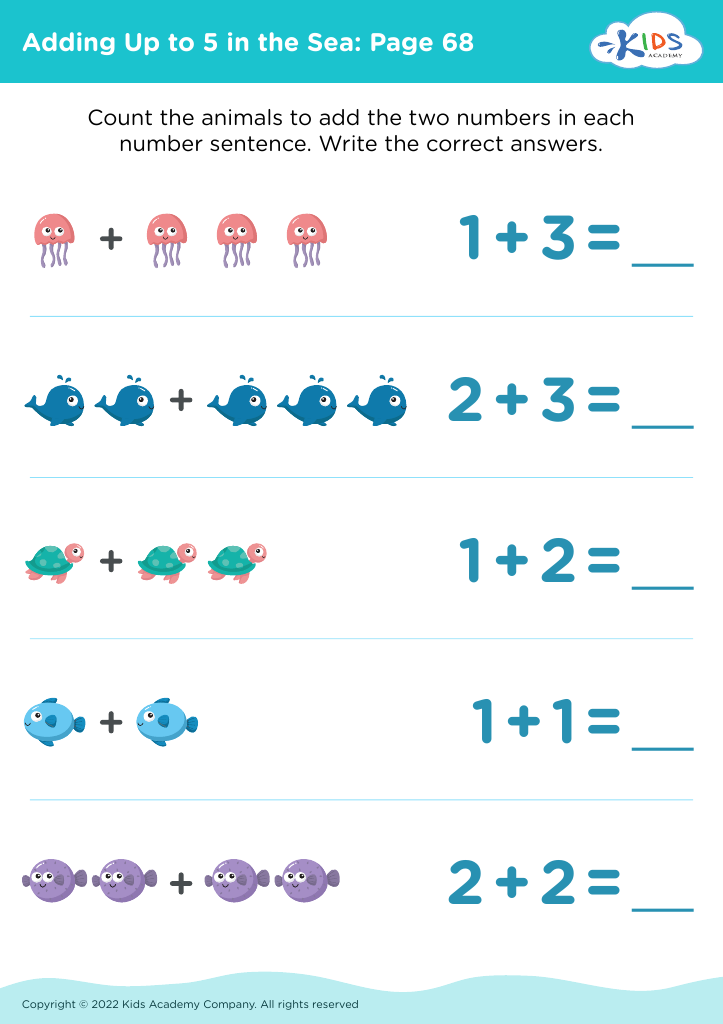
Adding Up to 5 in the Sea: Page 68
Worksheet
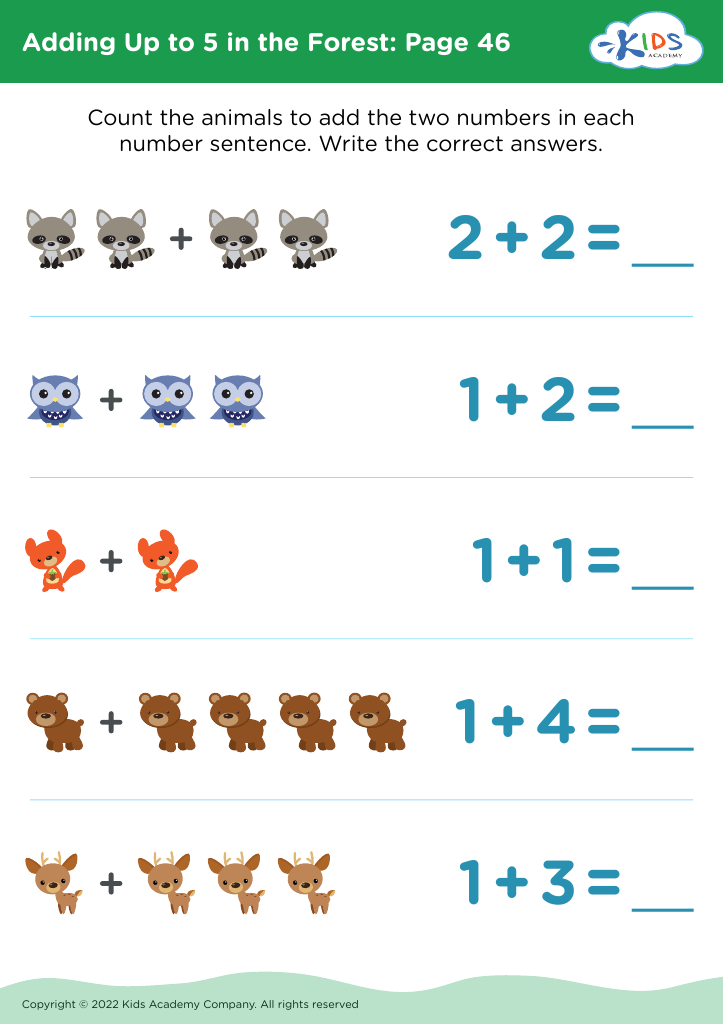
Adding Up to 5 in the Forest: Page 46
Worksheet
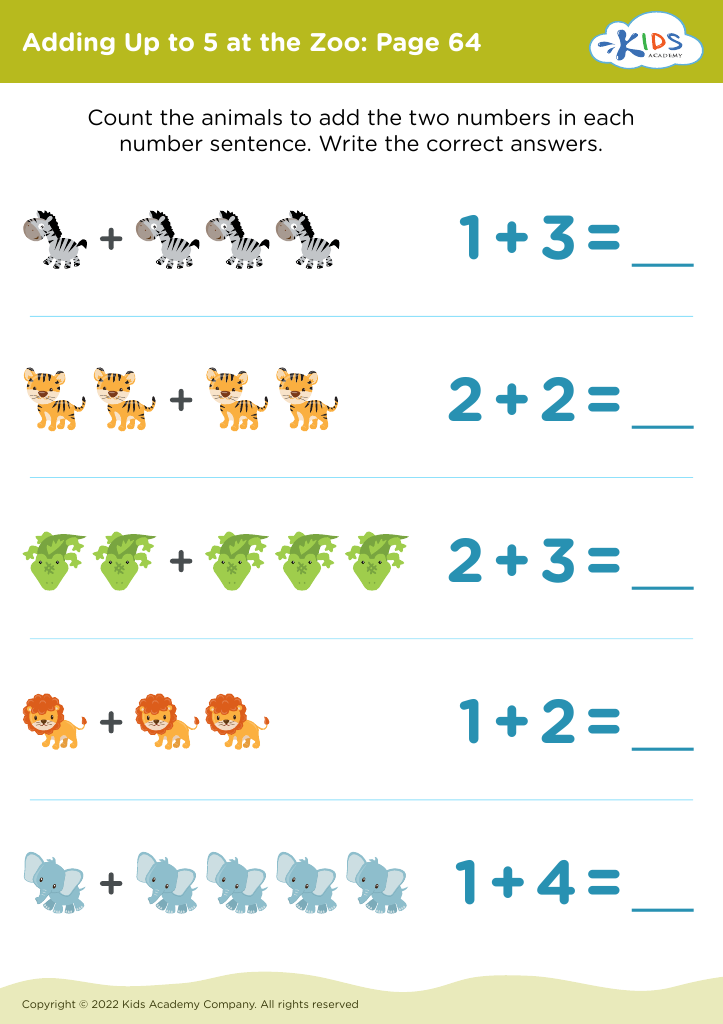
Adding Up to 5 at the Zoo: Page 64
Worksheet
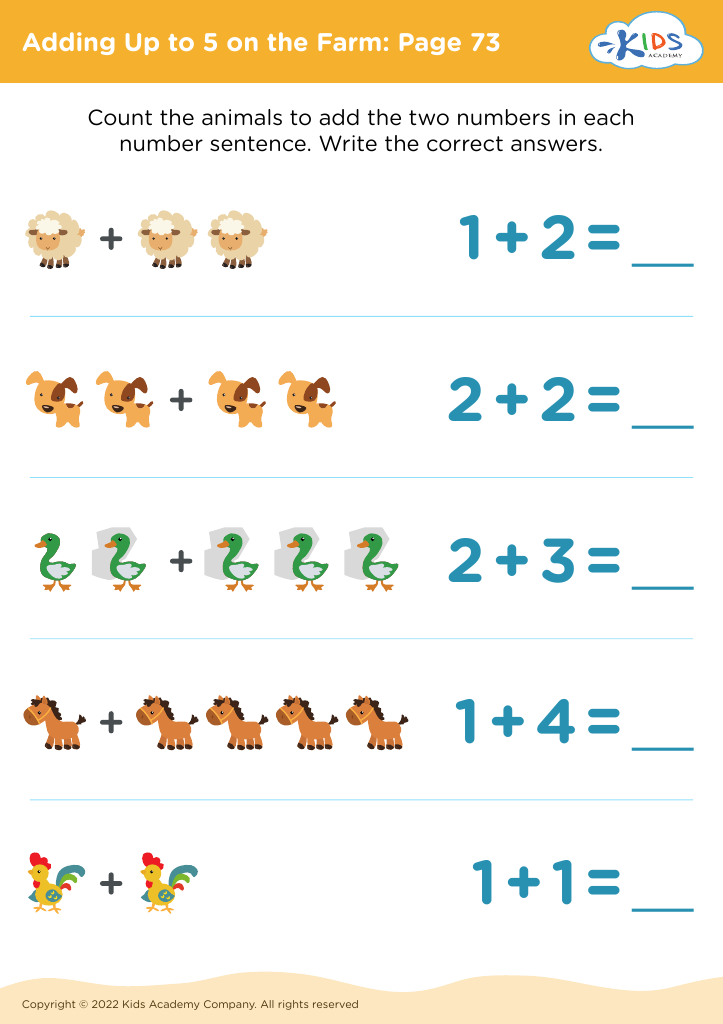
Adding Up to 5 on the Farm: Page 73
Worksheet
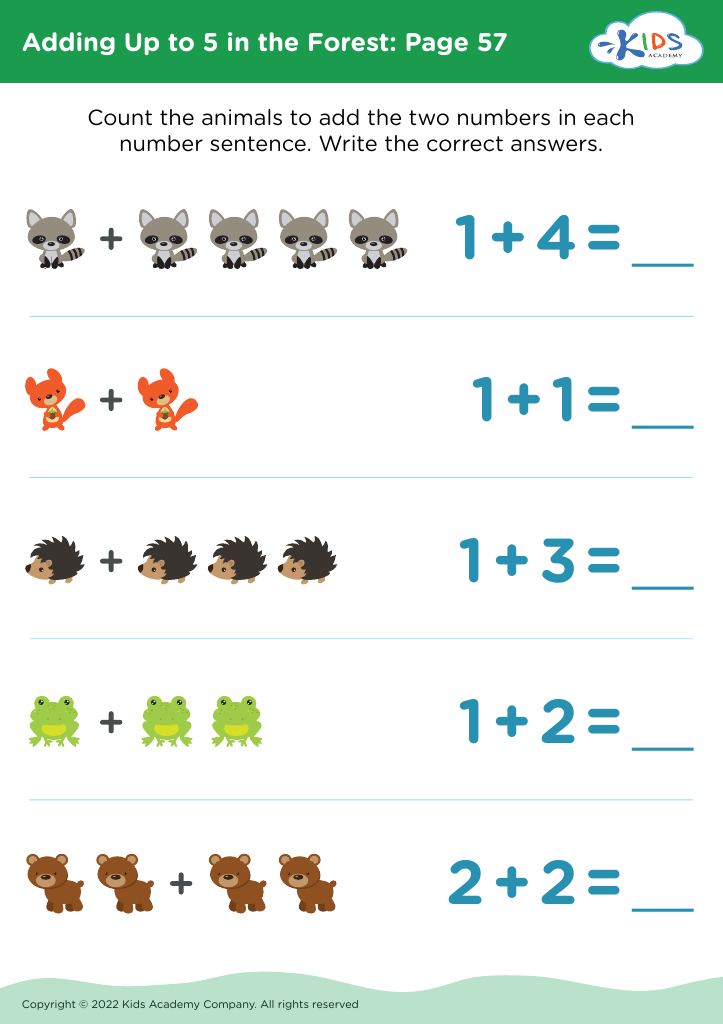
Adding Up to 5 in the Forest: Page 57
Worksheet
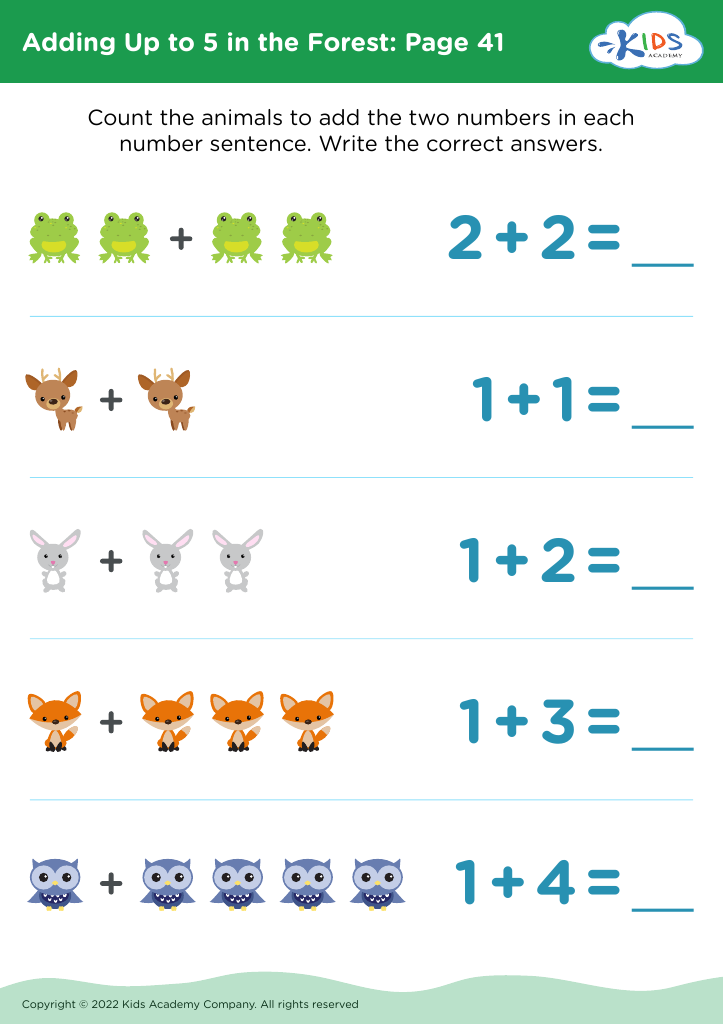
Adding Up to 5 in the Forest: Page 41
Worksheet


... 3 4

Visual learning in early math, such as adding numbers up to 5 for young children aged 4-9, is crucial because it supports foundational number sense, an essential skill for later mathematical success. At this age, children are very receptive to visual stimuli; using objects, pictures, and visual aids helps them quickly grasp abstract concepts.

One key reason parents and teachers should care is that visual learning makes math feel concrete and relatable. When children see illustrations of five apples instead of just the numeral "5," it helps them understand the quantity better and develop a more tangible connection with numbers.

Additionally, visual aids such as counting blocks, number lines, and charts make learning more engaging. These tools encourage interactive and hands-on experiences, which can cater to various learning styles. Engaged children are more likely to retain information and develop a positive attitude towards math.

Furthermore, mastering basic skills like adding up to 5 builds confidence and sets the stage for more complex arithmetic. This early confidence can shape a child’s self-perception about their mathematical abilities in the long term.

By fostering visual learning in adding small numbers, parents and teachers empower children with cognitive tools and confidence that form the cornerstone for their future learning experiences in math and beyond.