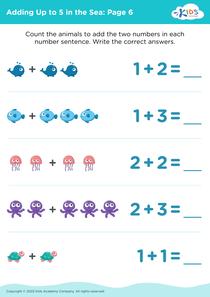
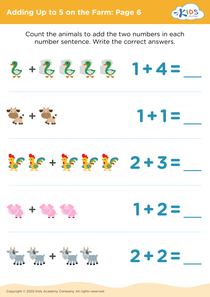
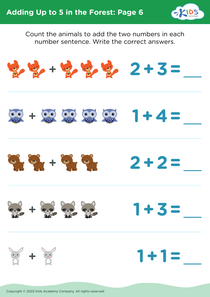
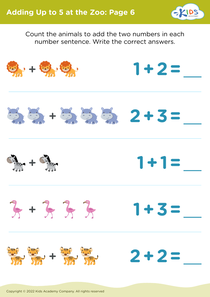
Addition skills Adding with Busy Bugs Worksheets for Ages 4-9
22 filtered results
-
From - To
Boost your child’s math confidence with our 'Addition Skills: Adding with Busy Bugs' worksheets, perfect for ages 4-9. These engaging, printable exercises turn learning addition into a fun adventure with cute, colorful bug characters. Designed to develop essential math skills, each worksheet provides visually appealing problems that help kids practice and master simple addition in an enjoyable way. Ideal for young learners, these activities not only make math exciting but also build a solid foundation for future math success. Check out our vibrant, kid-friendly worksheets to make addition both entertaining and educational!
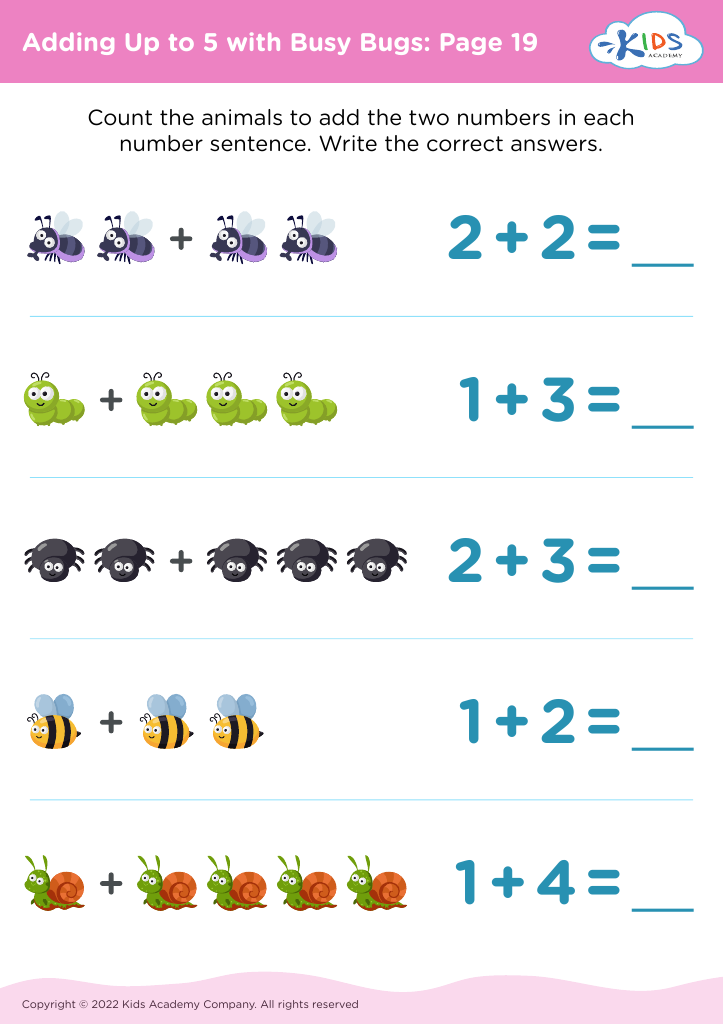
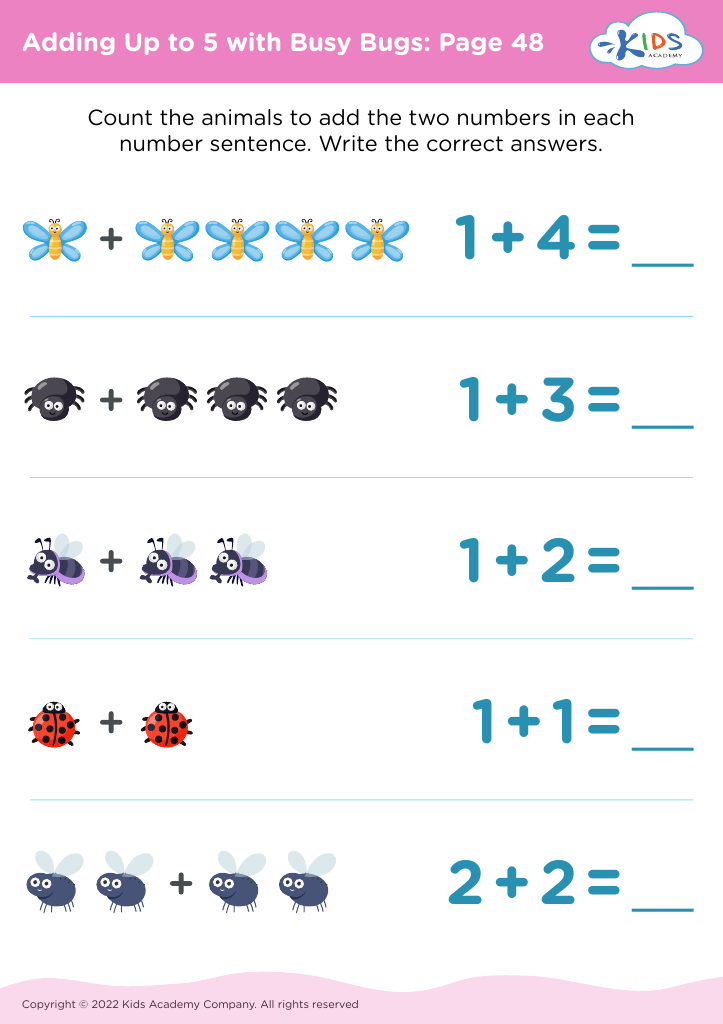
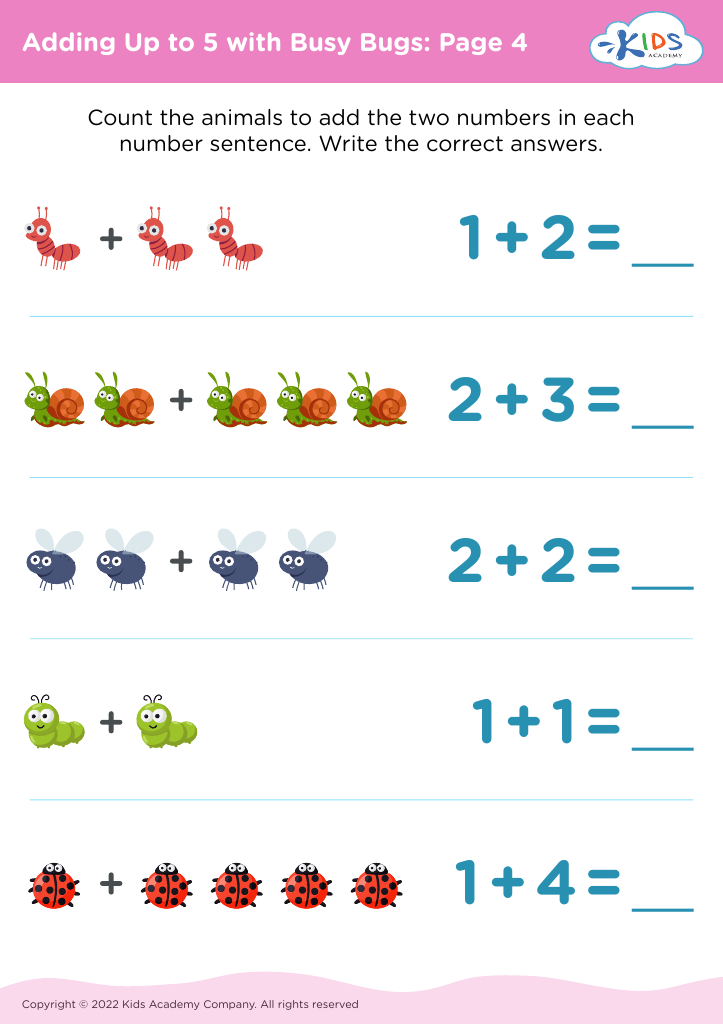
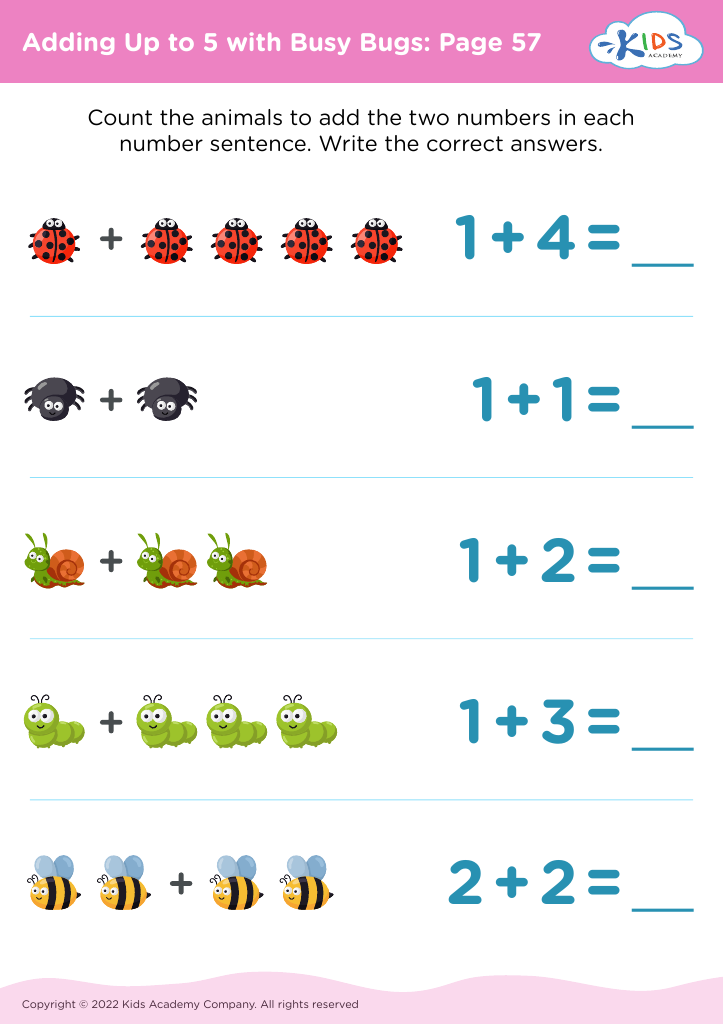
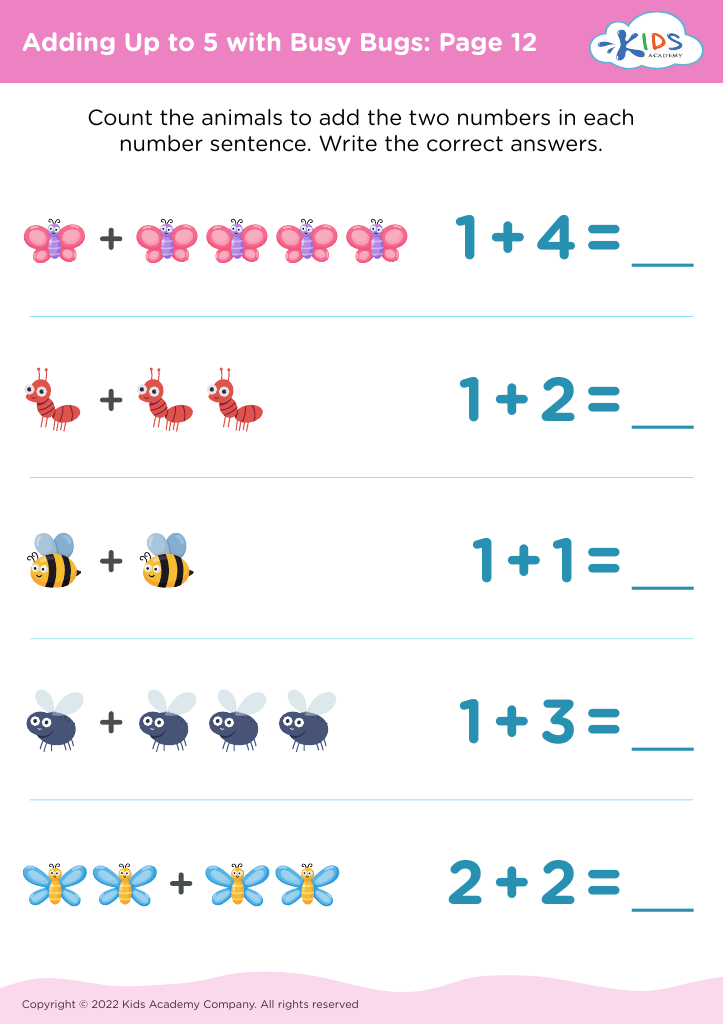
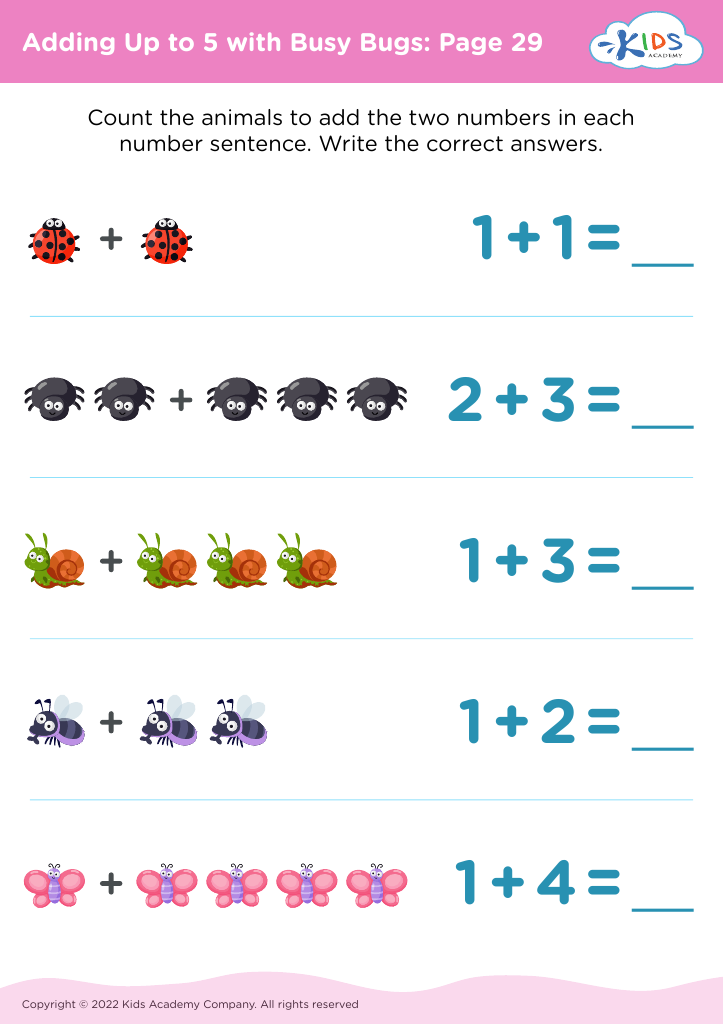
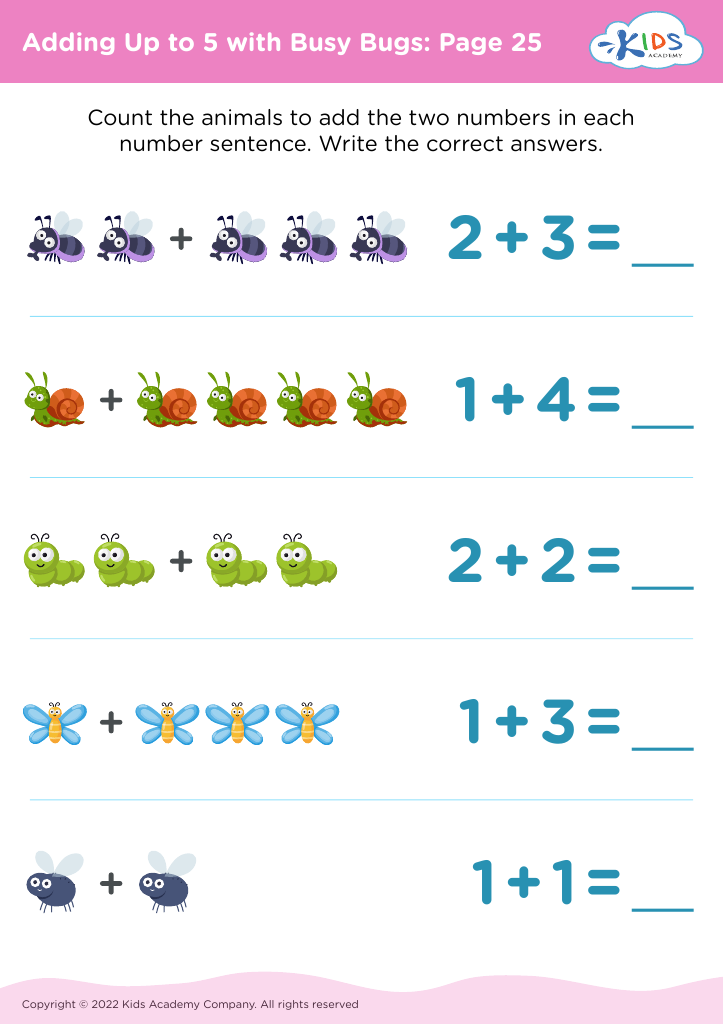
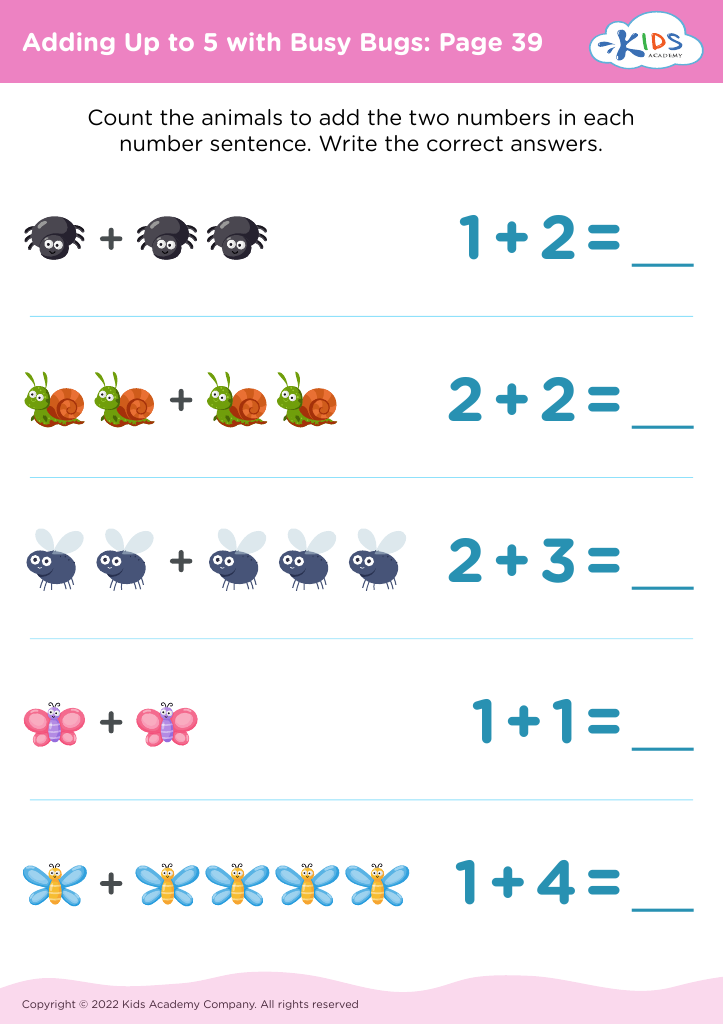
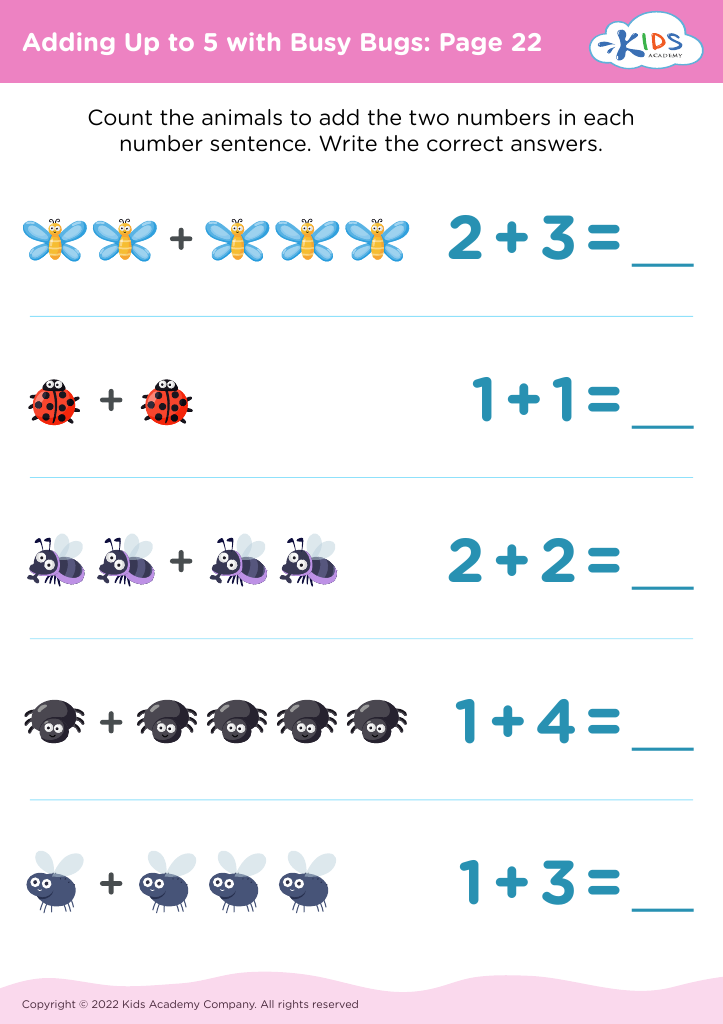
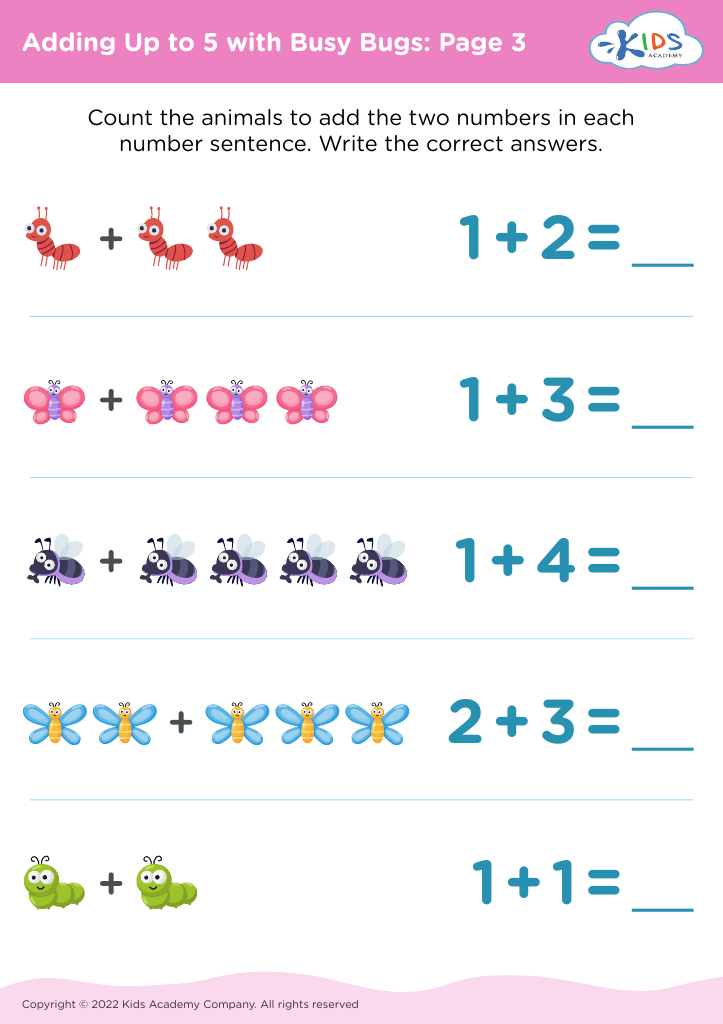
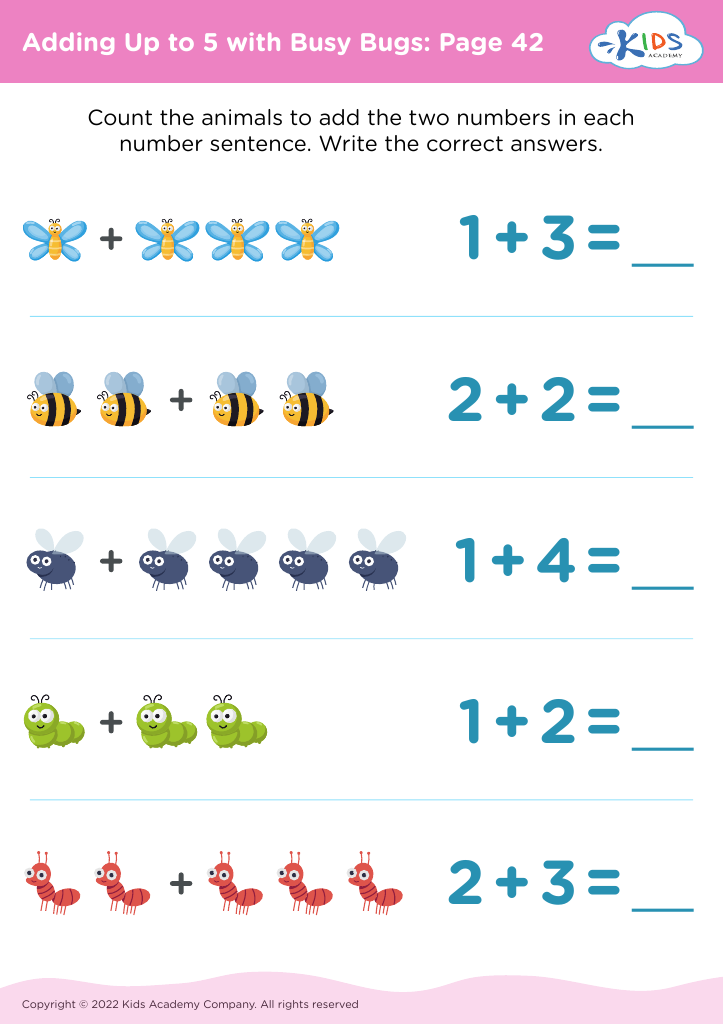
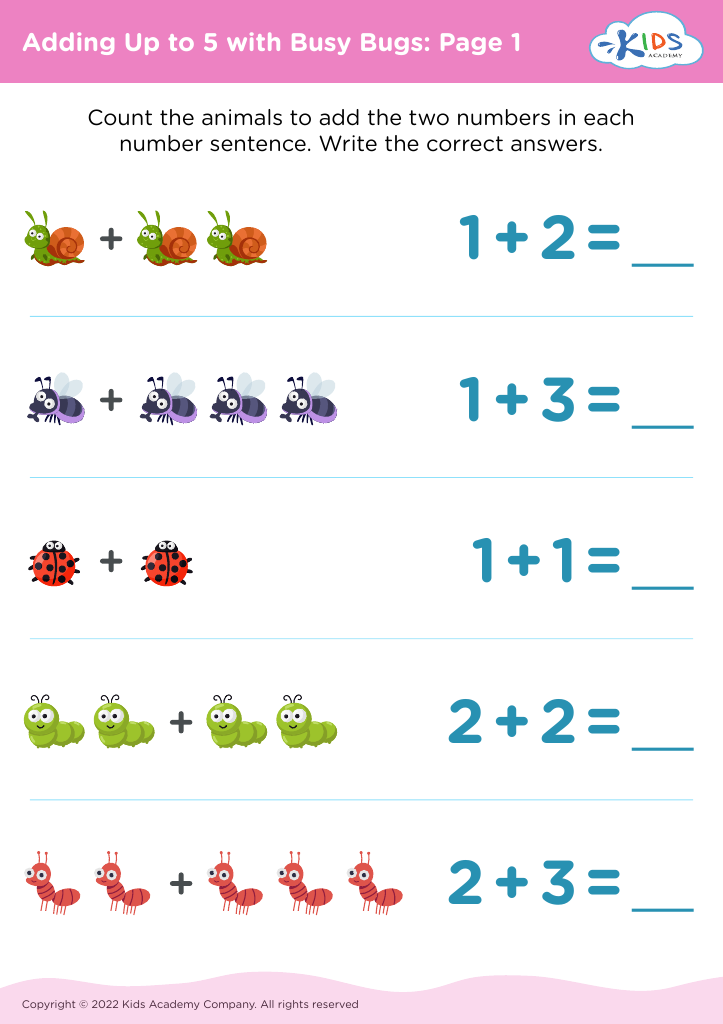
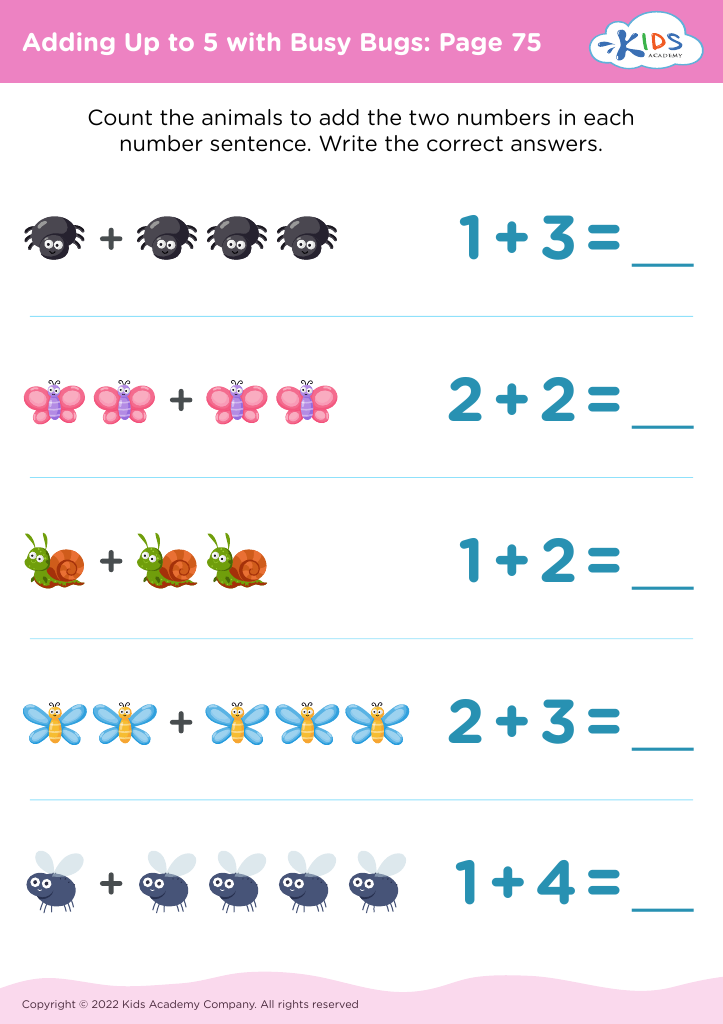
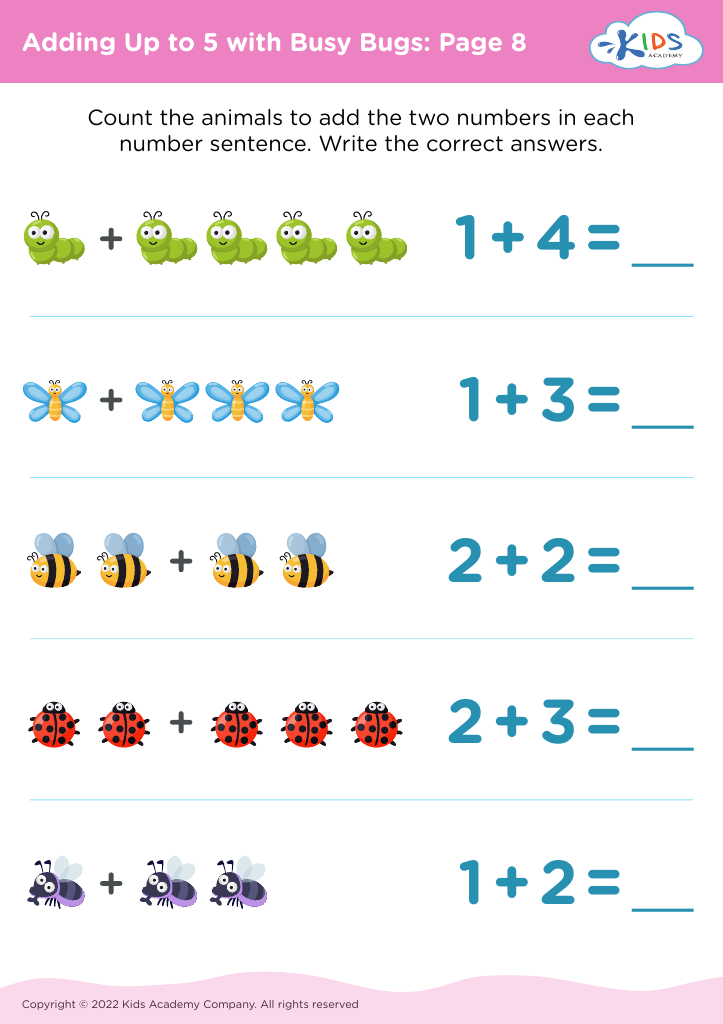
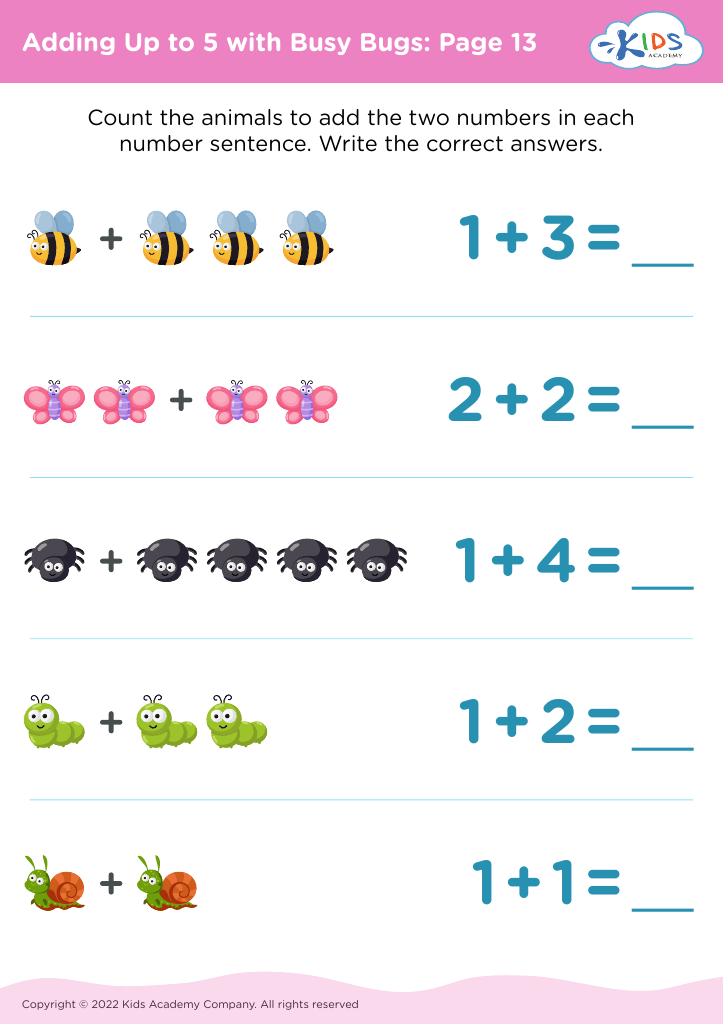
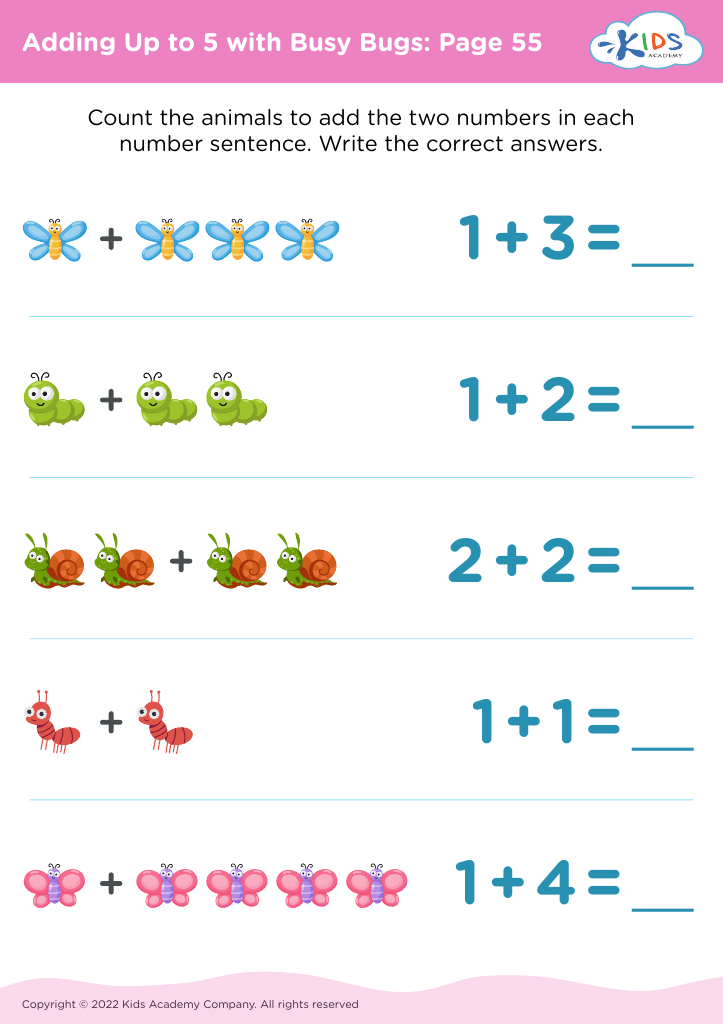
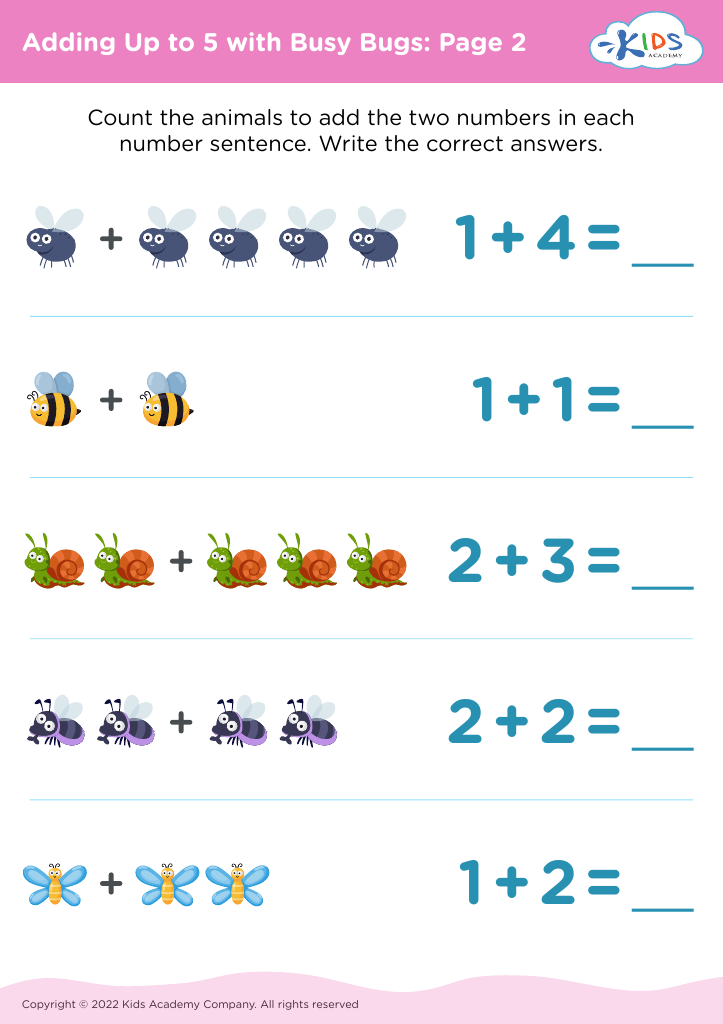
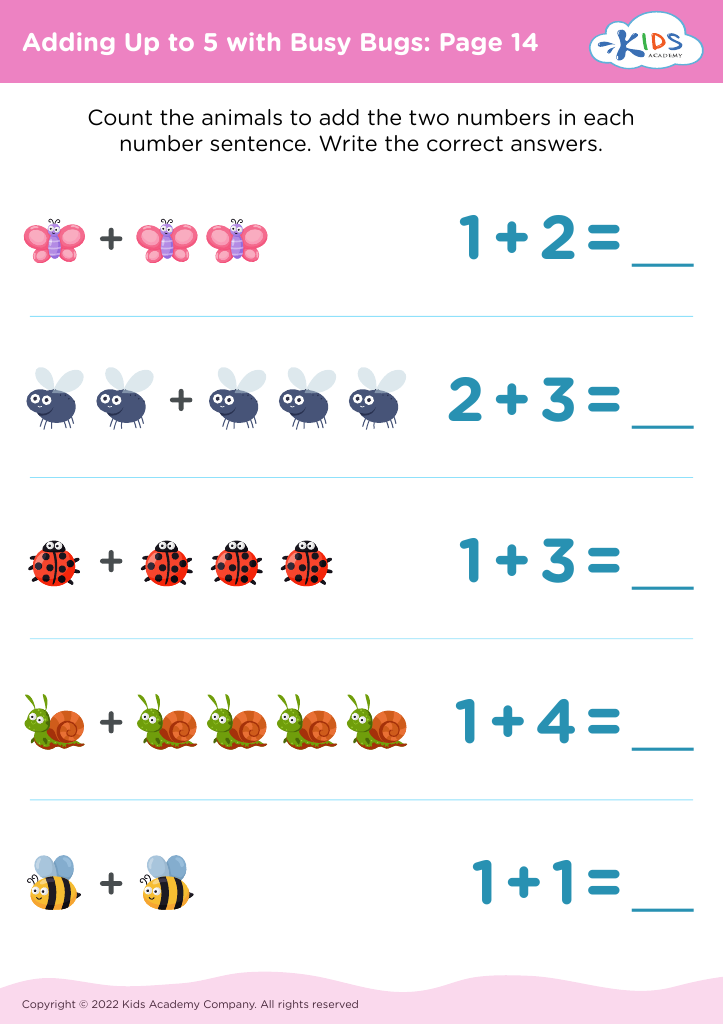
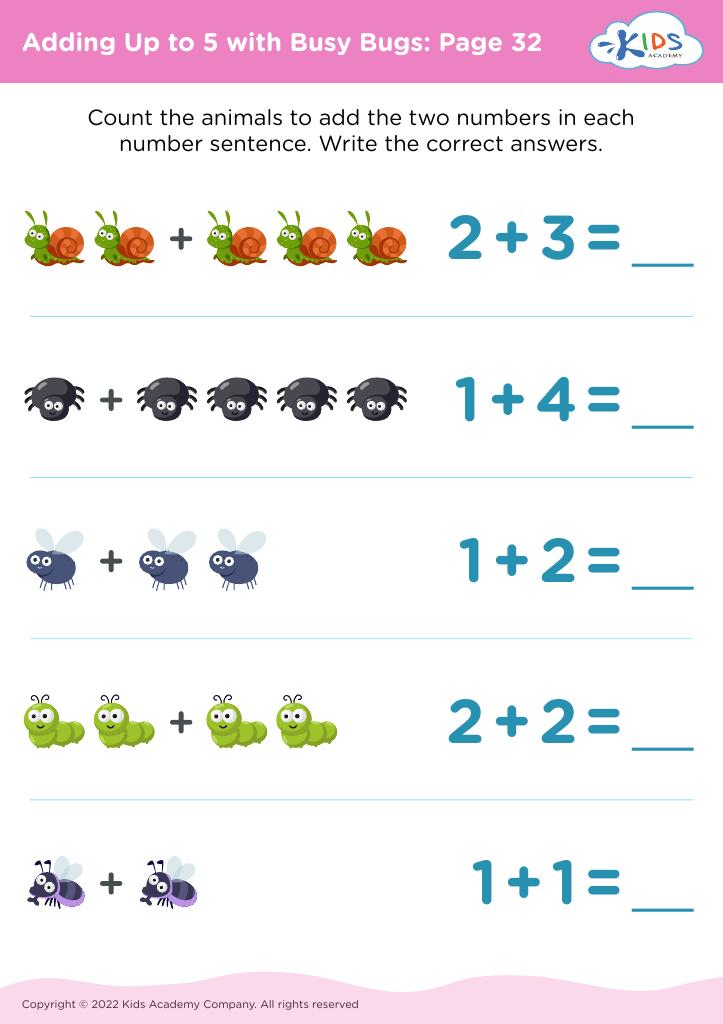
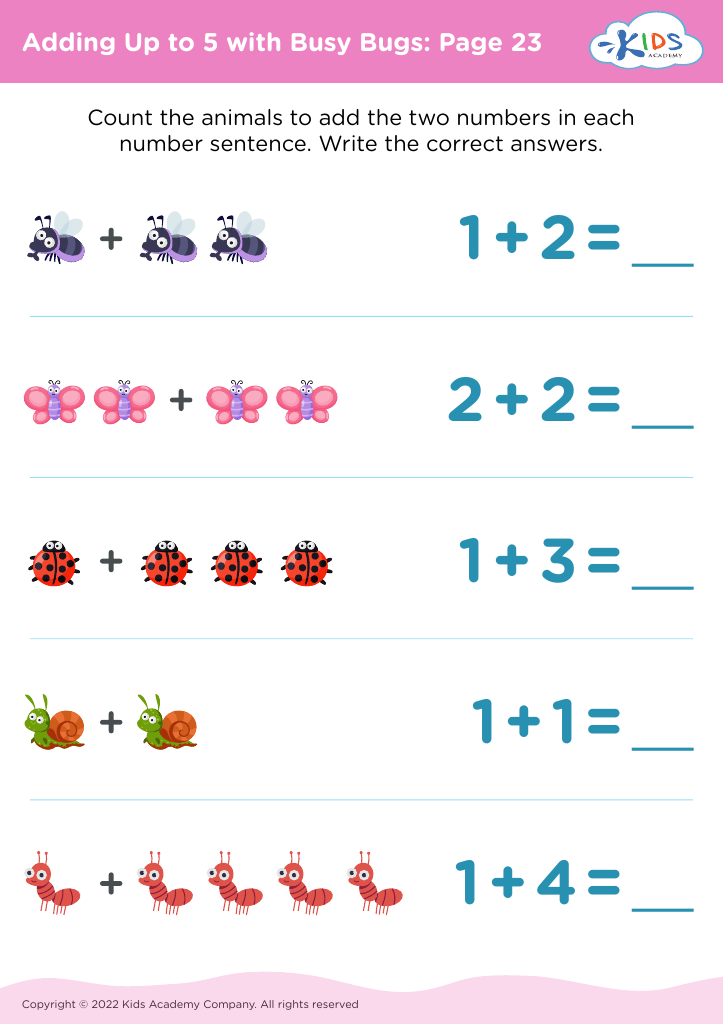
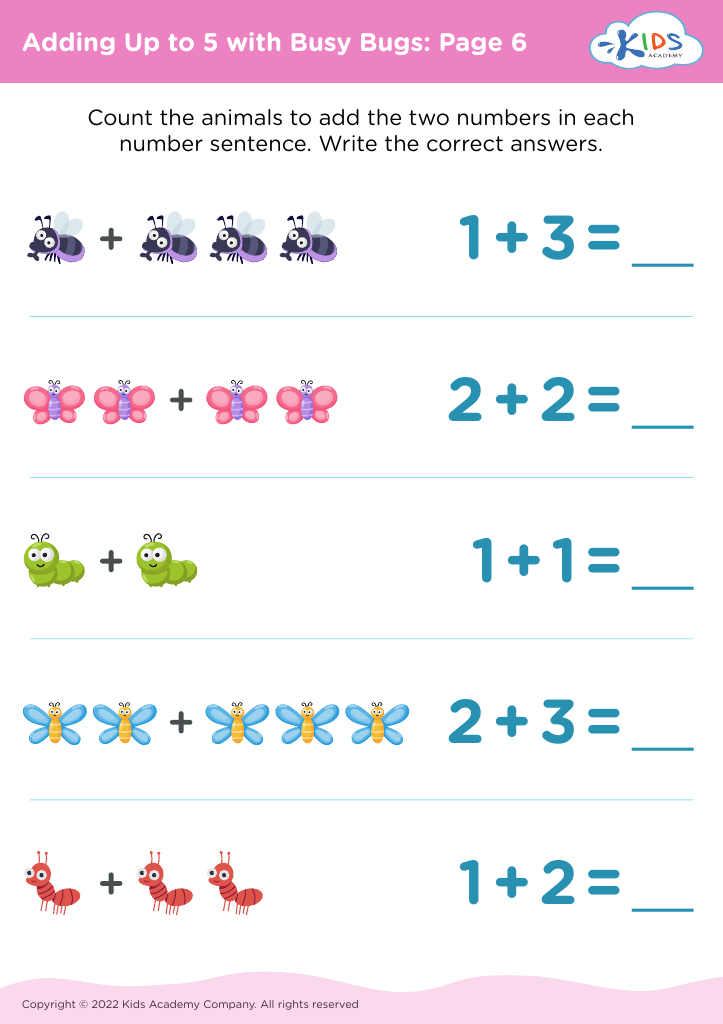
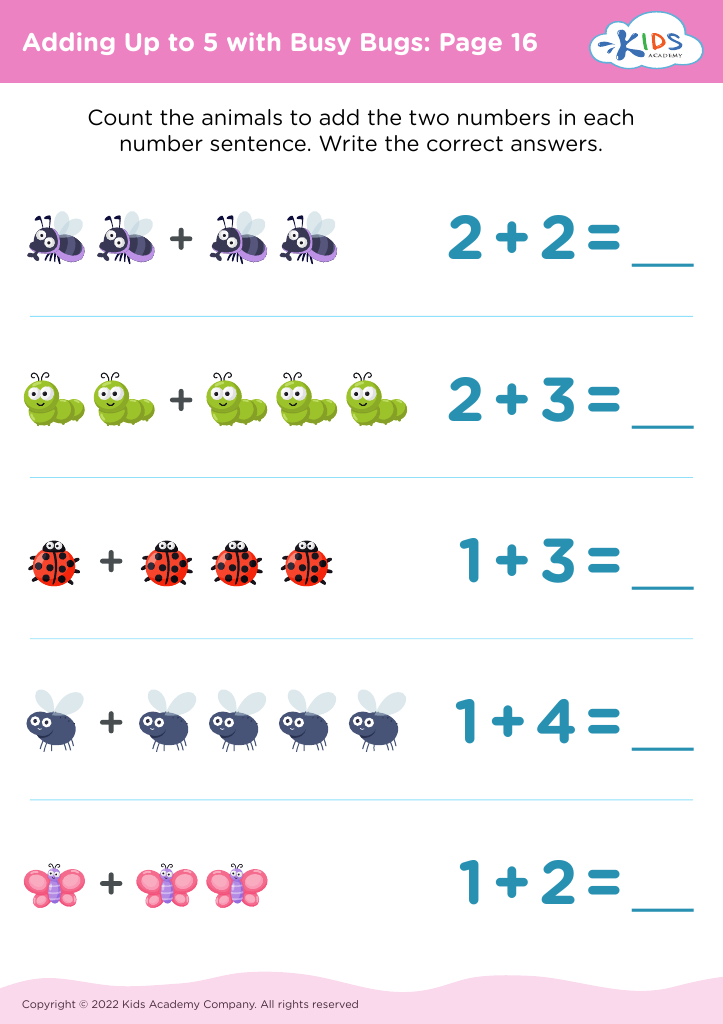



Parents and teachers should care about fostering addition skills through engaging tools like "Adding with Busy Bugs" for several crucial reasons, especially for children ages 4-9. First, this period is formative for mathematical concept development. Establishing a robust foundation in basic arithmetic, such as addition, ensures children are well-prepared for more complex math problems in the future. "Adding with Busy Bugs" uses colorful, interactive visuals that can captivate young learners' attention, making the learning process enjoyable and effective.
Developing strong addition skills at an early age enhances cognitive abilities such as problem-solving, logical thinking, and memory. Interactive tools streamline these skills, thus promoting self-confidence as children achieve small, incremental successes. This confidence boost can foster a positive attitude towards learning and instill a sense of curiosity about mathematics.
Moreover, engaging tools like "Adding with Busy Bugs" cater to various learning styles. Visual learners benefit from the imagery, hands-on learners engage with the interactive elements, and auditory learners can follow along with any sounds or instructions. This inclusivity meets children where they are, enabling personalized learning paths.
In summary, the enhancement of addition skills through engaging, age-appropriate methods is fundamental for academic growth, cognitive development, and fostering a lifelong positive relationship with learning and mathematics.