Animal identification Addition & Subtraction Worksheets for Ages 4-9 - Page 2
28 filtered results
-
From - To
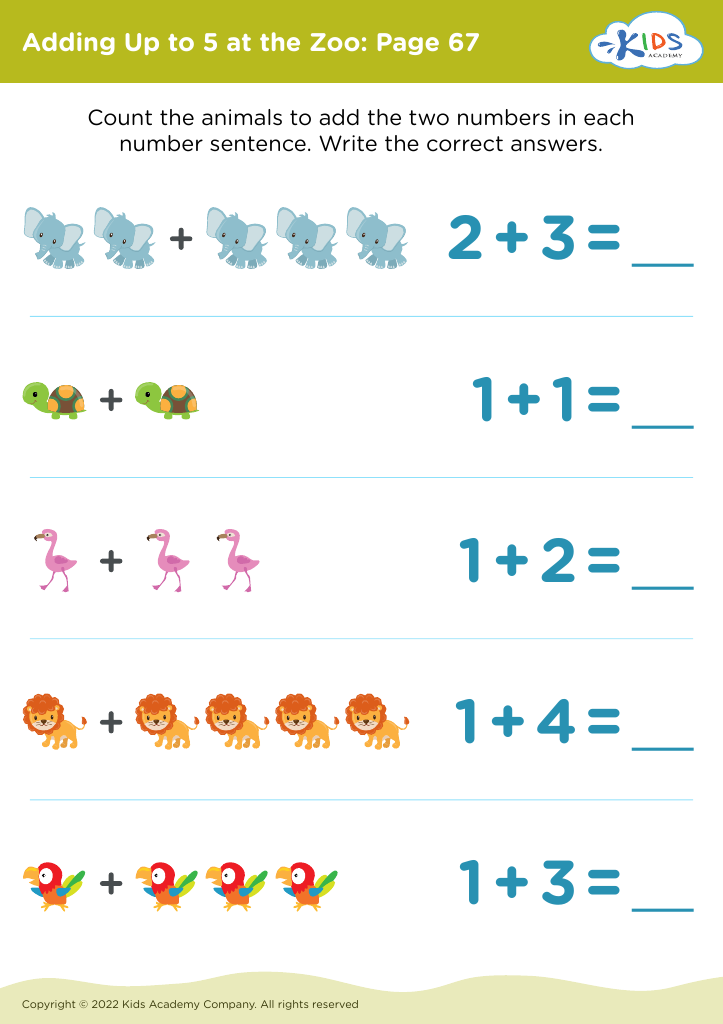
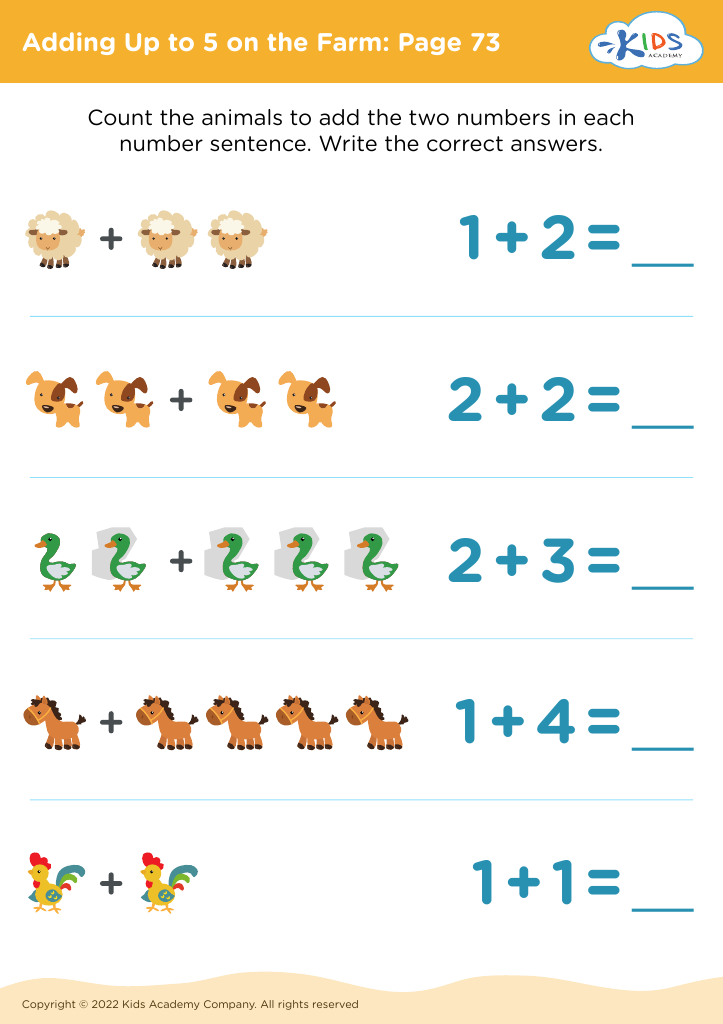
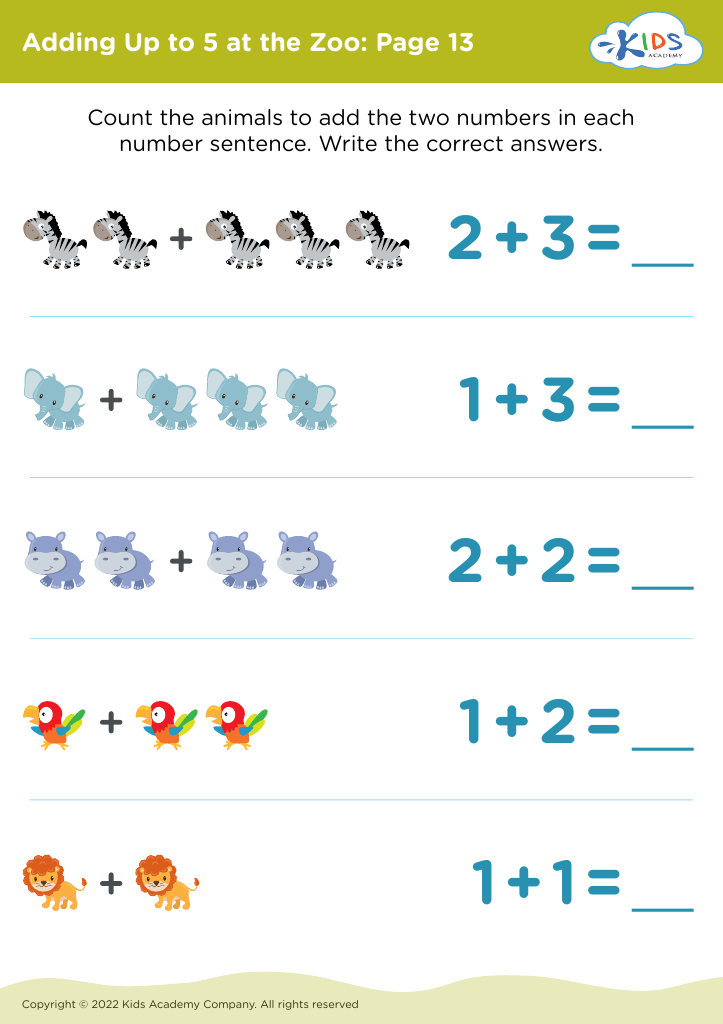
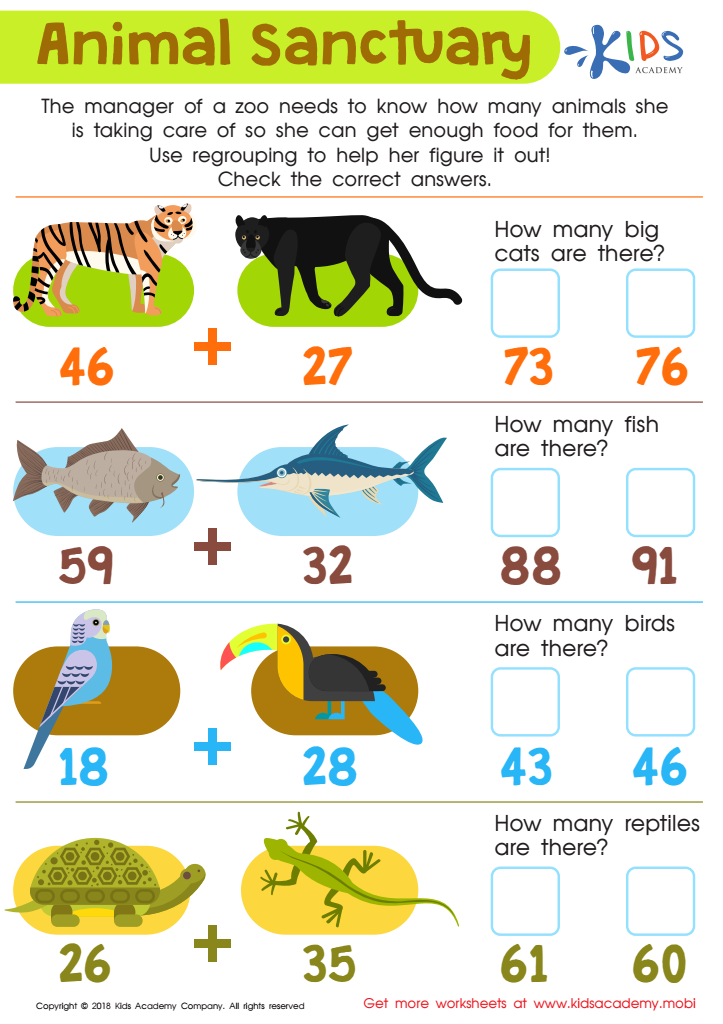
Animal Sanctuary Worksheet
 Assign to My Students




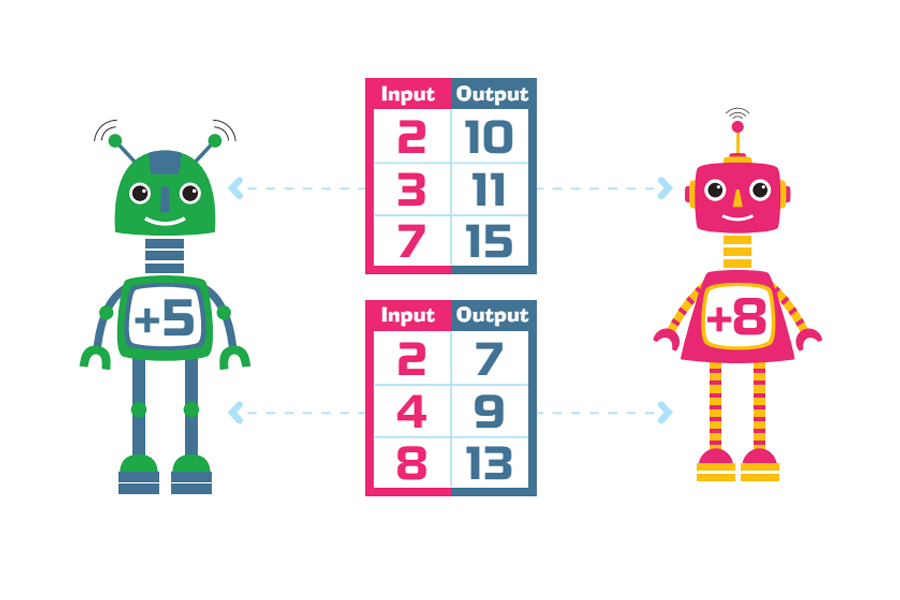



Animal identification addition and subtraction for children aged 4-9 is not just a fun and engaging way to learn math; it’s a critical educational tool that fosters multiple aspects of development. First, it combines foundational math skills with animal recognition, tapping into children’s natural curiosity about the world around them. By associating mathematical concepts with animals, children become enthusiastic learners, which enhances retention and comprehension.
Parents and teachers should care because this method aids in numeracy skills development—children learn to recognize numbers, count, and perform basic operations within a relatable context. Interactive and themed activities lead to a stronger connection to types of wildlife and environmental awareness, promoting both literacy in mathematics and knowledge of animals.
Additionally, such exercises enhance cognitive skills like problem-solving and critical thinking. Working with animal themes can also encourage teamwork; children may participate in group activities, fostering social skills. Lastly, engaging tools like games or story problems make learning enjoyable, reducing math anxiety and building confidence in their abilities. Overall, integrating animal identification with basic math operations equips young learners with essential skills critical for their academic journey and broader societal understanding.








