
Critical thinking development Addition & Subtraction Worksheets for Ages 4-9
3 filtered results
Difficulty Level
Grade
Age
-
From - To
Subject
Activity
Standards
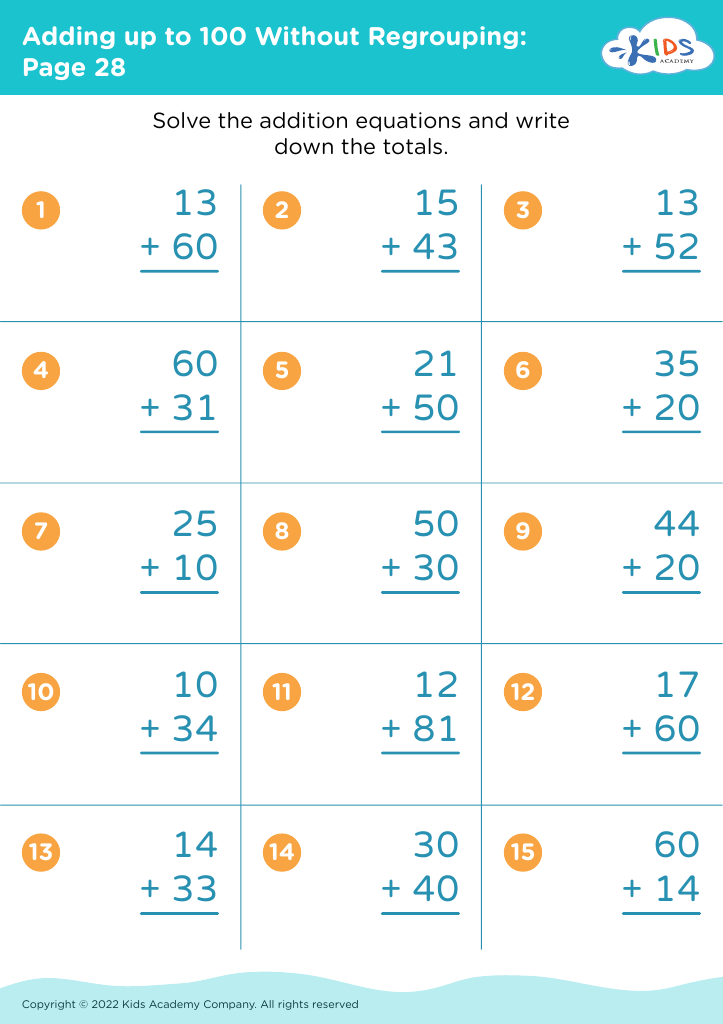
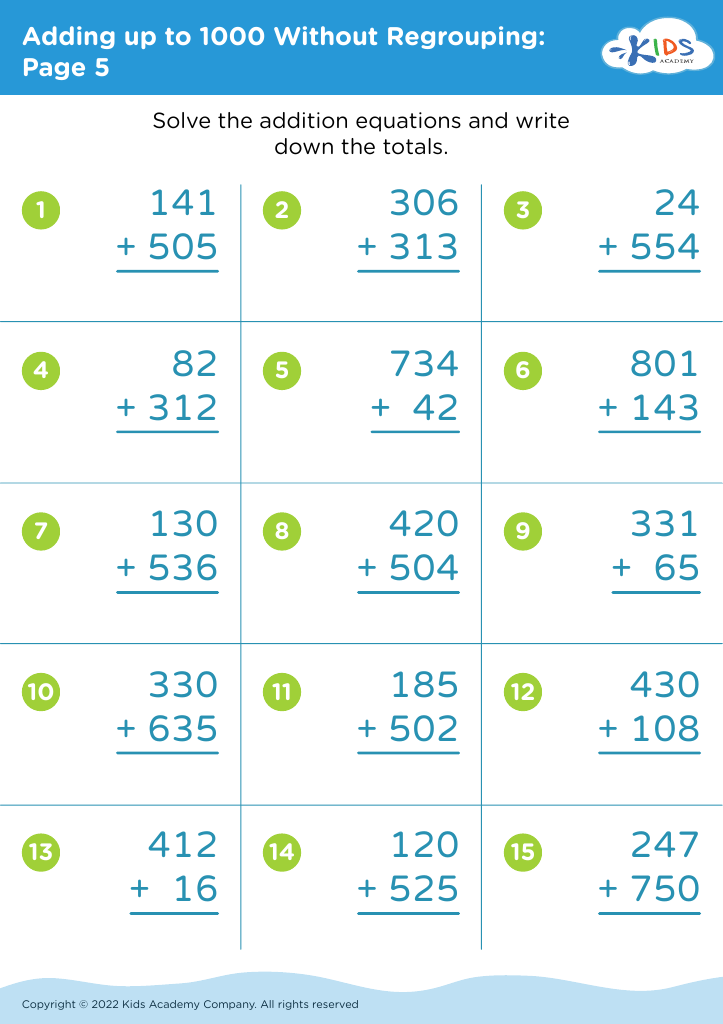
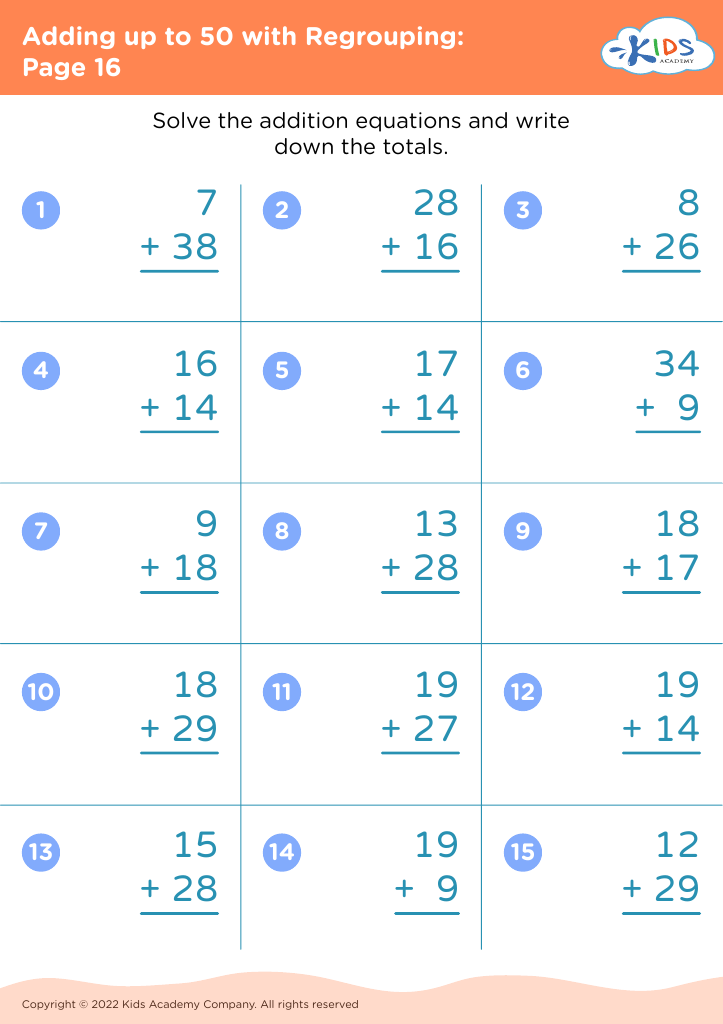
Unlock your child’s potential with our critical thinking development addition and subtraction worksheets tailored for ages 4-9. These engaging activities help young learners build foundational math skills through interactive exercises designed to stimulate logical reasoning and problem-solving. Your child will explore fun, educational challenges that promote both numerical fluency and critical thinking. Perfect for parents and educators, these worksheets are an essential tool to nurture confidence and inspire a lifelong love of learning. Visit Kids Academy to download now and watch your child thrive!
Favorites
With answer key
Interactive
Join Kids Academy for Free
Who is primarily going to use this learning content?








Critical thinking development is fundamental for children aged 4-9 as it lays the groundwork for perceptive, independent learning. Importantly, addition and subtraction are not just mechanical skills but acts of problem-solving which enhance critical thinking. By grappling with numerical operations, children learn to identify patterns, integrate information, and develop logical steps to find solutions.
Investing in these skills early augments cognitive abilities, enabling children to tackle complex problems with confidence later in life. For instance, solving 5 + 7 engages them in evaluating quantities, comparing numbers, and understanding the relevance of operation order. This process promotes analytical thinking—evaluating the problem before calculating—and reflective thinking—assessing whether their solution is reasonable.
Parents and teachers fostering this dual focus—skills and problem-solving—equip children to handle wider and more abstract challenges not confined to math, such as making reasoned decisions and understanding cause-effect relationships across subjects. Activities encouraging such skills may include puzzles, story problems, and playful math games to nurture curiosity while strengthening focus and resilience.
Ultimately, characterizing math as a dynamic, thought-provoking discipline rather than an arbitrary set of rules helps children love learning, explore various solutions, and apply critical thinking throughout their schooling and into adulthood, thereby shaping adaptive, judicious minds.








