Identifying Animals Addition & Subtraction Worksheets for Ages 4-9
5 filtered results
-
From - To
Discover our engaging "Identifying Animals Addition & Subtraction Worksheets" designed specifically for children ages 4-9! These worksheets combine essential math skills with fun animal-themed illustrations, making learning enjoyable and interactive. Young learners will practice addition and subtraction by counting animals, enhancing their numeric fluency while nurturing their love for wildlife. Each worksheet caters to various skill levels, ensuring that every child can thrive from novice to more advanced learners. Perfect for classroom settings or at-home learning, our resources support early math education through visual aids and hands-on practice. Help your child develop confidence in math while exploring the world of animals!
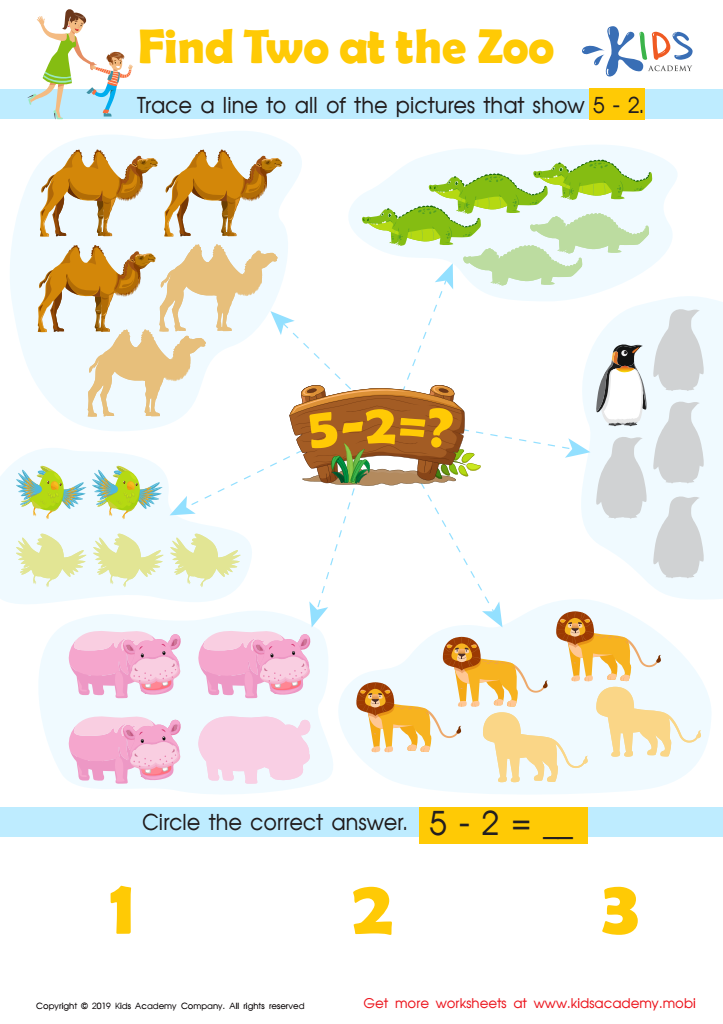
Find Two at the Zoo Worksheet
 Assign to My Students
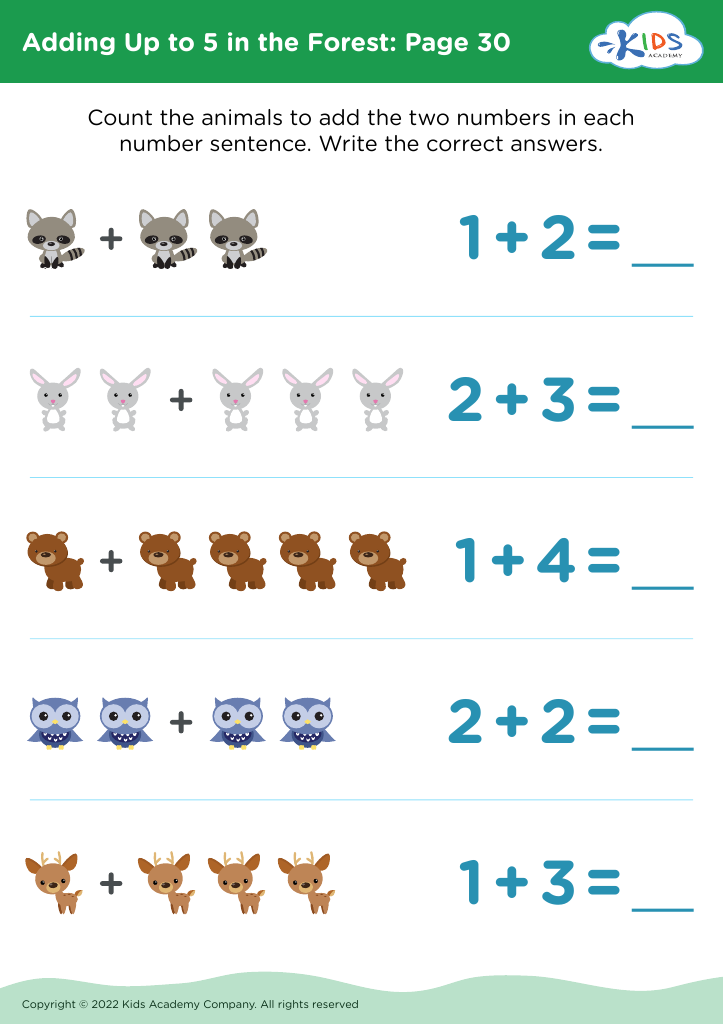








Identifying animals through addition and subtraction activities is crucial for parents and teachers of children aged 4-9, as it fosters foundational math skills while promoting engagement with nature. Early math education is vital for cognitive development, as mastering basic arithmetic forms the building blocks for future learning in more complex mathematics.
Incorporating animals into these mathematical exercises captures children's interest and provides relatable context that makes abstract concepts more concrete. For example, counting or solving word problems involving animals makes the learning experience enjoyable and can improve retention. Furthermore, it enhances critical thinking as children are encouraged to visualize and comprehend the relationships between numbers in real-world scenarios.
Moreover, focusing on animals nurtures curiosity and environmental awareness, as children learn about different species and their habitats. This dual approach not only improves numeracy skills but also cultivates a sense of stewardship toward the natural world.
Finally, engaging with this topic promotes social learning, as students often collaborate or share imaginative animal story problems. In short, identifying animals in conjunction with math is an effective educational strategy that supports well-rounded development, making it a vital focus for educators and parents alike.








