
Improve counting Addition & Subtraction Worksheets for Ages 4-9
3 filtered results
Difficulty Level
Grade
Age
-
From - To
Subject
Activity
Standards
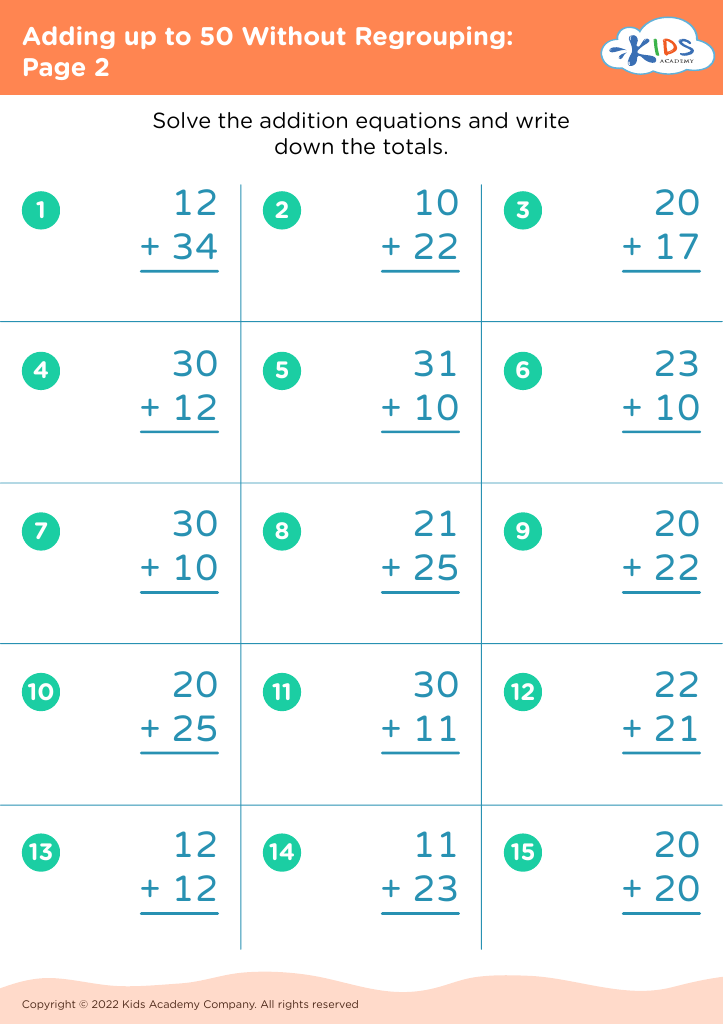
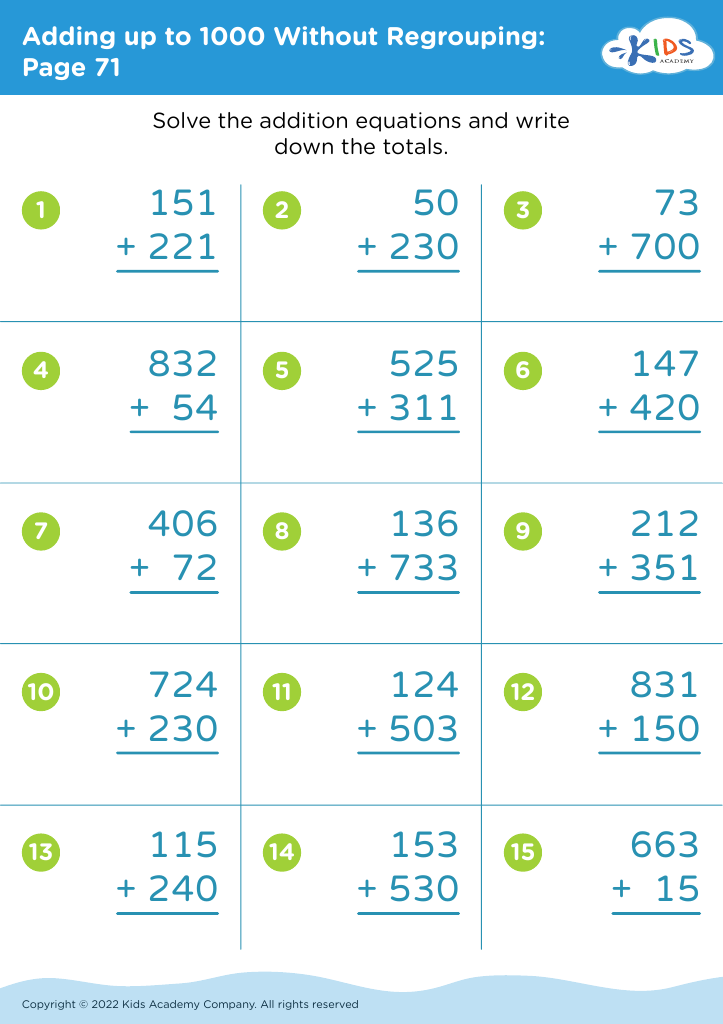
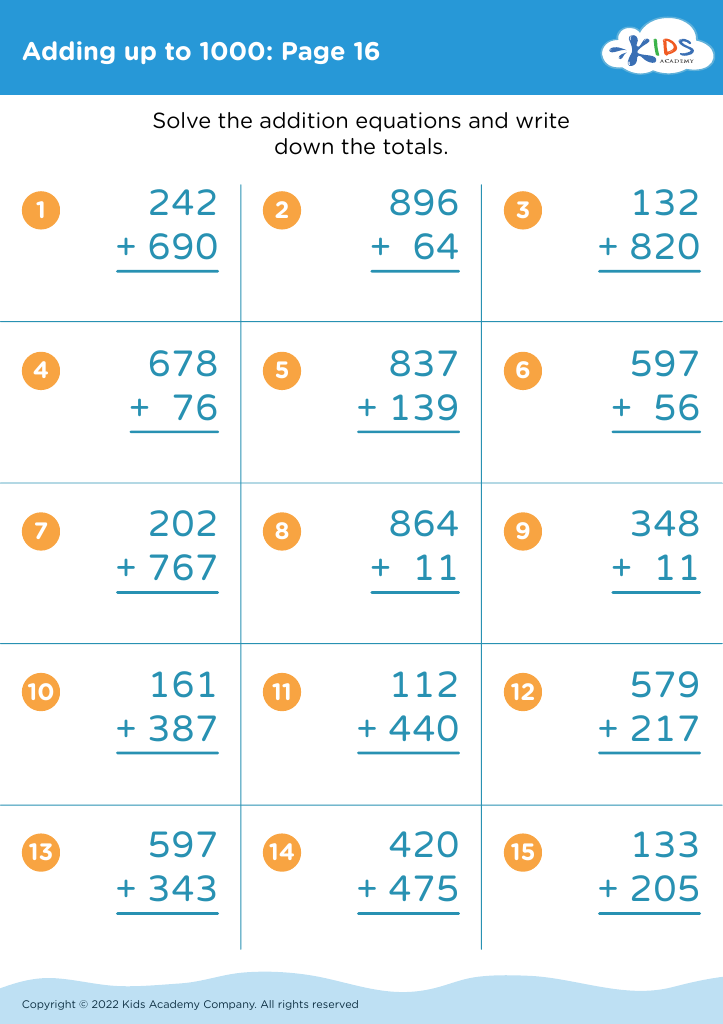
Explore our engaging Improve Counting Addition & Subtraction Worksheets designed for children aged 4-9. These carefully crafted resources focus on enhancing counting skills while reinforcing essential addition and subtraction concepts. Each worksheet features vibrant visuals and interactive activities that captivate young learners' attention, making math practice enjoyable and effective. With a range of difficulty levels, these worksheets are perfect for the classroom or home learning, catering to diverse skill levels. Help your child build confidence in their math abilities and promote a solid foundation in counting and arithmetic. Empower their learning journey today with our fun and educational worksheets!
Favorites
With answer key
Interactive
Join Kids Academy for Free
Who is primarily going to use this learning content?








Parents and teachers should prioritize improving counting, addition, and subtraction skills for children aged 4-9 because these foundational skills are critical for a child's overall education and development. Early numeracy knowledge not only promotes mathematical proficiency but is also linked to later success in both mathematics and other academic areas. Mastering counting helps children understand the concept of numbers, forming the basis for addition and subtraction.
Additionally, these skills foster logical thinking, problem-solving abilities, and spatial awareness. As children learn to manipulate numbers and comprehend basic arithmetic, they gain confidence in their math skills, which can significantly influence their attitudes towards learning. Furthermore, consistent practice of these skills during the formative years can help identify learning gaps early on, allowing for timely interventions if needed.
Socially, math is a part of daily life, enhancing a child's capacity to engage in conversations about various topics, from shopping to sharing. Instilling a solid understanding of counting, addition, and subtraction also promotes resilience and perseverance as children tackle challenges, making it critical for educators and parents to create supportive environments where these skills can be nurtured and celebrated. Ultimately, these competencies equip children with essential tools for lifelong learning and personal growth.








