Improving reading skills Addition & Subtraction Worksheets for Ages 4-9
4 filtered results
-
From - To
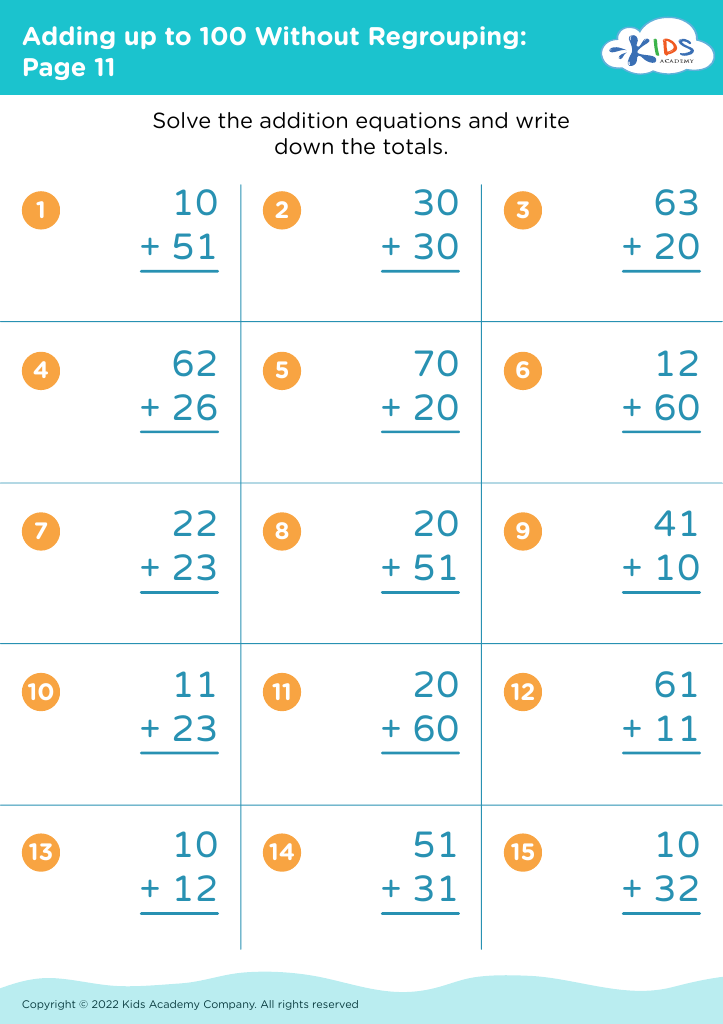
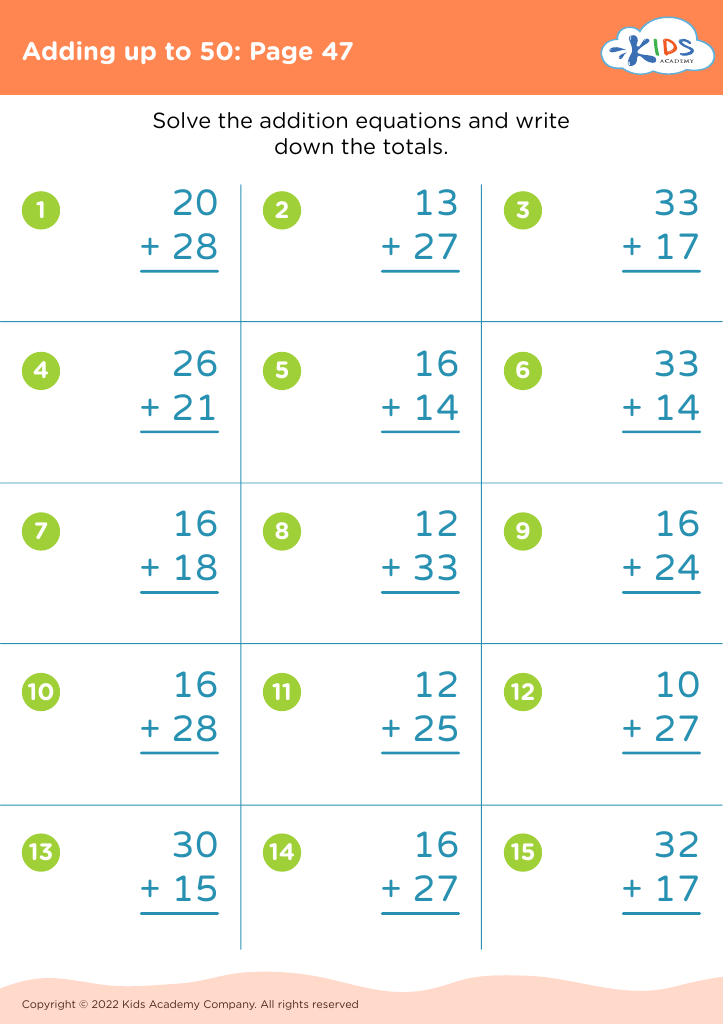
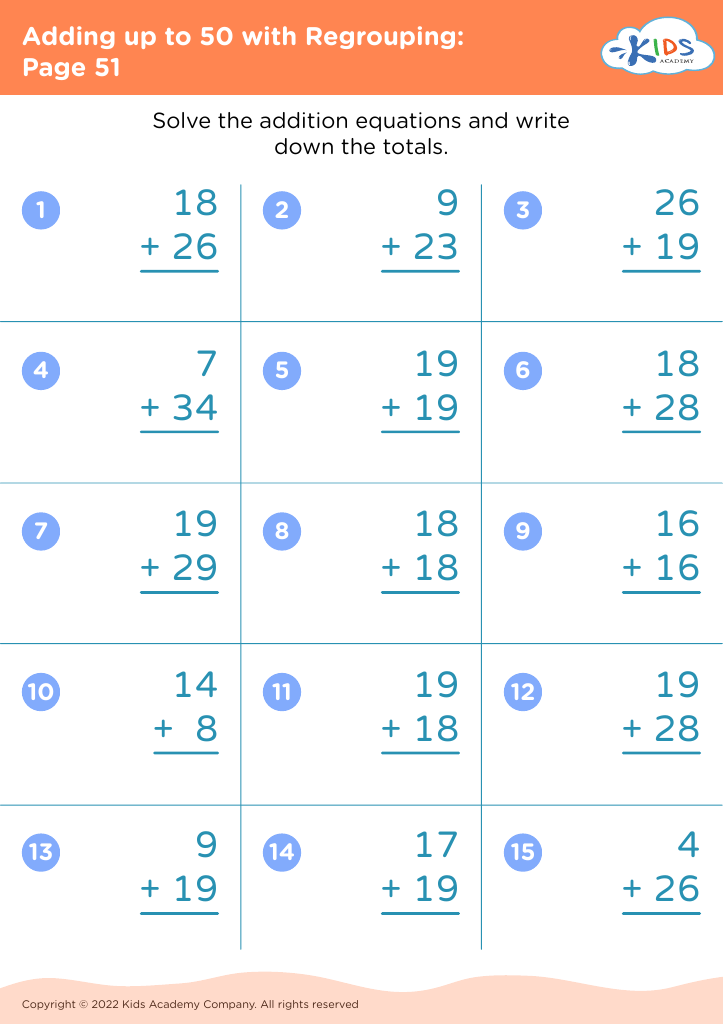
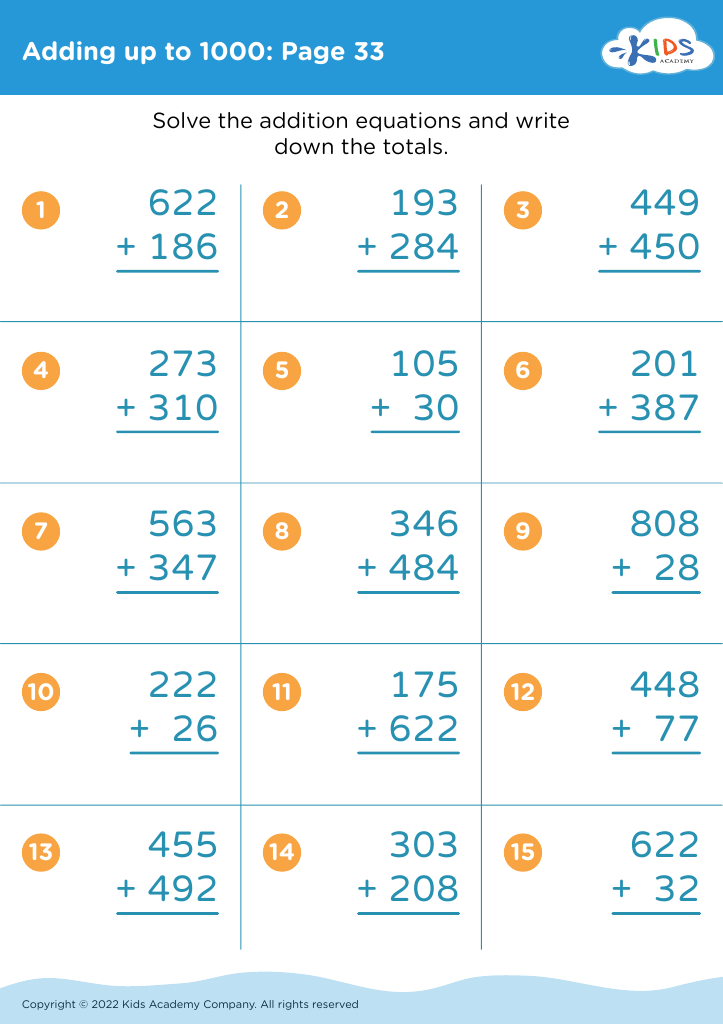
Discover our engaging "Improving Reading Skills Addition & Subtraction Worksheets" designed for children aged 4-9! These worksheets integrate math practice with literacy development, helping young learners enhance their reading comprehension alongside their arithmetic skills. Featuring fun activities that encourage kids to read instructions and words within math problems, your child will gain confidence in both reading and problem-solving. Our easy-to-follow layout and colorful illustrations motivate creativity and sustain interest, making learning enjoyable. Equip your child with essential skills for academic success. Explore our diverse collection of worksheets and watch your little ones thrive in reading and math!








Improving reading skills and mastering addition and subtraction for children aged 4-9 is crucial for several reasons. First, these foundational skills are integral to future academic success. Early reading proficiency not only promotes a love for literature but also develops comprehension skills needed across all subjects. When children read well, they understand math problems better, which can enhance their ability to perform basic operations like addition and subtraction.
Second, fostering these skills at an early age builds confidence. Children who achieve success in reading and math are more likely to take on challenges and engage in classroom activities. This boosts self-esteem and encourages a growth mindset.
Moreover, strong reading and math skills are essential for practical life skills, such as budgeting, grocery shopping, and understanding signs and labels. As children learn to read and manipulate numbers, they gain critical thinking skills that contribute to effective problem-solving in everyday situations.
Finally, involvement from parents and teachers creates a supportive learning environment. Collaboration enhances children's motivation and ingrains the importance of education into their daily lives. Therefore, prioritizing these skills helps children lay a strong foundation for lifelong learning and future success.








