Improving subtraction skills Addition & Subtraction Worksheets for Ages 4-9
3 filtered results
-
From - To
Enhance your child’s subtraction skills with our expertly crafted Addition & Subtraction Worksheets for Ages 4-9. Designed to foster a strong mathematical foundation, these fun and engaging worksheets make learning subtraction enjoyable for young minds. Each activity is tailored to different skill levels, ensuring gradual progress and building confidence through practice. Our resources help children develop critical thinking and problem-solving abilities in an encouraging environment. Perfect for both classroom and home use, these worksheets set the stage for academic success. Explore our selection to give your child the tools they need to thrive in math!
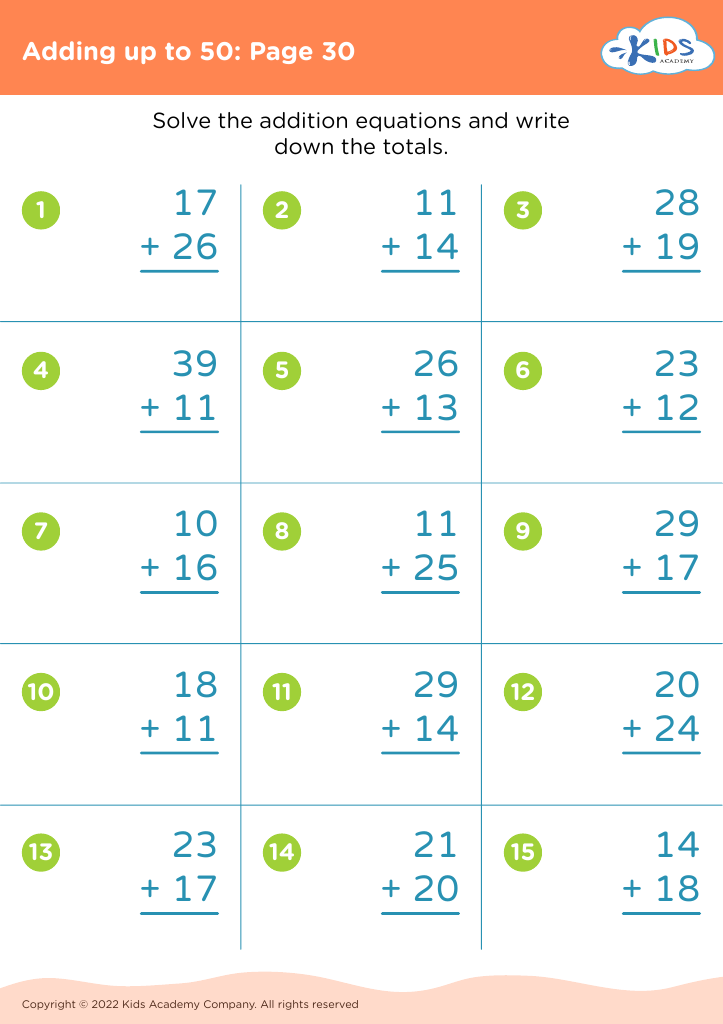
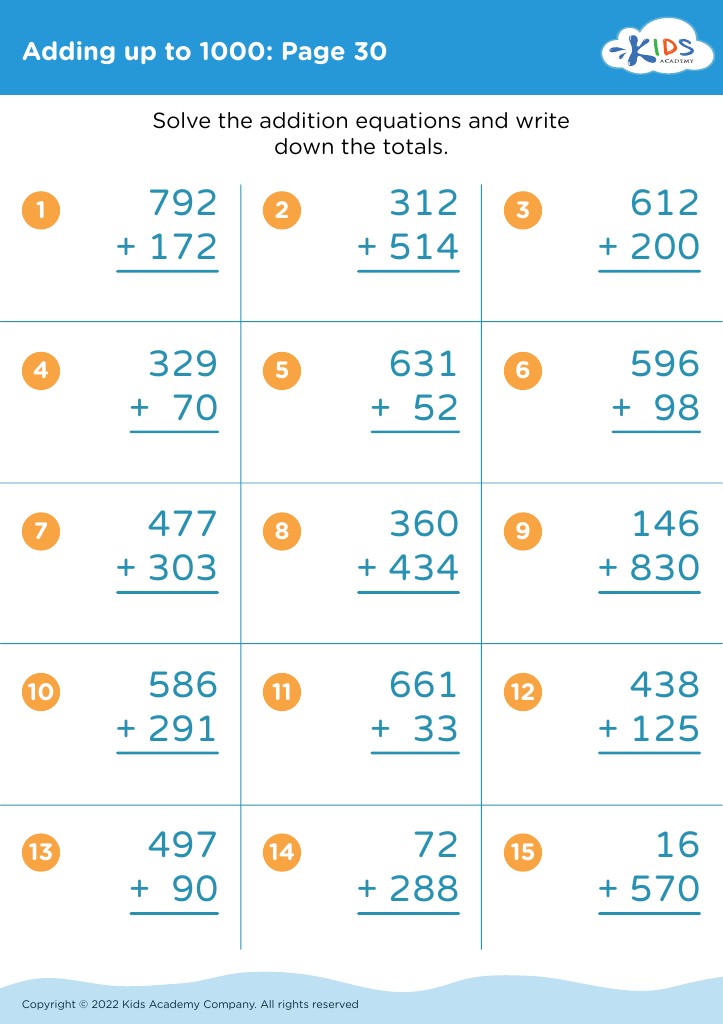
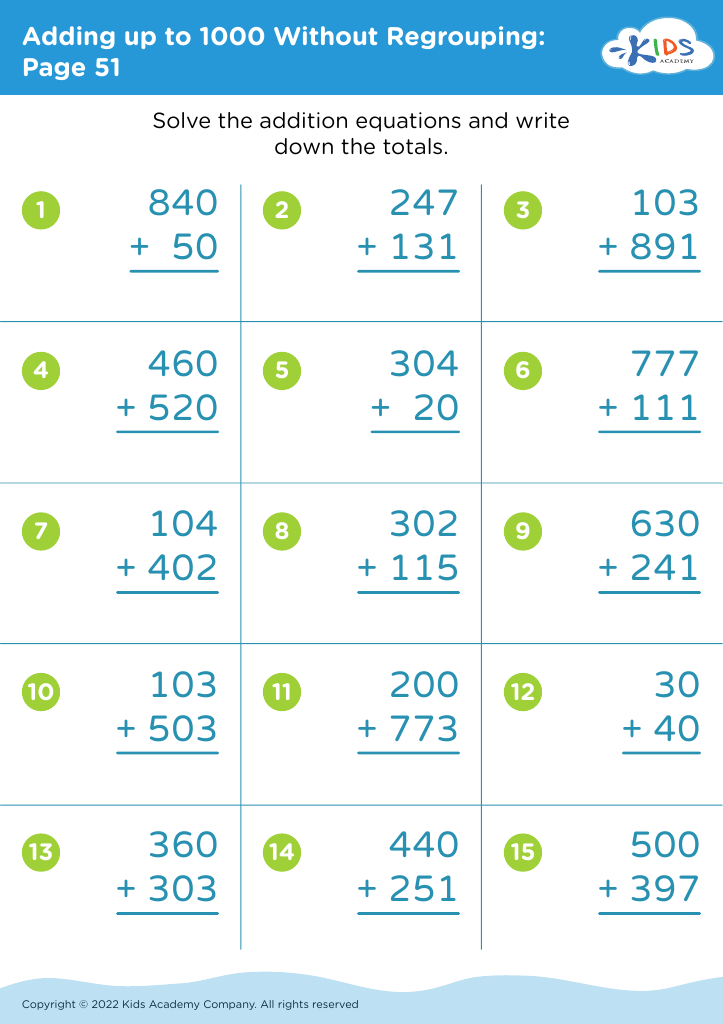








Improving subtraction skills for children aged 4-9 is crucial as it forms a foundational aspect of their mathematical understanding. This age range, known as the formative years, is when children develop critical cognitive skills. Strong subtraction abilities are essential for problem-solving and logical reasoning, extending beyond math to other domains like science and daily decision-making tasks. For example, understanding subtraction helps children grasp the concept of "taking away" and can be applied in real-life situations, such as distributing snacks equally among friends or counting how many toys they have left after sharing some.
Moreover, subtraction is intrinsically related to addition, another fundamental arithmetic skill, and together they reinforce numerical fluency. Mastery of these basic operations sets the stage for more complex math concepts, such as multiplication and division, which are cumulative processes relying heavily on solid subtraction and addition skills.
Teachers and parents play a pivotal role in nurturing this development. Engaging children through interactive and practical activities not only makes learning enjoyable but also ingrains these skills more deeply. For instance, using visual aids, hands-on tools like counters, or interactive games can make subtraction tangible and meaningful. Ensuring a strong grasp of subtraction during these early years equips children with confidence and competence in math, fostering overall academic success.








