Filters

10 filtered results

Clear all filters
Favorites
With answer key
Interactive

10 filtered results

Difficulty Level

Grade


Enhance your child's logical thinking skills with our engaging Addition & Subtraction Worksheets, specifically designed for ages 4-9! These worksheets combine foundational math concepts with fun activities that encourage critical thinking and problem-solving. Each printable resource is crafted to stimulate young minds through intriguing puzzles and challenges, fostering a deeper understanding of addition and subtraction. By integrating logic development into early math education, children can improve their cognitive abilities while enjoying the learning process. Empower your little learners with the essential tools they need to succeed in math and develop lifelong skills. Explore our diverse collection of worksheets today!

Check out this FREE Trial Lesson on Addition & Subtraction for age 4-9!

More Word Problems

Favorites
With answer key
Interactive
  • 4-9
  • Logical thinking development
  • Addition & Subtraction
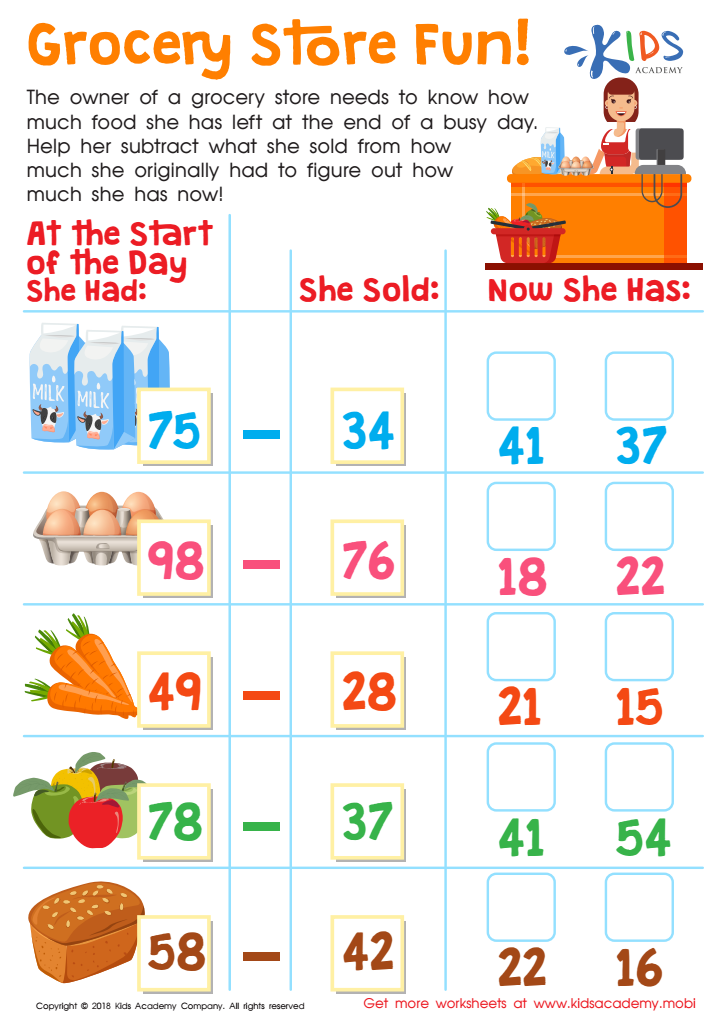
Grocery Store Fun! Worksheet

Grocery Store Fun! Worksheet

Let your kids have fun with this store worksheet. It requires them to help the owner by subtracting what she has sold from the original amount to figure out how much is left. Have them read and solve the equations in the printout to give the store owner the answer.
Grocery Store Fun! Worksheet
Worksheet
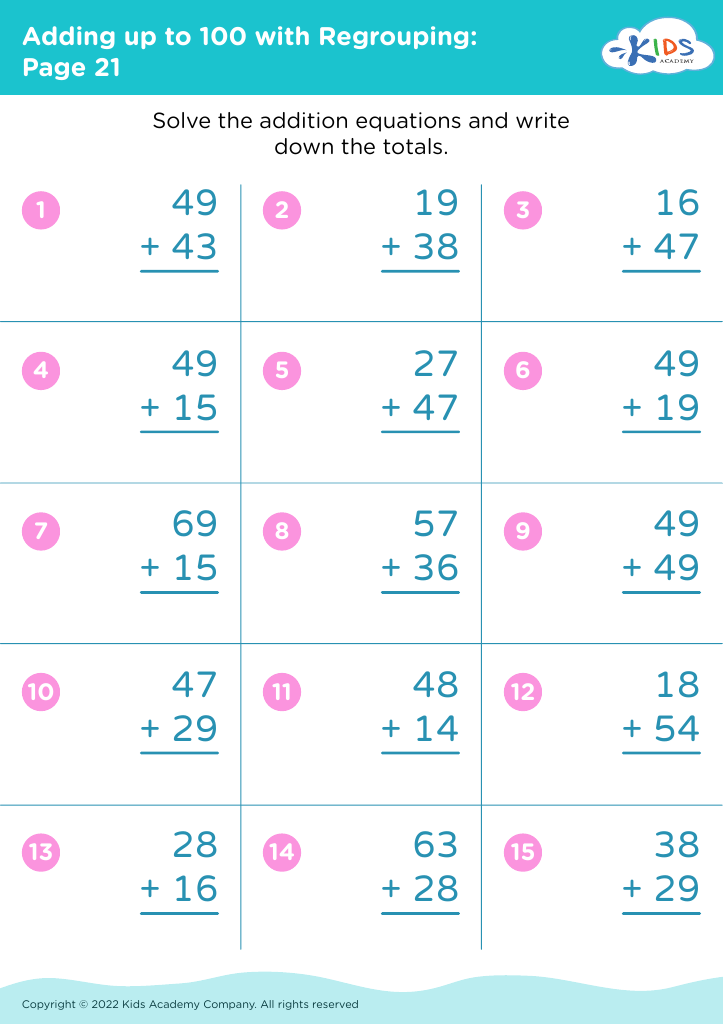
Adding up to 100 with Regrouping: Page 21
Worksheet
Voting Worksheet
Voting Worksheet

Voting Worksheet

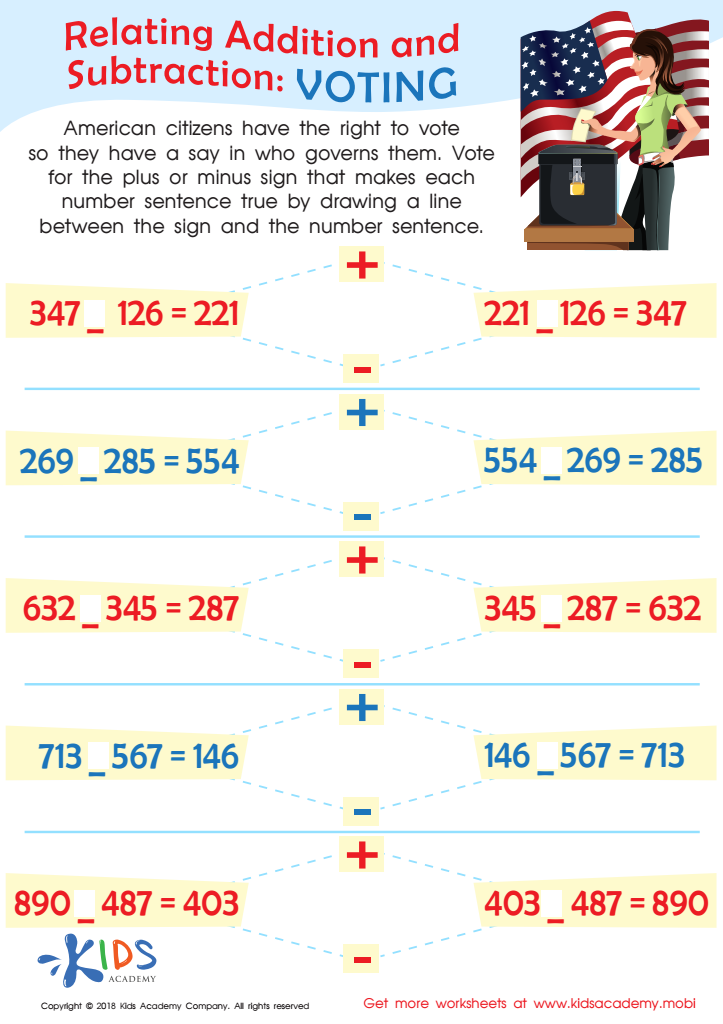
This worksheet combines Social Studies and Math, teaching kids the democratic concept of voting. Guide learners to observe the problem, and decide if it needs a plus or minus. They "vote" for the correct answer by drawing a line from the problem to the correct operation symbol. Tally up the votes to check the answers!
Voting Worksheet
Worksheet
Tricky Problems Worksheet: Part 2

Tricky Problems Worksheet: Part 2

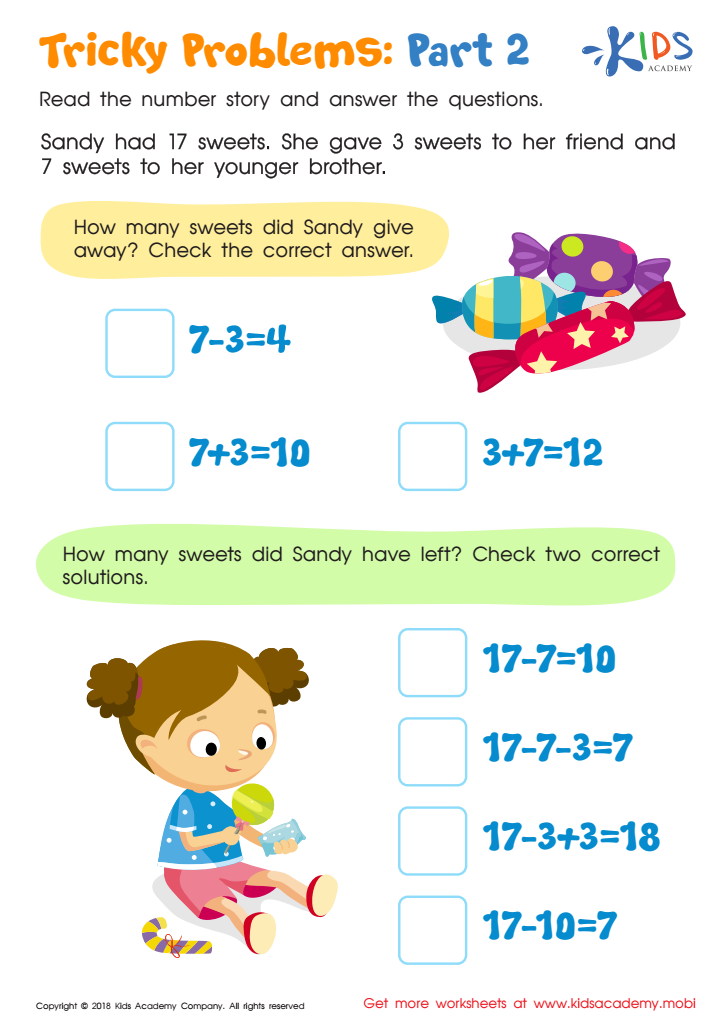
Help your little math learner visualize number stories with this engaging worksheet. They'll connect pictures to the story and use math facts to find the sums. After that, they'll be able to identify the correct number sentences to match. Let them practice and get better at problem solving!
Tricky Problems Worksheet: Part 2
Worksheet
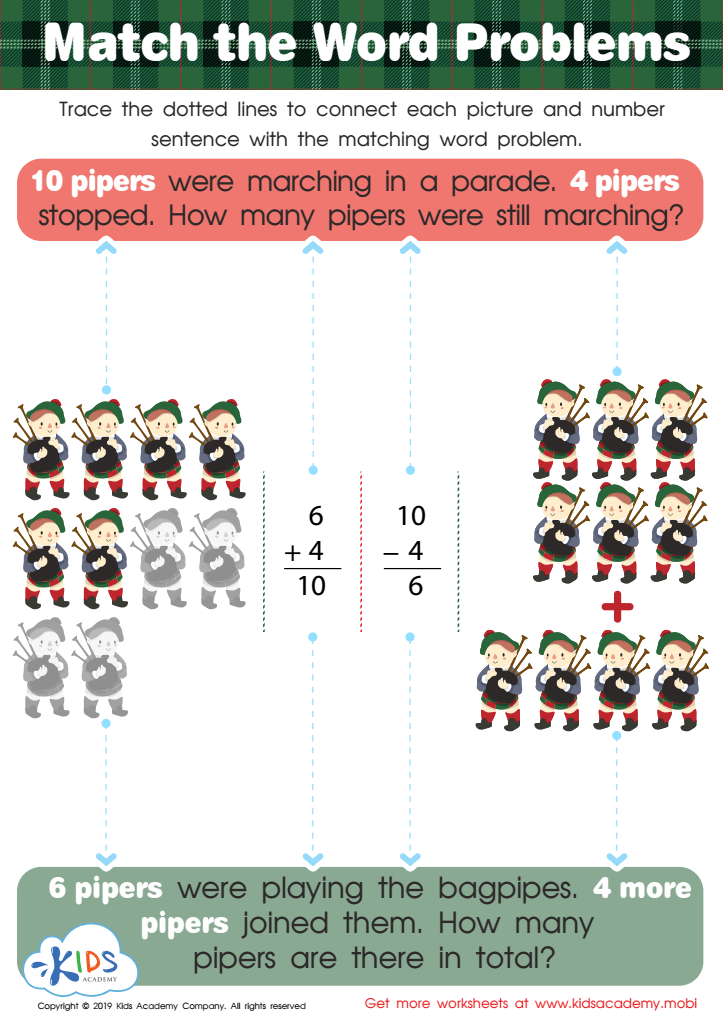
Match the Word Problems Worksheet

Match the Word Problems Worksheet

Read this word problem to your kids: Help them understand how it can be translated into a number problem. Trace the dotted lines to see how each picture and number sentence match the problem. With this worksheet, you can show your kids how easy it is to transform a word problem into a number problem.
Match the Word Problems Worksheet
Worksheet
Subtraction Robot Sorter Worksheet
Subtraction Robot Sorter Worksheet
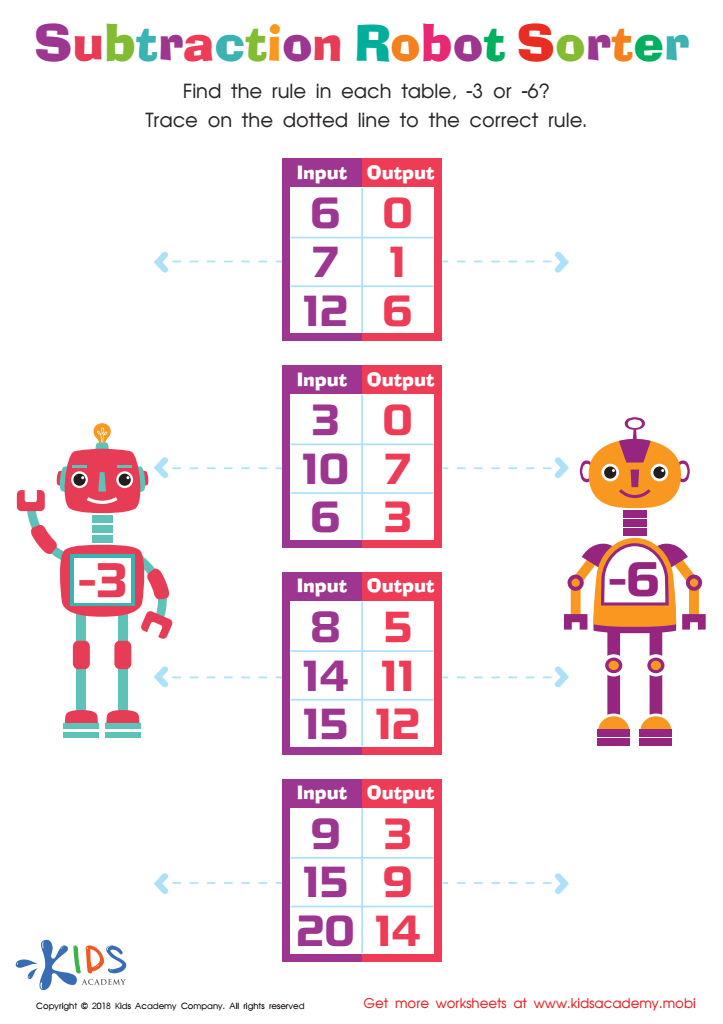
Help your child learn essential math skills with robot friends! Look at function machines and find if the rule is minus 3 or minus 6. Trace the dotted line to the robot with the correct rule when the pattern is found. Simple and delightful!
Subtraction Robot Sorter Worksheet
Worksheet
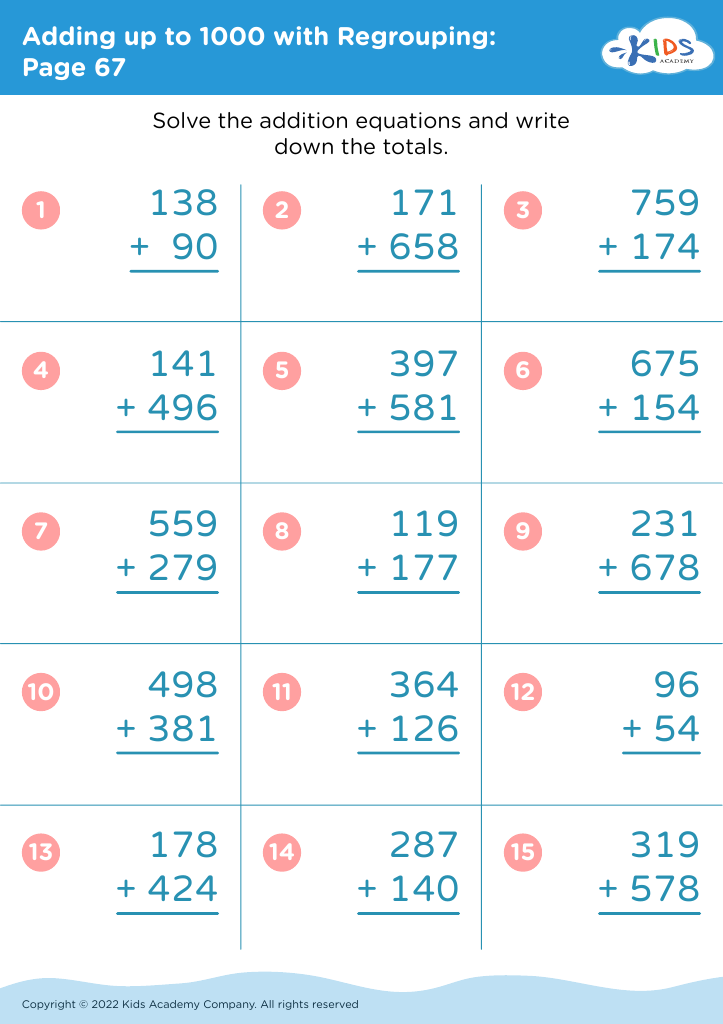
Adding up to 1000 with Regrouping: Page 67
Worksheet
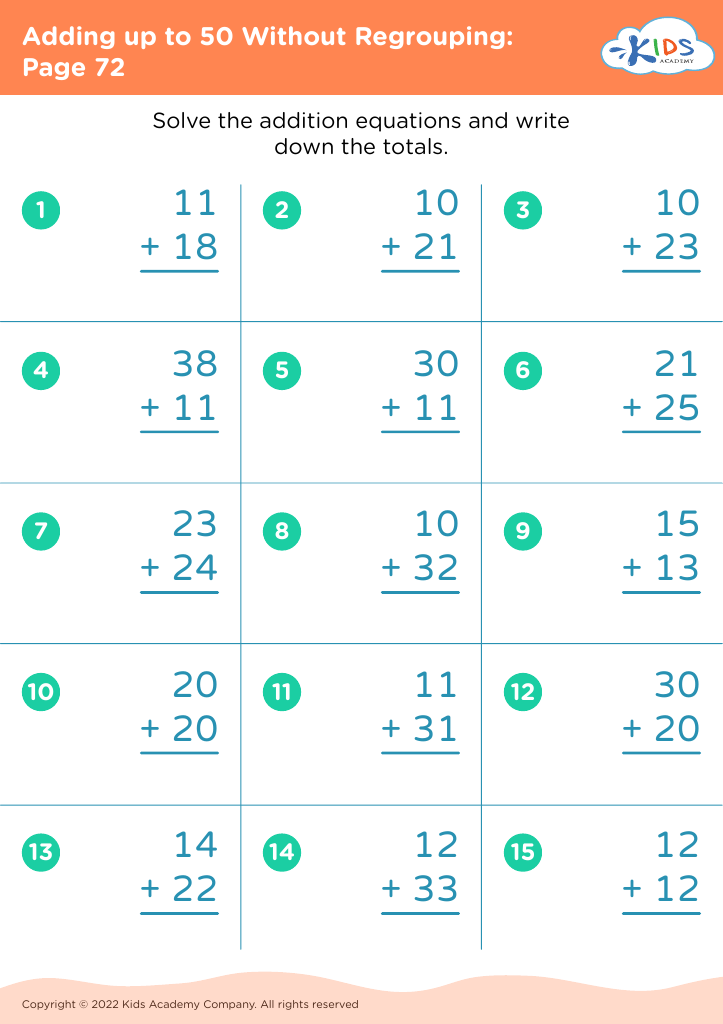
Adding up to 50 Without Regrouping: Page 72
Worksheet
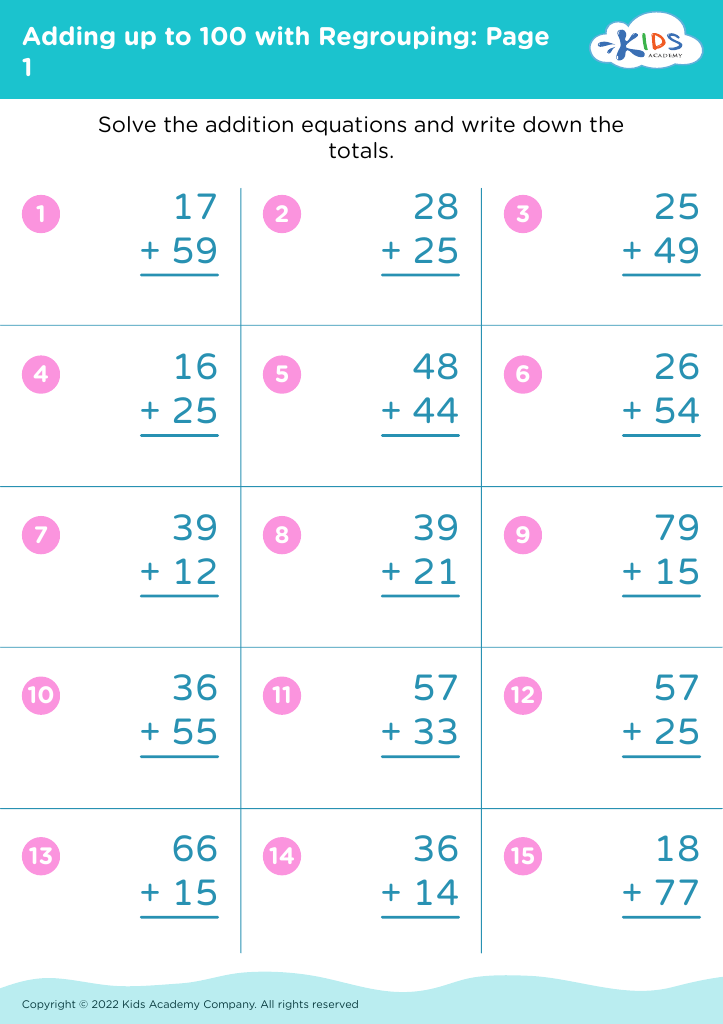
Adding up to 100 with Regrouping: Page 1
Worksheet
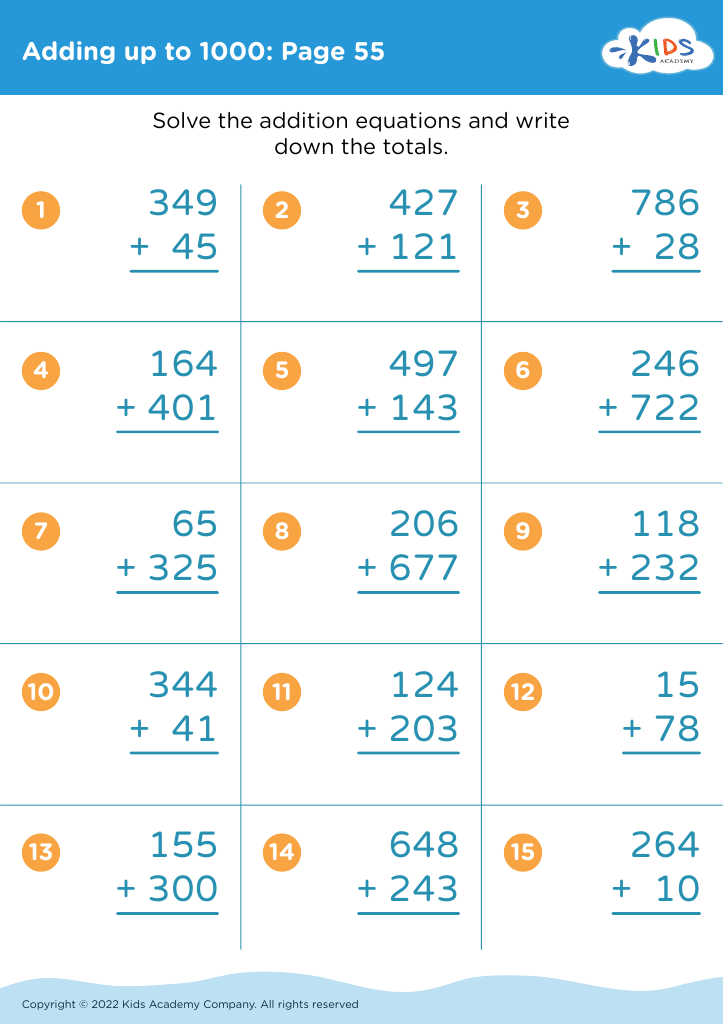
Adding up to 1000: Page 55

Adding up to 1000: Page 55

Adding up to 1000: Page 55
Worksheet


Logical thinking development, particularly in the context of addition and subtraction for children aged 4 to 9, is crucial for several reasons. First, these foundational math skills not only help children understand numbers but also lay the groundwork for more complex problem-solving abilities in the future. Developing logical thinking through addition and subtraction encourages children to recognize patterns and relationships, essential components of mathematical reasoning.

For parents and teachers, fostering these skills helps to build confidence in young learners. When children grasp basic arithmetic concepts, they are more likely to engage positively with math, reducing anxiety and preventing aversion to the subject. This early exposure to logical thinking and numeracy equips them with the cognitive tools they will use in various contexts, including science, technology, economics, and daily decision-making.

Moreover, logical thinking cultivates critical life skills such as decision-making, planning, and sequential reasoning. These skills are fundamental as they encounter increasingly complex tasks throughout their schooling and daily life. Thus, investing time in developing logical thinking through addition and subtraction nurtures resilient and adept learners poised for academic success and practical problem-solving in everyday situations.