
Mathematics skills Addition & Subtraction Worksheets for Ages 4-9
3 filtered results
Difficulty Level
Grade
Age
-
From - To
Subject
Activity
Standards
Enhance your child's mathematical abilities with our comprehensive Addition & Subtraction Worksheets designed for ages 4-9. Our worksheets cover fundamental arithmetic skills, ensuring young learners build a strong foundation in math. Tailored to various skill levels, each worksheet promotes understanding of concepts like single-digit addition, subtraction, and progressing to more complex equations. Colorful, engaging, and carefully structured, these worksheets make learning both fun and effective. Whether practiced at home or in the classroom, they are an excellent resource to boost your child's confidence and competence in mathematics. Discover a world of learning with our expertly crafted printable worksheets.
Favorites
With answer key
Interactive
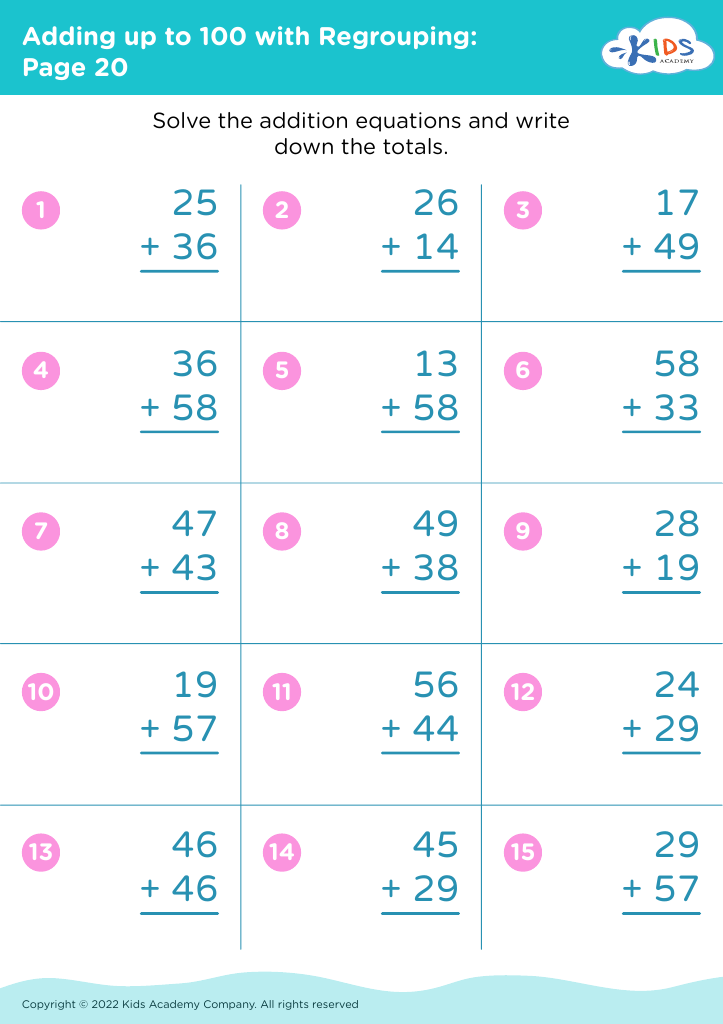
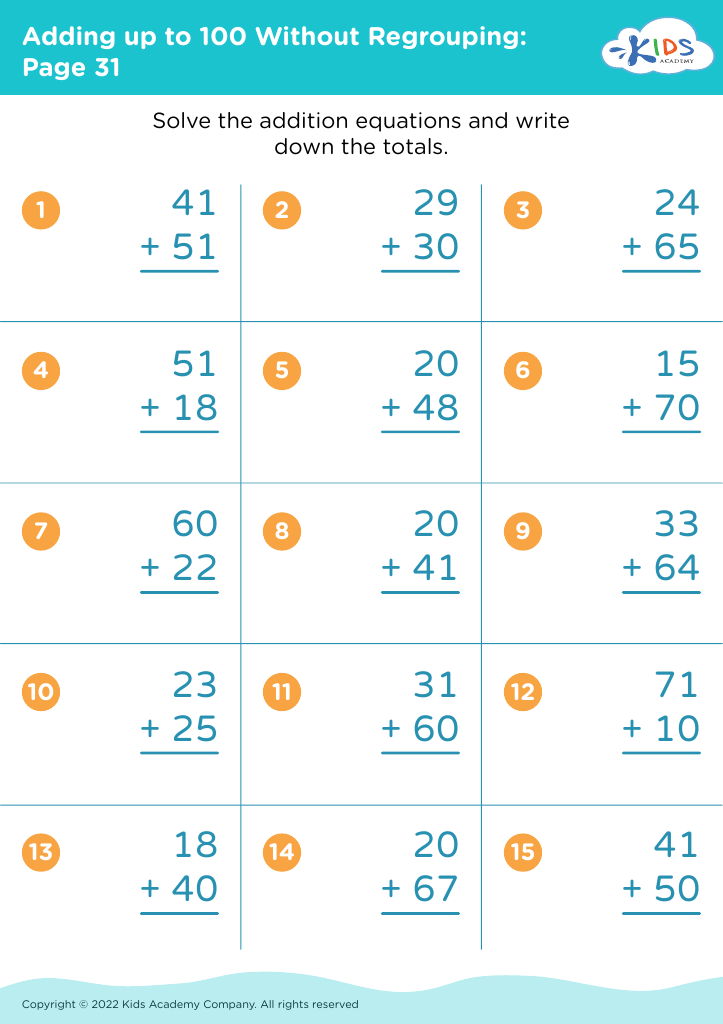
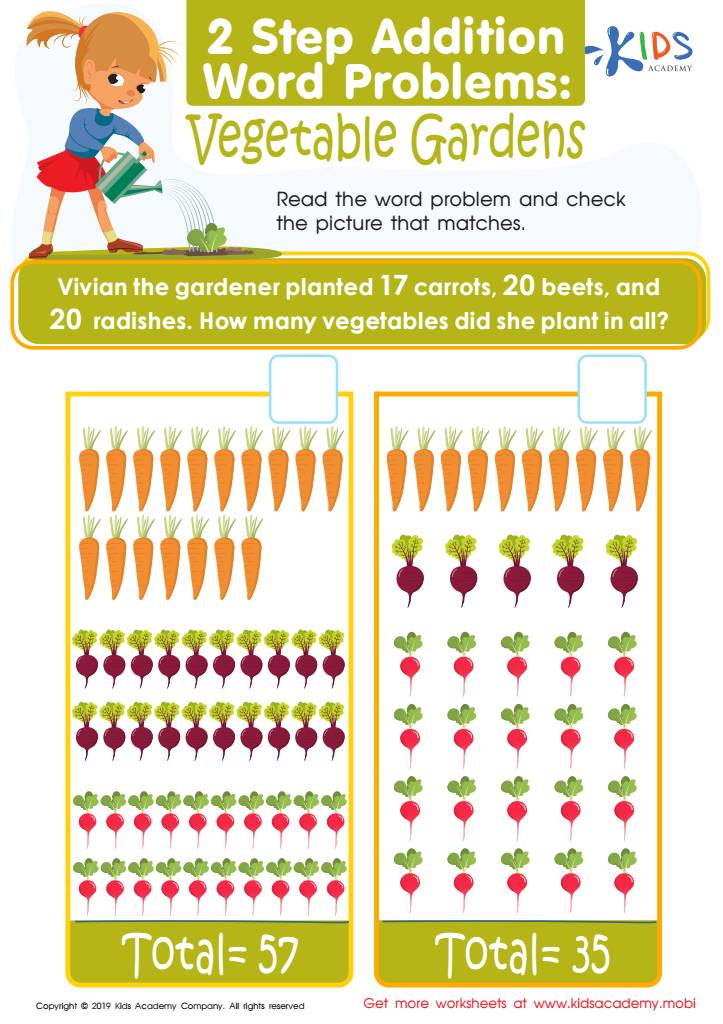
Vegetable Gardens Worksheet
Kids will have fun helping their buddy Vivian solve the addition word problems. Using one-to-one representation, they'll count the beets, carrots and radishes, then figure out the multi-step word problems. After, they'll check the picture that matches the answer, boosting their understanding of adding multiple numbers for one answer.
 Assign to My Students
Vegetable Gardens Worksheet
Worksheet
Join Kids Academy for Free
Who is primarily going to use this learning content?








Understanding and mastering addition and subtraction by ages 4-9 lay a solid foundation for children's future academic and life success. Parents and teachers should care about these essential math skills for several reasons. Firstly, addition and subtraction are basic arithmetic operations that form the building blocks of more complex mathematics, such as multiplication, division, and algebra. A strong grasp of these concepts enables children to approach higher-level math with confidence and competence.
Secondly, these skills enhance cognitive development. They encourage logical thinking, problem-solving abilities, and the capacity to understand and manipulate numbers. For young children, engaging in math activities develops concentration, memory, and attention to detail, which are crucial across all areas of learning.
Moreover, early math skills are strongly linked to academic achievement in later years. Research consistently shows that children who enter school with good numeracy skills perform better not only in math but across various subjects throughout their schooling.
Additionally, everyday life is filled with scenarios where addition and subtraction are needed—be it managing money, cooking, or understanding time. By mastering these skills early, children gain practical tools that empower them to navigate everyday situations more effectively and independently.
Caring about these foundational skills ensures children’s academic success and nurtures their ability to function efficiently in daily life.








