Numerical reasoning Addition & Subtraction Worksheets for Ages 4-9
3 filtered results
-
From - To
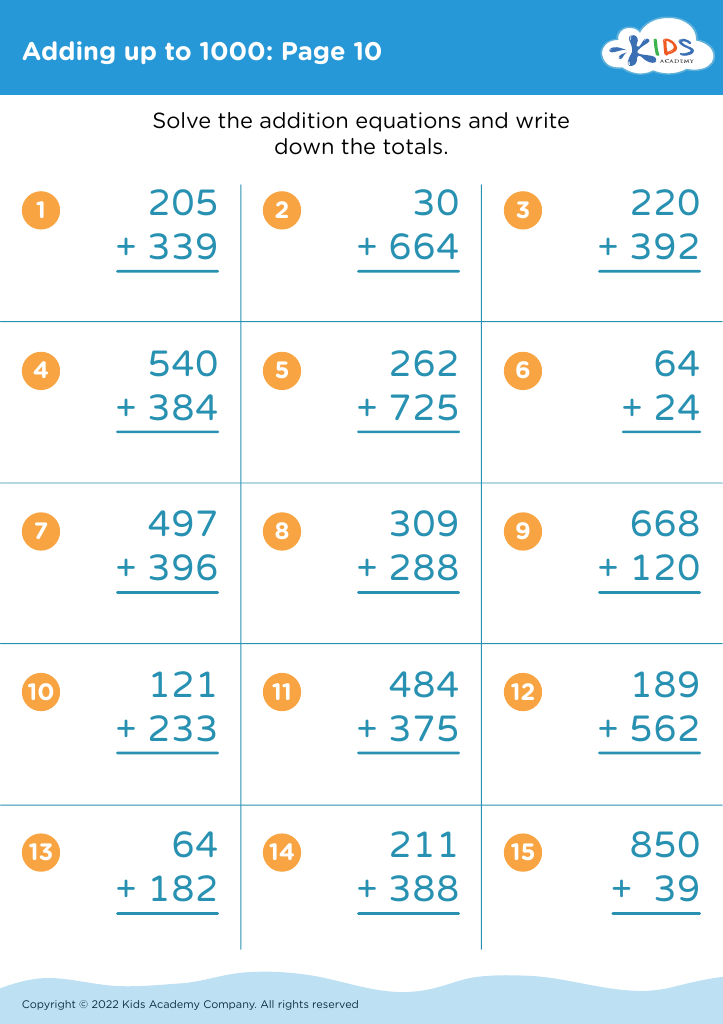
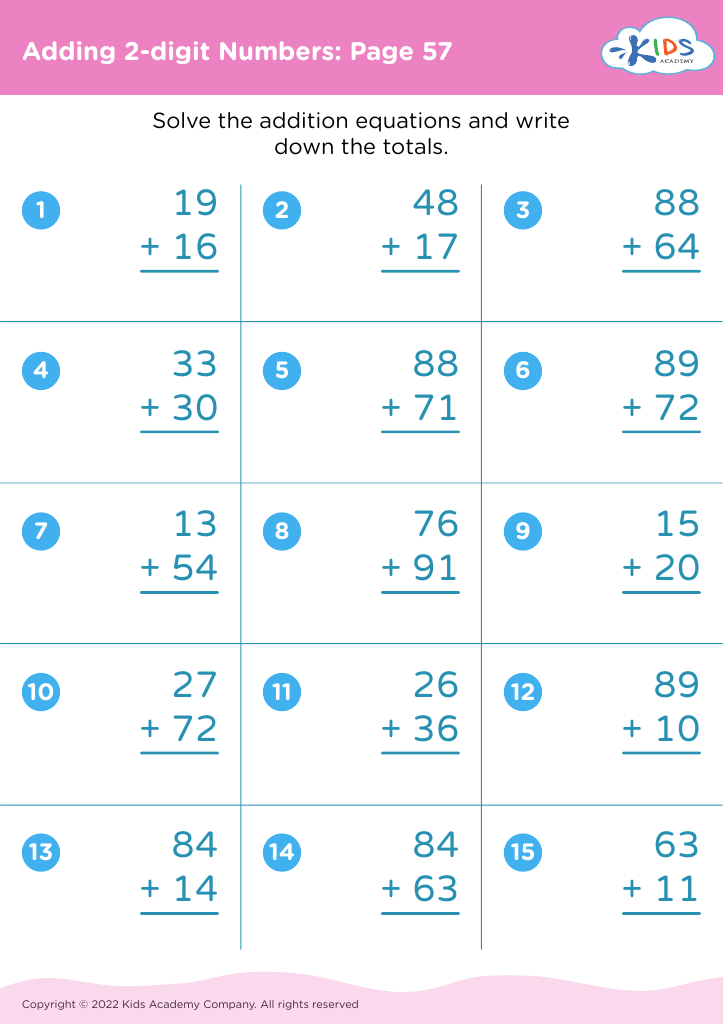
Boost your child's mathematical skills with our "Numerical Reasoning Addition & Subtraction Worksheets" designed for ages 4-9. These engaging worksheets from Kids Academy help children master fundamental math concepts through fun and colorful exercises. Children will develop their numerical reasoning abilities by working on addition and subtraction problems tailored for their learning level. With a focus on building a strong mathematical foundation, our easily downloadable and printable worksheets make learning math enjoyable and effective. Foster confidence and competence in your young learners with Kids Academy's expertly crafted resources—perfect for home or classroom use.
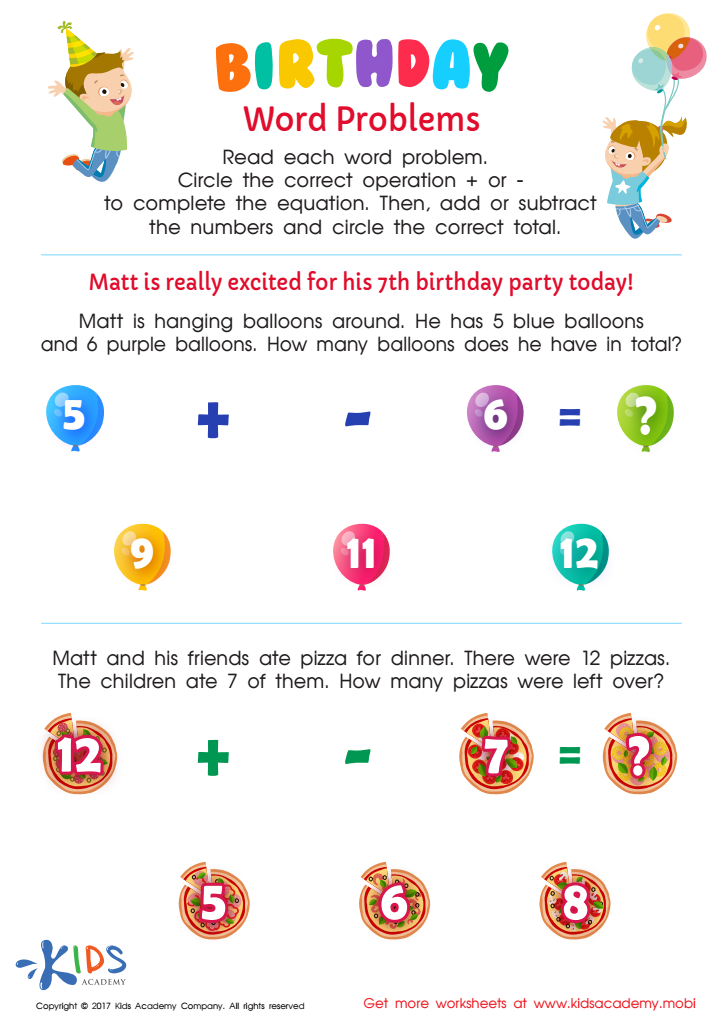
Birthday Word Problems Substraction Worksheet
 Assign to My Students








Numerical reasoning, encompassing skills in addition and subtraction, is essential for children ages 4-9 as it serves as a fundamental building block for future mathematical learning and everyday problem-solving. For parents and teachers, understanding and supporting these skills is crucial for several reasons.
Firstly, mastering addition and subtraction builds a child's confidence and fluency with numbers, which is vital for more complex arithmetic and algebra in later grades. These basic operations also help to develop logical thinking and the ability to understand relationships between numbers.
Secondly, numerical reasoning is integral to practical life skills. For young children, being able to understand and apply basic math when handling real-world scenarios, such as counting money, measuring ingredients in cooking, or dividing treats among friends, is important. Success in these areas develops a child's independence and boosts their confidence in handling everyday challenges.
Moreover, early proficiency in numerical reasoning fosters a positive attitude toward mathematics in general. When children feel capable and enjoy engaging with numbers, they are more likely to develop a lifelong interest in STEM (Science, Technology, Engineering, and Mathematics) subjects.
Overall, a strong foundation in addition and subtraction not only catalyzes academic success but also enhances everyday life competence, making it a critical focus for parents and teachers working with young learners.








