Recognize patterns Addition & Subtraction Worksheets for Ages 4-9
11 filtered results
-
From - To
Discover our engaging "Recognize Patterns Addition & Subtraction Worksheets" designed for children aged 4-9! These worksheets help young learners identify mathematical patterns, fostering foundational skills in addition and subtraction. By recognizing patterns, students can enhance their problem-solving abilities and gain confidence in math. Our colorful and interactive worksheets make learning fun, encouraging children to think critically while developing essential numerical skills. Perfect for home or classroom use, these resources are tailored to suit diverse learning styles. Download now and watch your child's mathematical understanding flourish as they explore patterns within addition and subtraction in an enjoyable and stimulating way!
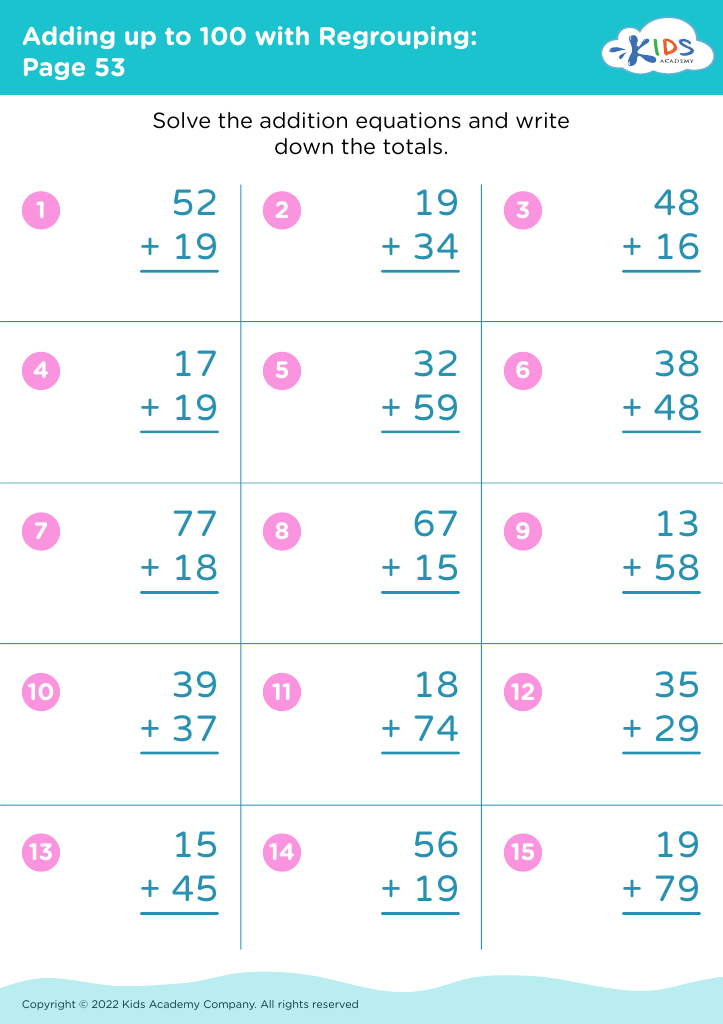
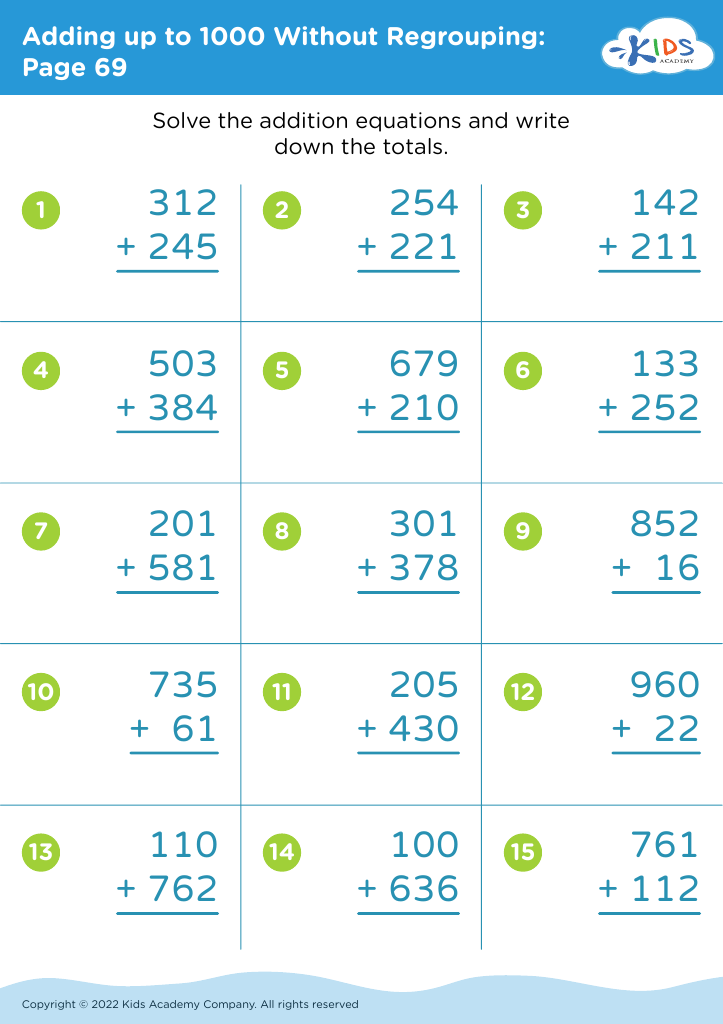
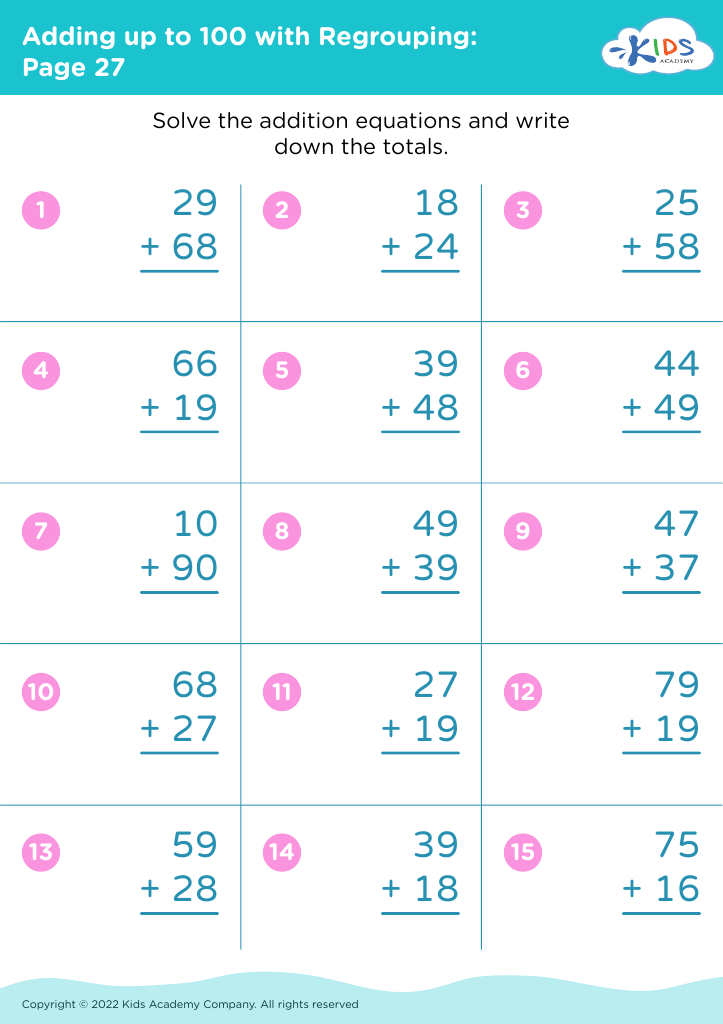
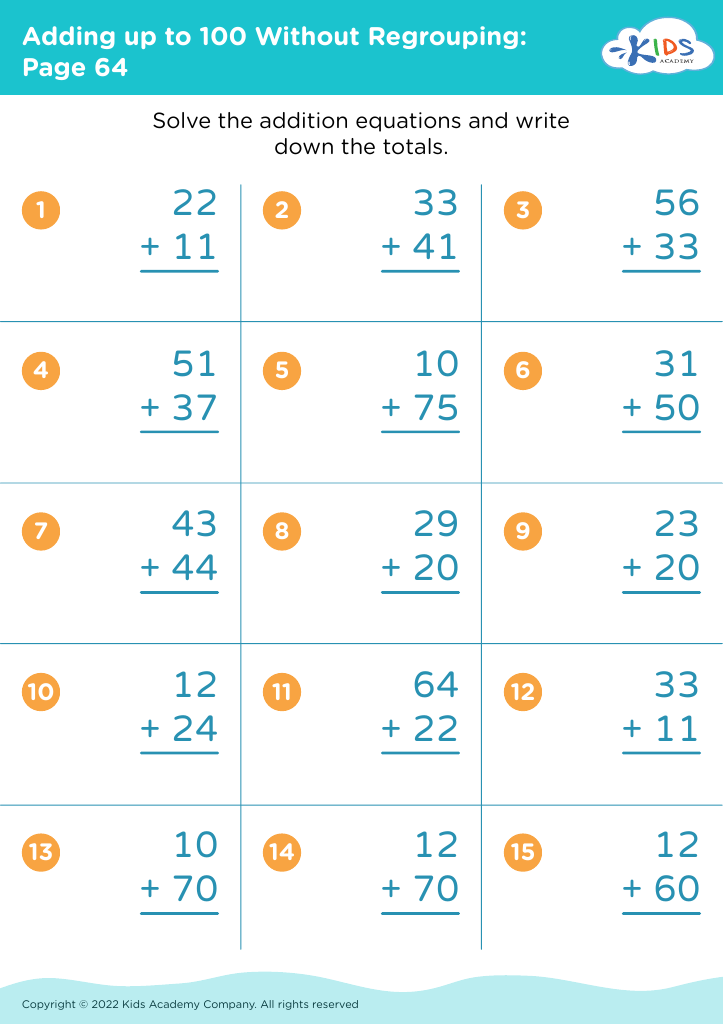
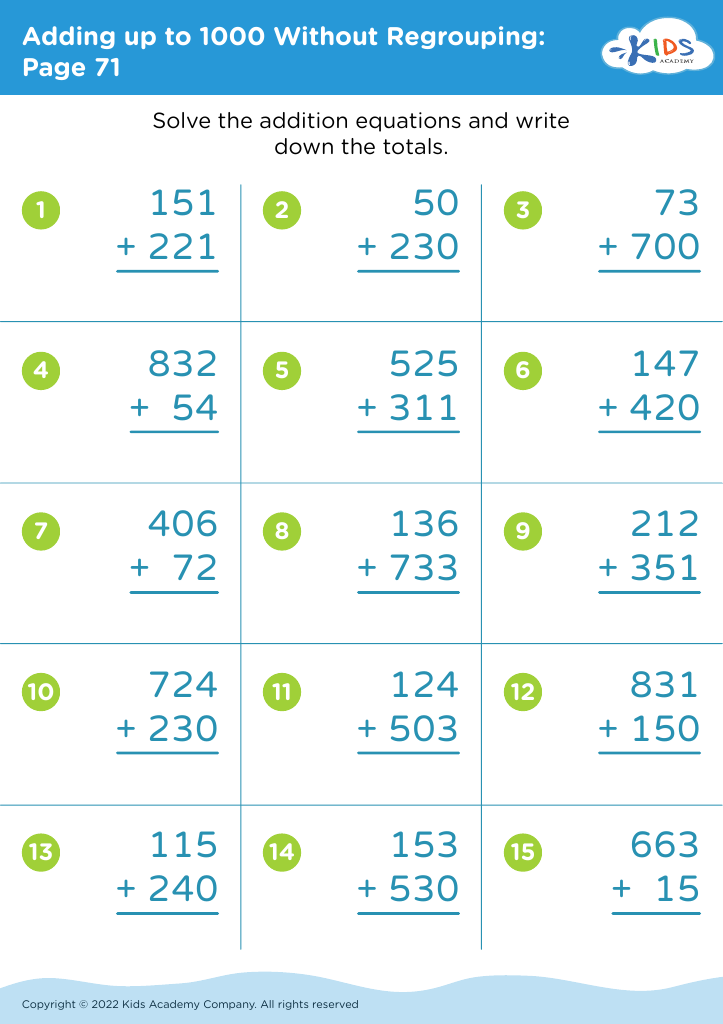
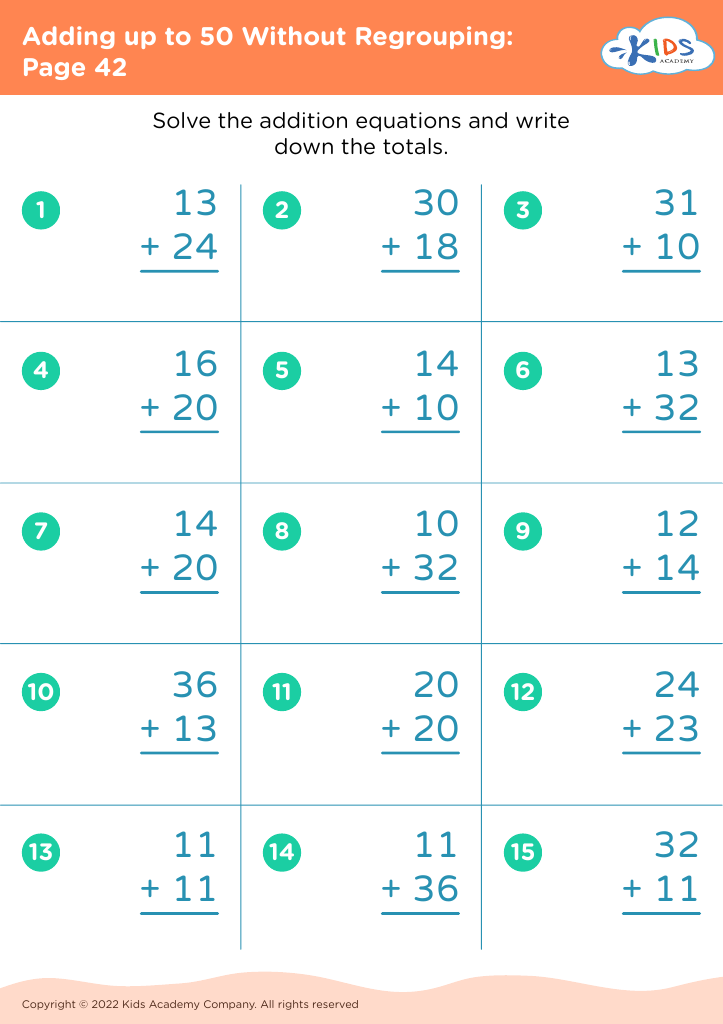
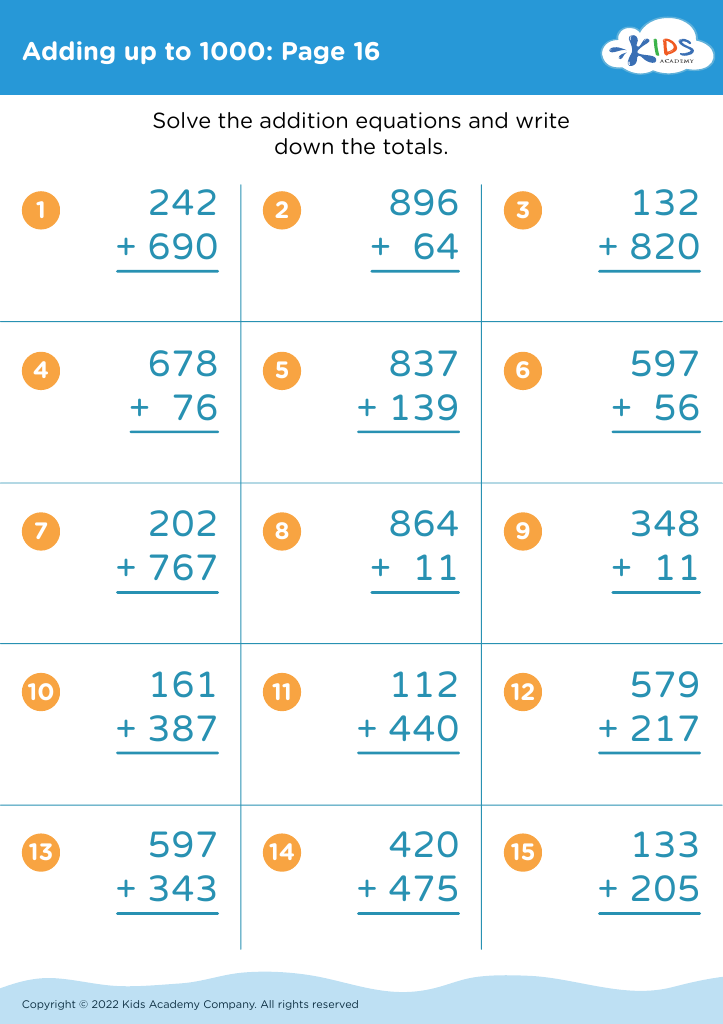
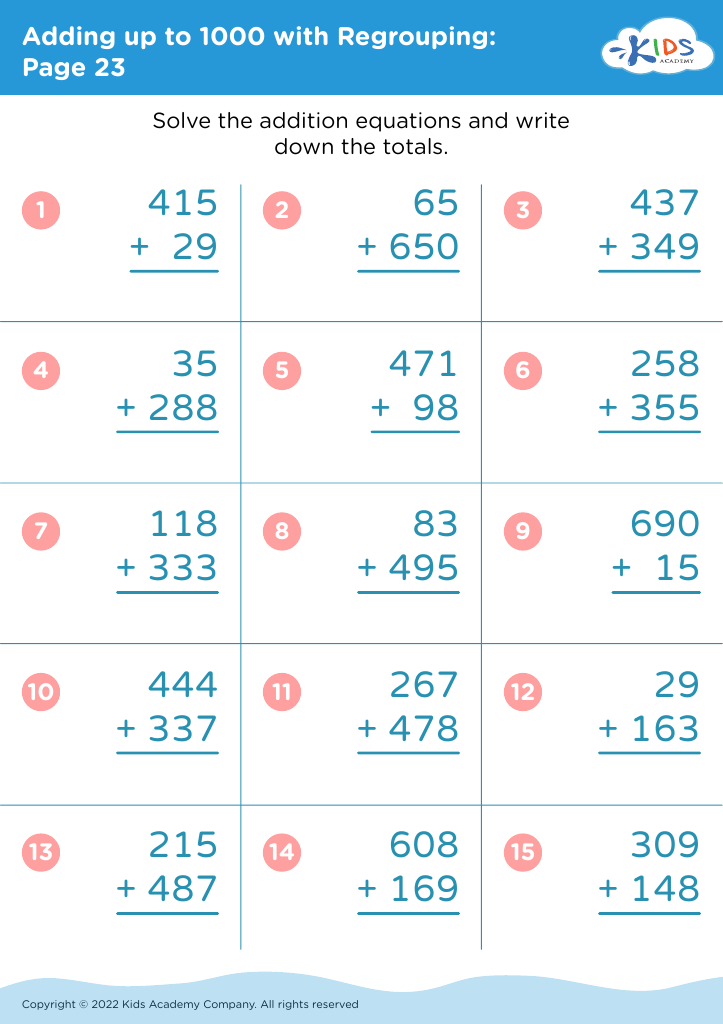
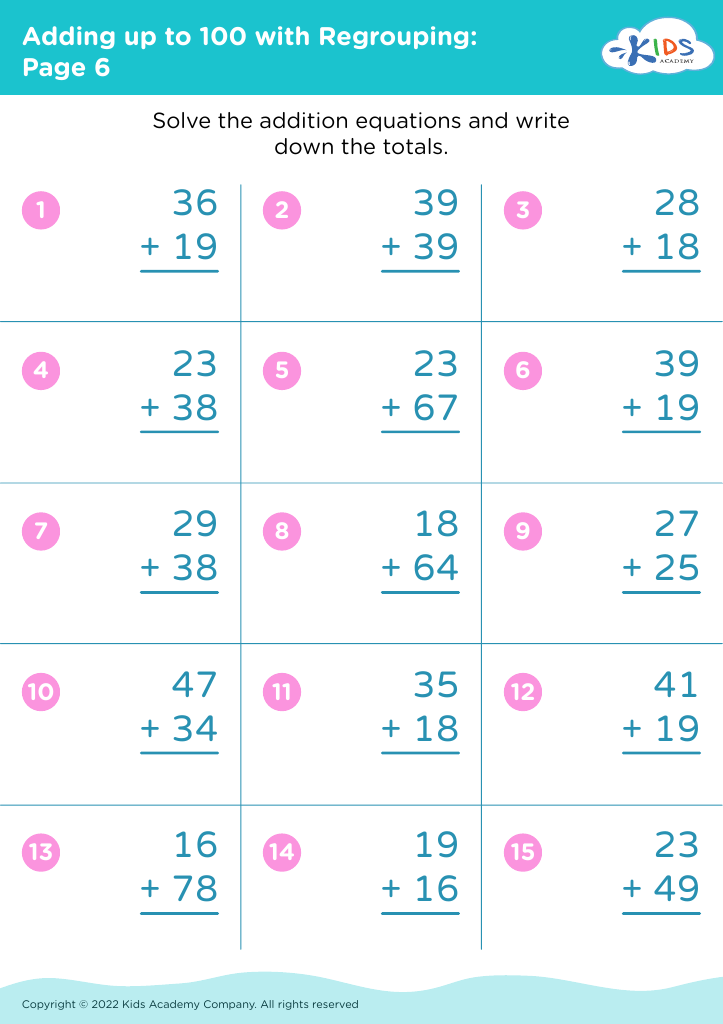
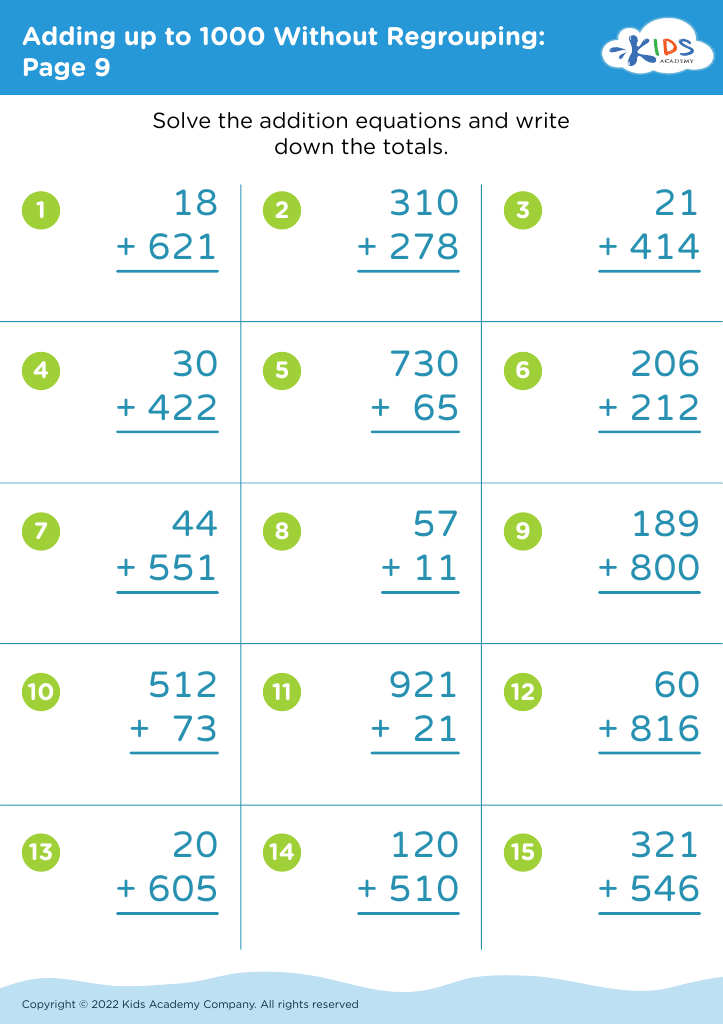
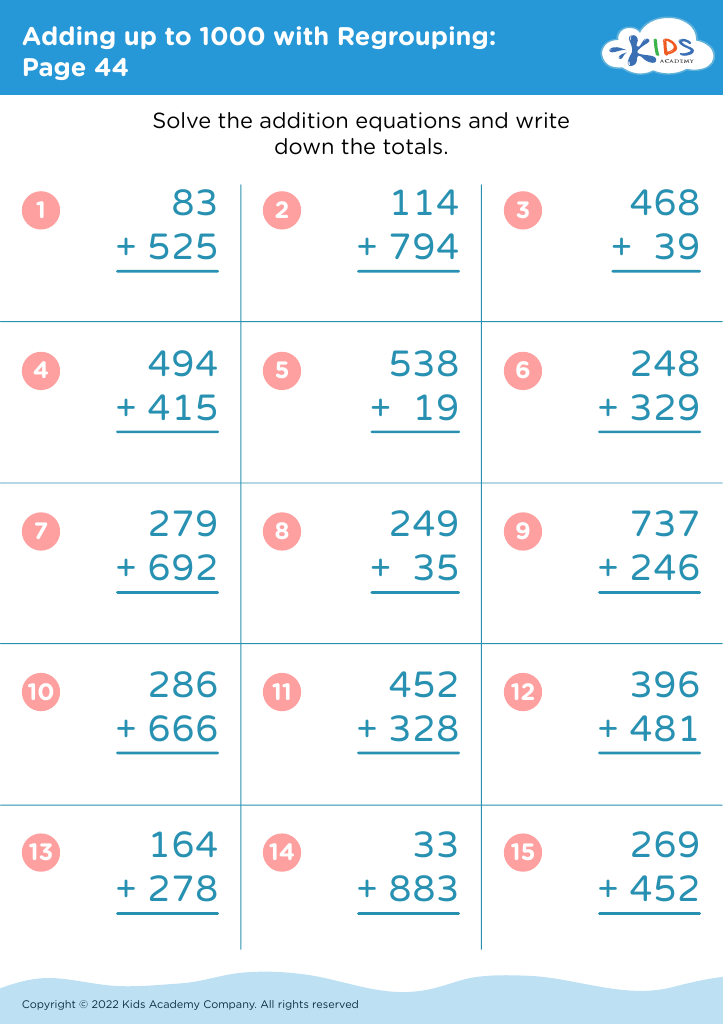








Recognizing patterns in addition and subtraction is a fundamental skill for young learners aged 4 to 9, serving as a building block for more advanced mathematical concepts. Parents and teachers should care about this because understanding patterns enhances children's problem-solving abilities, making math less intimidating and more intuitive as they progress in their education.
When children recognize patterns, they can make connections between numbers and operations, leading to increased fluency in addition and subtraction. This skill helps them to efficiently solve problems and fosters critical thinking. For example, recognizing that adding 2 to an even number always results in another even number allows children to predict outcomes confidently.
Additionally, pattern recognition encourages a growth mindset. As students discover and build upon their understanding of numerical relationships, they develop a sense of accomplishment and a love for learning. This positive attitude towards math will benefit them in higher grade levels where more complex mathematical concepts build upon these foundational skills.
Lastly, in a technology-driven world, pattern recognition is vital for developing skills in fields such as coding and computer science. Therefore, fostering pattern recognition in early learners sets them up for future academic success and equips them with essential tools for a rapidly evolving landscape.








