Recognizing equivalent fractions Addition & Subtraction Worksheets for Ages 4-9
5 filtered results
-
From - To
Welcome to our "Recognizing Equivalent Fractions Addition & Subtraction Worksheets" designed for children ages 4-9! These engaging worksheets help young learners understand the concept of equivalent fractions through fun, interactive exercises. Each activity is tailored to develop foundational math skills while enhancing critical thinking. Kids will enjoy adding and subtracting fractions, building confidence as they solve problems at their own pace. Perfect for use in the classroom or at home, our worksheets provide a well-rounded approach for young mathematicians to grasp the basics of fractions. Start your child's math journey today with our comprehensive and colorful resources!
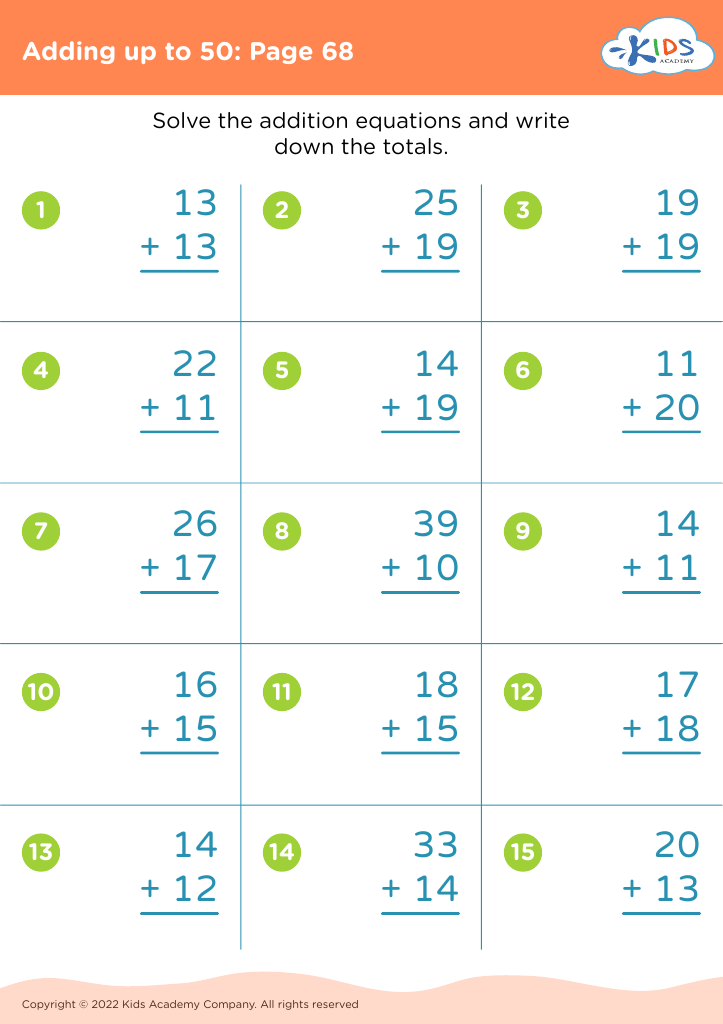
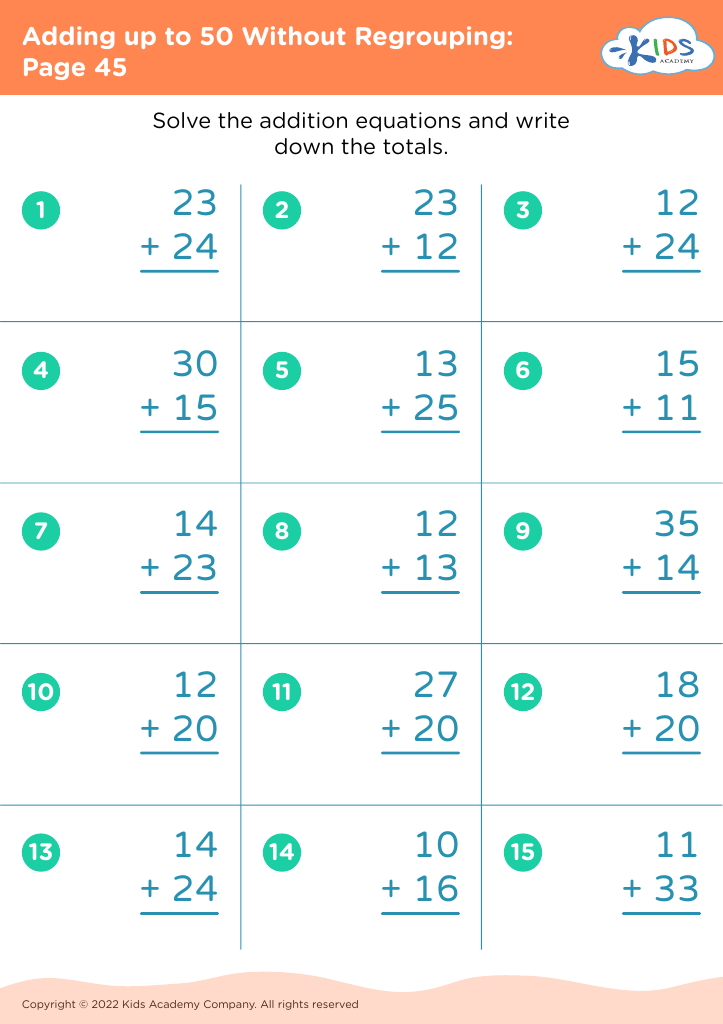
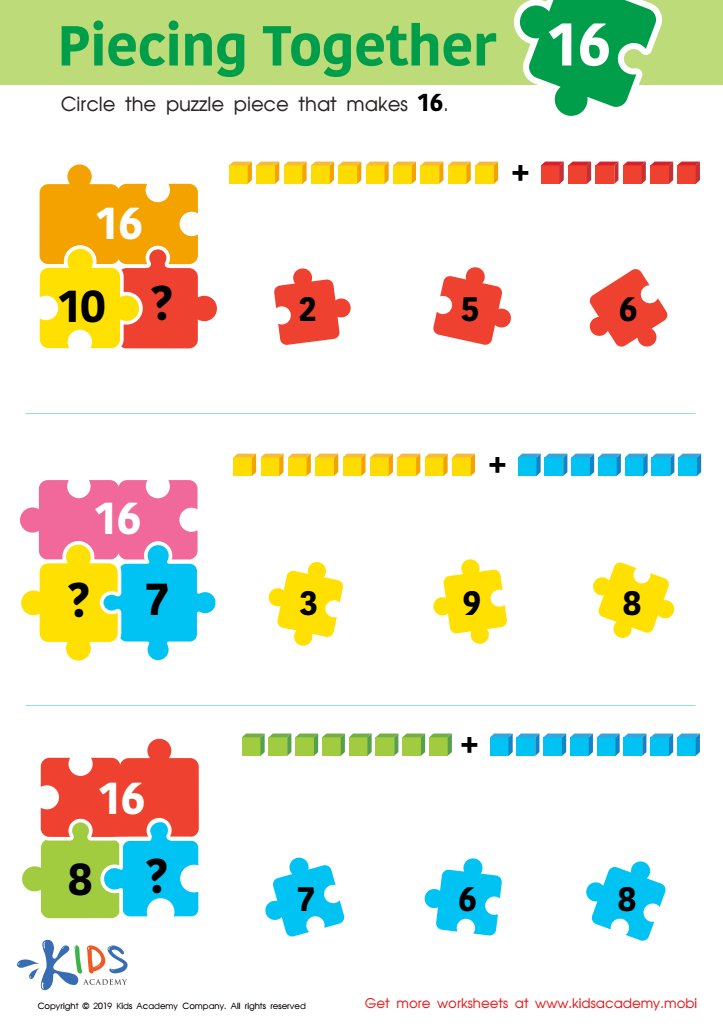
Piecing Together 16 Worksheet
 Assign to My Students








Recognizing equivalent fractions, particularly in addition and subtraction, is a crucial mathematical concept for young learners aged 4-9. Understanding equivalent fractions lays the foundation for more complex mathematical skills and promotes logical thinking. For parents and teachers, fostering this skill is significant for several reasons.
First, it enhances number sense by helping children see relationships between different fractions, which aids in comparison and simplification tasks. These early experiences equip them with essential problem-solving strategies later on. Second, recognizing equivalent fractions fosters confidence in children as they learn to manipulate fractions, thus preparing them for more advanced topics like measurement and ratios.
Furthermore, incorporating equivalent fractions in addition and subtraction activities can be fun and engaging, making math enjoyable. This enthusiasm can ensure that students stay motivated and develop a positive attitude towards learning.
Finally, as children move through the educational system, mastering the concept of equivalent fractions will serve as a cornerstone for success in algebra and other higher math subjects. By focusing on this foundational skill now, parents and educators ensure that children are well-prepared for future challenges. Overall, investing time in this area nurtures critical thinking and number fluency, key components for lifelong learning.








